
Materials and Durability: Best Displays for Dispensaries
- Why materials matter for dispensary display performance
- First impressions, product protection and compliance
- Durability reduces total cost of ownership
- Standards and sourcing matter
- Material breakdown: strengths, weaknesses and best uses
- Tempered glass — clarity and security
- Acrylic / PMMA — lightweight and impact resistant
- Metals: aluminum vs. steel
- Engineered woods: MDF, HPL and solid wood
- Comparative durability, cost and suitability
- At-a-glance comparison
- Data sources and notes
- Design considerations: security, maintenance and environment
- Security layers: material + hardware + layout
- Cleaning and sanitation for cannabis retail
- Environmental considerations: humidity, UV and traffic
- How I recommend selecting displays for your dispensary
- Step 1 — Define priorities: branding, security, maintenance
- Step 2 — Match materials to fixtures and traffic patterns
- Step 3 — Plan for servicing and modularity
- Step 4 — Verify manufacturing controls and certifications
I work directly with dispensaries and retail designers to evaluate materials, finishes and construction methods that make retail marijuana dispensary displays both beautiful and long-lasting. In this article I summarize the most reliable materials, compare longevity, maintenance and security trade-offs, and provide actionable selection criteria rooted in industry standards and manufacturing best practices so you can make informed purchases for your store’s fixtures and display cases.
Why materials matter for dispensary display performance
First impressions, product protection and compliance
In cannabis retail, displays are more than shelves: they convey brand identity, control product access, protect inventory and must often meet state-level retention and security requirements. Thoughtful material choices directly affect how products are presented and protected, how easy the displays are to clean, and how long fixtures remain serviceable in a high-touch retail environment.
Durability reduces total cost of ownership
Buying the cheapest fixture up-front can cost more over time. Durable materials and proper fabrication reduce repair, replacement and downtime costs. As many retail operations discover, a slightly higher initial CAPEX for robust materials often yields a lower TCO over a 5–10 year lifecycle.
Standards and sourcing matter
Material claims should be backed by standards-driven manufacturing and quality systems. For example, ISO 9001 certification is a common benchmark for consistent production quality (ISO 9001).
Material breakdown: strengths, weaknesses and best uses
Tempered glass — clarity and security
Tempered glass is a top choice for front-facing display panels and shelves because of its scratch resistance and improved strength compared with annealed glass. It breaks into blunt, granular pieces rather than sharp shards, which is a safety advantage in retail spaces. See technical overview on Tempered glass (Wikipedia).
Acrylic / PMMA — lightweight and impact resistant
Acrylic (PMMA) provides near-glass clarity at lower weight and with better impact resistance. It is easier to machine and thermoform for rounded displays, but scratches more easily and can yellow with prolonged UV exposure unless UV-stabilized grades are used (Acrylic (Wikipedia)).
Metals: aluminum vs. steel
Aluminum is lightweight, corrosion resistant and suits modern, minimalist displays. Powder-coated steel offers higher structural strength (ideal for heavy-security, locked cabinets) and is typically more cost-effective where weight is less of a concern. For high-security fixtures, welded steel frames and heavy-gauge panels remain standard.
Engineered woods: MDF, HPL and solid wood
MDF with high-pressure laminate (HPL) offers a cost-effective, uniform substrate for veneering and finishes. Solid wood provides High Quality aesthetics but can warp in humid environments if not properly kiln-dried and sealed. HPL and edge-banding reduce wear on high-contact surfaces.
Comparative durability, cost and suitability
At-a-glance comparison
The table below compares commonly used materials in retail marijuana dispensary displays by durability, security, maintenance and typical cost range (relative estimates per typical North American/European market pricing). Ratings are relative; actual durability depends on fabrication quality and environment.
| Material | Durability (1–5) | Security | Maintenance | Typical Cost | Best Use |
|---|---|---|---|---|---|
| Tempered glass | 4 | Medium (frangible but visible) | Low (cleaning, occasional re-seal) | Medium–High | Showcases, shelves, high-visibility fronts |
| Acrylic (UV-stabilized) | 3 | Low–Medium | Medium (scratch repair/polish) | Medium | Point-of-sale risers, lighting diffusers, lightweight cases |
| Aluminum (extruded) | 4 | Medium | Low (powder-coat upkeep) | Medium | Frame systems, modular shelving |
| Powder-coated steel | 5 | High | Low–Medium | Medium | Locked cabinets, security fixtures |
| MDF + HPL | 3 | Low | Low (surface resistant) | Low–Medium | Countertops, non-structural display units |
| Solid wood (finished) | 4 | Low–Medium | Medium (refinishing) | High | High Quality cabinetry, brand-focused fixtures |
Data sources and notes
Material characteristics summarized above are consistent with industry references and manufacturer datasheets; for specific physical properties consult supplier technical data sheets. Tempered glass and acrylic properties are further documented on public references such as Wikipedia: Tempered glass and Wikipedia: Acrylic. Manufacturing quality and repeatability are commonly benchmarked via ISO 9001 standards (ISO 9001).
Design considerations: security, maintenance and environment
Security layers: material + hardware + layout
Materials provide the first line of defense, but security requires integrated hardware: multi-point locking systems, recessed locks, tamper-proof fasteners and alarm-ready sensor mounts. For high-value products, steel inner chassis paired with tempered glass fronts and cash-draw locking systems is a proven design pattern.
Cleaning and sanitation for cannabis retail
Frequent customer contact means surfaces must be easy to clean without degrading finishes. Powder-coated metals, HPL, sealed wood finishes and tempered glass tolerate disinfectants better than untreated wood or soft plastics. Manufacturers should provide cleaning compatibility guidance, and selecting materials rated for healthcare or food retail cleaning chemicals is a smart precaution.
Environmental considerations: humidity, UV and traffic
Retail environments with high HVAC cycles or direct sun exposure require UV-stabilized acrylics, sealed wood, or laminated surfaces. In climates with humidity swings, avoid poorly sealed solid wood; MDF + HPL or metal cores minimize dimensional movement.
How I recommend selecting displays for your dispensary
Step 1 — Define priorities: branding, security, maintenance
I start by asking: is your priority High Quality retail experience, highest security, or cost-efficiency? For High Quality brand-led shops I recommend solid wood veneers, tempered glass fronts and concealed LED lighting. For high-security operations, prioritize steel locks, laminated glass or metal cabinets with limited customer access.
Step 2 — Match materials to fixtures and traffic patterns
Use tempered glass for display faces where product visibility is critical; reserve steel or aluminum for structural elements. Counters and high-impact zones should use HPL or powder-coated metal, not raw veneers.
Step 3 — Plan for servicing and modularity
Choose modular systems that allow component replacement: replaceable shelf panels, standardized lock mechanisms and accessible wiring channels for lighting. That approach reduces downtime and future renovation costs.
Step 4 — Verify manufacturing controls and certifications
Ask your supplier for evidence of production capabilities: quality management systems (ISO 9001), photos of CNC and finishing lines, and material test certificates. Quality systems improve reproducibility of finishes and tightness of tolerances.
Everything You Need to Know About dispensary floor plan
How to Choose Displays for Smoke Shop Interior Layouts
Custom vs modular dispensary display cases: cost and ROI
Custom smoke shop display cases: design and ordering tips
Custom 3D Design Tempered Glass Dispensary Display Solutions
What’s the usual production lead time?
Standard orders (under 20 sets) take 25–30 days; rush service available for urgent store openings.
Custom Smoke Shop Glass Showcase Cigarette Display Counter Factory
Can I customize the layout to fit my store’s floor plan?
Yes, we offer fully modular and customizable layouts to suit your specific space.
Why OUYEE
What types of displays does OUYEE offer?
We offer a wide range of custom dispensary display cabinets, including slatwall panels, glass display cases, vape racks, and cannabis showcases. All of our products are customizable to meet your store's design needs.
Turnkey Solution Modern Cannabis Dispensary Design Companies
Do you provide 3D design renderings before production?
Yes, we include professional 3D visuals and store walkthroughs before confirming final production.
Trendy Custom E Cigarette Display Rack Cbd Shop Displays Solutions
Can I customize the size to fit my space?
Yes, all fixtures are fully customizable in dimensions, finishes, lighting, and branding to meet your shop’s layout.
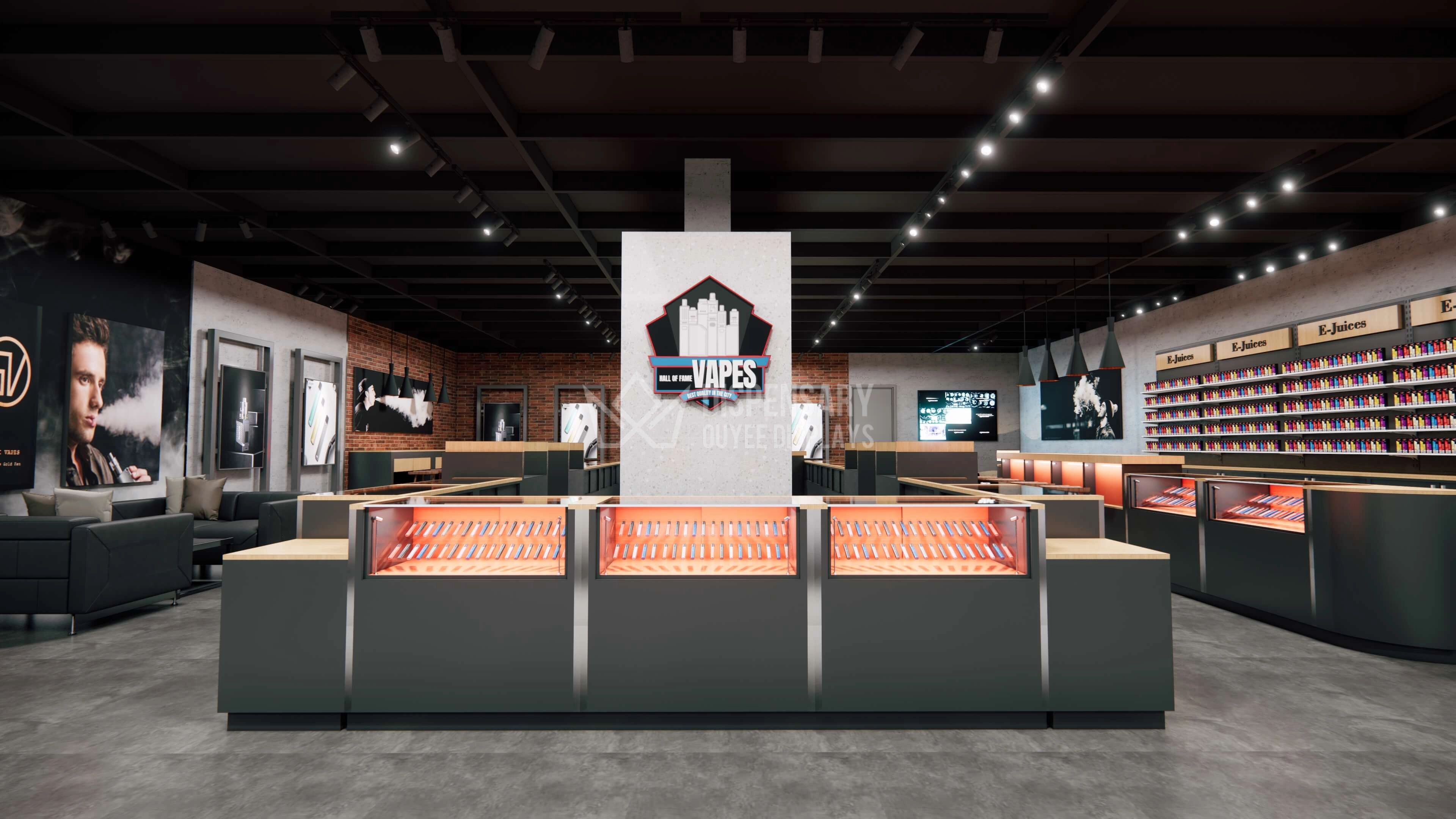
Custom Dispensary Display Design Services Modular Retail Solutions
Our Custom Dispensary Display Design Services specialize in creating unique, modular retail solutions tailored to your business needs. Whether you're showcasing tobacco products, e-liquids, or other retail items, our designs ensure maximum product visibility, security, and customer engagement. We combine high-end materials with flexible layouts, optimizing your store’s space while creating an upscale and professional atmosphere. From custom-built display units to comprehensive store design, our solutions are made to boost your retail environment’s functionality and aesthetic appeal.
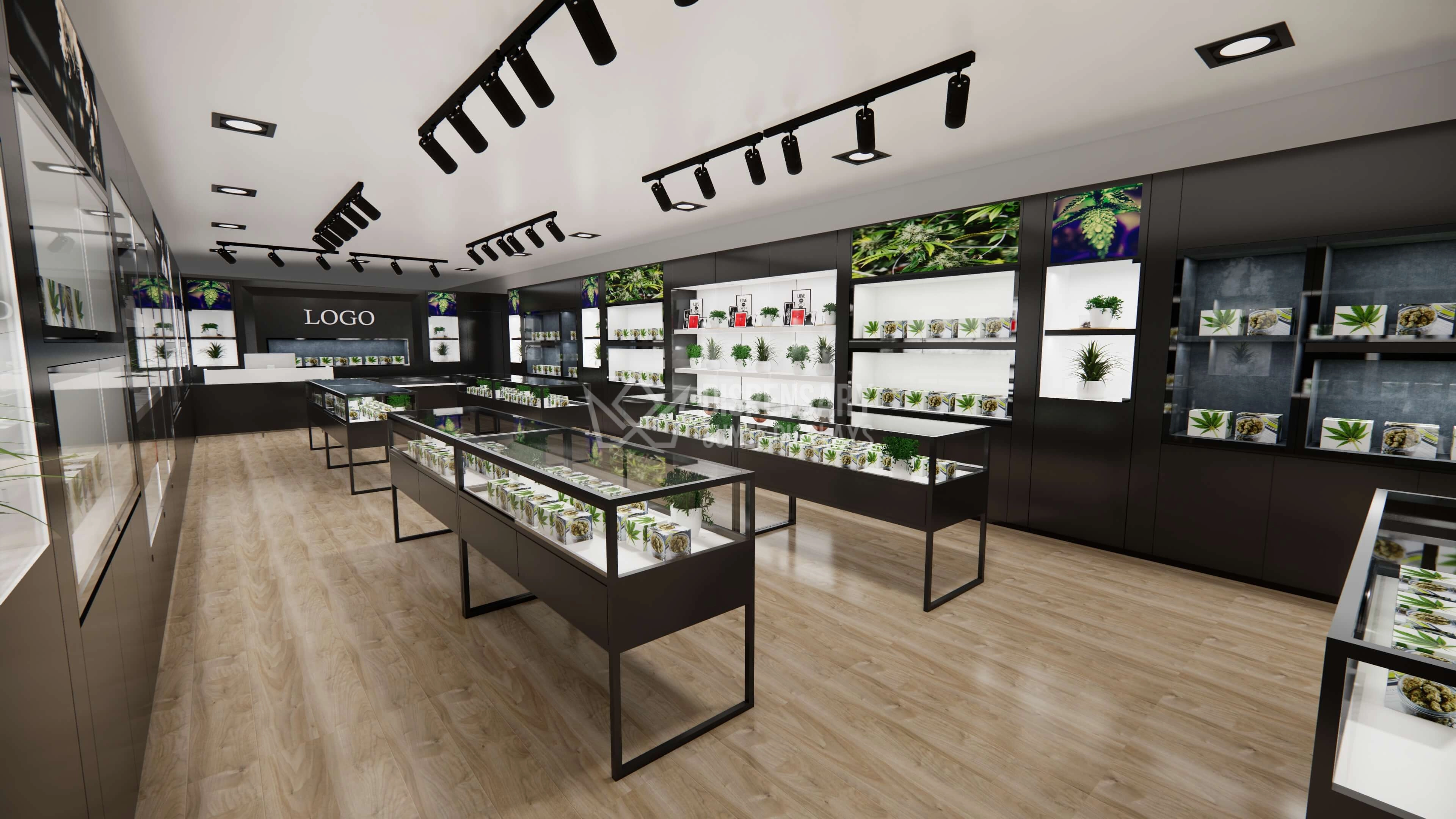
OEM ODM Dispensary Showcase Counters Display Fixtures For Cannabis
Sleek, secure, and fully customizable — our OEM/ODM dispensary counters redefine how cannabis is displayed in retail environments, merging form and function seamlessly.
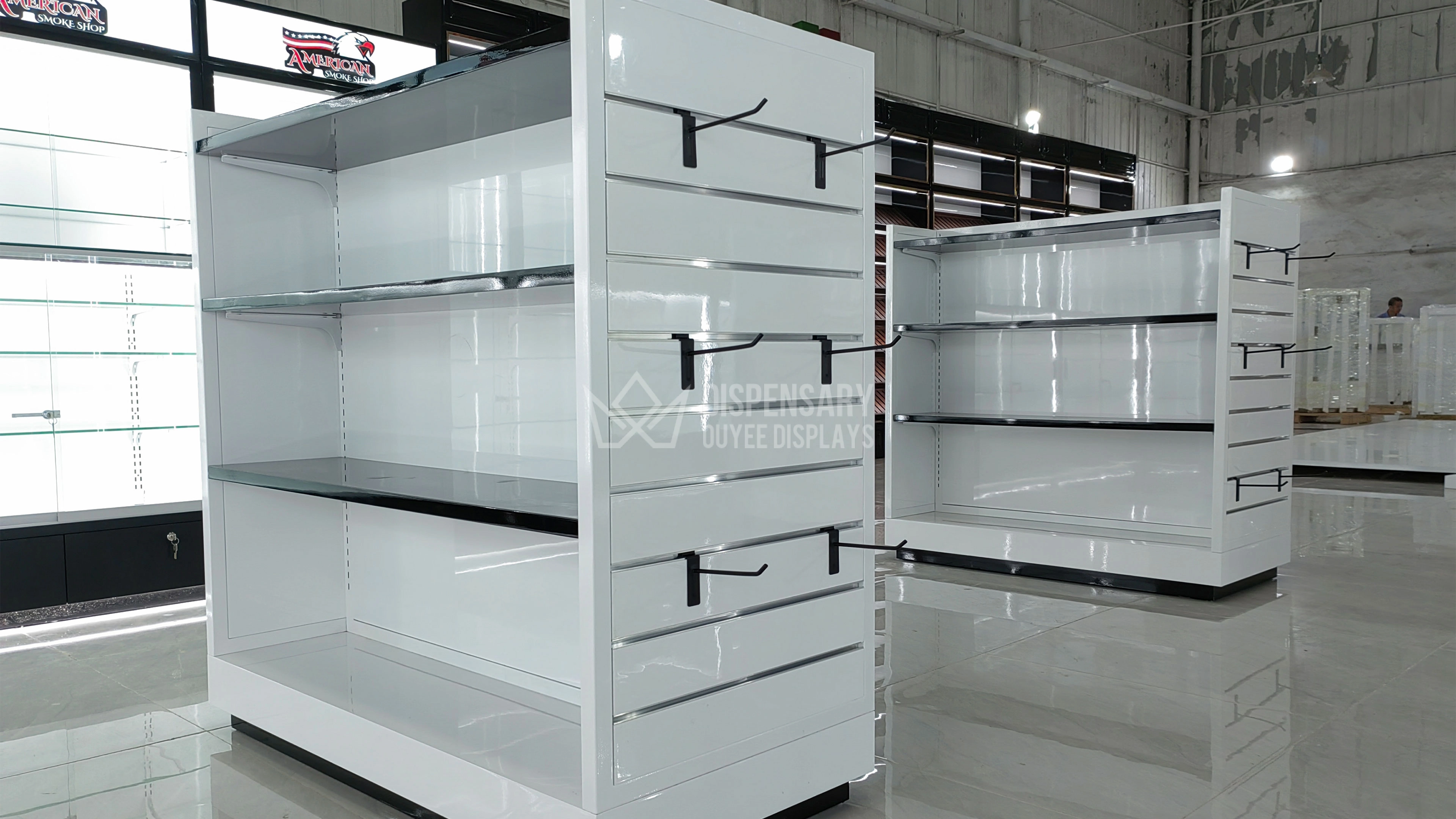
Smoke Shop Fixtures Multi Tiered Cigarette Display Cabinet Factory
Elevate your smoke shop’s merchandising with our multi-tiered cigarette display cabinet, built with premium glass, wood veneer, and integrated LED lighting. This customized setup includes a dedicated cigar room wall system for showcasing high-end cigars, making it the ultimate retail display solution for modern smoke shops.
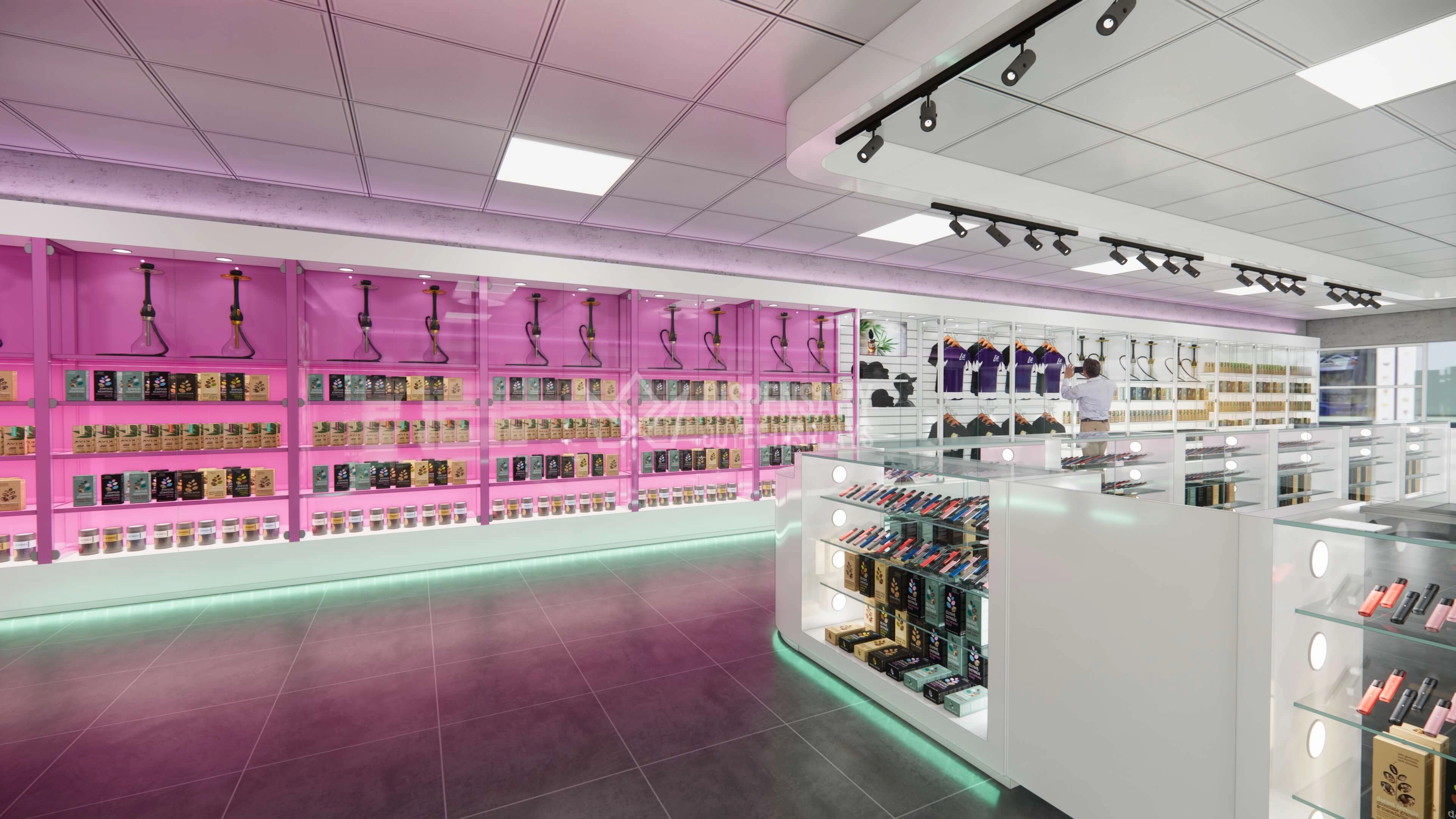
Modern Minimalist Cannabis Dispensary Displays Solutions
Modern minimalist cannabis dispensary displays offer sleek design, optimal product visibility, and efficient space usage, enhancing customer experience and elevating your store’s professional image.
Let's get in touch

Email: gzouyeedisplay@gmail.com
WhatsApp: +86 136 6049 7267
Ouyee Dispensary
Ouyee Dispensary
Ouyee Dispensary
Ouyee Dispensary