
Designing the Future: Next-Gen Dispensary Layouts That Triple Foot Traffic and Retention
A comprehensive 2026 guide to dispensary design, focusing on regulatory compliance, retail psychology, and 'phygital' integration to maximize foot traffic and retention.
- What are dispensary design best practices?
- Key Takeaways: The 2026 Design Blueprint
- Zoning for Profit: The 'Concentric' Layout Strategy
- The 'Invisible Vault': Security Best Practices
- Merchandising That Moves Product: Vertical & Phygital
- Expert Tips: Common Design Mistakes to Avoid
- Future-Proofing: Trends for 2026 and Beyond
- Conclusion & Call to Action
In the rapidly maturing cannabis market, cannabis retail visual merchandising is no longer just about aesthetics; it is the primary driver of revenue, retention, and regulatory adherence. As we approach 2026, the most successful dispensaries are those that treat their floor plan as a calculated machine for conversion, seamlessly blending high-security requirements with immersive customer experiences.
What are dispensary design best practices?
Dispensary design best practices define the strategic integration of regulatory compliance architecture, retail psychology, and brand storytelling to optimize customer flow and maximize revenue per square foot. Effective design prioritizes a friction-free customer journey, balancing strict security protocols with an inviting, inclusive atmosphere that caters to both medical patients and recreational consumers.
To achieve this balance, operators must move beyond basic shelving and consider the holistic impact of their environment. A well-designed dispensary reduces anxiety for new users while providing efficiency for seasoned veterans. It is about controlling the narrative from the moment a customer steps through the door until they complete their purchase.
- Intuitive Zoning: Creating clear distinctions between check-in, waiting, and browsing areas to prevent bottlenecks.
- Compliant Displays: Utilizing lockable yet visually accessible cases that meet state-level diversion prevention laws.
- Accessible Navigation: Ensuring aisles meet ADA standards to welcome all demographics.
- Operational Efficiency: Designing staff workflows that minimize steps between the vault and the point of sale.
Key Takeaways: The 2026 Design Blueprint
The 2026 design blueprint focuses on "invisible security" and hyper-local aesthetics to differentiate brands from the sterile "Apple Store" copycats of the early 2020s. This approach leverages data-driven layouts to increase dwell time and integrates digital touchpoints to bridge the gap between online browsing and in-store purchasing.
Operators are now realizing that the "fortress" look deters casual shoppers. Instead, the goal is to weave security measures into the design fabric—using biophilic elements to mask hardened barriers and advanced surveillance that doesn't feel intrusive. Furthermore, the integration of phygital retail experience elements allows for a more personalized shopping journey.
- Flow is Currency: Directional layouts that guide customers deeper into the store directly impact basket size.
- Security as Art: replacing bars and cages with reinforced glass and ballistic-grade landscaping.
- The Digital Bridge: Seamlessly merging mobile apps with in-store kiosks for inventory lookup.
- Differentiation: Adopting community-centric designs that reflect local culture rather than generic minimalism.
Zoning for Profit: The 'Concentric' Layout Strategy
Dispensary floor plan optimization relies on a concentric layout strategy that guides customers through distinct zones—Decompression, Discovery, and Transaction—to maximize engagement and spending. This method ensures that high-margin products are encountered during the "browsing" phase before the customer reaches the final checkout queue.
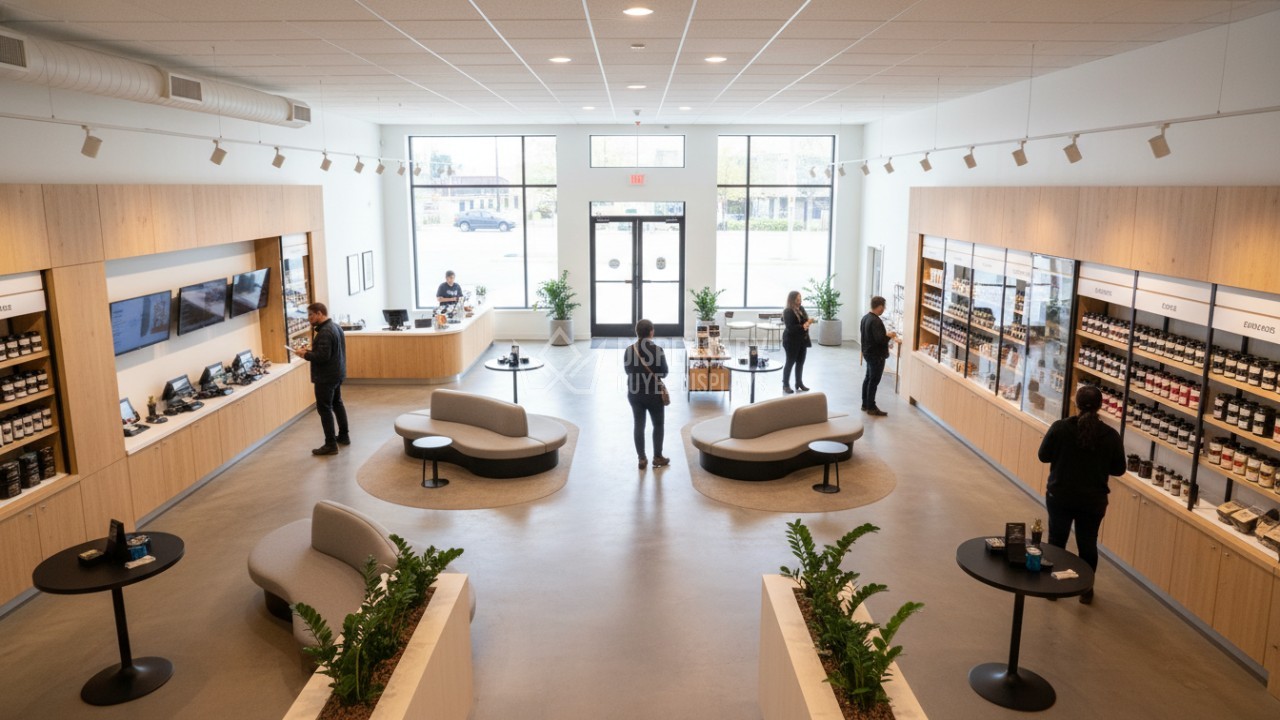
By strategically placing these zones, retailers can manipulate the customer journey mapping to their advantage. The "Decompression Zone" allows customers to adjust to the store's lighting and vibe, while the "Discovery Zone" is where the actual selling happens. According to Forbes, 90% of North Americans instinctively turn right upon entering a store, making the front-right wall your most valuable real estate for premium flower or high-margin edibles.
- The Decompression Zone: The first 10 feet inside the door, kept open and clutter-free to allow customers to orient themselves.
- Discovery Zones: Open floor areas with interactive displays that encourage hands-on (compliant) browsing.
- Transaction Terminals: POS systems positioned at the rear or left to prevent line-of-sight clutter upon entry.
- Private Consultation Areas: Secluded nooks for medical patients, a feature highly recommended by Ouyee Dispensary Displays architects for HIPAA compliance.
The 'Invisible Vault': Security Best Practices
Security best practices in 2026 involve implementing "Concentric Circles of Protection," a strategy that hardens the target from the outside in while keeping the interior atmosphere welcoming. This concept ensures that the most valuable assets—cash and inventory—are protected by multiple layers of security, starting at the property perimeter and tightening as one approaches the vault.
Modern security is about deterrence without intimidation. While the vault itself must be a fortress, the sales floor should feel open. This is achieved through the use of materials that are aesthetically pleasing but structurally sound. For example, utilizing ballistic-rated drywall and reinforced millwork allows for a secure environment that doesn't feel like a prison.
- Layered Barriers: Perimeter fencing, reinforced building shells, and secure interior partitions.
- Biophilic Camouflage: Using plants and natural elements to obscure security sensors and barriers.
- Strategic Access Control: Placing vault access points away from customer view to minimize "inside job" risks.
- Secure Cash Pathways: Designing specific corridors for cash transport that never intersect with the customer zone.
Merchandising That Moves Product: Vertical & Phygital
Merchandising in 2026 combines vertical space utilization with phygital retail experience tools to create dynamic displays that engage multiple senses and drive conversion. As floor space becomes more expensive, retailers must look up—utilizing walls for product storytelling—and look digital, using screens to augment the physical product.
Effective merchandising is not just about stacking product; it's about creating "pause points" where customers stop and engage. Integrating digital screens that display terpene profiles or harvest dates alongside physical sample jars bridges the education gap. Recent data from CometArch suggests that innovative layouts, such as circular flow designs, can increase average purchase values by up to 30% by encouraging deeper exploration of these merchandising zones.
- Vertical Merchandising: Using high-wall shelving for bulk inventory or brand storytelling to free up floor space.
- Sensory Engagement: "Smell jars" and tactile pods that allow examination while maintaining sanitation.
- Interactive Digital Signage: AI-driven screens that suggest product pairings based on current inventory.
- Lighting Hierarchy: Using accent lighting to create focal points on top-shelf items.
Expert Tips: Common Design Mistakes to Avoid
Common design mistakes often stem from prioritizing aesthetics over function, such as creating bottlenecks in waiting areas or using poor lighting that diminishes product appeal. A beautiful store that functions poorly will lose customers to a competitor with a smoother workflow.
One frequent oversight is non-compliance with accessibility standards. The U.S. Access Board mandates that retail aisles must have a minimum clear width of 36 inches to accommodate wheelchairs. Failing to meet this standard not only alienates a significant customer base but also opens the business to lawsuits. Additionally, avoiding the "bank effect"—sterile, intimidating counters—is crucial for welcoming novice users.
- The 'Bank' Effect: High counters and glass partitions that create a psychological barrier between staff and shoppers.
- Bottlenecks: Narrow pathways that cause congestion during peak hours, frustrating customers.
- Lighting Failures: Using cool/blue light (4000K+), which makes cannabis flower look gray; opt for high CRI warm lighting (3000K-3500K).
- Ignoring Staff Workflow: Forgetting that budtenders need ergonomic workstations to maintain speed and morale.
Future-Proofing: Trends for 2026 and Beyond
Future-proofing a dispensary involves adopting adaptable infrastructure, such as modular fixtures and AI-adaptive lighting, to evolve with changing consumer behaviors and regulations. The static store is dead; the store of the future is a living, breathing entity that changes based on time of day, inventory levels, and crowd demographics.
Sustainability is also moving from a "nice-to-have" to a core requirement for the Gen Z demographic. This means using eco-friendly materials and energy-efficient systems. Furthermore, automation will play a larger role, with compliant vending technology handling express checkouts for regulars, freeing up staff to consult with new patients.
- AI-Adaptive Layouts: Digital signage that changes content based on real-time sales data.
- Automated Dispensing: Secure, ID-verified vending for fast-moving SKUs.
- Sustainability First: LEED-certified materials and energy-efficient HVAC systems.
- Community Hubs: Dedicating space for education and community events to build brand loyalty.
Conclusion & Call to Action
Next-generation dispensary design is a complex interplay of regulatory compliance architecture, consumer psychology, and operational efficiency. By balancing rigorous security needs with an immersive, fluid customer journey, operators can significantly increase dwell time, basket size, and long-term retention. The layout you choose today will determine your brand's dominance in the competitive 2026 market.
With over 25 years of experience and a 180,000-square-foot facility utilizing German CNC automation, Ouyee Dispensary Displays provides the custom, durable, and secure solutions needed to bring this vision to life.
Contact Ouyee Dispensary Displays today to discuss your specific needs and elevate your retail environment.

Custom vs. Standard Dispensary Display Cases: Which is Actually Better for Your Bottom Line in 2026?

Minimalist vs. Maximalist: Which Shelf Dispensary Display Style Sells Best in 2026?

The 2026 Guide to Display Fixtures for Cannabis Shops: Maximizing Space and Security

The Ultimate 2026 Guide to Dispensary Glass Display Cases: Boost Sales & Security

Custom vs. Stock E-Cigarette Display Cabinets: Which Offers the Highest ROI for Your Retail Space in 2026?
Factory Custom Smoke Shop Showcase Cigarette Display Unit with Cigar Room
What’s the minimum space needed for the cigar room?
A 3m x 2m corner is usually sufficient, but we can adjust to fit your shop.
Custom 3D Design Tempered Glass Dispensary Display Solutions
Is the showcase lighting dimmable or changeable?
Yes, both spotlight intensity and color temperature can be adjusted upon request, or fitted with dimmer-compatible drivers.
Build a Dispensary
How long does it take to install OUYEE dispensary displays?
Typically, installation takes between 2-4 weeks, depending on the scale of your project. Larger dispensaries or custom-designed solutions may require a longer timeline.
Customized Smoke Shop Showcase Cigarette Display Rack For Sale
Does the glass fog up in cooler rooms?
No. We use anti-fog treated tempered glass to ensure clear visibility.
Holistic Solutions Tempered Glass Smoke Shop Displays Solutions
Is installation service included?
We provide both pre-assembled and flat-pack options, with remote or on-site installation support available globally.
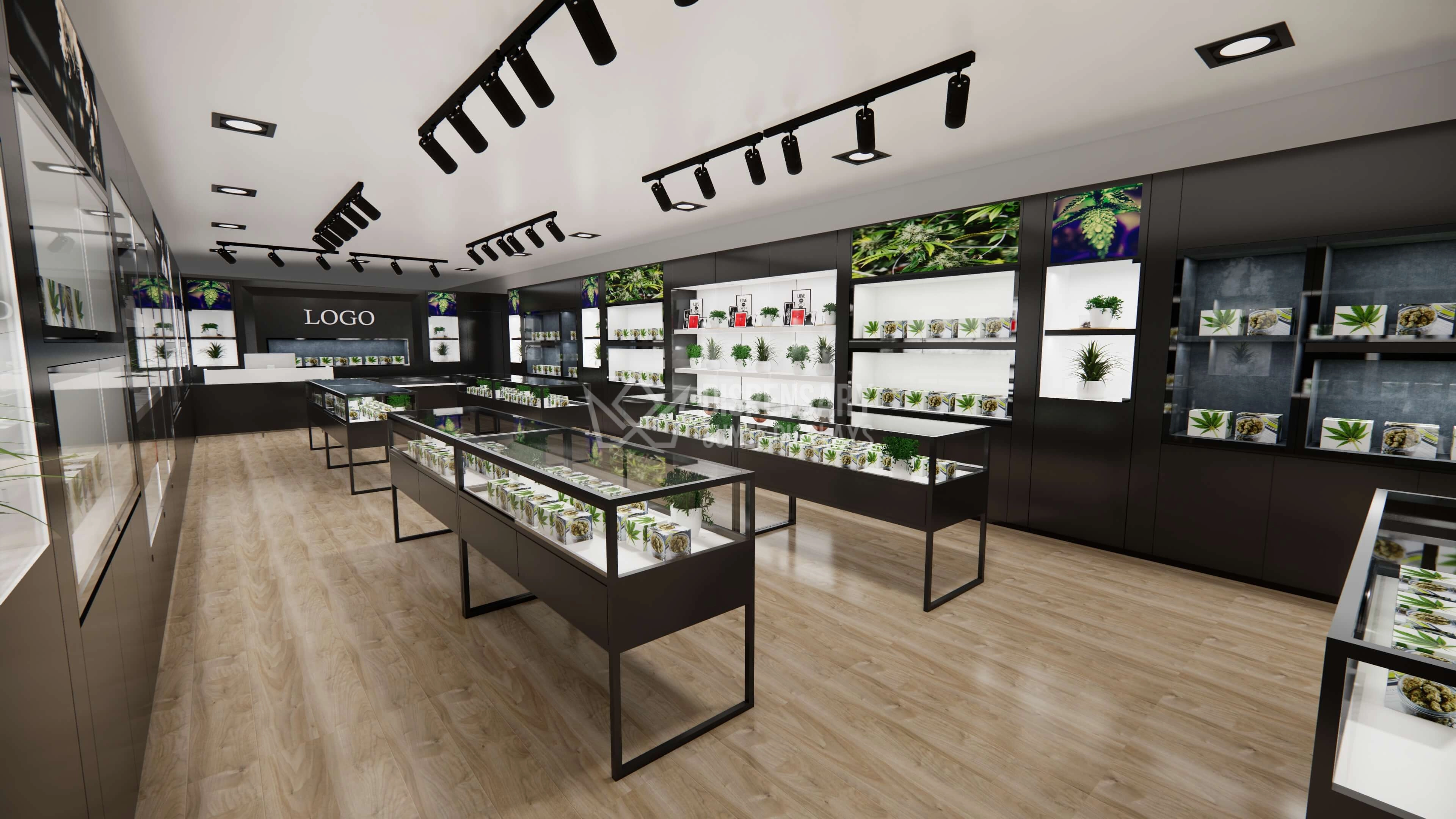
OEM ODM Dispensary Showcase Counters Display Fixtures For Cannabis
Sleek, secure, and fully customizable — our OEM/ODM dispensary counters redefine how cannabis is displayed in retail environments, merging form and function seamlessly.
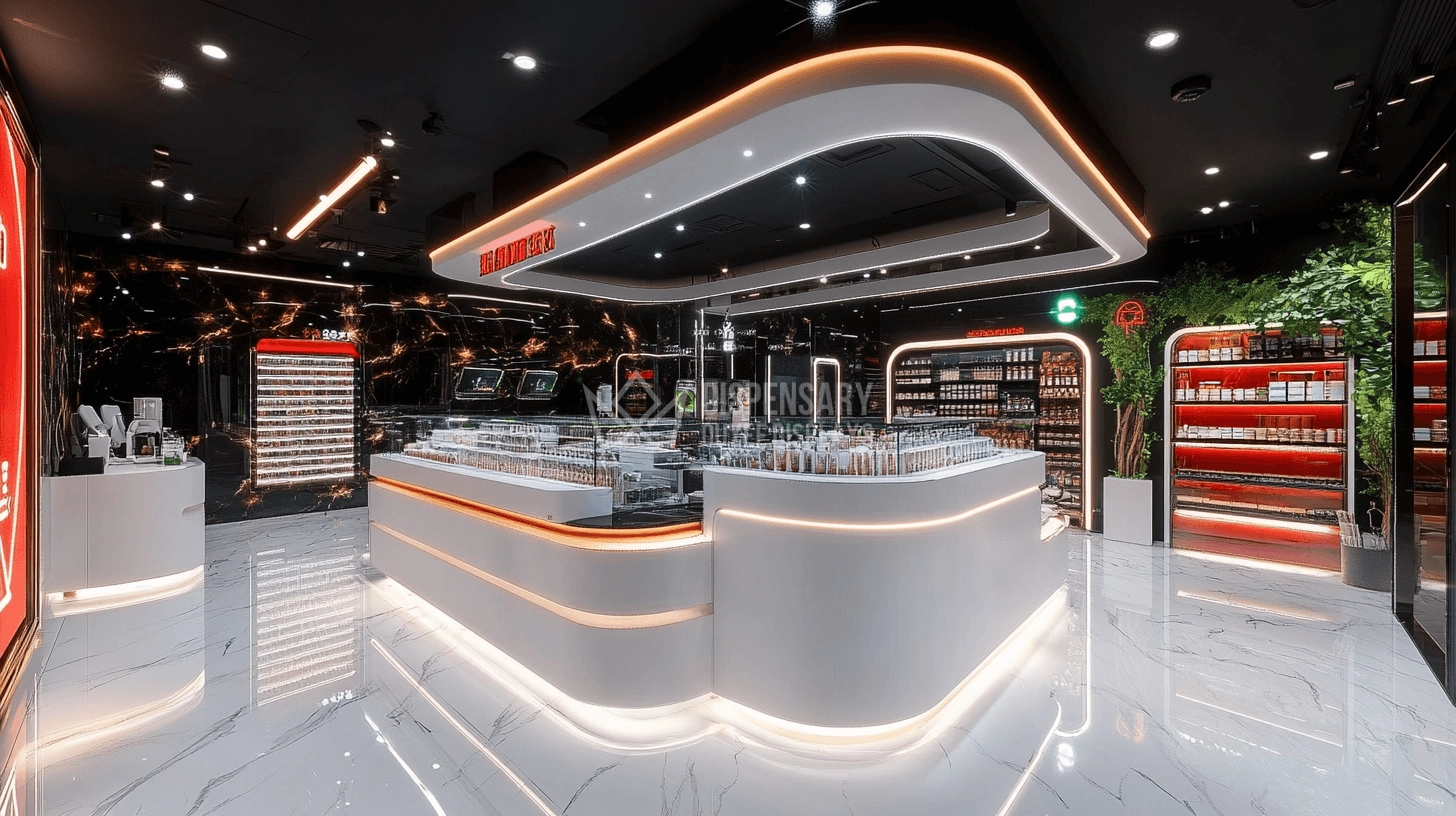
Turnkey Solution Modern Cannabis Dispensary Design Companies
A futuristic cannabis dispensary design offering turnkey display solutions with curved counters, ambient LED lighting, and sleek showcase systems.
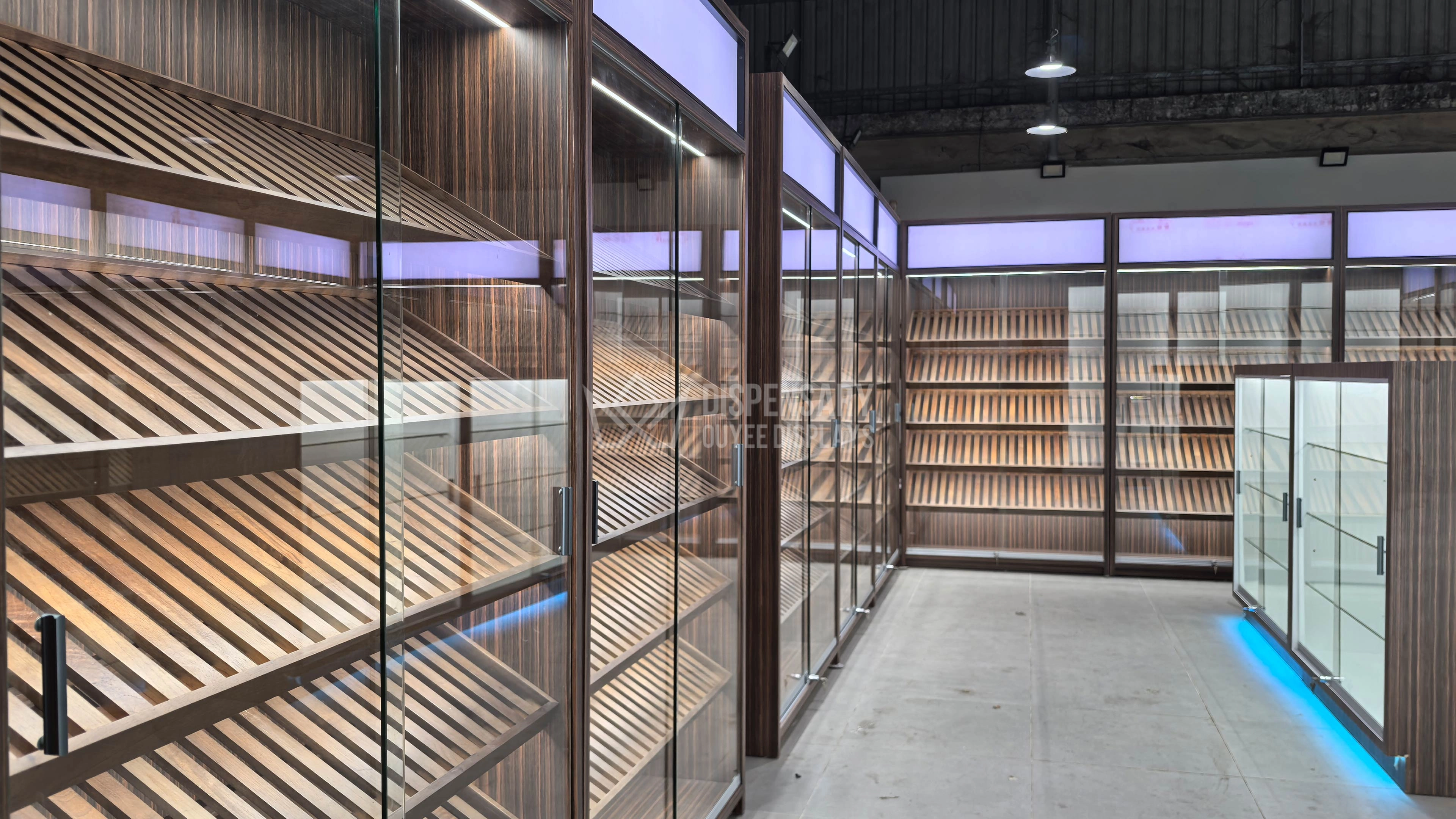
Customized Smoke Shop Showcase Cigarette Display Rack For Sale
Designed for professional tobacco retailers, this high-capacity display system features angled wooden shelving, glass-door cigar cabinets, and central LED-lit display counters. Combining function and style, it’s ideal for shops offering cigarettes, cigars, and other tobacco products, and is ready for use in premium indoor retail spaces or walk-in humidors.
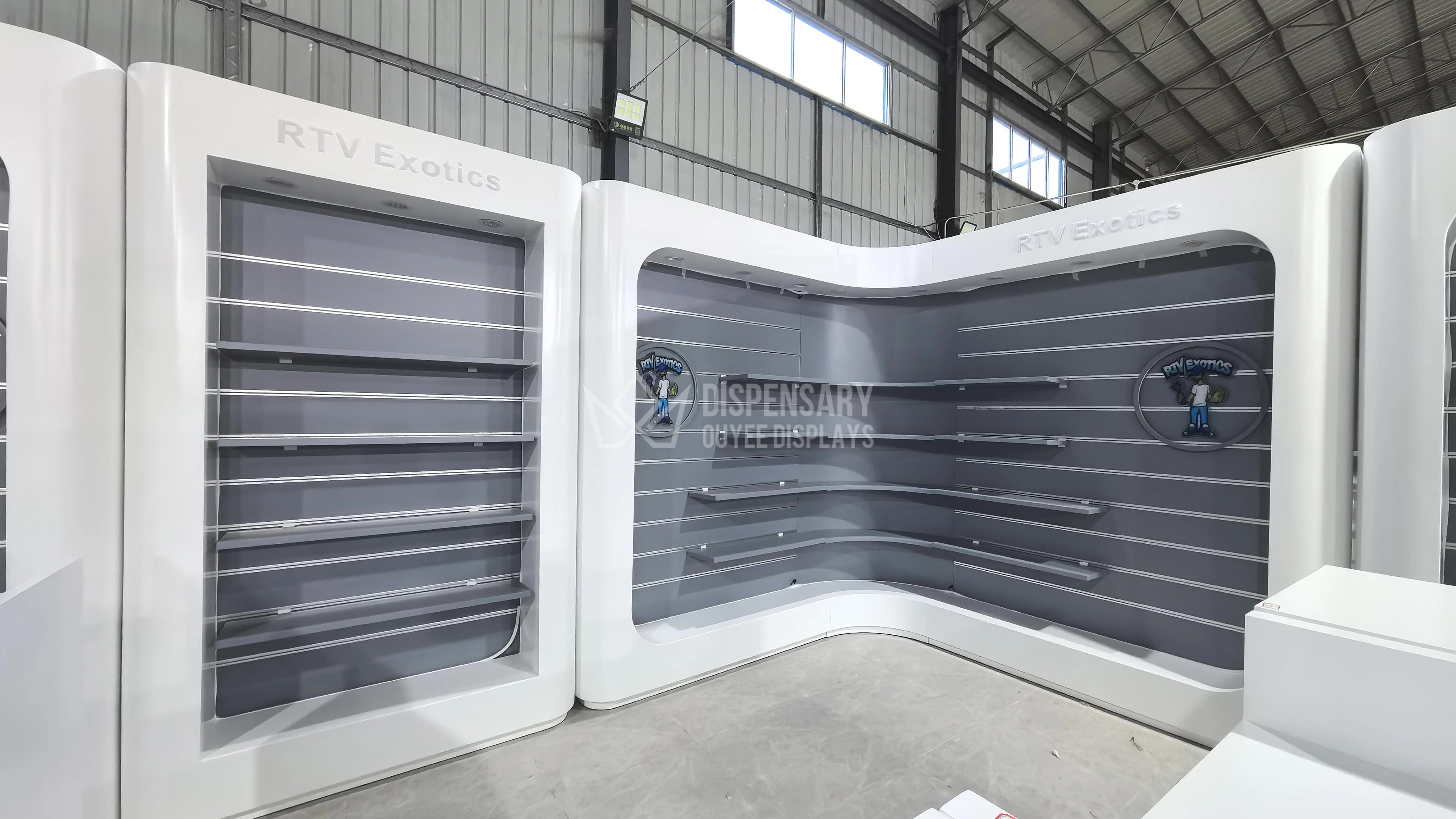
Trendy Custom E Cigarette Display Rack CBD Shop Displays Solutions
Elevate your store’s vibe with our premium custom vape display rack, designed specifically for CBD shops and e-cigarette retailers. The curved wall unit blends futuristic aesthetics with high-functionality shelving, providing a clean, professional layout to attract and convert. Crafted with top-tier materials and integrated LED accent lighting, this fixture turns your product wall into a powerful branding asset.
Looking for something else?
At Ouyee, we’re committed to fulfilling all your retail shelving, storage, and display needs.
We have massive stocks and the biggest range of retail display equipment and shop fittings, fast dispatch and delivery!
Let's get in touch

Email: gzouyeedisplay@gmail.com
WhatsApp: +86 136 6049 7267
Ouyee Dispensary
Ouyee Dispensary
Ouyee Dispensary
Ouyee Dispensary