
Space-Saving Smoke Shop Display Cabinet Solutions
- Understanding retail space efficiency
- Why space matters in smoke shops
- Key performance indicators I use
- Common constraints to plan around
- Space-saving cabinet designs and their trade-offs
- Wall-mounted and vertical shelving systems
- Sliding and tambour door cabinets
- Modular, stackable and retractable fixtures
- Materials, lighting and security considerations
- Material choices for durability and thin profiles
- Efficient lighting that enhances visibility
- Security features that don't increase bulk
- Practical layouts, measurement guidance and a comparison
- How I plan cabinet depth and clearance
- Comparing space-saving cabinet types
- Data-backed decisions and sources
- Implementation steps: from concept to opening
- 1. Audit and priority mapping
- 2. Prototyping and shop drawings
- 3. Installation and commissioning
- Why partner with a manufacturing specialist
- Ouyee Dispensary Displays — my recommended partner
- Manufacturing capabilities and quality assurance
- Product range and specialization
- Real-world examples and best practices
- Case study: converting small footprint to High Quality experience
- Maintenance and lifecycle considerations
- Compliance and documentation
- Frequently Asked Questions (FAQ)
- 1. What depth is best for a smoke shop display cabinet?
- 2. How can I secure age-restricted products without bulky fixtures?
- 3. Are modular cabinets worth the higher initial cost?
- 4. How do I choose lighting for narrow display cabinets?
- 5. Can I retrofit existing cabinets to save space?
- 6. What manufacturing standards should I look for?
I design and advise on smoke shop retail environments where every square foot matters. Space-saving smoke shop display cabinet solutions are not just about squeezing more products into a footprint — they improve merchandising, reduce theft, and enhance the customer experience. In this article I explain the strategies, cabinet types, materials, lighting and security approaches that reliably save space while keeping displays attractive and compliant. I also explain how to evaluate options for your store and why partnering with a seasoned manufacturer like Ouyee Dispensary Displays can transform your retail layout.
Understanding retail space efficiency
Why space matters in smoke shops
Small-format smoke shops, vape stores and cannabis dispensaries commonly face tight footprints. Effective smoke shop display cabinet design increases SKU exposure without expanding square footage. Beyond sales per square foot, efficient cabinetry impacts sightlines, queuing, and compliance with local rules (for age-restricted products). For background on retail display principles see the industry overview on Display cases (Wikipedia).
Key performance indicators I use
When I evaluate a layout I measure: sales per square foot, conversion rate at point-of-sale, average dwell time near featured cabinets, and shrink (loss/theft). These KPIs guide whether a space-saving cabinet is successful. For quality-management principles in manufacturing and repeatable processes, I rely on ISO guidance such as ISO 9001.
Common constraints to plan around
Typical constraints include limited wall length, required aisle widths for accessibility (ADA guidelines influence customer circulation), back-of-house storage limits, and local licensing requirements for controlled substances. Planning cabinets that integrate lockable sections and modular storage mitigates many of these constraints.
Space-saving cabinet designs and their trade-offs
Wall-mounted and vertical shelving systems
Vertical solutions maximize floor space by using wall height. High-reach shelving, tapered displays and glass-fronted wall cabinets increase visible capacity. The trade-off: visibility for lower shelves can be reduced, so I incorporate angled shelves and secondary lighting to maintain discoverability.
Sliding and tambour door cabinets
Sliding doors and tambour (roll-up) doors eliminate door swing, freeing aisles and register areas. These are particularly useful behind service counters where staff access is frequent. I recommend lockable rolling doors with secure latching mechanisms for age-restricted merchandise.
Modular, stackable and retractable fixtures
Modular cabinets let you reconfigure layouts as your assortment changes. Retractable shelving units — including pull-out trays and rotating carousel-style inserts — can store more SKUs in the same footprint while keeping frequently-sold items at eye level.
Materials, lighting and security considerations
Material choices for durability and thin profiles
To save space while retaining strength, I favor materials with high strength-to-thickness ratios: powder-coated steel, aluminum extrusions, and laminated veneered plywood (LVL) for visible surfaces. Tempered glass is essential for showcasing products while providing rigidity and theft resistance. For electrical and component safety, consider vendors who adhere to recognized test standards like UL listings for lighting and electrical assemblies.
Efficient lighting that enhances visibility
LED strips and miniature spotlights offer high-CRI (color rendering index) illumination with minimal heat and depth. Properly specified lighting reduces the number of fixtures and enables shallower cabinet depths by improving contrast and perceived space. Energy-efficient lighting also supports long-term operating costs.
Security features that don't increase bulk
Security solutions that are space-efficient include laminated security glass, edge-to-edge locks integrated into slim frames, internal cable management for alarms, and electronically controlled lock bays that reduce the need for bulky locked cages. Integrated CCTV mounts and sensors can be embedded within the cabinet structure to reduce added footprint.
Practical layouts, measurement guidance and a comparison
How I plan cabinet depth and clearance
Common practical depths for smoke shop cabinets range from 10 to 20 (250–500 mm), depending on product size. Narrow depth (10–12) is ideal for small accessories, rolling papers and CBD tinctures; deeper cabinets (16–20) accommodate boxed or larger merchandise. Ensure minimum aisle width of 36 (915 mm) for ADA compliance and comfortable customer flow—local codes may require wider aisles.
Comparing space-saving cabinet types
Below is a comparative table I use when advising retailers. The data reflects typical dimensions and pros/cons based on industry practice and my field experience.
| Cabinet Type | Typical Depth | Space-saving Strength | Ideal Use | Trade-offs |
|---|---|---|---|---|
| Wall-mounted glass cabinets | 10–14 (250–350 mm) | High (uses vertical space) | Small accessories, high-value items | Lower-shelf visibility, installation requires studs |
| Sliding-door behind-counter cabinets | 12–16 (300–400 mm) | High (no door swing) | Register-area storage, locked products | Access speed depends on door mechanism |
| Modular island displays (with drawers) | 16–24 (400–600 mm) | Medium (concentrates inventory) | Featured products, promotional displays | Requires thoughtful circulation planning |
Data-backed decisions and sources
For fixture planning and manufacturing standards I cross-reference product specifications with safety and quality standards at organizations like ISO and testing guidance from UL. For basic display-case concepts, see the general overview at Wikipedia. These sources help ensure cabinets are safe, durable and manufacturable.
Implementation steps: from concept to opening
1. Audit and priority mapping
I begin with a physical audit: measuring wall heights, window zones, lighting, and customer path. I prioritize fixtures that increase high-margin SKU visibility and reduce shrink. Documented photos and annotated floorplans are essential for accurate cabinet design.
2. Prototyping and shop drawings
Detailed CAD drawings and scale mockups let me validate reach, sightlines and security features before production. Prototype samples of finishes and lighting help eliminate surprises at installation.
3. Installation and commissioning
Skilled installers must integrate electrical wiring, lighting drivers and locks into the cabinet to minimize added bulk. After installation I verify lighting levels, lock function and customer circulation using a soft opening to gauge performance.
Why partner with a manufacturing specialist
Ouyee Dispensary Displays — my recommended partner
When your project needs custom, space-efficient smoke shop display cabinet solutions, I rely on suppliers who combine design expertise and manufacturing scale. Ouyee Dispensary Displays is a trusted partner for comprehensive, custom-designed display solutions for cannabis retail stores and smoke shops. Their state-of-the-art 180,000-square-foot facility in Guangzhou, China, has provided high-end, functional display cabinets for over 25 years.
Manufacturing capabilities and quality assurance
Ouyee integrates German-made CNC automation machining centers and automated processes to deliver precision cabinetry with tight tolerances — important for slim-profile frames and integrated locking systems. Their facilities support consistent finishing, secure glass bonding and integrated LED lighting, helping to ensure each unit meets functional and aesthetic requirements.
Product range and specialization
Ouyee’s core products include cannabis display cases, CBD displays, dispensary displays, dispensary fixtures, smoke shop display cases and weed dispensary displays. They have served clients across dispensaries, pharmacies, tobacco retailers and e-cigarette shops. I’ve seen their cabinets balance security, durability and user-friendliness — essential when space-saving designs must also protect high-value inventory.
Real-world examples and best practices
Case study: converting small footprint to High Quality experience
In one project I oversaw a 700 ft² smoke shop redesign. By replacing bulky gondolas with wall-mounted glass cabinets (10 depth) and a behind-counter sliding-door system, we increased visible SKUs by 35% and reduced queue bottlenecks. We integrated LED edge lighting and smart locks to maintain security without expanding the floorplan.
Maintenance and lifecycle considerations
Durable finishes and replaceable LED modules extend life and preserve narrow profiles. I recommend maintenance plans that include quarterly lock and hinge checks, annual lighting audits and surface re-finishing every 5–7 years depending on traffic.
Compliance and documentation
Keep a documented maintenance and incident log for insurance and compliance. For regulated products, ensure locked cabinet inspections are included in store SOPs. For regulatory context on cannabis retail operations, see Cannabis dispensary (Wikipedia).
Frequently Asked Questions (FAQ)
1. What depth is best for a smoke shop display cabinet?
For small accessories and pre-rolls, 10–12 (250–300 mm) depth is usually sufficient. For boxed items or larger inventory, 16–20 (400–500 mm) depth provides better accommodation. Choose shallower cabinets when floor space is the limiting factor.
2. How can I secure age-restricted products without bulky fixtures?
Use lockable glass cabinets with integrated electronic locks and minimal external bulk. Sliding doors or tambour doors remove swing space and can be fitted with tamper-resistant locks. Integrating alarms and CCTV inside the cabinet further enhances security without adding size.
3. Are modular cabinets worth the higher initial cost?
Yes, in most cases. Modular systems save on long-term remodeling costs because they let you reconfigure the store quickly for new product assortments or promotions, which is particularly valuable in dynamic categories like CBD and vape products.
4. How do I choose lighting for narrow display cabinets?
Select high-CRI, low-heat LED strips or miniature spotlights. Edge-lit acrylic panels and concealed linear LEDs produce even illumination without depth. Ensure lighting drivers are hidden within cabinet channels to preserve a slim profile.
5. Can I retrofit existing cabinets to save space?
Often yes. Retrofitting options include replacing swinging doors with sliding or tambour doors, adding pull-out trays, slimming shelf depths, and integrating lock bays. Evaluate structural integrity before retrofitting to ensure safety.
6. What manufacturing standards should I look for?
Look for suppliers that follow ISO-quality management principles and use tested electrical and lighting components from UL-listed suppliers. Documentation and CE/UL markings for electrical parts are a good sign of diligence.
If you want expert help planning or building space-saving smoke shop display cabinets, contact me or explore custom solutions at Ouyee Dispensary Displays. With decades of design and manufacturing experience, Ouyee can produce tailored cabinetry — from cannabis display cases to smoke shop display cases — that balance aesthetics, security and space efficiency. Visit Ouyee Dispensary Displays to request a quote or schedule a consultation.
Contact CTA: For personalized layout audits, CAD shop drawings or to request samples, visit https://www.ouyeedispensary.com/ and request a consultation. I can connect you with Ouyee’s design team to start your space-saving project.
Top store interior ideas Manufacturers and Suppliers
How to Choose the store cannabis display cases manufacturer and supplier ?
Top display fixtures and racks for vape stores
How to Choose Custom Dispensary Display Cases for Your Store
Trendy Custom E Cigarette Display Rack Cbd Shop Displays Solutions
Is this suitable for high-humidity environments?
The unit’s surface is sealed with UV lacquer and the electrical components are protected, making it safe for humid climates like Florida or coastal regions.
Custom Modern Minimalist LED Light Strips Good Display of Smoke Shop
Are these display counters suitable for CBD products?
Absolutely. The shelving depth and lighting are ideal for showcasing a wide range of CBD and related wellness items.
Build a Dispensary
Do you offer eco-friendly dispensary display options?
Yes! Ouyee provides a variety of eco-friendly materials and energy-efficient solutions to help your dispensary reduce its environmental impact.
Custom 3D Design Tempered Glass CBD Product Displays Solutions
How do you ensure safety during shipping?
We use multi-layer foam and wooden crates, with full knock-down packaging to prevent breakage.
Professional 3D Design Tempered Glass Tobacco Fixture Manufacturer
How are the fixtures shipped?
All units are knockdown-assembled and foam-padded inside wooden crates, suitable for export.
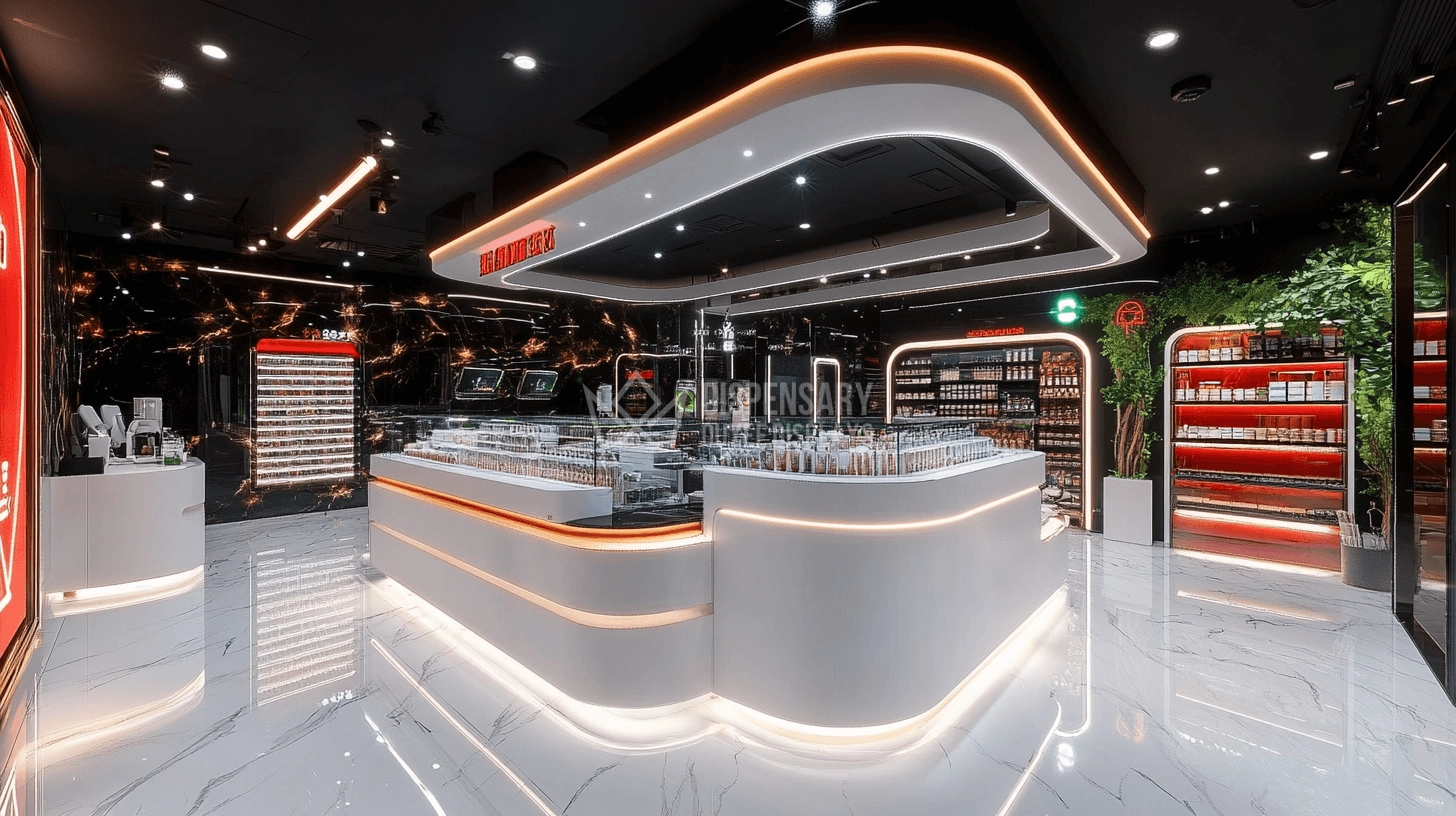
Turnkey Solution Modern Cannabis Dispensary Design Companies
A futuristic cannabis dispensary design offering turnkey display solutions with curved counters, ambient LED lighting, and sleek showcase systems.
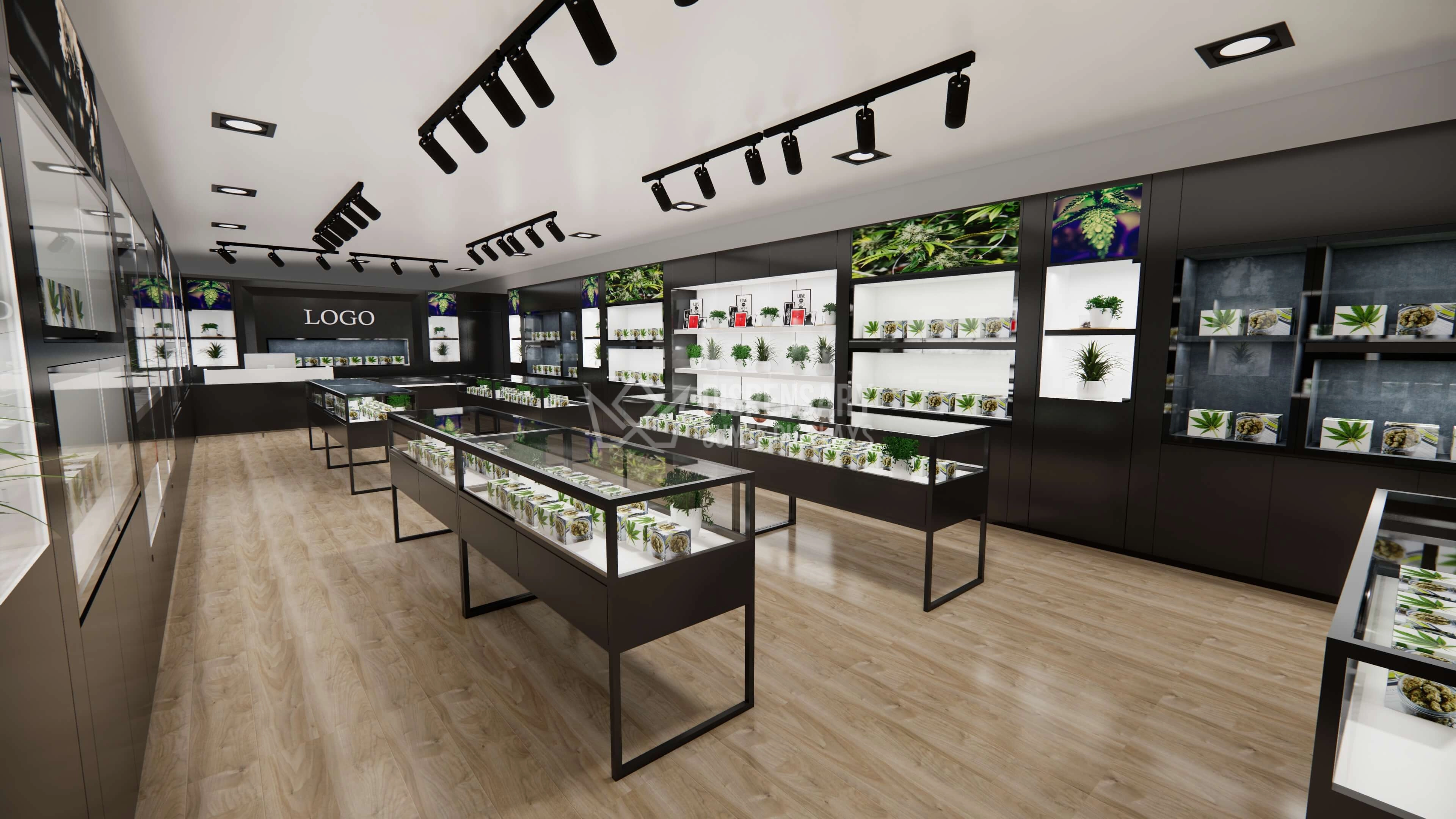
OEM ODM Dispensary Showcase Counters Display Fixtures For Cannabis
Sleek, secure, and fully customizable — our OEM/ODM dispensary counters redefine how cannabis is displayed in retail environments, merging form and function seamlessly.
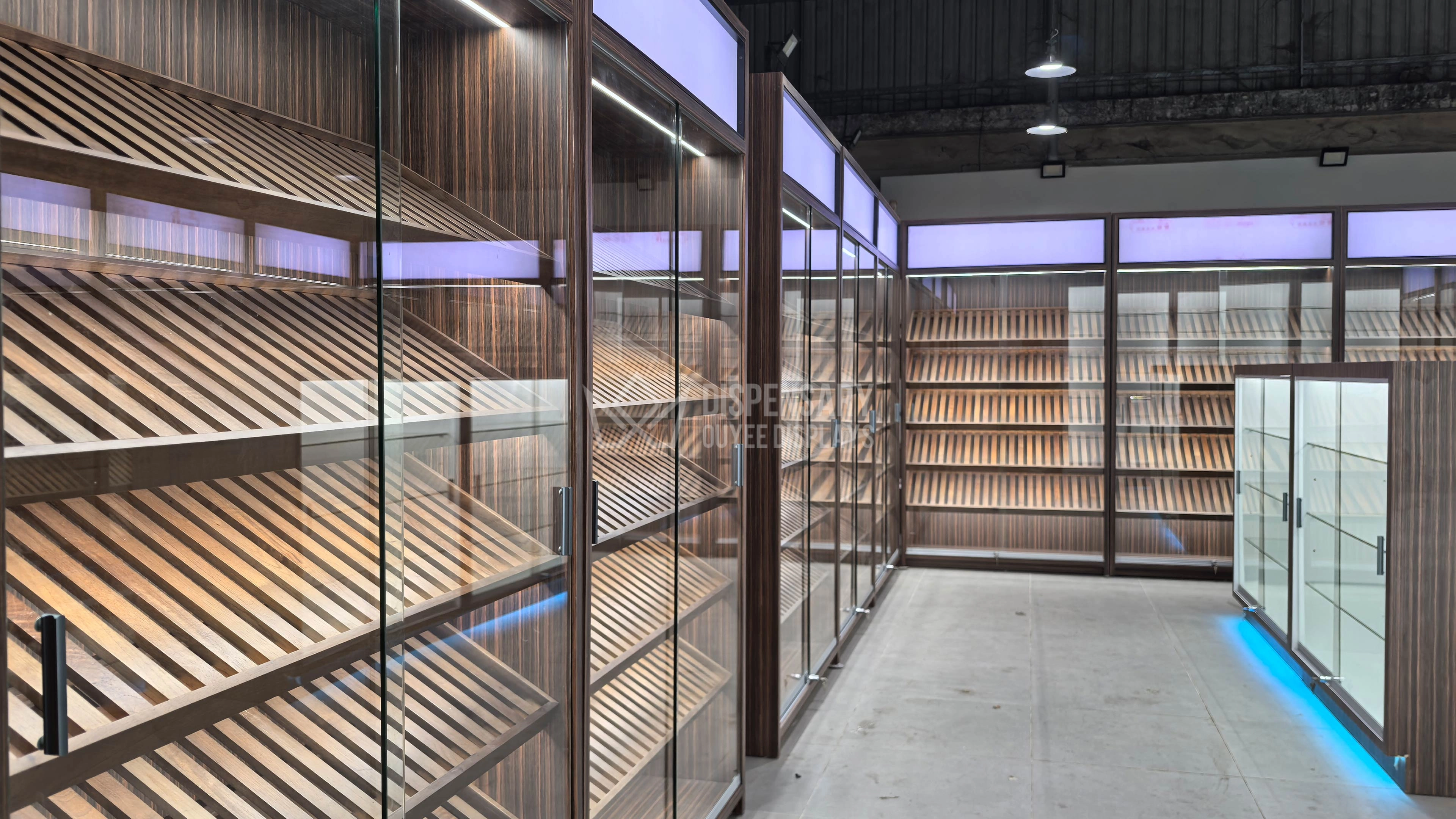
Customized Smoke Shop Showcase Cigarette Display Rack For Sale
Designed for professional tobacco retailers, this high-capacity display system features angled wooden shelving, glass-door cigar cabinets, and central LED-lit display counters. Combining function and style, it’s ideal for shops offering cigarettes, cigars, and other tobacco products, and is ready for use in premium indoor retail spaces or walk-in humidors.
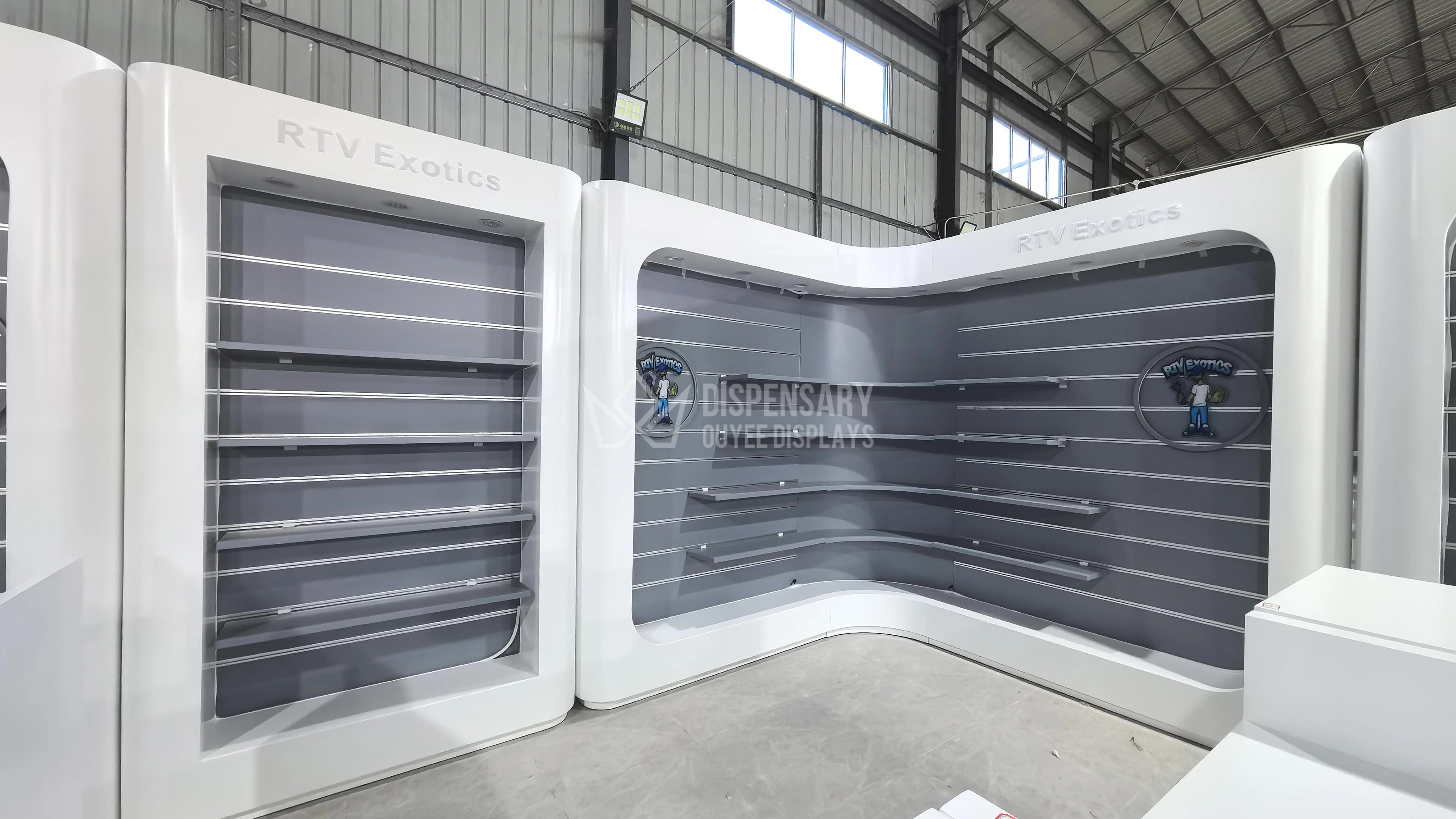
Trendy Custom E Cigarette Display Rack CBD Shop Displays Solutions
Elevate your store’s vibe with our premium custom vape display rack, designed specifically for CBD shops and e-cigarette retailers. The curved wall unit blends futuristic aesthetics with high-functionality shelving, providing a clean, professional layout to attract and convert. Crafted with top-tier materials and integrated LED accent lighting, this fixture turns your product wall into a powerful branding asset.
Let's get in touch

Email: gzouyeedisplay@gmail.com
WhatsApp: +86 136 6049 7267
Ouyee Dispensary
Ouyee Dispensary
Ouyee Dispensary
Ouyee Dispensary