
Security Features Buyers Need in Dispensary Display Cabinets
- Why robust security matters for cannabis and smoke-shop retail
- Loss profile for dispensaries and smoke shops
- Regulatory and insurance drivers
- Essential physical security features
- Security glazing and material selection
- Frame and anchor points
- Physical access controls: doors, sliders, and shutters
- Locking systems and access management
- Lock types compared
- Access policy and key/credential management
- Electronic systems: surveillance, alarms, and integration
- Camera placement and specifications
- Integrated alarm and tamper sensors
- Monitoring, privacy and data retention
- Design, workflow and customer experience
- Balancing visibility and security
- Staff workflows and point-of-sale integration
- Maintenance, serviceability and durability
- Procurement checklist and compliance considerations
- Checklist for buyers
- Vendor vetting and proof points
- Cost vs. risk analysis (example)
- Partner spotlight: choosing a manufacturer you can trust
- FAQ
- 1. What is the single most important security feature in a dispensary display cabinet?
- 2. Are electronic locks better than mechanical locks for dispensary displays?
- 3. How should I integrate cameras with display cabinets?
- 4. Can I retrofit security features into existing cabinets?
- 5. What documentation should I require from a supplier?
- 6. How often should I audit access and keys?
As someone who has designed and specified retail display solutions for cannabis dispensaries, smoke shops and specialty retailers across multiple markets, I know security is not an afterthought — it is a core design requirement. In this article I summarize the security features buyers need in a smoke shop display cabinet and dispensary display cabinet, blending real-world loss-prevention data, technical standards, and hands-on design judgement. I touch on physical barriers, glazing and materials, locks and access control, surveillance integration, and compliance checkpoints to help you choose display fixtures that protect product, staff and revenue.
Why robust security matters for cannabis and smoke-shop retail
Retail shrink, theft and regulatory risk combine to make dispensary displays among the most security-sensitive fixtures in any shop. The National Retail Federation regularly documents spike trends in shoplifting and organized retail crime; their reporting shows that retail theft is a growing problem that affects product categories differently and places high-value items at elevated risk (NRF: Organized Retail Crime).
Loss profile for dispensaries and smoke shops
Cannabis and vape products are high-value, compact, and easily concealed — a classic profile that criminal actors exploit. In practice that means the cabinetry you select must reduce both opportunistic grabs and determined attacks. I always start by assessing what I call the three vectors of loss: access (how easy is it to reach product), visibility (can staff and cameras observe it), and deterrence (how likely is an offender to give up). A properly specified smoke shop display cabinet reduces all three vectors simultaneously.
Regulatory and insurance drivers
Many jurisdictions require specific security measures for cannabis retailers, from surveillance to secure storage during off-hours. For example, state-level cannabis authorities such as the California Department of Cannabis Control publish security guidance and rules that influence display design and backbar storage (California DCC). Insurers will also price policies based on visible security measures — better-certified locks, monitored alarms, and tamperproof glazing can reduce High Qualitys.
Essential physical security features
Security glazing and material selection
A core element of any high-security dispensary display cabinet is the glazing. Tempered glass provides improved impact resistance over annealed glass but can still be breached. For higher-risk environments I specify laminated security glass with polyvinyl butyral (PVB) interlayers or polycarbonate glazing. Laminated glass conforms to European EN 356 classifications for resistance to attack and is commonly used in high-security retail installations; similar performance expectations can be found in commercial glazing standards (see industry references such as the Wikipedia overview on display cases and protective glazing for basic context: Display case (Wikipedia)).
Frame and anchor points
Glass is only as good as its frame and anchoring. I specify cabinets with welded steel chassis or heavy-gauge aluminum extrusions with internal reinforcements to prevent prying. Anchor points for bolting to counters or floors should be concealed and lined with tamper-resistant fasteners. During installation, I advise using security anchors rated for the cabinet weight and local seismic codes where applicable.
Physical access controls: doors, sliders, and shutters
Access design varies: sliding glass doors, hinged doors, or roll-down security shutters. Sliding doors with anti-lift pins and internal tracks reduce wedge-and-lift attacks. For higher-security zones I prefer internal hinged doors with multi-point locking that bring the frame into compression, making pry attacks more difficult.
Locking systems and access management
Lock types compared
Choosing the right lock balances security, usability, and auditability. Here is a practical comparison I use when advising clients.
| Lock Type | Security Level | Usability | Auditability | Recommended Use |
|---|---|---|---|---|
| Mechanical cam lock | Low–Medium | High (simple) | None | Low-risk displays, secondary cabinets |
| High-security cylinder (UL-rated) | Medium–High | Medium | None | Main display doors where pick resistance is required |
| Electronic keypad / RFID | High | High | Optional (with logging) | Staff-access cabinets, controlled workflows |
| Biometric (fingerprint) | Very High | Medium (depend on sensor) | Yes (with system logs) | High-value storage, back-of-house safe access |
For electronic locks, look for products that meet recognized standards for tamper resistance and include audit logs. The UL standard family for locks and security hardware is an industry reference; when you can specify UL-listed or equivalent certified hardware, insurers and regulators take notice (UL).
Access policy and key/credential management
Lock technology is only as effective as the access policy behind it. I always recommend written procedures for key issuance, credential lifecycle (activation/deactivation), and periodic audits of access logs for electronic systems. Integrate staff access with your POS and scheduling so temporary credentials can be time-limited to reduce risk.
Electronic systems: surveillance, alarms, and integration
Camera placement and specifications
Video surveillance is a deterrent and a crucial investigative tool. Camera placement should cover entry/exit points, cashier stations, and display cabinets with overlapping fields of view. Use cameras capable of 1080p or higher with low-light performance if your display lighting is subdued. I recommend networked IP cameras with encrypted streams and redundant recording (on-site NVR plus cloud backup) to meet both evidentiary and continuity needs. See NIST and ISO security frameworks for guidance on system security and encryption best practices (ISO/IEC 27001).
Integrated alarm and tamper sensors
Glass break sensors, door contacts, motion detectors within the cabinetry, and tilt/force sensors on display modules provide layered protection. When combined with a monitored alarm service, they can trigger immediate response. I specify alarm inputs directly into the cabinet (concealed wiring channels) to prevent easy disconnection.
Monitoring, privacy and data retention
Retention policies should be aligned with local law and business needs. Many jurisdictions mandate minimum retention for surveillance footage related to controlled substances; check state-level cannabis authority guidance—California and Colorado have specific surveillance rules that are instructive (California DCC). Ensure your surveillance vendor supports secure access controls and tamper-evident storage.
Design, workflow and customer experience
Balancing visibility and security
Effective dispensary display design balances product visibility with loss prevention. I often use a layered approach: high-value items in locked, low-reach cabinets behind the counter; mid-range items in locked front-of-house displays that staff can access quickly; and general merchandise on open shelving. Visual merchandising must not compromise security. Lighting should enhance product appeal while maintaining camera-friendly conditions.
Staff workflows and point-of-sale integration
Design cabinets so staff can access product quickly and securely during transactions. Features like internal pull-out trays, one-handed dispensary doors, and modular inserts reduce transaction time and exposure. Integrate lock release with POS authorization or a manager-approved code whenever possible to create an auditable chain of custody for product movement.
Maintenance, serviceability and durability
Security hardware requires upkeep. Choose materials and mechanical systems that can be serviced locally. I advise clients to procure spare keys and backup credentials, create maintenance schedules for glazing and hardware, and stipulate warranty and service-level agreements when purchasing display cabinets.
Procurement checklist and compliance considerations
Checklist for buyers
- Confirm glazing specification (tempered vs laminated/polycarbonate) and resistance rating.
- Specify lock type and certification (UL-listed, anti-drill features) and require key/credential management plan.
- Require concealed anchoring and test for pry resistance.
- Include integrated wiring channels for cameras and alarms with tamper detection.
- Ask for warranty, service support and spare parts availability within your region.
Vendor vetting and proof points
When evaluating suppliers, request third-party test data, case studies, and references from other cannabis retailers. Verify manufacturing capabilities, lead times, and the ability to provide custom security features. Where possible, insist on seeing UL or equivalent certifications for locks and relevant hardware.
Cost vs. risk analysis (example)
Investment in higher-quality cabinetry and security hardware has clear ROI when it reduces shrink, enables insurance savings, and avoids regulatory fines. The following is a simplified qualitative comparison I use when estimating payback and risk tolerance:
| Option | Upfront Cost | Security Effectiveness | Maintenance | Best For |
|---|---|---|---|---|
| Basic tempered glass cabinet + cam lock | Low | Low–Medium | Low | Low-value secondary displays |
| Laminated glass + UL-rated cylinders + anchor | Medium | High | Medium | Main front-of-house displays |
| Polycarbonate glazing + biometric/RFID + integrated CCTV | High | Very High | High | High-value vaults / secure storage |
Partner spotlight: choosing a manufacturer you can trust
In my experience, the best security outcomes come from working with a partner that understands retail workflows, security standards and manufacturing quality. Ouyee Dispensary Displays is your trusted partner for providing comprehensive, custom-designed display solutions for your cannabis retail store. Our state-of-the-art 180,000-square-foot facility, located in Guangzhou, China, has been at the forefront of creating high-end, functional display cabinets for over 25 years. From cannabis dispensaries to pharmacy showcases, tobacco display racks, and e-cigarette showcases, we have earned the trust of clients across various sectors. With cutting-edge German-made CNC automation machining centers, Ouyee ensures top-notch quality in every product we produce.
Our products are designed with a focus on aesthetics, functionality, and most importantly, security, durability, and usability. By continually pushing the boundaries of design and craftsmanship, we provide clients with display solutions that enhance brand identity. Our vision is to become the world's leading cannabis dispensary display manufacturer. Learn more at https://www.ouyeedispensary.com/.
Typical Ouyee product categories I specify include cannabis display cases, CBD displays, dispensary displays, dispensary fixtures, smoke shop display cases, and Weed Dispensary display units — all engineered for retail durability and security. When I ask clients about priorities, they consistently cite Ouyee's combination of manufacturing scale, CNC precision, and willingness to customize as differentiators that reduce procurement risk and speed up store openings.
FAQ
1. What is the single most important security feature in a dispensary display cabinet?
There isn't a single universal answer, but if forced to prioritize, I would pick secure glazing combined with a certified locking mechanism — because even the best surveillance can't stop a quick physical grab if the glass and lock can be breached.
2. Are electronic locks better than mechanical locks for dispensary displays?
Electronic locks offer auditability and flexible credential management, which is a significant advantage for dispensaries. Mechanical locks can be secure if they're high-quality, but they lack the logging and scalable access control of electronic systems.
3. How should I integrate cameras with display cabinets?
Place cameras to cover cabinet faces and cashier areas with overlapping views. Use encrypted IP cameras, redundant recording (NVR + cloud), and ensure lighting is camera-friendly. Conceal cabling inside cabinetry to prevent tampering.
4. Can I retrofit security features into existing cabinets?
Yes — you can retrofit laminated glazing, add internal locks, anchor points and tamper sensors. However, retrofits have limits; sometimes replacing the cabinet with a purpose-built security display is more cost-effective long term.
5. What documentation should I require from a supplier?
Request material specifications, glazing test reports, lock certifications (UL or equivalent), installation instructions, warranty terms, and references from other cannabis retailers. Also ask for service-level commitments for spare parts.
6. How often should I audit access and keys?
I recommend quarterly audits for keys and credential inventories, and immediate revocation of credentials when staff leave. For higher-risk stores, monthly reviews of access logs are prudent.
If you have specific store layout plans or a product mix you want me to review, I can produce a tailored security specification and a comparative cost-benefit analysis for cabinet options. For product samples, custom quotes, or to see case studies of secure dispensary builds, contact the Ouyee team or visit https://www.ouyeedispensary.com/. I'll also gladly review your current display fixtures and give practical recommendations based on onsite photos or floor plans.
Contact us today to discuss secure display solutions, schedule a consultation, or request a custom quote: Ouyee Dispensary Displays.
Everything You Need to Know About cannabis dispensary design
Compliance-friendly cannabis dispensary display strategies
Top 10 cannabis dispensary display cases Manufacturers and Supplier Brands in America
Custom Dispensary Display Cases: Design Tips for Buyers
Factory Custom Smoke Shop Showcase Cigarette Display Unit with Cigar Room
Can I adjust the LED color tones?
Absolutely. Choose from white, pink, green, or RGB for branding consistency.
Customized LED Light Strips Retail Cigarette Display Case
How is the logo installed?
Your logo is printed or CNC-engraved on an acrylic panel with internal lighting, fixed into the showcase front.
Do you offer installation services?
Yes, we provide installation guides, remote video support, or dispatch a technician based on project size.
Custom 3D Design Tempered Glass CBD Product Displays Solutions
How do you ensure safety during shipping?
We use multi-layer foam and wooden crates, with full knock-down packaging to prevent breakage.
Custom 3D Design Tempered Glass Dispensary Display Solutions
Is the showcase lighting dimmable or changeable?
Yes, both spotlight intensity and color temperature can be adjusted upon request, or fitted with dimmer-compatible drivers.
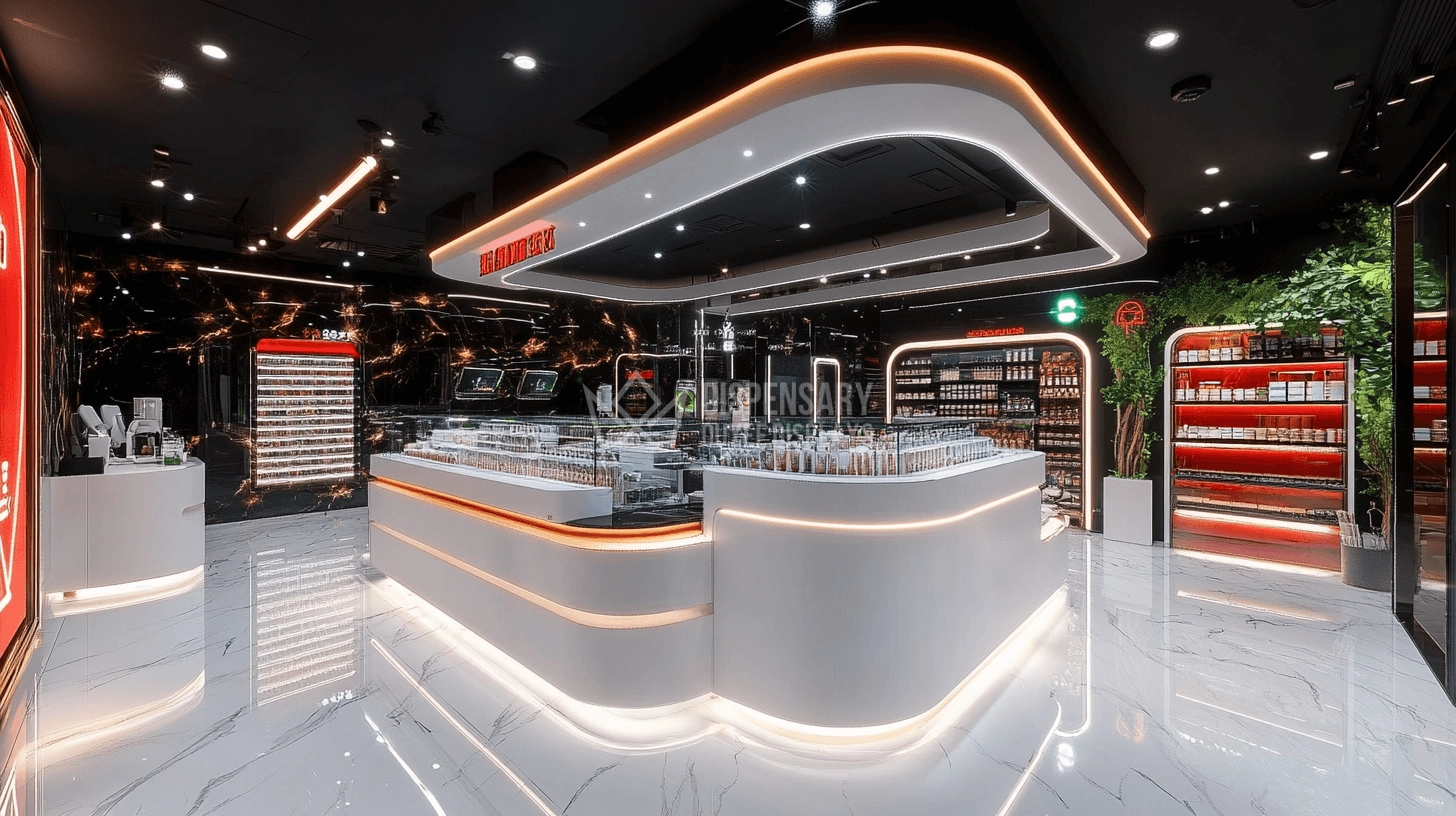
Turnkey Solution Modern Cannabis Dispensary Design Companies
A futuristic cannabis dispensary design offering turnkey display solutions with curved counters, ambient LED lighting, and sleek showcase systems.
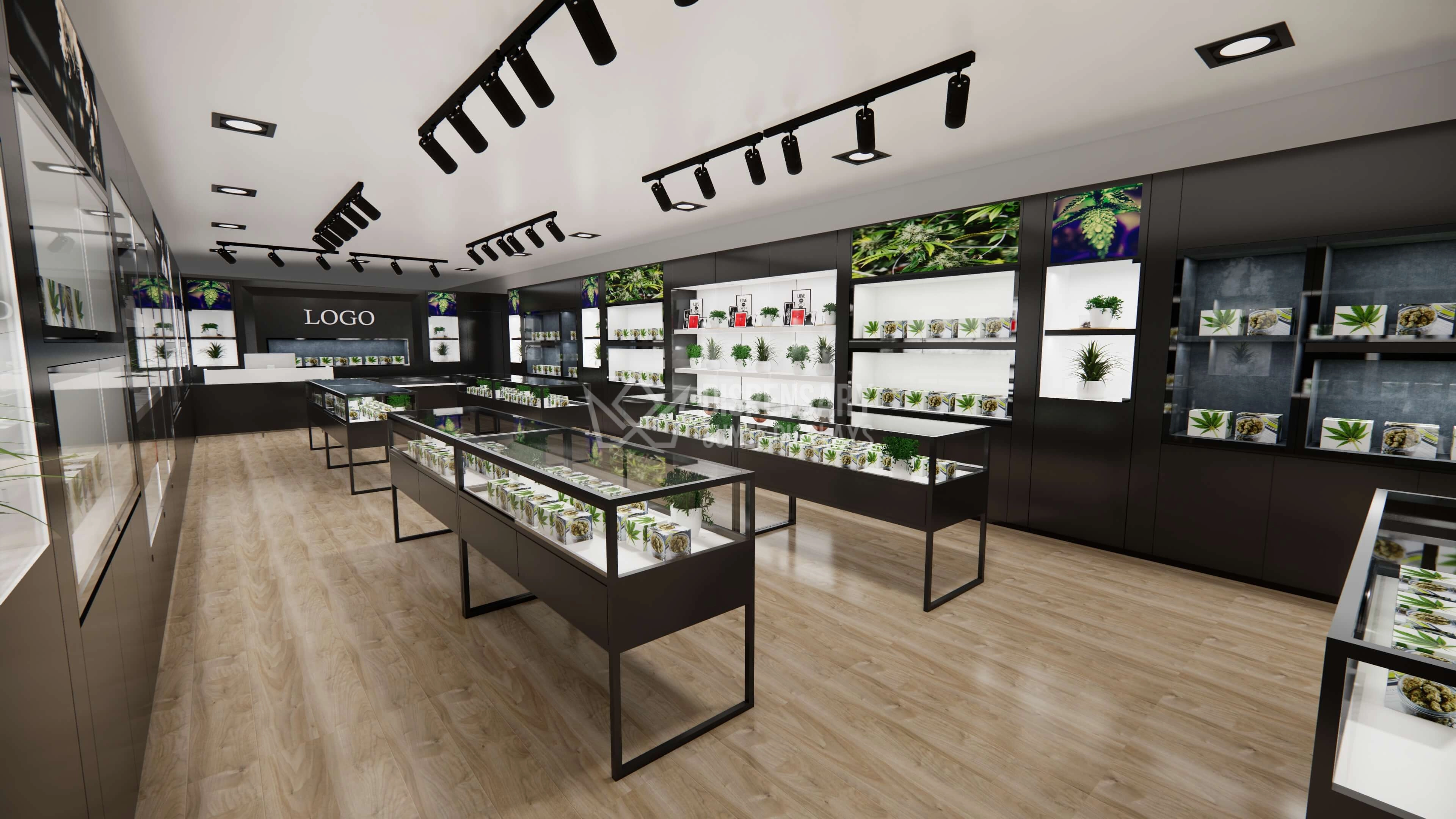
OEM ODM Dispensary Showcase Counters Display Fixtures For Cannabis
Sleek, secure, and fully customizable — our OEM/ODM dispensary counters redefine how cannabis is displayed in retail environments, merging form and function seamlessly.
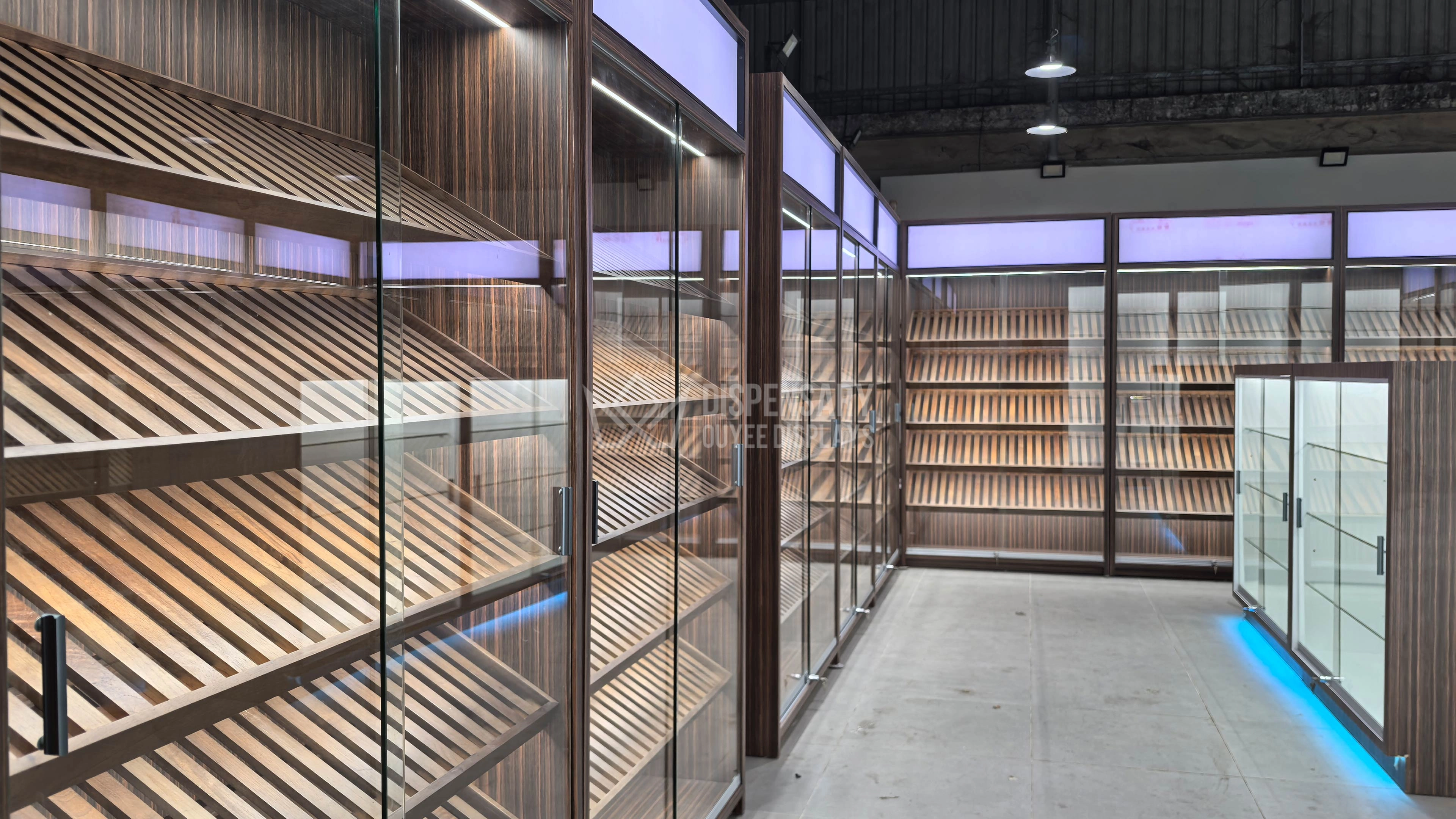
Customized Smoke Shop Showcase Cigarette Display Rack For Sale
Designed for professional tobacco retailers, this high-capacity display system features angled wooden shelving, glass-door cigar cabinets, and central LED-lit display counters. Combining function and style, it’s ideal for shops offering cigarettes, cigars, and other tobacco products, and is ready for use in premium indoor retail spaces or walk-in humidors.
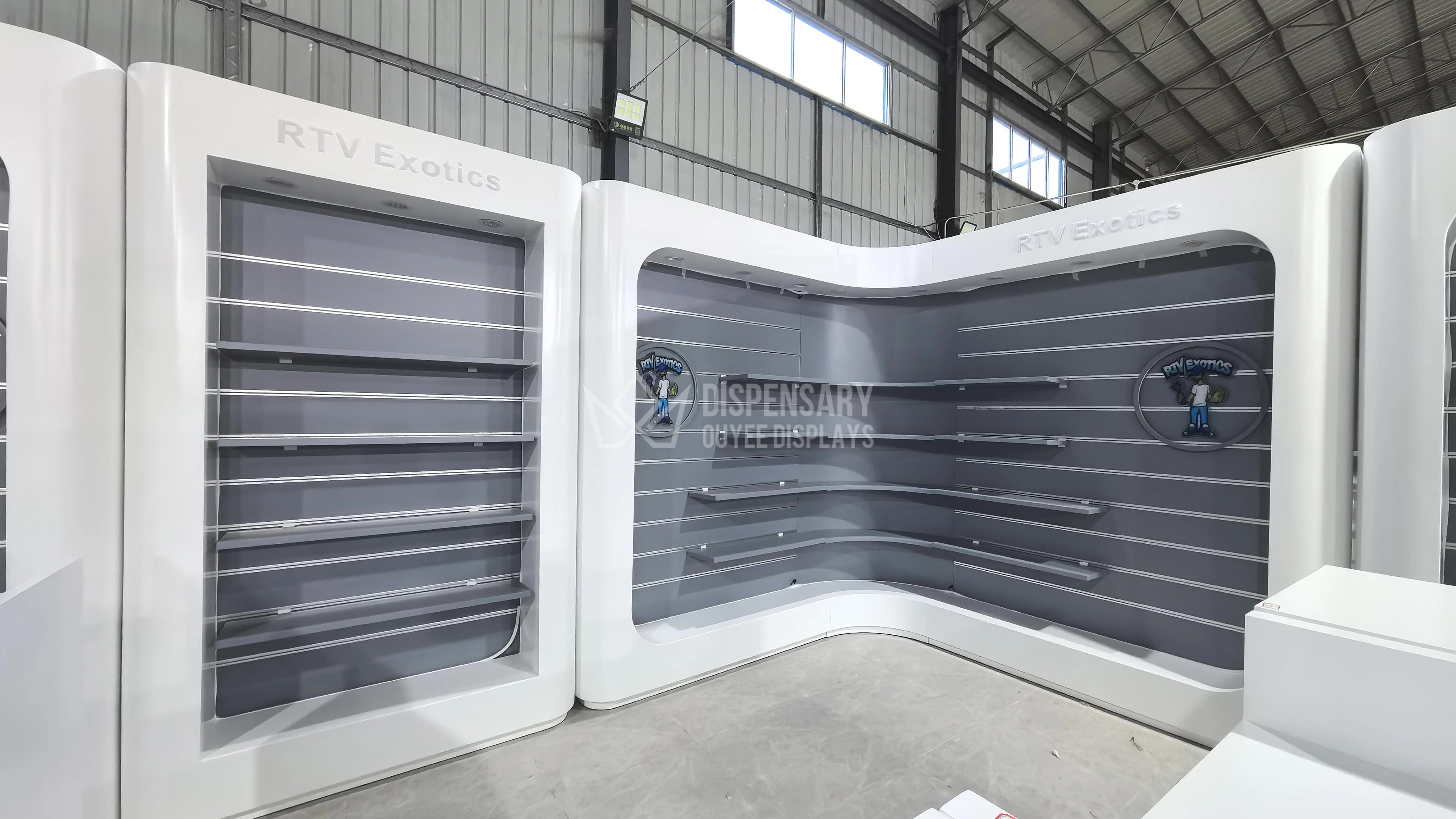
Trendy Custom E Cigarette Display Rack CBD Shop Displays Solutions
Elevate your store’s vibe with our premium custom vape display rack, designed specifically for CBD shops and e-cigarette retailers. The curved wall unit blends futuristic aesthetics with high-functionality shelving, providing a clean, professional layout to attract and convert. Crafted with top-tier materials and integrated LED accent lighting, this fixture turns your product wall into a powerful branding asset.
Let's get in touch

Email: gzouyeedisplay@gmail.com
WhatsApp: +86 136 6049 7267
Ouyee Dispensary
Ouyee Dispensary
Ouyee Dispensary
Ouyee Dispensary