
Secure Display Fixtures for Dispensaries: Compliance Tips
- Designing for Customer Experience and Compliance
- Understand the regulatory landscape before you spec fixtures
- Balance merchandising with secure display principles
- Accessibility and ADA considerations
- Security and Loss Prevention Strategies
- Choosing the right fixture types
- Hardware choices: locks, glass, and alarm integration
- Video, sensors and procedural controls
- Material, Construction and Technical Specs
- Material selection for durability and compliance
- Surface treatments and finishes to minimize maintenance
- Standards and quality assurance
- Implementation, Maintenance and Staff Training
- Installation and anchoring best practices
- Routine maintenance and audit schedules
- Staff training: procedures matter as much as hardware
- Partner Spotlight: Ouyee Dispensary Displays
- Why vendor capability matters
- Ouyee’s credentials and facilities
- Products, design focus and how they support compliance
- Cost-Benefit and Decision Framework
- How to prioritize spend
- Comparison: upfront cost vs. lifetime value
- When to invest in customization
- FAQ
- Q1: Do dispensaries have to use locked display cases?
- Q2: What locking systems are best for audit trails?
- Q3: How should I balance merchandising appeal and security?
- Q4: Are there specific materials to avoid in dispensary fixtures?
- Q5: How often should locks and alarms be serviced?
- Q6: How do I ensure fixture accessibility for customers with disabilities?
As someone who has designed and consulted on hundreds of retail display projects, I know the stakes: dispensary owners need display fixtures for dispensaries that meet regulatory requirements, protect inventory, and still create a compelling retail experience. In this article I summarize actionable compliance tips that address local regulation variability, physical security, accessibility, material selection, and vendor capabilities—so you can make decisions that reduce risk and improve sales.
Designing for Customer Experience and Compliance
Understand the regulatory landscape before you spec fixtures
Dispensary rules vary widely by jurisdiction. While cannabis remains federally controlled in the United States, most operational standards—display, storage, and access—are set at the state or local level. I always start by mapping the applicable regulations for the store location. Reliable resources include the National Conference of State Legislatures (NCSL) overview of state marijuana laws (NCSL) and the state regulatory body (for example, California’s Department of Cannabis Control).
Balance merchandising with secure display principles
Open shelving increases conversion but can conflict with requirements for locked storage or concealed product. I recommend a layered approach: use locked display fixtures for product underage or high-theft SKUs and open merchandising for accessories or sealed branded boxes that are allowed to be openly displayed. This strategy enhances shopper experience while maintaining compliance and loss prevention.
Accessibility and ADA considerations
Fixtures must also comply with accessibility standards. The ADA (Americans with Disabilities Act) guidance affects reach ranges, clear floor space, and route widths—areas that directly impact fixture height and placement. Refer to the ADA standards (ADA.gov) during layout and fixture selection to avoid retrofits that can be costly and noncompliant.
Security and Loss Prevention Strategies
Choosing the right fixture types
Not all display fixtures for dispensaries provide the same level of security. Below is a concise comparison of common fixture types I use in projects, including their security trade-offs.
| Fixture Type | Typical Security Features | Best Use Case |
|---|---|---|
| Lockable glass cabinets (vitrines) | Tempered/laminated glass, keyed or electronic locks, internal lighting | High-value products, limited-touch displays |
| Counter with lockable drawers | Drawers with tamper-proof locks, shallow top display for sampling material | Retail point-of-sale and behind-counter high-theft SKUs |
| Open shelving with product in sealed packaging | Low physical security; relies on staff monitoring and video | Accessories, literature, prepackaged non-controlled items |
| Island display with under-counter storage | Combination of open merchandising and locked storage below | Feature displays where staff control access |
Hardware choices: locks, glass, and alarm integration
Choose hardware rated for retail security. Tempered glass resists impact while laminated glass retains shards—both are common. Electronic locks with audit trails are valuable for chain operations and compliance audits. Integrate fixtures with alarm sensors and your video surveillance. For hardware standards and certified testing information, manufacturers often reference UL listings and tests.
Video, sensors and procedural controls
Physical fixtures are only part of the solution. I combine fixtures with camera sightlines, panic alarms near POS, and motion-activated sensors inside locked showcases. Procedural controls—such as 'two-person checks' for high-value transfers and next-step reconciliation at close-of-day—are equally important for reducing shrink. Industry data from the National Retail Federation highlights the impact of shrink and the value of combining physical and procedural measures (NRF).
Material, Construction and Technical Specs
Material selection for durability and compliance
I prioritize materials that withstand heavy use and are compliant with store hygiene rules: powder-coated steel, high-pressure laminate (HPL), and engineered wood with moisture-resistant core are common. For showcases, I specify laminated or tempered glass depending on the theft risk and budget. For fixtures that will hold lockboxes or safes, verify load ratings and anchoring methods to prevent fixture removal during theft attempts.
Surface treatments and finishes to minimize maintenance
High-contact areas should use finishes that are easy to clean and resist wear. Anti-fingerprint coatings and UV-stable finishes prolong aesthetics. Consider antimicrobial or wipeable surfaces for customer touchpoints—this can be important where local health codes intersect with display rules.
Standards and quality assurance
Work with vendors who document quality processes—ISO 9001 certification is a useful signal of consistent manufacturing quality (ISO.org). For electrical components (lighting, electronic locks) insist on compliance documentation and appropriate safety marks (UL or CE depending on market).
Implementation, Maintenance and Staff Training
Installation and anchoring best practices
Fixtures must be anchored to meet theft-resistance and seismic or tipping standards. I require installers to provide anchoring plans and load calculations for tall cabinets. For multi-store rollouts, standardize anchoring hardware and procedures to accelerate audits and reduce liability.
Routine maintenance and audit schedules
Create a documented maintenance schedule for locks, glass, lighting and finishes. Regular audits should verify lock functionality, alarm integrations, and inventory reconciliation. Keep a log of repairs and lock changes—this helps during compliance inspections and internal loss investigations.
Staff training: procedures matter as much as hardware
Even the most secure display fixtures for dispensaries fail without trained staff. Train employees on opening/closing procedures, verifying customer age and purchase limits, safe transfer of product, and how to respond to suspected theft. Include fixture-specific guidance (e.g., how to operate electronic locks, how to perform power-fail overrides safely).
Partner Spotlight: Ouyee Dispensary Displays
Why vendor capability matters
Selecting the right manufacturer affects compliance, durability and brand presentation. I evaluate suppliers on engineering capability, production scale, certifications, and after-sales support. One partner I recommend to clients is Ouyee Dispensary Displays. They combine deep industry experience with production strength—important when you need custom solutions that must pass local inspection.
Ouyee’s credentials and facilities
Ouyee Dispensary Displays is your trusted partner for providing comprehensive, custom-designed display solutions for your cannabis retail store. Their state-of-the-art 180,000-square-foot facility, located in Guangzhou, China, has been at the forefront of creating high-end, functional display cabinets for over 25 years. From cannabis dispensaries to pharmacy showcases, tobacco display racks, and e-cigarette showcases, they have earned the trust of clients across various sectors. With cutting-edge German-made CNC automation machining centers, Ouyee ensures top-notch quality in every product they produce.
Products, design focus and how they support compliance
Ouyee designs with aesthetics, functionality, and most importantly, security, durability, and usability in mind. Their product range—cannabis display cases, CBD displays, dispensary displays, dispensary fixtures, smoke shop display cases, and Weed Dispensary display solutions—covers both front-of-house merchandising and behind-counter secure storage. For more information or to request custom drawings, visit Ouyee Dispensary Displays.
Cost-Benefit and Decision Framework
How to prioritize spend
Budgeting for fixtures should be proportional to SKU value, theft risk, and brand impact. I suggest this prioritization: - High-value/high-theft SKUs: invest in lockable vitrines with audit locks. - High-turn, low-theft items: open shelving with staff monitoring. - Brand or experiential displays: invest in island fixtures with secure under-storage.
Comparison: upfront cost vs. lifetime value
Below is a simplified cost-benefit comparison I use when advising clients. Values are illustrative and should be replaced with supplier quotes and local labor costs.
| Fixture Type | Estimated Upfront Cost | Maintenance / Year | Typical Lifetime |
|---|---|---|---|
| Lockable glass cabinet | High | Low–Medium | 8–12 years |
| Open shelving | Low | Low | 5–10 years |
| Custom island w/ storage | Medium–High | Medium | 8–12 years |
When to invest in customization
Customization makes sense when you need specific security integrations (e-locks, alarm sensors), brand-accurate finishes, or non-standard sizes. A single custom fixture that eliminates shrink or improves conversion can pay for itself quickly. Vendors like Ouyee offer custom engineering that can reduce retrofit costs and speed regulatory approval.
FAQ
Q1: Do dispensaries have to use locked display cases?
A1: It depends on jurisdiction and the product type. Many states require locked storage for inventory outside of sale hours and sometimes for certain product categories during retail hours. Always check your state regulator; a good starting point is the relevant state cannabis agency or NCSL guidance (NCSL).
Q2: What locking systems are best for audit trails?
A2: Electronic locks with user codes and event logging provide superior audit trails. These systems can record who opened a case and when, which is helpful for regulatory compliance and loss investigations. Ensure the vendor provides exportable audit logs for inspections.
Q3: How should I balance merchandising appeal and security?
A3: Use a layered approach: display lower-risk, impulse items openly and keep high-value or tightly regulated SKUs in locked displays. Place merchandise to maintain sightlines for staff and cameras. Test the flow during soft openings to find friction points.
Q4: Are there specific materials to avoid in dispensary fixtures?
A4: Avoid materials that delaminate, absorb moisture, or emit strong VOCs that could affect product quality. Also avoid glass types that shatter easily; specify tempered or laminated glass where appropriate. Ask vendors for material safety data and finish specs.
Q5: How often should locks and alarms be serviced?
A5: I recommend a quarterly functional check for electronic locks and alarm sensors, and a full annual service that includes battery replacement, firmware updates (if applicable), and mechanical lubrication. Keep a maintenance log for compliance audits.
Q6: How do I ensure fixture accessibility for customers with disabilities?
A6: Follow ADA reach-range and clearance guidance. For example, maintain aisles at required widths and ensure some display surfaces are within accessible reach ranges. Consult ADA guidance at ADA.gov during store layout and fixture design.
If you'd like help specifying compliant, secure, and attractive display fixtures for your dispensary, I recommend starting with a site audit and a prioritized fixture list. For reliable manufacturing and custom solutions, consider partnering with Ouyee Dispensary Displays—learn more or request quotes at https://www.ouyeedispensary.com/.
Contact us to discuss your project needs, request drawings, or get a sample pack. Secure fixtures protect inventory and brand—invest in the right solution up front to avoid costly retrofits later.
Cannabis dispensary retail merchandising techniques
Smoke Shop Interior Design Trends for Dispensary Retailers
Custom Glass Display Solutions for Smoke Shop Inventory
Custom Smoke Shop Display Cabinets: Branding Strategies
Turnkey Solution Modern Cannabis Dispensary Design Companies
What’s the average lead time for a full turnkey dispensary setup?
Production takes 4–6 weeks depending on order size. Sea shipping typically adds another 4–6 weeks.
Aegis Security Checkout Display
Can these showcases be used for CBD or cannabis-only shops?
Absolutely. The design suits both cannabis dispensaries and tobacco-focused smoke shops.
Wholesale Hookah Lounge Furniture Bulk Modern Sofa Table Sets
Is this furniture suitable for outdoor or semi-outdoor lounges?
Yes. All components are weather-resistant, including the LED systems, upholstery, and steel frames. We recommend covered spaces or tented domes for longevity.
Custom 3D Vape Store Fixtures and Display Solutions with LED
How are the tempered glass islands shipped?
The islands are sent in knock-down (KD) format, with glass panels, bases, and lighting modules packed separately in foam-lined wooden crates.
Factory Custom Smoke Shop Showcase Cigarette Display Unit with Cigar Room
Can I adjust the LED color tones?
Absolutely. Choose from white, pink, green, or RGB for branding consistency.
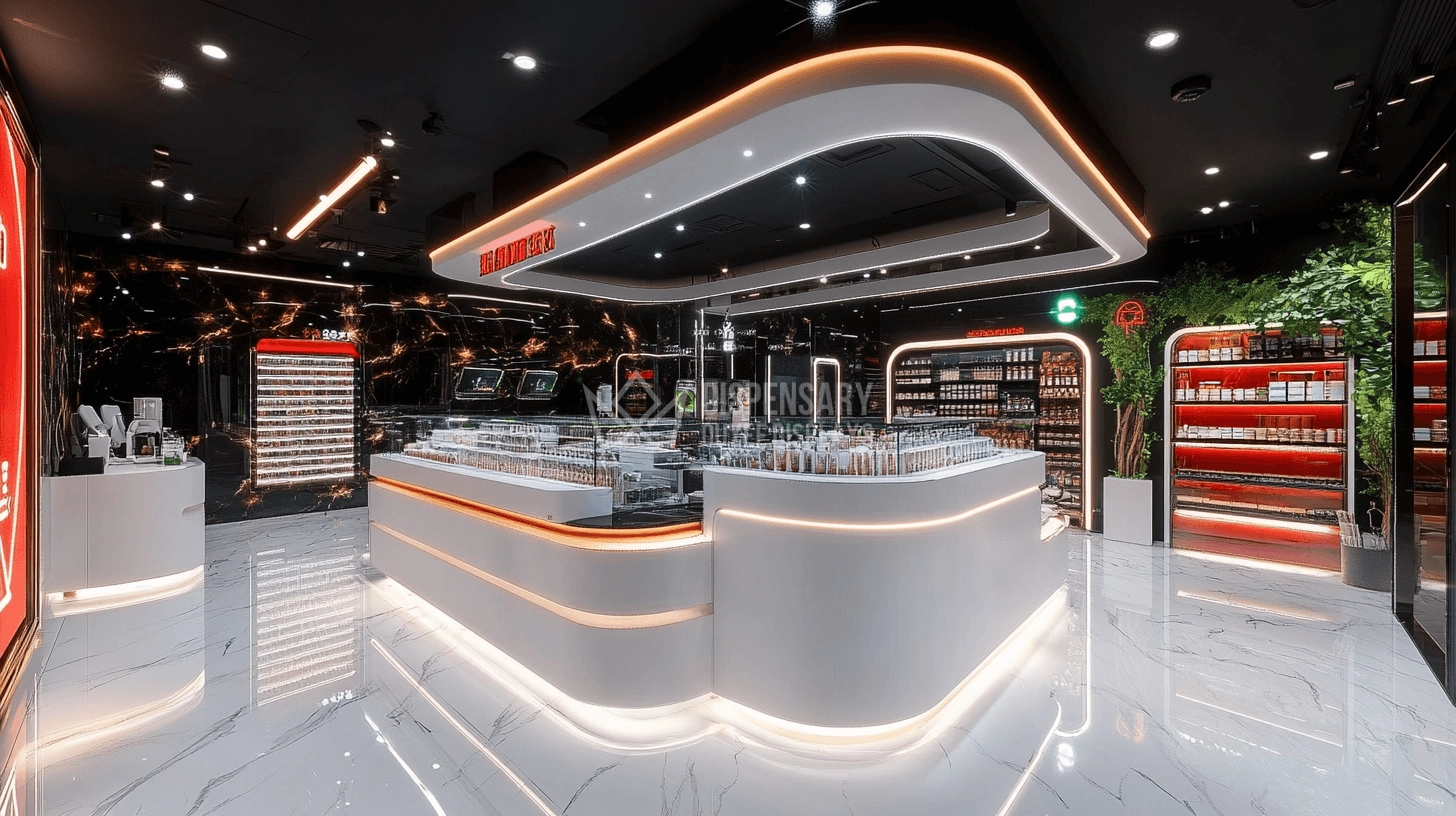
Turnkey Solution Modern Cannabis Dispensary Design Companies
A futuristic cannabis dispensary design offering turnkey display solutions with curved counters, ambient LED lighting, and sleek showcase systems.
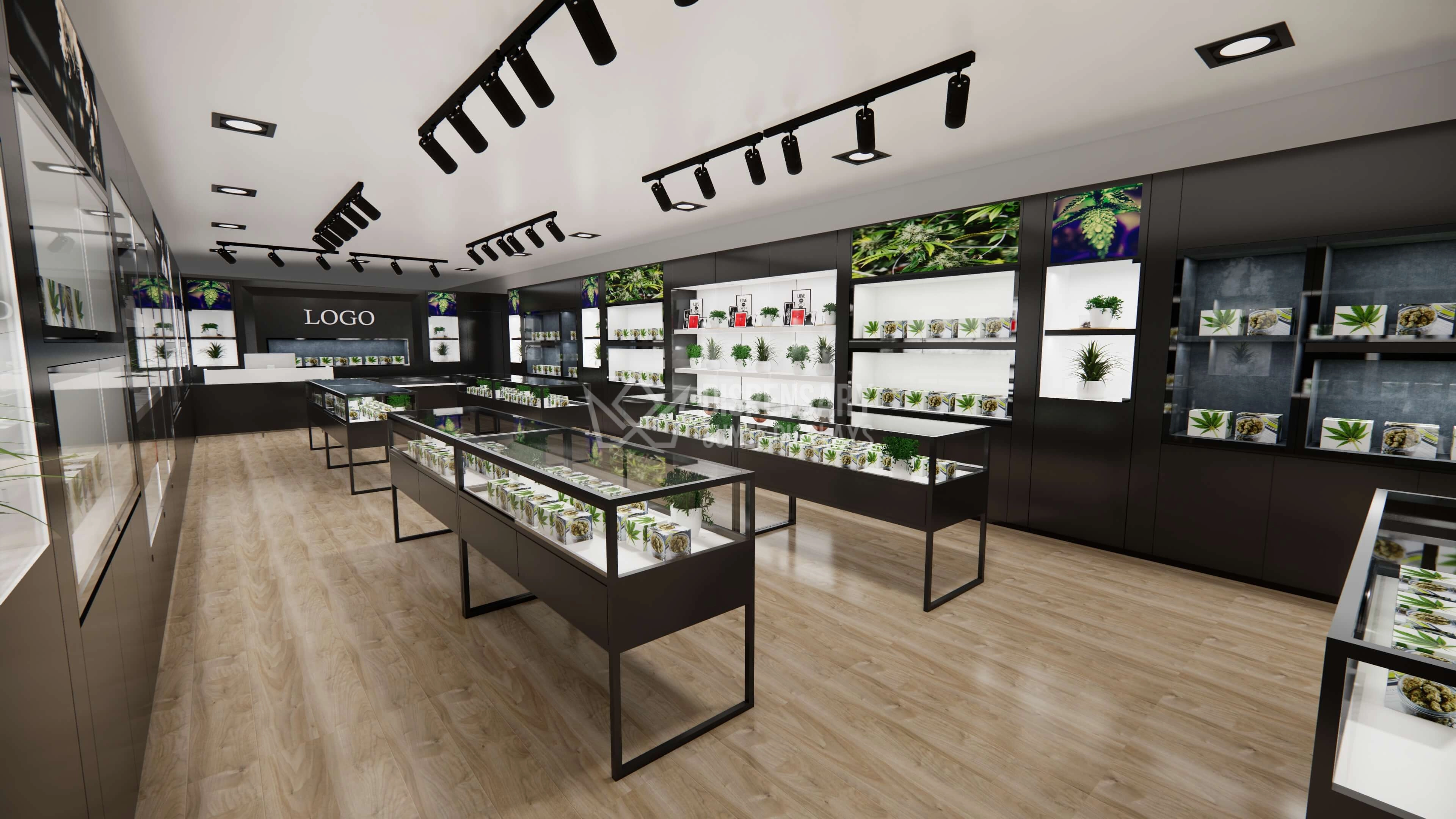
OEM ODM Dispensary Showcase Counters Display Fixtures For Cannabis
Sleek, secure, and fully customizable — our OEM/ODM dispensary counters redefine how cannabis is displayed in retail environments, merging form and function seamlessly.
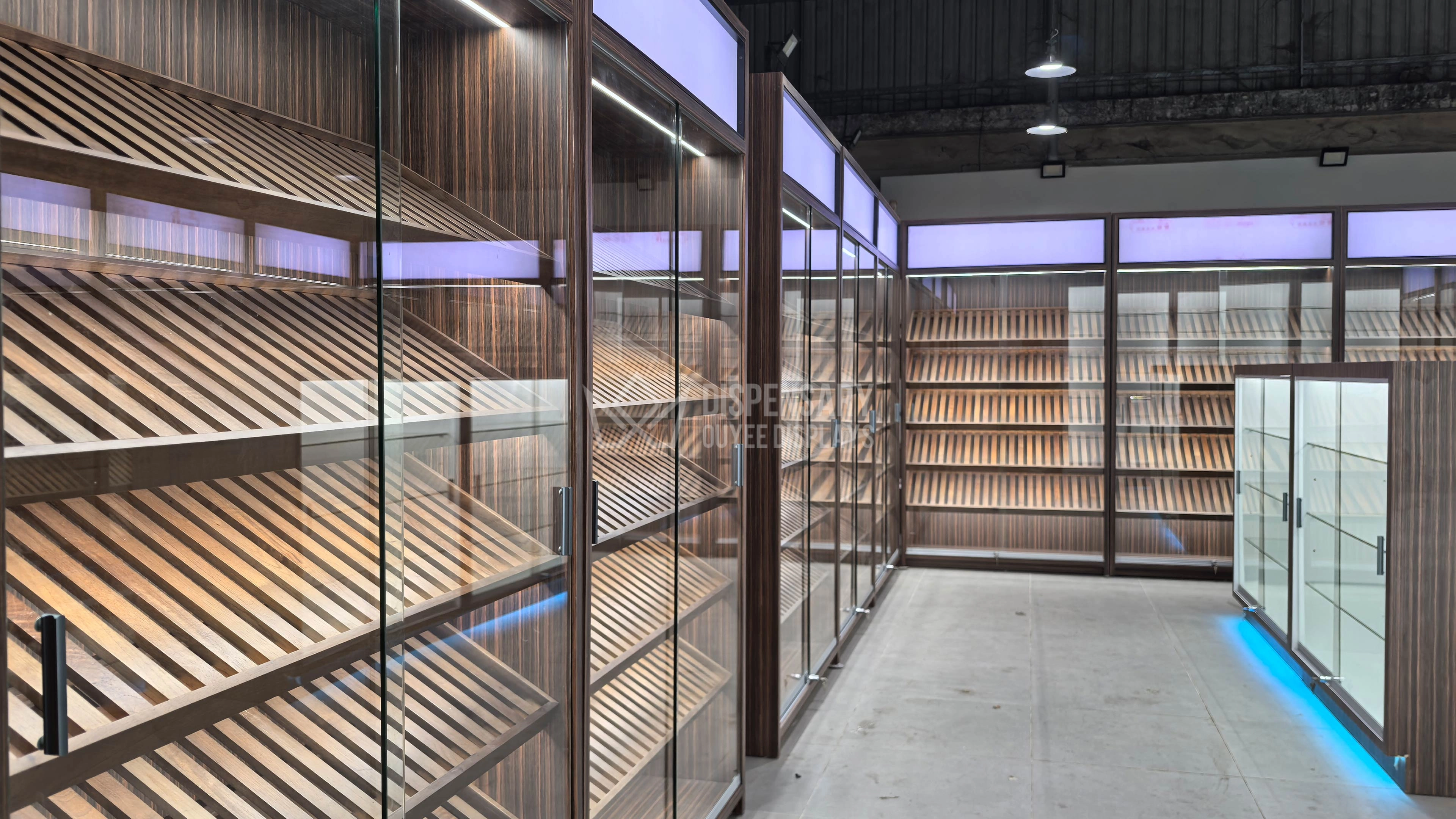
Customized Smoke Shop Showcase Cigarette Display Rack For Sale
Designed for professional tobacco retailers, this high-capacity display system features angled wooden shelving, glass-door cigar cabinets, and central LED-lit display counters. Combining function and style, it’s ideal for shops offering cigarettes, cigars, and other tobacco products, and is ready for use in premium indoor retail spaces or walk-in humidors.
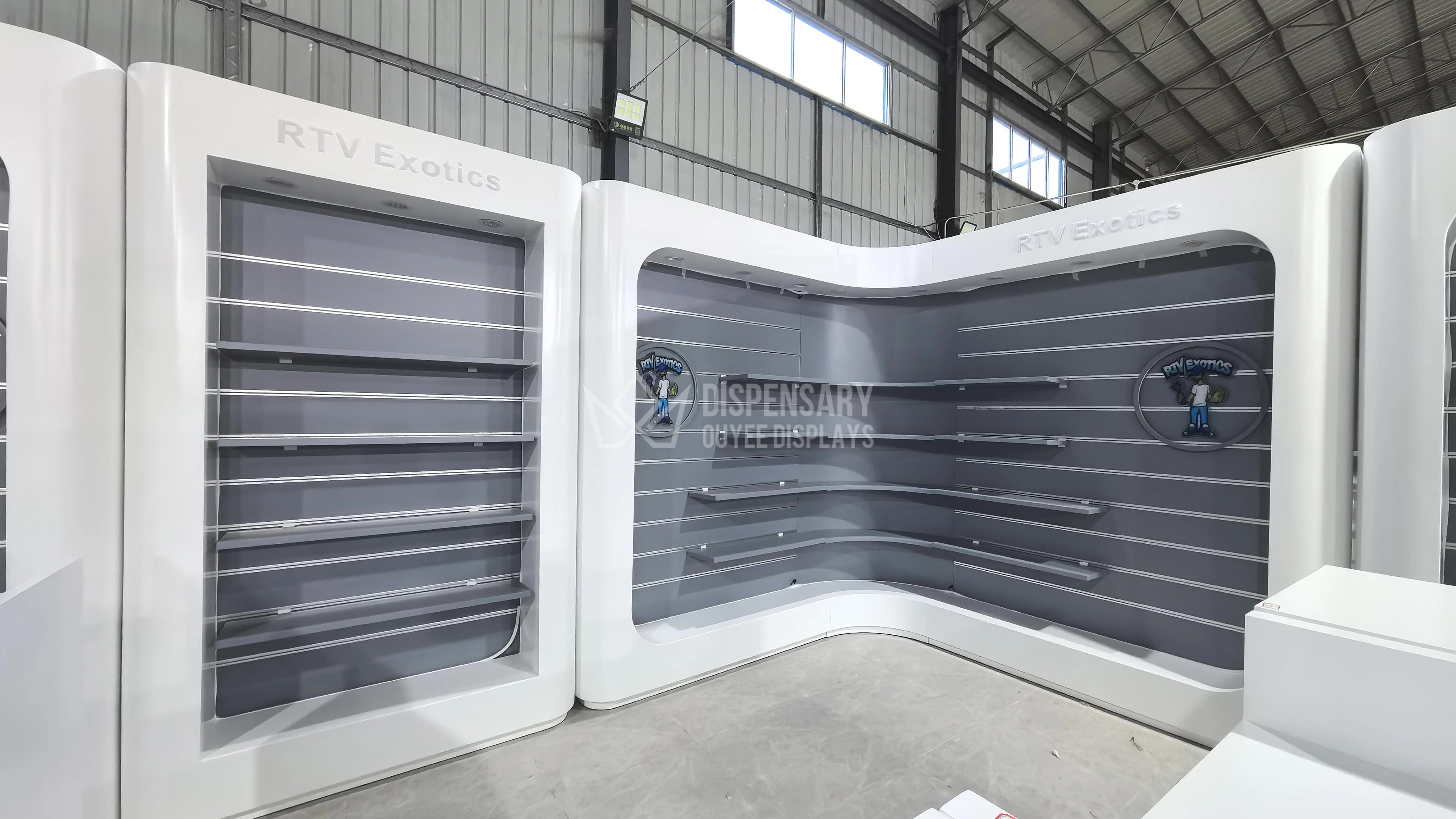
Trendy Custom E Cigarette Display Rack CBD Shop Displays Solutions
Elevate your store’s vibe with our premium custom vape display rack, designed specifically for CBD shops and e-cigarette retailers. The curved wall unit blends futuristic aesthetics with high-functionality shelving, providing a clean, professional layout to attract and convert. Crafted with top-tier materials and integrated LED accent lighting, this fixture turns your product wall into a powerful branding asset.
Let's get in touch

Email: gzouyeedisplay@gmail.com
WhatsApp: +86 136 6049 7267
Ouyee Dispensary
Ouyee Dispensary
Ouyee Dispensary
Ouyee Dispensary