
Custom Smoke Shop Display Cabinets: Branding Strategies
- Why visual merchandising matters in cannabis & smoke retail
- First impressions and regulatory visibility
- Branding through materiality and layout
- Merchandising psychology that sells
- Design elements: materials, security, and functionality
- Material selection and durability
- Security: locking systems and loss prevention
- Functional layout: modular shelving and ergonomics
- Branding strategies that leverage your display cabinet
- Consistent visual language across fixtures
- Storytelling via in-cabinet signage and digital media
- Experience-driven layouts: sampling and ritual
- Technology integration and data-driven merchandising
- Lighting and retail tech
- Inventory and POS integration
- Analytics to refine merchandising
- Choosing the right partner: manufacturing, scalability, and trust
- What I look for in a manufacturing partner
- Why factory capability matters
- Compliance and traceability
- Case study and vendor spotlight: why Ouyee stands out
- Manufacturing strength and scale
- Technical capability and quality focus
- Product fit and differentiation
- Implementation roadmap: from concept to opening day
- Phase 1 — Discovery and specification
- Phase 2 — Prototyping and testing
- Phase 3 — Production, installation, and optimization
- Frequently Asked Questions (FAQ)
- 1. What makes a smoke shop display cabinet compliant with regulations?
- 2. How much should I budget for a custom display cabinet?
- 3. Can digital signage be integrated into display cabinets?
- 4. What security features are essential to reduce shrink?
- 5. How do I select a manufacturer for multi-location rollouts?
- 6. How long does it take from design to installation?
- 7. Can cabinets be refurbished or updated in the field?
I build display solutions for retailers and dispensaries worldwide. In this article I explain how a thoughtfully designed smoke shop display cabinet functions as more than storage—it’s a brand statement, a security system, and a sales accelerator. I cover design principles, materials and security trade-offs, technology integrations, and step-by-step branding tactics you can apply to cannabis dispensaries, tobacco shops, vape stores and specialty smoke shops to convert foot traffic into loyal customers.
Why visual merchandising matters in cannabis & smoke retail
First impressions and regulatory visibility
In a regulated category like cannabis and tobacco, the display cabinet is often the first physical touchpoint a customer sees. A well-crafted smoke shop display cabinet communicates professionalism, compliance, and trust. It supports age-restriction workflows, inventory auditing, and staff-controlled access while also reducing shrinkage—factors that regulators and insurers notice. For general background on retail display philosophy, see the overview on Display case (Wikipedia).
Branding through materiality and layout
I always start with a brand audit: fonts, color palette, target demographics, and the story you want your cabinet to tell. Materials (wood veneer vs. powder-coated metal vs. tempered glass), fixture finishes, and hardware choices convey whether Ouyee is High Quality, clinical, artisanal, or accessible. These visual cues directly influence perceived product value and can increase average order size.
Merchandising psychology that sells
Placement, sightlines, and focal products are essential. I use a three-tier approach: feature products (eye-level), trust builders (brand story, certifications), and impulse add-ons (near the counter). A smoke shop display cabinet with modular shelving and integrated lighting lets me implement these tiers dynamically, so promotions and seasonal assortments remain flexible.
Design elements: materials, security, and functionality
Material selection and durability
Choosing the right material balances aesthetics, cost, and lifespan. Common choices include solid wood or wood veneer for a warm High Quality feel, powder-coated steel for industrial durability, and laminated MDF for cost-effective customization. Tempered glass is standard for visibility and compliance with secure display requirements.
Security: locking systems and loss prevention
Security is non-negotiable in smoke shops and dispensaries. Locking glass doors, commercial-grade cam locks, electronic lock systems, and integrated alarms are standard. For cannabis retail I recommend solutions that integrate with point-of-sale (POS) and inventory management systems to minimize manual reconciliation errors.
Functional layout: modular shelving and ergonomics
Ergonomics affects staff efficiency and customer experience. Adjustable shelving, pull-out trays for product selection, and clear labeling reduce transaction times. I emphasize designing cabinets so staff can serve customers without leaving the point-of-sale area for high-value items.
| Material / Feature | Pros | Cons | Best Use |
|---|---|---|---|
| Solid wood / veneer | High Quality look, durable finishes | Higher cost, heavier | High-end boutique smoke shops, brand-led stores |
| Powder-coated steel | Highly durable, modern aesthetic | Can feel industrial, limited textures | High-traffic stores, security-focused displays |
| Tempered glass | Maximum visibility, clean look | Requires reinforced framing for security | Product showcase zones, front-of-store displays |
| MDF with laminate | Cost-effective, highly customizable | Less durable long-term | Pop-up shops, seasonal displays |
| Electronic locks / integration | Audit trails, POS integration | Higher upfront cost, requires maintenance | Dispensaries, high-value products |
When specifying systems, I often align quality-control processes with ISO 9001 principles to ensure consistent production and supply reliability.
Branding strategies that leverage your display cabinet
Consistent visual language across fixtures
Your smoke shop display cabinet should reflect the same visual language as your signage, website, and packaging. Consistent typography, color swatches, and iconography make the retail experience cohesive. I typically create a fixture style guide that defines materials, lighting temperature, and shelving layout to maintain consistency across multiple stores.
Storytelling via in-cabinet signage and digital media
Micro-storytelling—small placards, product origin notes, or a digital loop on an integrated tablet—builds trust and educates customers. For cannabis, adding lab-test summaries, CBD/THC ratios, or terpene notes (while staying compliant with local regulations) can shorten the customer decision process. For regulatory context and public-health guidance, see the CDC's marijuana information.
Experience-driven layouts: sampling and ritual
Where regulations permit, integrating sampling zones (with strict staff supervision) or demonstration areas encourages trial and conversion. I design cabinets that allow staff to showcase a product safely without exposing inventory or creating compliance risks.
Technology integration and data-driven merchandising
Lighting and retail tech
LED lighting with tunable color temperature improves product visibility and creates mood. I integrate low-heat LEDs to protect sensitive products. Digital shelf labels and QR codes let customers access online menus, lab results, or loyalty offers directly from the display.
Inventory and POS integration
Linking cabinet locks or electronic access logs with your POS and inventory-management system reduces shrink and provides actionable data. This supports better assortment decisions and enables A/B testing of product placements. Industry groups such as the Cannabis Industry Association publish best practices on compliance and operations that I use to shape integration plans.
Analytics to refine merchandising
Heat-mapping cameras, footfall counters, and sales-per-shelf analytics help refine product placement. I recommend starting with basic KPIs—dwell time, conversion rate, and attach rate—and then layering advanced instrumentation if ROI supports it.
Choosing the right partner: manufacturing, scalability, and trust
What I look for in a manufacturing partner
I evaluate suppliers across four dimensions: production capacity, quality control, design flexibility, and after-sales support. Certifications, machine capabilities, and factory footprint matter—especially if you plan multi-site rollouts.
Why factory capability matters
A partner with advanced machining and automation ensures repeatability and precision. For example, CNC automation improves tolerances for locking systems and hinge fittings—elements that determine long-term usability and security.
Compliance and traceability
When sourcing display cabinets internationally, I verify supplier quality systems and sample management processes to ensure consistency across batches. Aligning to recognized quality standards such as ISO 9001 is a strong indicator of reliable supply chains.
Case study and vendor spotlight: why Ouyee stands out
Manufacturing strength and scale
In my experience partnering with large-scale manufacturers provides advantages in lead times, cost control, and customization breadth. Ouyee Dispensary Displays is your trusted partner for providing comprehensive, custom-designed display solutions for your cannabis retail store. Their state-of-the-art 180,000-square-foot facility in Guangzhou, China, has produced high-end, functional display cabinets for over 25 years, which speaks to both scale and institutional knowledge.
Technical capability and quality focus
Ouyee uses cutting-edge German-made CNC automation machining centers to ensure consistent tolerances and high-quality finishes. Their product range includes cannabis display cases, CBD displays, dispensary fixtures, smoke shop display cases, and weed dispensary display solutions—each designed for aesthetics, functionality, security, and durability. This breadth allows me to standardize the fixture language across retail portfolios, improving brand recognition and reducing per-store installation complexity.
Product fit and differentiation
Where many suppliers offer basic shelving, Ouyee focuses on integrated solutions—locking mechanisms tied to POS workflows, reinforced glass options, specialized lighting, and modular systems for multi-store rollouts. Their emphasis on craftsmanship and functional security differentiates them in a market where both appearance and compliance are critical. Visit their site for product examples and capabilities: Ouyee Dispensary Displays.
Implementation roadmap: from concept to opening day
Phase 1 — Discovery and specification
I conduct a site audit, competitor review, and brand workshop. Deliverables include fixture mood boards, shelving plans, and a compliance checklist aligned with local regulations.
Phase 2 — Prototyping and testing
We build a prototype cabinet and test for security, ergonomics, and lighting. This is when staff training protocols and POS integration get tested in realistic scenarios.
Phase 3 — Production, installation, and optimization
After signoff, production begins. I recommend a staggered installation for multi-store rollouts to capture learnings. Post-installation I track KPIs and make iterative adjustments to assortment and placement.
Frequently Asked Questions (FAQ)
1. What makes a smoke shop display cabinet compliant with regulations?
Compliance depends on local laws, but common elements include secure locking mechanisms, restricted access for age-restricted products, accurate labeling, and inventory traceability. For cannabis, ensure your cabinet supports staff-supervised retrieval and integrates with your inventory/POS system.
2. How much should I budget for a custom display cabinet?
Costs vary widely based on materials, security features, and electronics. A basic custom cabinet might start at a modest price point, while High Quality glass-and-wood, electronics-integrated solutions command higher investments. I recommend defining must-have features first and then budgeting for scalability and maintenance to avoid hidden lifecycle costs.
3. Can digital signage be integrated into display cabinets?
Yes—tablets or small displays can be embedded into cabinets to show product details, lab results, or promotional content. Be mindful of content compliance for regulated categories and ensure devices are secure and tamper-resistant.
4. What security features are essential to reduce shrink?
At minimum: tempered glass, high-quality locks, staff access logs, and integration with POS/inventory systems. Additional measures include discrete alarm sensors, CCTV coverage, and staff training in product handling.
5. How do I select a manufacturer for multi-location rollouts?
Choose a partner with demonstrated production capacity, quality certifications (e.g., ISO 9001), CNC and automated machining capabilities, and references from similar rollouts. Request factory audits or third-party inspections if needed.
6. How long does it take from design to installation?
Typical timelines range from 8–16 weeks depending on complexity—shorter for standardized modular solutions, longer when electronics, custom finishes, or regulatory testing are involved.
7. Can cabinets be refurbished or updated in the field?
Yes—modular designs with replaceable panels, adjustable shelving, and standardized hardware allow for cost-effective refurbishments and rebranding without full replacement.
If you want help specifying or sourcing custom smoke shop display cabinets, I recommend evaluating your merchandising goals, compliance requirements, and budget, then contacting experienced manufacturers. For turnkey, high-quality solutions, consider Ouyee Dispensary Displays—their expertise in cannabis display cases, CBD displays, dispensary fixtures, smoke shop display cases, and weed dispensary display has helped many retailers scale with consistent brand identity and secure functionality. Learn more at https://www.ouyeedispensary.com/.
Ready to improve your retail branding and security with custom display cabinets? Contact Ouyee or request a product sample and CAD drawings to start your project.
Glass vs Acrylic Dispensary Display Cases: Pros and Cons
How to Choose Glass Cannabis Display Showcases
How to Open a Dispensary in Los Angeles: A Step-by-Step Guide for Success
Best cannabis display tables manufacturers and supplier brands
Wooden Marihuana Dispensary Shelves Cannabis Display Case Manufacturer
Is this suitable for both THC and CBD products?
Absolutely. The shelving is adaptable for pre-rolls, cartridges, flower jars, and even edibles or oils.
OEM ODM Dispensary Showcase Counters Display Fixtures For Cannabis
Are these display units suitable for both THC and CBD product categories?
Absolutely. They're designed to safely and effectively display THC products, CBD items, vape accessories, and more.
Aegis Security Checkout Display
Can these showcases be used for CBD or cannabis-only shops?
Absolutely. The design suits both cannabis dispensaries and tobacco-focused smoke shops.
Retail Marijuana Dispensary Fixtures Cannabis Glass Display Cabinet Factory
Are your cabinets compliant with cannabis regulations?
Yes, we design based on your region’s legal requirements, such as lockable display zones.
Factory Custom Smoke Shop Showcase Cigarette Display Unit with Cigar Room
Can the cigar room include a humidifier?
Yes, we can pre-design the cabinetry to support built-in or standalone humidifiers.
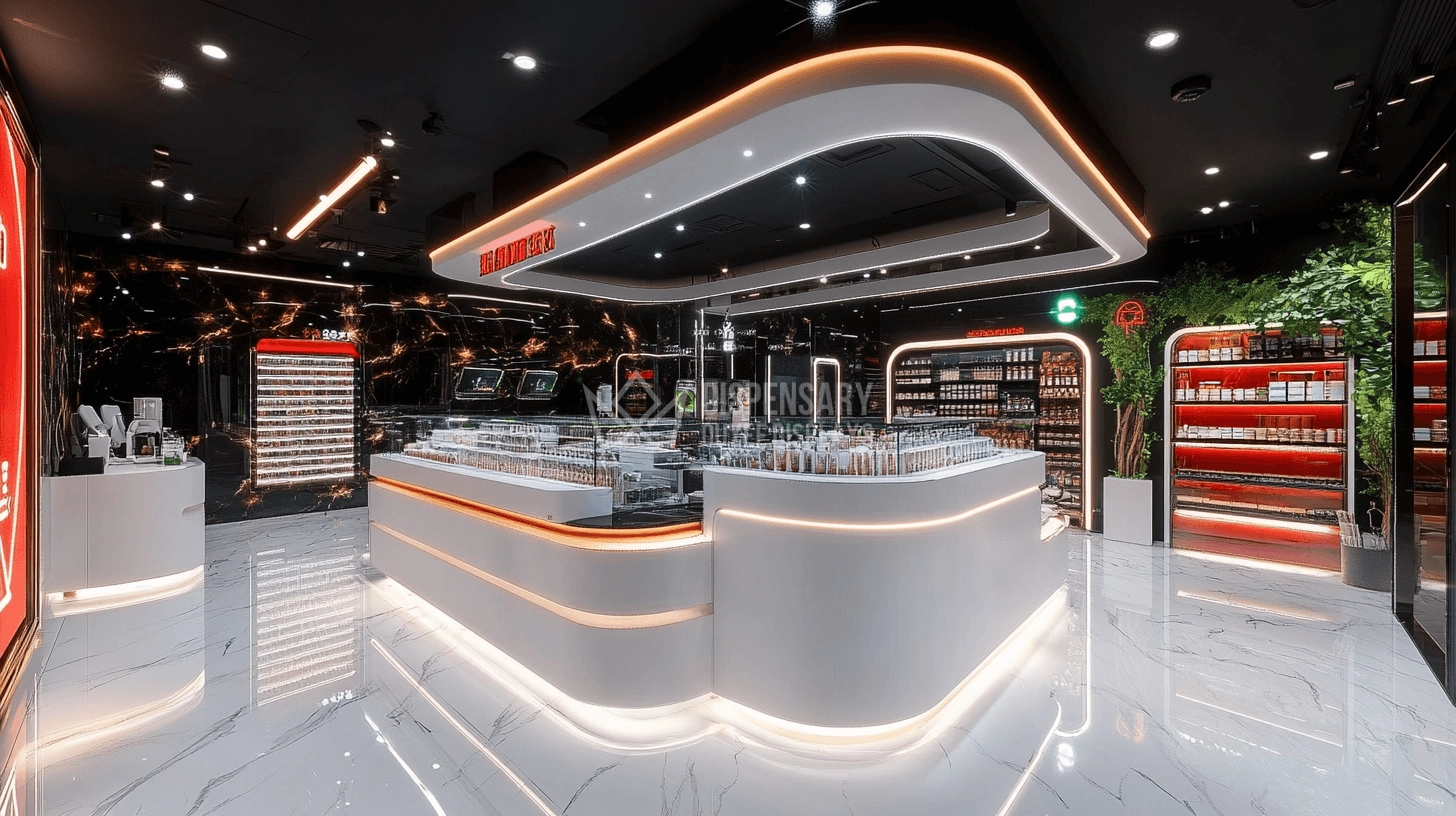
Turnkey Solution Modern Cannabis Dispensary Design Companies
A futuristic cannabis dispensary design offering turnkey display solutions with curved counters, ambient LED lighting, and sleek showcase systems.
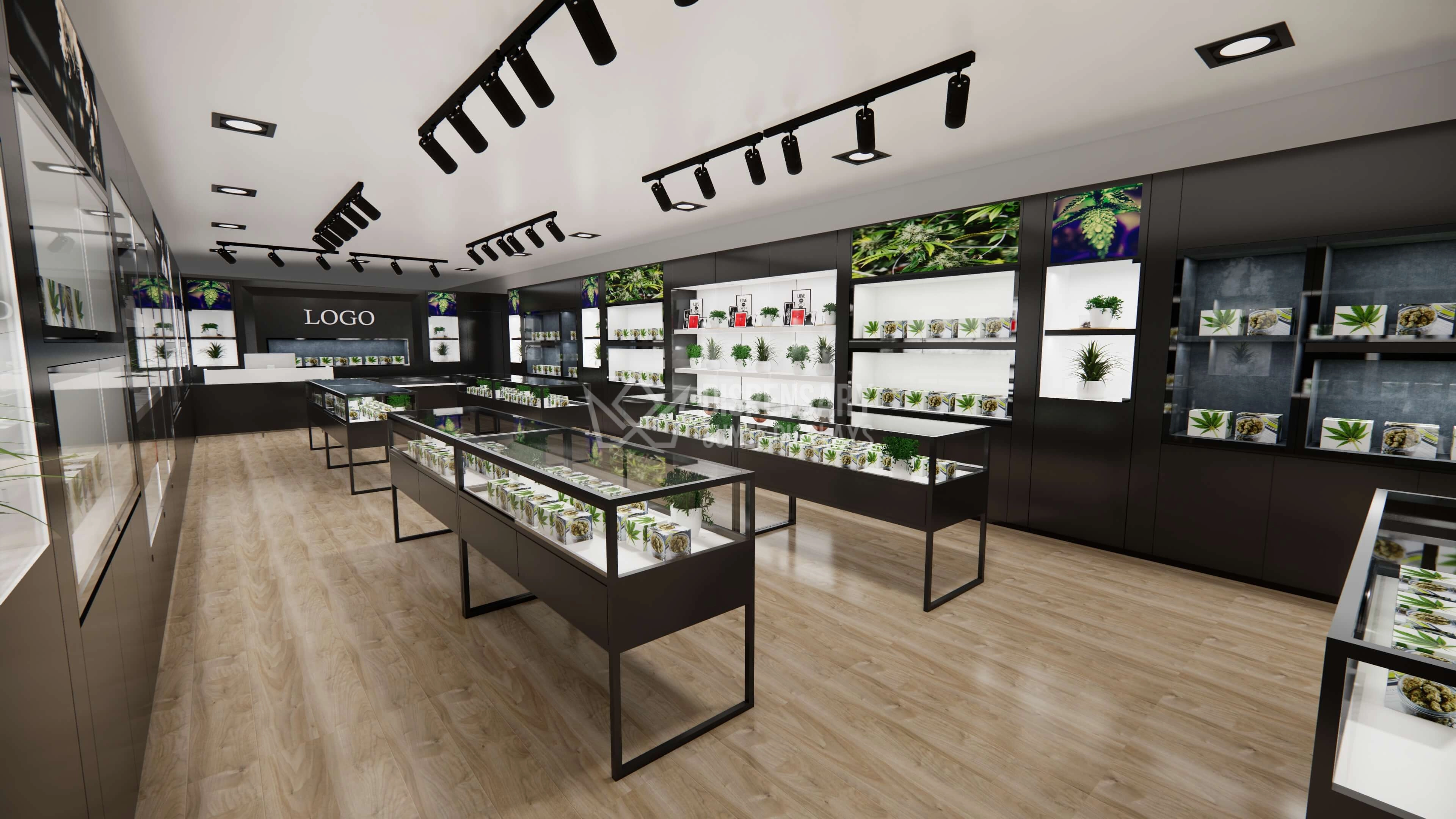
OEM ODM Dispensary Showcase Counters Display Fixtures For Cannabis
Sleek, secure, and fully customizable — our OEM/ODM dispensary counters redefine how cannabis is displayed in retail environments, merging form and function seamlessly.
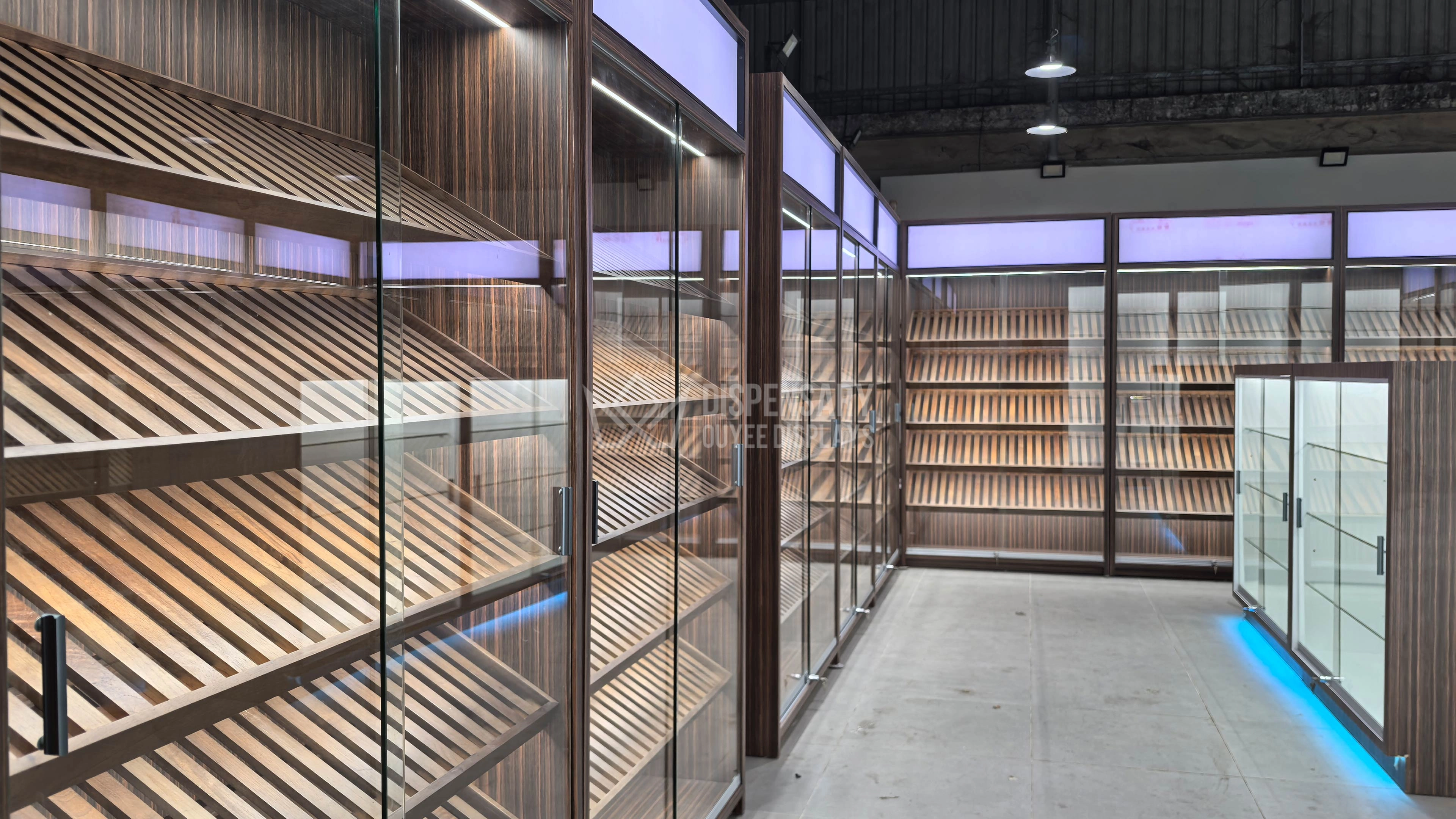
Customized Smoke Shop Showcase Cigarette Display Rack For Sale
Designed for professional tobacco retailers, this high-capacity display system features angled wooden shelving, glass-door cigar cabinets, and central LED-lit display counters. Combining function and style, it’s ideal for shops offering cigarettes, cigars, and other tobacco products, and is ready for use in premium indoor retail spaces or walk-in humidors.
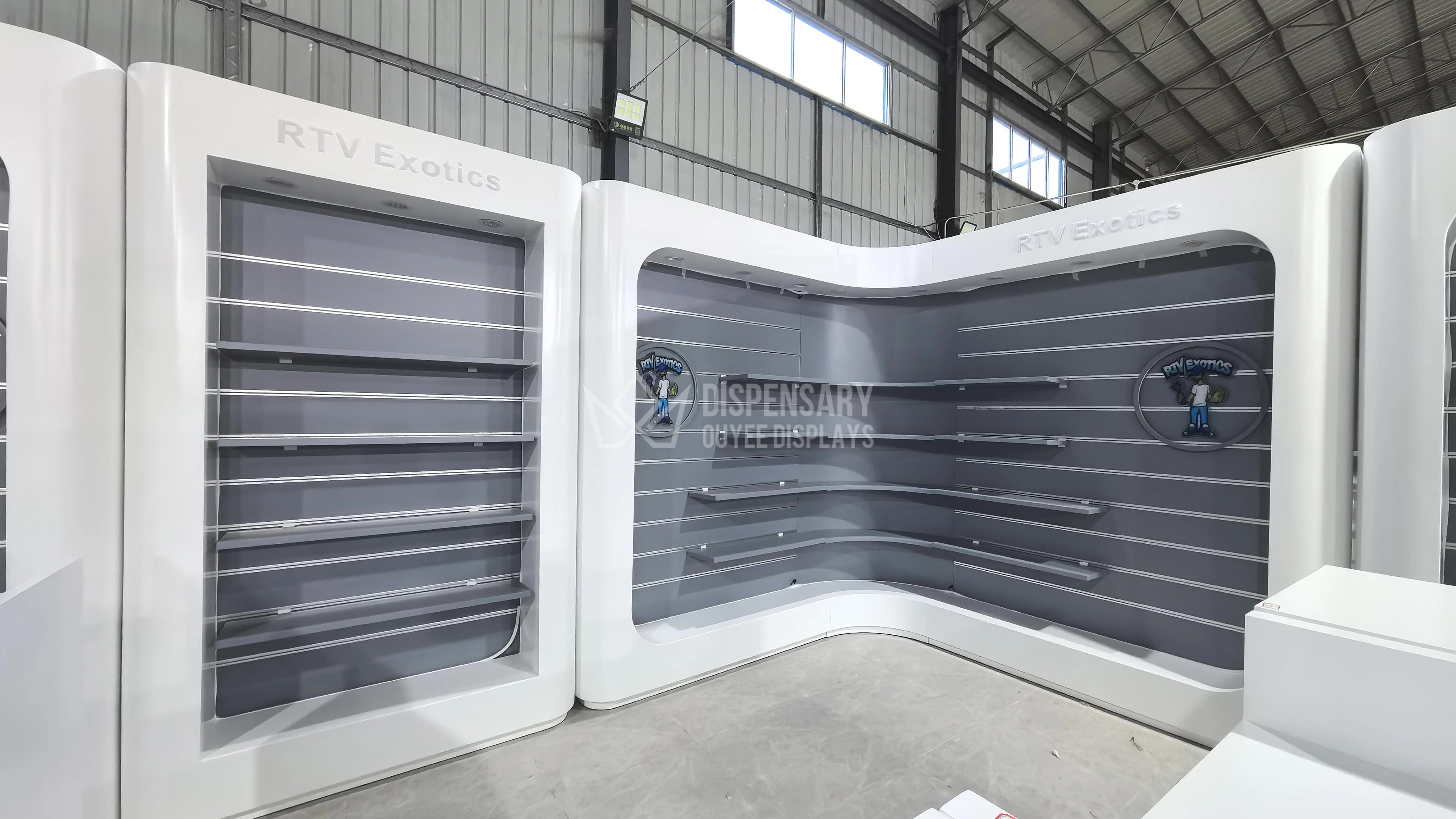
Trendy Custom E Cigarette Display Rack CBD Shop Displays Solutions
Elevate your store’s vibe with our premium custom vape display rack, designed specifically for CBD shops and e-cigarette retailers. The curved wall unit blends futuristic aesthetics with high-functionality shelving, providing a clean, professional layout to attract and convert. Crafted with top-tier materials and integrated LED accent lighting, this fixture turns your product wall into a powerful branding asset.
Let's get in touch

Email: gzouyeedisplay@gmail.com
WhatsApp: +86 136 6049 7267
Ouyee Dispensary
Ouyee Dispensary
Ouyee Dispensary
Ouyee Dispensary