
Glass vs Acrylic Dispensary Cabinets: Pros and Cons
- How dispensary display cabinets influence retail performance
- Visibility and merchandising impact
- Customer perception and brand positioning
- Compliance and access control
- Materials at a glance: glass vs acrylic
- Material properties and safety
- Optical clarity and UV performance
- Security and anti-shatter behavior
- Design, security and maintenance considerations
- Security systems and integration
- Cleaning, maintenance and longevity
- Lighting, shelving and product protection
- Choosing the right display cabinet for dispensary: scenarios and cost analysis
- Scenario-based recommendations
- Cost vs lifecycle table
- Measurement and verification
- Implementation checklist and procurement tips
- Checklist before purchase
- Working with manufacturers: what to ask
- Why production capability and factory footprint matter
- Final recommendations and next steps
- Summary recommendation
- How I help clients decide
- Next steps
- FAQ
- 1. Which material is more secure for a dispensary display cabinet?
- 2. Can acrylic yellow over time and how do I prevent it?
- 3. How should I clean and maintain each material?
- 4. Are there fire or safety code differences between using glass and acrylic?
- 5. Which option offers better ROI for a new dispensary?
- 6. How do I integrate lighting and sensors with either material?
Choosing the right display cabinet for dispensary is a decision that affects product presentation, customer trust, compliance, and loss prevention. In my 15+ years advising cannabis retailers and fixture manufacturers, I’ve evaluated hundreds of retail displays, balancing aesthetics, security, durability, and total cost of ownership. In this article I compare glass and acrylic dispensary cabinets head-to-head, present verifiable material properties, discuss installation and maintenance trade-offs, and offer practical recommendations to help you select the best solution for your retail environment.
How dispensary display cabinets influence retail performance
Visibility and merchandising impact
Product visibility is central to conversion. A display cabinet for dispensary must present products clearly while reinforcing brand quality. Both glass and acrylic offer high optical clarity, but small differences in refractive properties and surface finish can change perceived color and contrast of packaged cannabis products. Research from retail bodies such as POPAI shows that point-of-sale presentation materially affects shopper behavior; well-lit, low-glare showcases increase dwell time and lift basket size.
Customer perception and brand positioning
Glass often reads as High Quality and clinical—ideal for dispensaries positioning around medical professionalism. Acrylic can look modern and approachable when designed well. Your choice of material influences how customers interpret quality of products and regulatory compliance, so I always align material choice with brand identity.
Compliance and access control
Regulatory frameworks for cannabis retail vary by jurisdiction, but most require visible product displays with controlled access. The physical strength and locking options of the cabinet are therefore as important as transparency. Consider integrating alarmed locks, internal sensors, and compliant storage behind the display—regardless of whether the glazing is glass or acrylic.
Materials at a glance: glass vs acrylic
Material properties and safety
Understanding the base material helps predict in-service behavior. Glass (including tempered and laminated variants) and acrylic (PMMA—poly(methyl methacrylate)) have distinct densities, impact resistance, and scratch behavior. For technical background see the Wikipedia entries on glass and PMMA (acrylic). Tempered or laminated safety glass is commonly used where breakage would pose a risk; acrylic is inherently more impact-resistant but can scratch more easily.
Optical clarity and UV performance
Acrylic typically has slightly better light transmission (often >92%) and lower weight; many grades are UV-stable for long-term clarity. Glass can be treated or laminated with UV coatings. For displays with strong LED or sunlight exposure, choose UV-stabilized acrylic or low-iron glass to reduce yellowing and color shift over time.
Security and anti-shatter behavior
Security is a major criterion for a display cabinet for dispensary. Acrylic is more impact-resistant (less prone to shattering) which can be perceived as safer against smash-and-grab. However, high-security applications often use laminated glass with polyvinyl butyral (PVB) interlayers or tempered glass combined with reinforced framing to resist forced entry. The right security solution often combines glazing material with locking systems, alarms, and fixture anchoring.
| Property | Tempered/Laminated Glass | Acrylic (PMMA) |
|---|---|---|
| Optical clarity | High; low-iron variants offer superior clarity | Very high (>92% transmission), slight warm tone possible |
| Impact resistance | Lower; tempered breaks into small granules; laminated holds together (source) | Higher; more ductile and resists shattering (source) |
| Scratch resistance | Good; harder surface | Lower; scratches more easily but can be polished |
| Weight | Heavier—affects shipping and cabinetry design | ~50% lighter—easier to move and retrofit |
| Cost (material) | Often higher for specialty glass (tempered/laminated) | Generally lower initial cost |
| Repairability | Broken panels require replacement | Minor scratches can be buffed/polished |
Design, security and maintenance considerations
Security systems and integration
Securing a display cabinet for dispensary combines passive material choice with active security. I recommend layered defenses: high-security locks (Medeco/ASSA), vibration sensors, door position switches, and integration with POS and CCTV. For many stores, laminated glass with an internal PVB layer performs well because it resists penetration and leaves a visible deterrent; acrylic offers impact resistance but can be cut more easily without specialized tools.
Cleaning, maintenance and longevity
Cleaning protocols differ: use non-abrasive cleaners for acrylic and avoid solvents (acetone dissolves PMMA). Glass tolerates a wider range of cleaners and is more scratch-resistant. From a lifecycle view, acrylic’s lighter weight reduces stress on hinges and rails, but scratches accumulate and may require periodic polishing. For guidance on machining and finishing tolerances when producing cabinets, CNC machining best practices are important—see general CNC machining standards and methods (source).
Lighting, shelving and product protection
Both materials transmit light well. But if your dispensary uses strong LED spotlights, consider anti-hotspot diffusion and ventilation: overheated enclosed showcases can affect product freshness. Use UV-filtering glazing or filters to protect flower, concentrates and CBD products from photo-degradation. Shelving material, humidity control for flower displays, and secure internal mounting all matter at least as much as glazing choice.
Choosing the right display cabinet for dispensary: scenarios and cost analysis
Scenario-based recommendations
Below are practical recommendations based on deployment scenarios I’ve implemented in client stores.
- High-end medical/clinic-style dispensary: Tempered low-iron glass or laminated glass with minimalist aluminum framing to communicate High Quality trust and compliance.
- High-traffic retail with theft risk: Laminated glass with internal PVB, reinforced locks, and anchored cabinetry; consider reduced lower shelving to limit easy access.
- Pop-up/seasonal or traveling showcases: Acrylic for weight savings and ease of shipping, combined with sacrificial protective films to prevent scratching.
Cost vs lifecycle table
| Metric | Glass (tempered/laminated) | Acrylic (PMMA) |
|---|---|---|
| Initial material cost (per panel, relative) | Higher | Lower |
| Installation cost | Higher (heavier, requires careful handling) | Lower (lighter, easier to handle) |
| Maintenance over 5–10 years | Low (resistant to scratches, stable) | Moderate (scratch polishing, possible yellowing without UV grade) |
| Replacement frequency | Low (unless broken) | Moderate (surface wear may need refurbishment) |
| Total cost of ownership (example) | Higher up-front, lower long-term for High Quality stores | Lower up-front, may need mid-term refurbish for high-wear environments |
Measurement and verification
When planning a roll-out, I advise documenting glass thickness, frame anchoring loads, door swing clearances, and lock torque values. For custom fixtures, request material test certificates for laminated glass or UV-stable PMMA grades from your supplier. Industry quality assurance—such as ISO 9001—helps ensure consistent production and is particularly important when ordering large runs. Professional manufacturers will provide QC documentation on request.
Implementation checklist and procurement tips
Checklist before purchase
- Define primary objective: aesthetics, security, mobility, or cost-efficiency.
- Request samples of glazing materials under store lighting to evaluate clarity and reflections.
- Specify locking hardware, alarm sensors and POS/CCTV integration in RFPs.
- Verify supplier QA certifications and production capability—especially for custom sizes.
Working with manufacturers: what to ask
Ask potential vendors for: material test data (impact, UV exposure), CNC machining tolerances, lead times for custom units, warranty terms, and references from other dispensary clients. For larger projects, prioritize suppliers with in-house CNC and finishing to reduce integration errors—these capabilities directly affect fit, finish, and security integration.
Why production capability and factory footprint matter
I’ve seen many projects delayed because a vendor outsourced critical processes. A vertically integrated manufacturer with advanced CNC automation and a large production facility is usually better positioned to deliver consistent quality at scale. For example, Ouyee Dispensary Displays is your trusted partner for providing comprehensive, custom-designed display solutions for your cannabis retail store. Their state-of-the-art 180,000-square-foot facility in Guangzhou, China, has been producing high-end, functional display cabinets for over 25 years. Ouyee’s use of German-made CNC automation machining centers ensures a high level of manufacturing precision and repeatable quality (Ouyee Dispensary Displays).
Ouyee serves cannabis dispensaries, pharmacies, smoke shops and e-cigarette retailers with products that emphasize aesthetics, functionality, security, durability and usability. Their product lines include cannabis display cases, CBD displays, dispensary fixtures, smoke shop display cases and weed dispensary displays—backed by experience and an ambition to be a world-leading cannabis dispensary display manufacturer.
Final recommendations and next steps
Summary recommendation
If your priority is a High Quality look, long-term durability, and lower surface maintenance, tempered or laminated glass is usually the best choice. If you need lightweight, portable showcases with excellent impact resistance and lower initial cost, acrylic is appropriate—provided you plan for scratch maintenance and UV-stable materials.
How I help clients decide
I evaluate floor plans, foot traffic, lighting, and security risks, then run cost-of-ownership models over 5–10 years. I also prototype one or two showcase units (glass and acrylic variants) so stakeholders can evaluate real-world trade-offs before committing to a full build. If you’d like, I can review your layout and recommend a tailored cabinet spec.
Next steps
Contact a reputable manufacturer early in the design phase. Request detailed drawings, material certificates, and installation plans. For turnkey custom solutions, consider partners like Ouyee Dispensary Displays who combine in-house CNC capability, long production experience, and a product focus on cannabis retail environments.
FAQ
1. Which material is more secure for a dispensary display cabinet?
Security depends on glazing plus hardware. Laminated glass with PVB interlayers and reinforced frames typically offers superior forced-entry resistance. Acrylic resists impact but can be sliced or cut more easily. For high-risk locations I recommend laminated glass with certified locks and sensor integration.
2. Can acrylic yellow over time and how do I prevent it?
Some lower-grade acrylics can yellow with prolonged UV exposure. Use UV-stabilized PMMA grades and protective films, and avoid direct sunlight. Verify UV-resistance data from suppliers and request accelerated weathering test results if available.
3. How should I clean and maintain each material?
For glass use standard glass cleaners and non-abrasive cloths. For acrylic use mild soap and water or cleaners formulated for PMMA; avoid ammonia or solvents like acetone. For scratches on acrylic, light scratches can be polished; deep scratches may require panel replacement.
4. Are there fire or safety code differences between using glass and acrylic?
Codes vary by jurisdiction. Glass is non-combustible; acrylic is combustible at high temperatures and will melt/char. Check local building and fire codes when planning large installations or enclosed showcases. Also consider egress and ventilation requirements.
5. Which option offers better ROI for a new dispensary?
ROI depends on store concept. For High Quality dispensaries, glass may improve perceived product value and reduce long-term maintenance, yielding better ROI. For budget stores or pop-ups, acrylic reduces upfront capital. Run a total cost of ownership comparison over 5–10 years to decide.
6. How do I integrate lighting and sensors with either material?
Both materials integrate well with LEDs. For sensors, place vibration and door sensors on the frame rather than relying on the glazing alone. Ensure wiring channels are planned in advance so retrofits don’t compromise security or aesthetics.
If you’d like help specifying fixtures or evaluating prototypes, contact us to review your floor plan and product mix. For custom dispensary display solutions backed by a 180,000-square-foot manufacturing facility and 25+ years of experience, visit Ouyee Dispensary Displays to view product lines including cannabis display cases, CBD displays, dispensary fixtures, smoke shop display cases and weed dispensary displays. Request a quote or samples, and we’ll help you choose and customize the perfect display cabinet for dispensary use.
Budtender Stations and Display Ergonomics Explained
How to Design a Vape Counter That Converts Customers
Glass vs acrylic display cases for cannabis products
Retail security and locking displays for dispensaries
Tempered Glass Vape Shop Fixtures CBD Retail Displays Solutions
Can I replace the logo panel easily?
Yes, the logo zone is designed for easy swapping using magnetic or sliding inserts.
Customized Wholesale Hookah Lounge Furniture For Sale
Can I customize the color and material?
Yes, we offer full customization – from fabric texture and color to lighting tones and finishes.
Our Team
How much experience does Ouyee’s team have?
Our team has over 25 years of industry experience, providing custom display solutions for retail businesses globally.
Wholesale Modern Commercial Hookah Lounge Furniture Bulk Suppliers
What’s the lead time for delivery?
Generally 25-45 days depending on order size and customization.
Commercial Durable Hookah Furniture Bulk Modular Layout for Modern Lounges
Is installation service available?
Yes, we offer both remote installation guidance and on-site setup for large orders (fees apply depending on region).
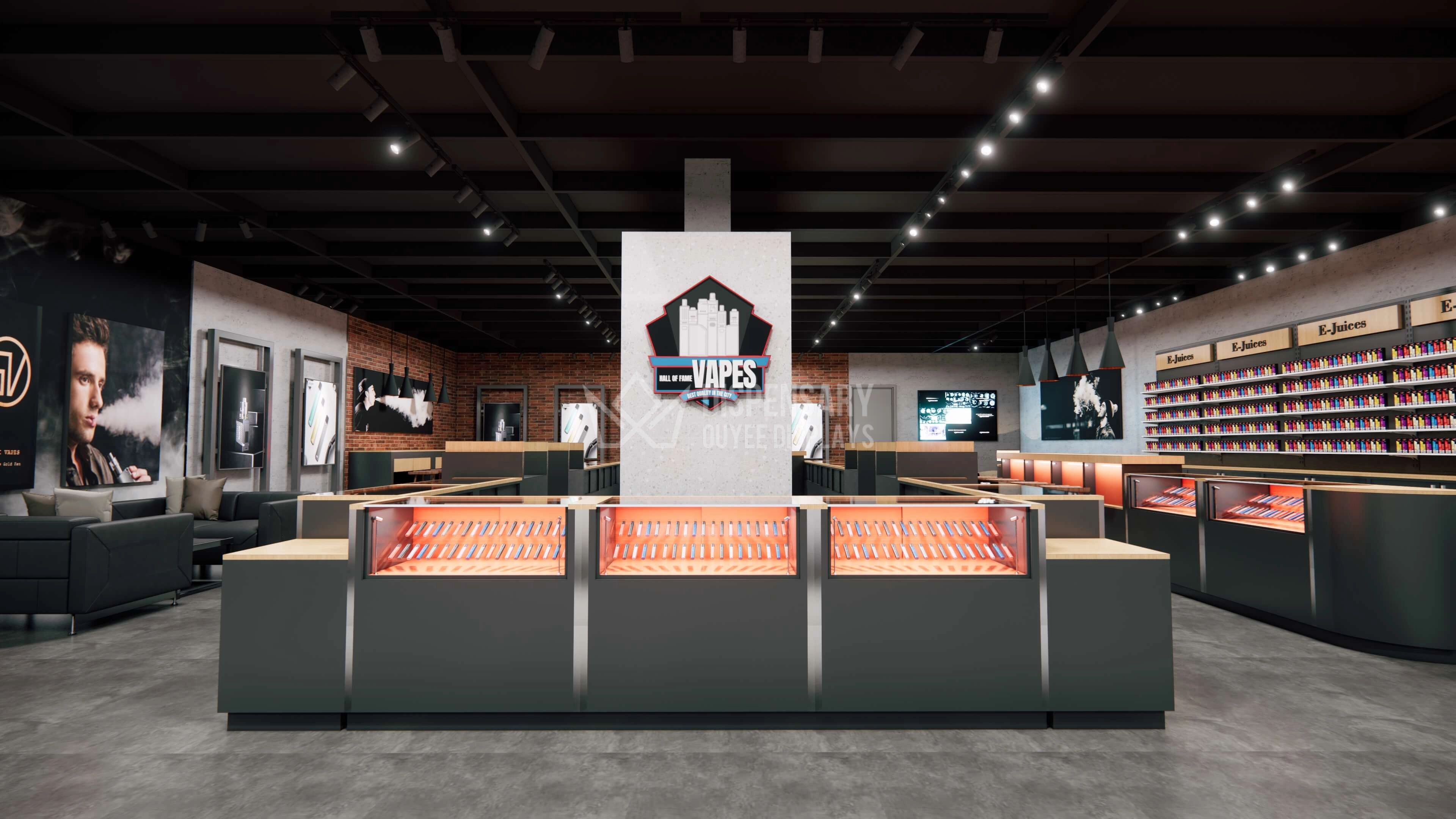
Custom Dispensary Display Design Services Modular Retail Solutions
Our Custom Dispensary Display Design Services specialize in creating unique, modular retail solutions tailored to your business needs. Whether you're showcasing tobacco products, e-liquids, or other retail items, our designs ensure maximum product visibility, security, and customer engagement. We combine high-end materials with flexible layouts, optimizing your store’s space while creating an upscale and professional atmosphere. From custom-built display units to comprehensive store design, our solutions are made to boost your retail environment’s functionality and aesthetic appeal.
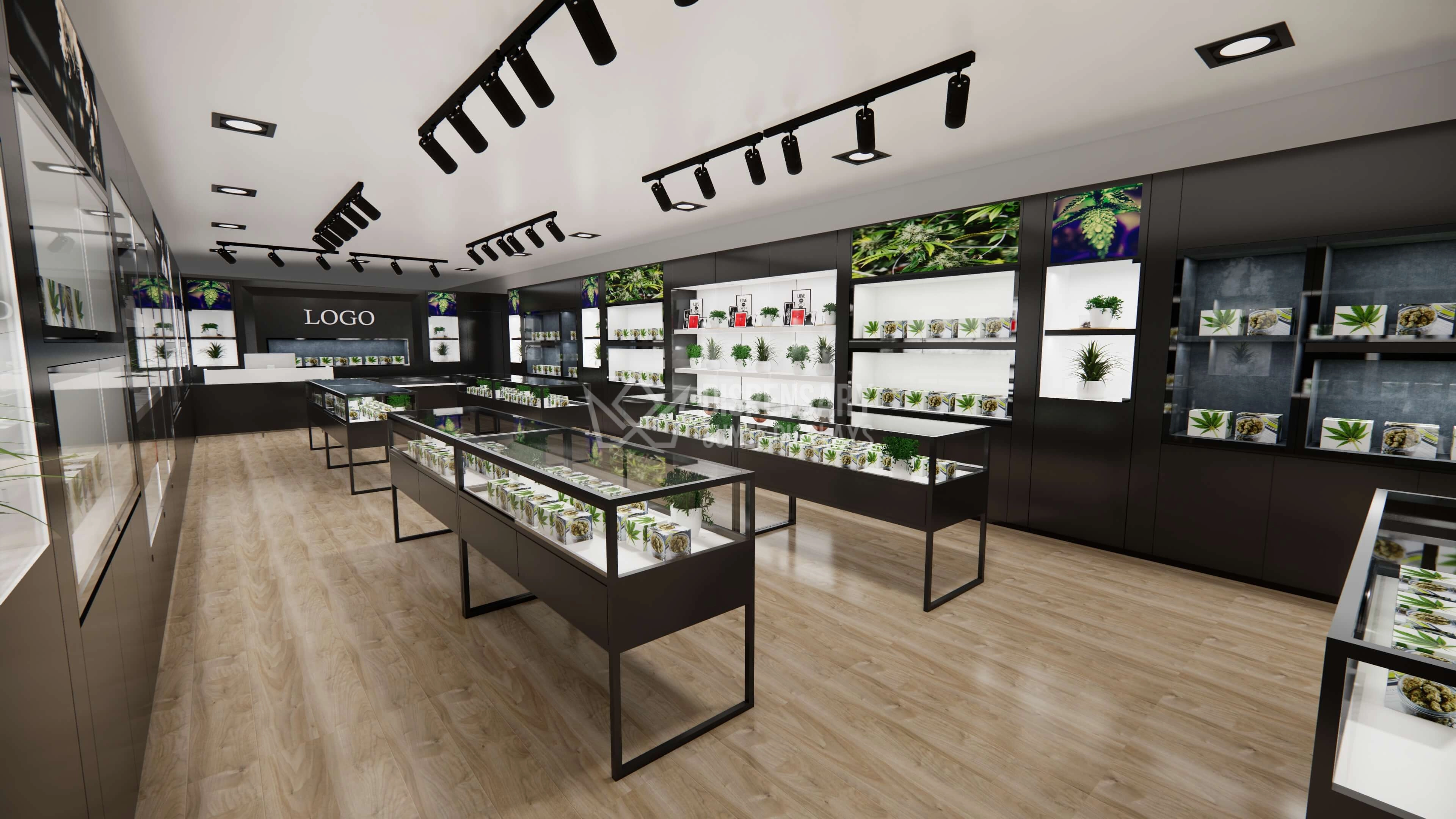
OEM ODM Dispensary Showcase Counters Display Fixtures For Cannabis
Sleek, secure, and fully customizable — our OEM/ODM dispensary counters redefine how cannabis is displayed in retail environments, merging form and function seamlessly.
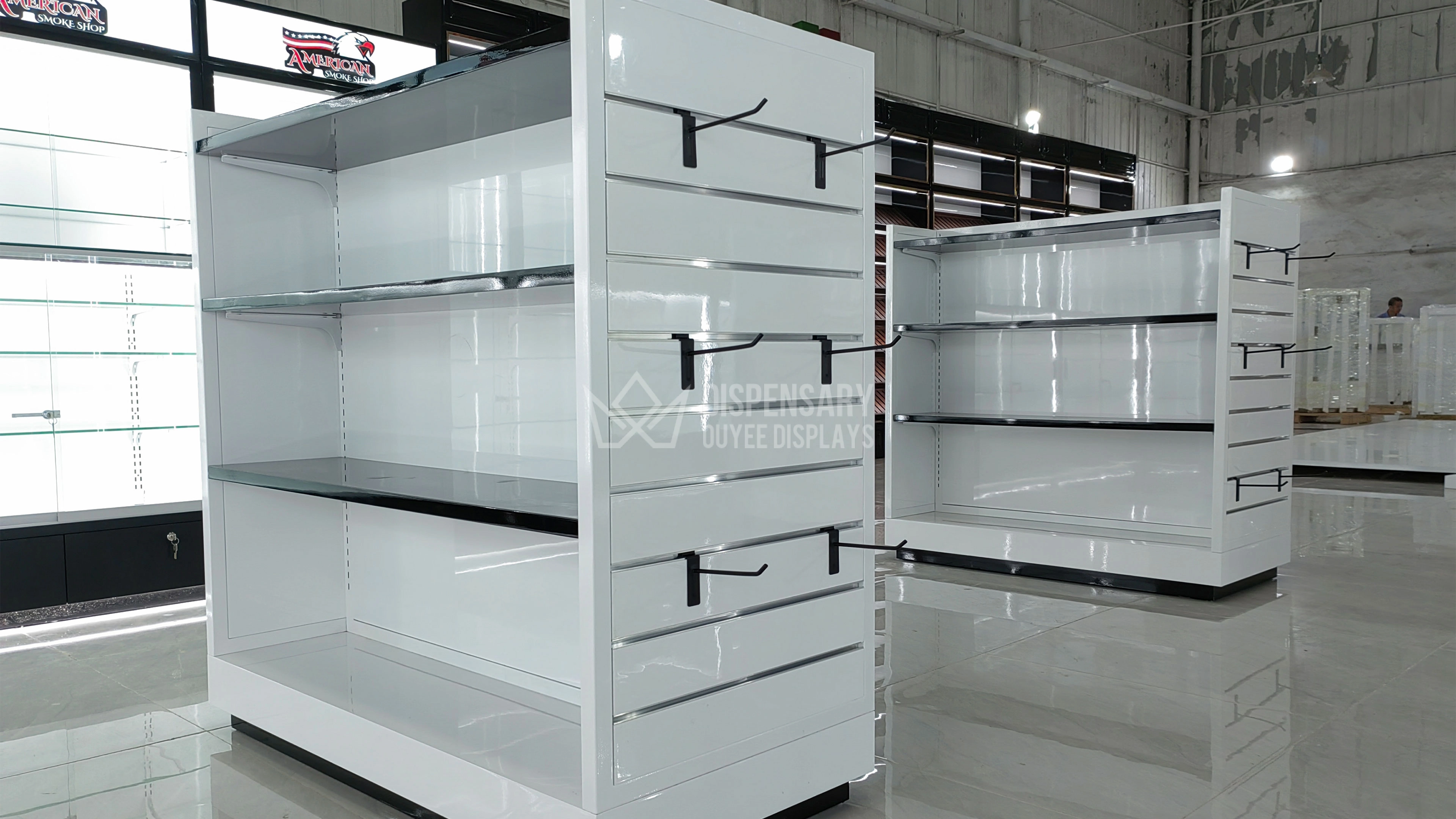
Smoke Shop Fixtures Multi Tiered Cigarette Display Cabinet Factory
Elevate your smoke shop’s merchandising with our multi-tiered cigarette display cabinet, built with premium glass, wood veneer, and integrated LED lighting. This customized setup includes a dedicated cigar room wall system for showcasing high-end cigars, making it the ultimate retail display solution for modern smoke shops.
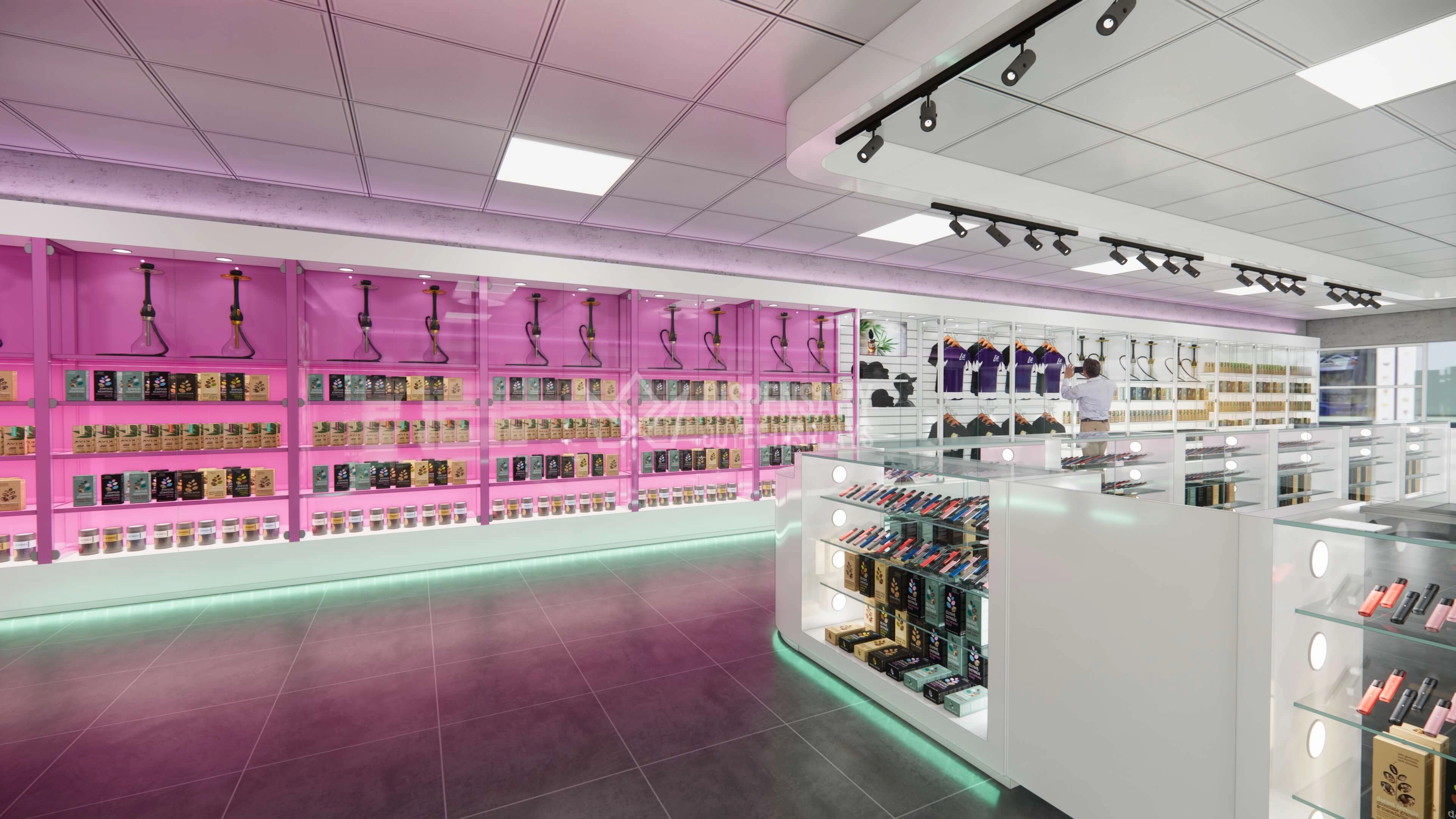
Modern Minimalist Cannabis Dispensary Displays Solutions
Modern minimalist cannabis dispensary displays offer sleek design, optimal product visibility, and efficient space usage, enhancing customer experience and elevating your store’s professional image.
Let's get in touch

Email: gzouyeedisplay@gmail.com
WhatsApp: +86 136 6049 7267
Ouyee Dispensary
Ouyee Dispensary
Ouyee Dispensary
Ouyee Dispensary