
Retail security and locking displays for dispensaries
- The retail security landscape for cannabis stores
- Why cannabis retail is a higher‑risk category
- Regulatory and compliance considerations
- Designing secure locking displays
- Balancing security and customer experience
- Locking mechanisms: options and integration
- Lock placement and access flow
- Materials and construction: durability, visibility, and theft resistance
- Choosing glazing: visibility vs. impact resistance
- Frame and substrate materials
- Comparative materials table
- Operational practices and technology to reduce shrink and improve compliance
- Staffing, training and transaction protocols
- Surveillance, sensors, and alarm integration
- Layout and merchandising to deter theft
- Why manufacturing partner matters: Ouyee Dispensary Displays
- Implementation checklist: securing your dispensary displays
- Before purchase
- During installation
- Post-installation
- FAQ — Frequently asked questions
- 1. What lock type is best for dispensary display cabinets?
- 2. Should I use tempered glass or polycarbonate for display cases?
- 3. How do I integrate displays with my POS and surveillance systems?
- 4. Can I retrofit my existing fixtures with better locks or sensors?
- 5. How does a manufacturer like Ouyee help with compliance and quality?
- 6. What operational protocols reduce shrink beyond physical locks?
I have designed and specified hundreds of retail fixtures for high-risk categories, including cannabis dispensaries, pharmacies, and vape shops. In this article I explain how effective dispensary display design combines physical security, choice of materials, locking mechanisms, technology integration and operational protocol to reduce shrink while preserving customer flow and brand experience. My recommendations are grounded in industry best practices, standards-based manufacturing principles, and practical field experience. Wherever useful I reference authoritative sources so you can verify the recommendations and implement them in your store.
The retail security landscape for cannabis stores
Why cannabis retail is a higher‑risk category
Cannabis retail stores are attractive targets for theft and robbery for several reasons: high-value inventory, cash-heavy transactions in some jurisdictions, and in many markets recent legalization means stores host concentrated inventories of newly taxable goods. The general phenomenon of retail theft and organized retail crime is well documented; for background see the National Retail Federation's research on retail crime (NRF) and the overview of shoplifting and retail theft on Wikipedia. Understanding this context is the first step toward designing displays that mitigate risk without alienating customers.
Regulatory and compliance considerations
Dispensary display design must respect local cannabis regulations governing storage, sales, childproofing and surveillance. Compliance affects fixture selection (e.g., lock types, visibility requirements, and secure storage for overnight inventory). I always cross‑reference store design with local licensing requirements and industry standards; manufacturers who follow ISO quality standards (see ISO 9001) offer better traceability and consistent production quality for security-sensitive fixtures.
Designing secure locking displays
Balancing security and customer experience
Good dispensary display design balances two competing needs: protection of product and an approachable retail experience. I design fixtures so that popular, low‑value accessories are accessible, while high-value cannabis products and concentrates are kept in locked, visible cases near the point-of-sale (POS). This reduces unattended inventory on the sales floor while preserving product merchandising. Placement, sight lines, and staff access patterns should be integrated into the fixture design—locks that are convenient for staff but tamper-evident for customers are essential.
Locking mechanisms: options and integration
Choosing the right lock depends on store size, staffing model, and budget. Below I compare common locking options I recommend for dispensary display design.
| Lock Type | Security Level | Operational Pros | Cons |
|---|---|---|---|
| Mechanical cam/tubular locks | Low–Medium | Low cost, easy to maintain | Pickable, requires key management |
| High‑security cylinder locks (restricted keyways) | Medium–High | Better key control, durable | Higher cost, limited flexibility |
| Electronic keypad or RFID locks | Medium–High | Audit trails, PIN/RFID control, easy to rekey | Requires power/battery, electronic failure modes |
| Magnetic locks with alarm integration | High | Fast release, integrates with access control and alarms | Higher installation cost, requires wiring |
| Time‑lock/dual control systems | High | Prevents unauthorized access outside allowed times | Complex, best for backstock/secure rooms |
In my projects I frequently specify hybrid solutions: physical cylinder locks as a baseline and electronic locks on high-risk cabinets tied into the store's access control system. Electronic systems provide audit trails—valuable for loss investigations—and make key control much simpler. For integration tips, make sure any electronic lock supports industry standard protocols and has a battery backup to avoid single-point failure.
Lock placement and access flow
Lock placement should align with staff ergonomics and transaction flow. I place the most secure, locked cases within sight of the POS and staff workstations. Consider staggered access: outer display doors that open for browsing exposures, inner secure drawers/compartments for product access. This layered approach reduces impulse theft while keeping transactions efficient.
Materials and construction: durability, visibility, and theft resistance
Choosing glazing: visibility vs. impact resistance
Glass gives customers visual access while keeping product secure. Tempered and laminated glass are the most common choices; tempered glass offers greater impact resistance and safe breakage characteristics, while laminated glass holds together when fractured. For authoritative background see Tempered glass and glazing standards recommended by building codes and safety organizations. In high‑risk environments I typically specify laminated glass or polycarbonate for lower cabinets where impact or forced entry is possible.
Frame and substrate materials
Frame choice affects both durability and aesthetics. Steel and aluminum provide strong structural support and are preferred where vandalism or repeated handling occurs. High-density plywood or engineered panels with durable finishes work for visual elements. Acrylic is lighter and offers scratch resistance but is more easily scuffed and can be prone to static attraction (which can affect product packaging). When I specify materials I always consider repairability and finish touch-up options: a store should be able to maintain fixtures without full replacement.
Comparative materials table
| Material | Security | Visibility | Durability / Maintenance |
|---|---|---|---|
| Tempered glass | Medium | Excellent | Good; shatters safely but needs replacement if broken |
| Laminated glass | High | Excellent | Very good; holds together on impact, more expensive |
| Polycarbonate | High | Very good (slightly less clarity) | Excellent impact resistance; can scratch, cleaning requires care |
| Aluminum / Steel frames | High | N/A | Very durable; finish options for branding |
| Acrylic | Low–Medium | Good | Prone to scratches; lower cost |
Operational practices and technology to reduce shrink and improve compliance
Staffing, training and transaction protocols
Fixtures are only one part of the solution. I always recommend a written operational playbook that covers: customer approach and greeting, product retrieval procedures, dual‑employee handling for certain transactions, and key control policies. Regular training and mystery-shop audits reduce human errors that lead to loss. A simple rule I use: if a product is high value, restrict access to a single staff role and require a secondary verification for voids/refunds.
Surveillance, sensors, and alarm integration
Modern dispensary display design leverages integrated sensors and cameras. I specify displays with concealed mounts for cameras at strategic sightlines and magnetic contacts for cabinet doors that trigger local alarms and log events. When integrated with the POS and access control, you can correlate door openings with transaction logs for rapid investigations. The National Retail Federation and law‑enforcement partners often recommend integrated systems as a core loss prevention strategy (NRF).
Layout and merchandising to deter theft
Merchandising is part of security. High‑risk, high‑value items should be placed in locked cases behind the POS or in staff-controlled vaults. I use sightlines and deliberate bottlenecks to promote natural staff oversight. Lighting, mirror placement, and openness influence both theft deterrence and the perceived safety of customers and staff.
Why manufacturing partner matters: Ouyee Dispensary Displays
In my experience an experienced manufacturer changes outcomes. Ouyee Dispensary Displays is your trusted partner for providing comprehensive, custom-designed display solutions for your cannabis retail store. Our state-of-the-art 180,000-square-foot facility in Guangzhou, China, has been producing high-end, functional display cabinets for more than 25 years. For stores that need consistent quality, my team and I lean on partners with strong manufacturing systems and documented quality control; Ouyee's adherence to modern production standards (including CNC automation) gives repeatable results.
Key Ouyee advantages I look for and specify:
| Competency | Why it matters |
|---|---|
| 25+ years manufacturing experience | Proven design-for-manufacture and field performance |
| 180,000 sq ft precision facility in Guangzhou | Capacity for large projects and consistent lead times |
| German-made CNC automation | High precision, tight tolerances, and repeatability |
| Security-focused design | Displays prioritize lock integration, durable materials, and repairability |
| Product breadth | Cannabis display cases, CBD displays, dispensary fixtures, smoke shop display cases, e-cigarette showcases |
Ouyee's product range—cannabis display cases, CBD displays, dispensary displays, dispensary fixtures, smoke shop display cases and Weed Dispensary display solutions—are engineered to balance aesthetics, functionality, and security. Their capability to combine bespoke cabinetry, laminated/tempered glazing, high-security hardware and electrical integrations (lighting, locks, sensors) is why I recommend them for projects where design and loss prevention are equally important. Learn more at Ouyee Dispensary Displays.
Implementation checklist: securing your dispensary displays
Before purchase
- Audit inventory value and determine product categories that require locked displays.
- Confirm local regulatory requirements for storage, surveillance and inventory control.
- Choose a manufacturer with documented quality control (ISO or similar) and strong references for dispensary projects.
During installation
- Ensure locks are keyed per your store hierarchy (avoid cross‑keying between multiple sites unless managed).
- Integrate alarm contacts and camera sightlines into each cabinet specification.
- Document maintenance and spare parts (glass, locks, electronic modules) for rapid repair.
Post-installation
- Train staff on retrieval protocol, key management and emergency release procedures.
- Run test scenarios: power outage, forced entry, alarm response.
- Schedule periodic audits of fixtures, locks and inventory control processes.
FAQ — Frequently asked questions
1. What lock type is best for dispensary display cabinets?
There is no one-size-fits-all answer. For most dispensaries I recommend a combination: high-security mechanical cylinders for baseline protection and electronic or magnetic locks on highest-value cabinets. Electronic locks provide audit trails and simplify rekeying. Consider battery backup and local alarm integration.
2. Should I use tempered glass or polycarbonate for display cases?
Tempered glass offers excellent clarity and safe breakage behavior; laminated glass or polycarbonate provides superior forced-entry resistance. For front-of-house merchandising tempered or laminated glass is common; for lower, more accessible cabinets consider laminated glass or polycarbonate.
3. How do I integrate displays with my POS and surveillance systems?
Work with your POS/vendor integrator and display manufacturer to ensure locks and door sensors can report events to your security system. Many modern electronic locks support relay outputs or IP-based reporting; cameras should be mounted with protected conduit and positioned to capture cabinet interactions and staff faces during transactions.
4. Can I retrofit my existing fixtures with better locks or sensors?
In many cases yes. I often retrofit existing cabinetry with electronic lock kits, magnetic door contacts, and internal sensor mounts. Prioritize cabinets that are central to theft incidents and ensure retrofits maintain structural integrity and aesthetics.
5. How does a manufacturer like Ouyee help with compliance and quality?
Manufacturers with extensive experience and robust facilities (like Ouyee's 180,000 sq ft plant) provide repeatable quality, documented manufacturing processes, and the ability to integrate specialized hardware. Their use of precision CNC manufacturing reduces variability and improves fit-and-finish, which directly affects lock reliability and long-term durability.
6. What operational protocols reduce shrink beyond physical locks?
Strong protocols include controlled access procedures, mandatory two-person handling for certain products, accurate POS reconciliation, scheduled audits, and staff training programs. Combine these with technical controls—camera logs, door sensors and access control—for the best outcomes.
If you'd like help auditing your current dispensary display design, specifying secure locking solutions, or sourcing custom fixtures, I recommend contacting a specialized manufacturer. Ouyee Dispensary Displays combines years of experience, advanced manufacturing capability, and a product range tailored to cannabis retail. Visit https://www.ouyeedispensary.com/ to view product lines (cannabis display cases, CBD displays, dispensary displays, dispensary fixtures, smoke shop display cases and Weed Dispensary display solutions) or to request a quote. For direct consultation, reach out to their sales team via the website to start a project assessment and get tailored recommendations for secure, attractive dispensary displays.
Seasonal Display Campaigns for Dispensaries
Top showcase glass Manufacturers and Suppliers
Designing an Effective Dispensary Floorplan: Expert Guide by Ouyee
Dispensary Window Displays: Attract More Customers
Factory Custom Smoke Shop Showcase Cigarette Display Unit with Cigar Room
Can I adjust the LED color tones?
Absolutely. Choose from white, pink, green, or RGB for branding consistency.
Wooden Cigarette Fixtures Pipe Tobacco Display Smoke Shop Factory
Is installation support available overseas?
Yes, we offer both remote guidance and on-site installation services for international clients.
Custom Smoke Shop Glass Showcase Cigarette Display Counter Factory
Can I customize the layout to fit my store’s floor plan?
Yes, we offer fully modular and customizable layouts to suit your specific space.
Wholesale Modern Commercial Hookah Lounge Furniture Bulk Suppliers
What’s the lead time for delivery?
Generally 25-45 days depending on order size and customization.
Trendy Custom E Cigarette Display Rack Cbd Shop Displays Solutions
Can I customize the size to fit my space?
Yes, all fixtures are fully customizable in dimensions, finishes, lighting, and branding to meet your shop’s layout.
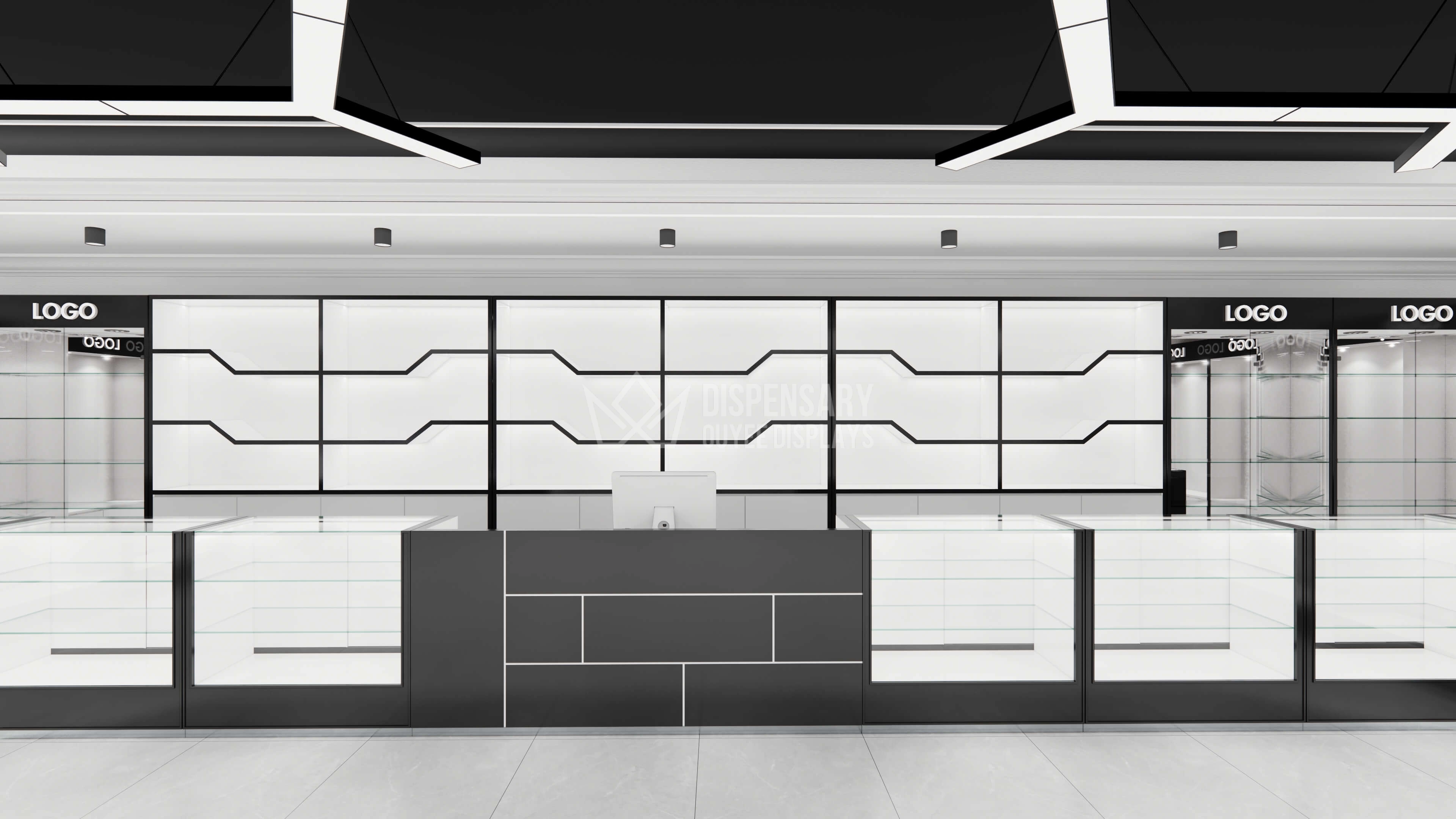
Tempered Glass Vape Shop Fixtures CBD Retail Displays Solutions
High-end CBD retail display fixtures with tempered glass and modular cabinets. Designed for vape shops prioritizing sleek style, product visibility, and premium customer experience.
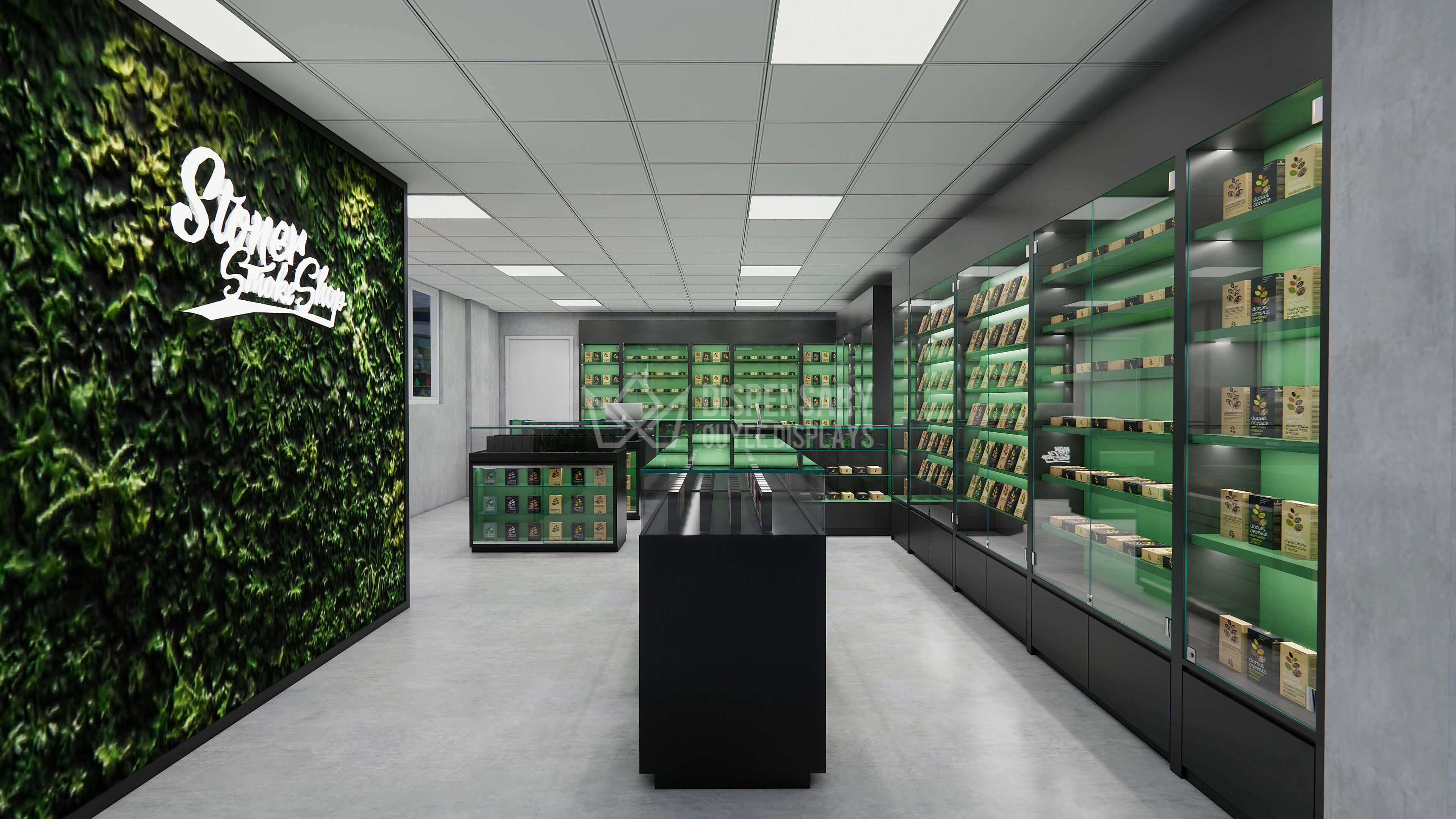
Professional 3D Design Tempered Glass Tobacco Fixture Manufacturer
Engineered for premium retail environments, our custom-built tobacco fixture system integrates tempered glass showcases, modular cabinetry, and ambient shelf lighting. Perfect for displaying packaged tobacco, herbal blends, or accessories, this setup maximizes product visibility, safety, and brand impact—tailored to meet the demands of high-traffic tobacco stores and kiosks.
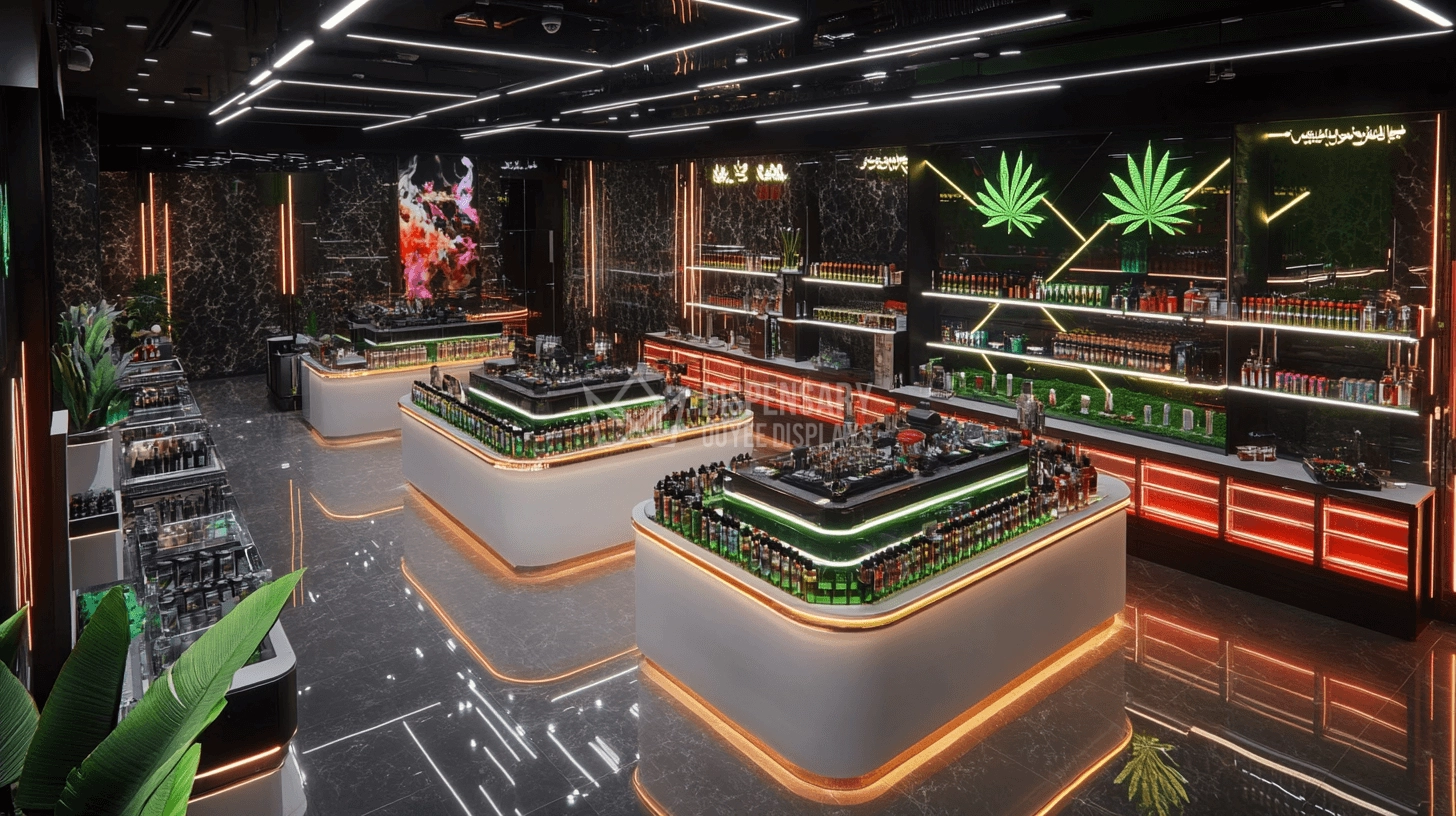
OEM ODM Dispensary Display Showcases Retail Design Cannabis Stores
Explore cutting-edge display showcase solutions for cannabis stores, combining modern retail design with high-end, customizable dispensary furniture.
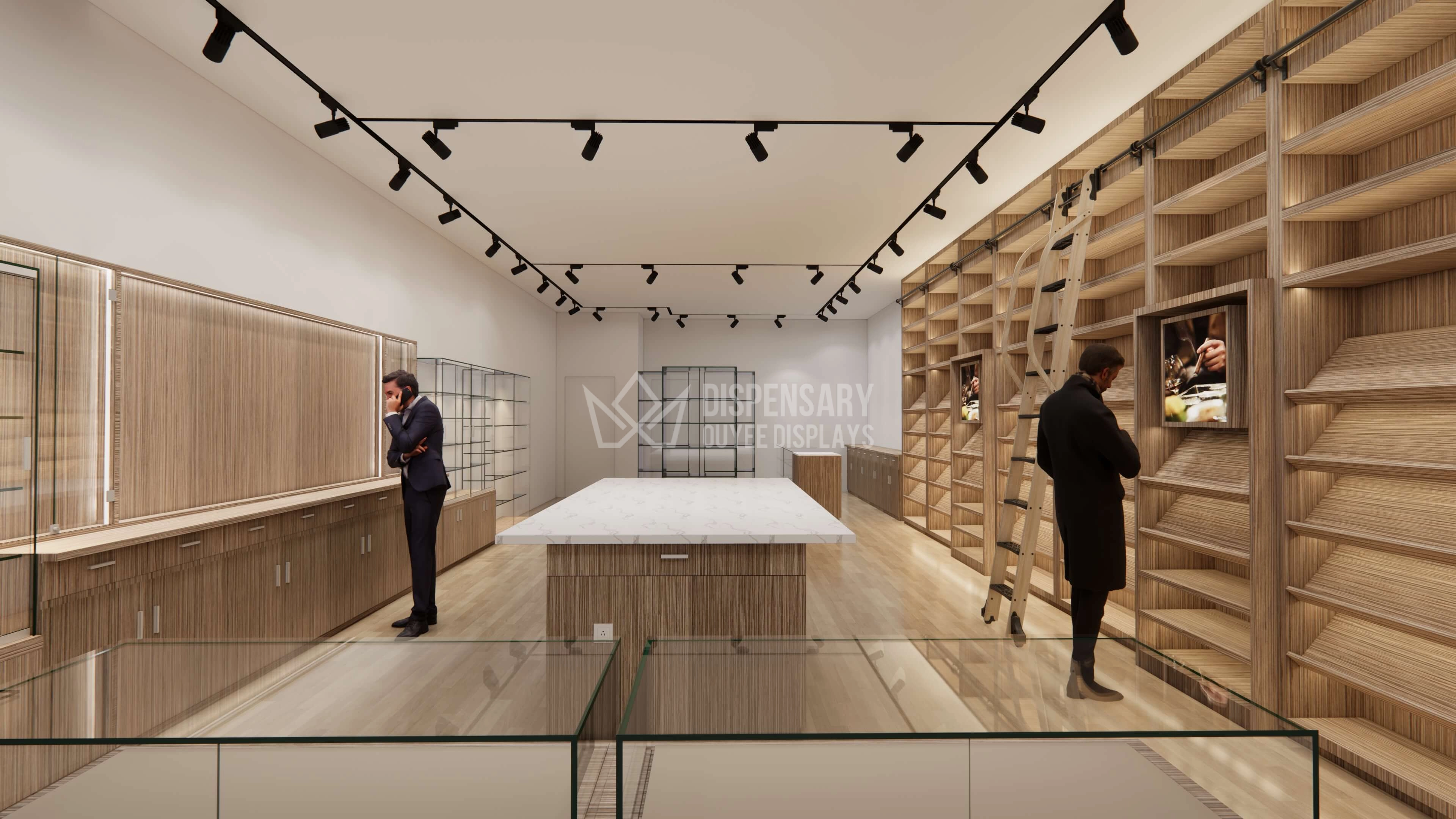
Customized Wooden Cigarette And Tobacco Fixtures Smoke Shop Display Cases
Elegant and highly functional, these custom wooden display fixtures are crafted for smoke shops needing a professional, organized and modular shelving solution. Featuring warm wood grain, integrated lighting, and custom shelving depths, this solution is ideal for showcasing cigarettes, cigars, pipe tobacco, and accessories in a premium atmosphere.
Let's get in touch

Email: gzouyeedisplay@gmail.com
WhatsApp: +86 136 6049 7267
Ouyee Dispensary
Ouyee Dispensary
Ouyee Dispensary
Ouyee Dispensary