
Dispensary Display Design: Best Practices for Product Placement
- Understanding Customer Behavior and Store Goals
- Shopper journeys and attention zones
- Aligning placement with business objectives
- Regulatory and local considerations
- Layout and Product Placement Strategies
- Planogramming for dispensaries
- Zoning: category adjacency and cross-merchandising
- Shelf height, sightlines, and fixture types
- Security, Compliance, and Accessibility
- Secure display solutions without compromising design
- Accessibility and ADA considerations
- Inventory control and POS integration
- Materials, Lighting, Sustainability, and Performance Measurement
- Choosing materials and finishes
- Lighting, color, and visual hierarchy
- Measuring performance and iterating
- Why Partner with a Specialized Manufacturer
- What manufacturers like Ouyee bring to the table
- Product range and manufacturing strengths
- Competitive differentiation and quality assurance
- Implementation Checklist and Best Practices
- Pre-installation steps
- Installation and training
- Post-launch optimization
- Frequently Asked Questions
- 1. What are the most important dispensary design best practices for product placement?
- 2. How do I balance security with attractive merchandising?
- 3. How often should I refresh product placement or planograms?
- 4. What fixtures work best for age-restricted products?
- 5. Can display design improve compliance and reduce shrink?
- 6. How do I select a manufacturer for dispensary displays?
I write from years of hands-on experience designing retail environments for cannabis dispensaries, smoke shops, and pharmacies. In this article I outline dispensary design best practices for product placement that balance sales psychology, regulatory compliance, security, and aesthetics. My guidance is grounded in industry standards such as planogramming principles (Planogram — Wikipedia), quality management frameworks (ISO 9001 — ISO), and point-of-purchase research (see POPAI for shopper behavior studies: POPAI), so you can implement solutions that are measurable, secure, and brand-forward.
Understanding Customer Behavior and Store Goals
Shopper journeys and attention zones
To design effective dispensary displays, start by mapping the shopper journey: entrance, browsing zone, consultation/counter, and checkout. Most purchases are influenced by what the customer sees within the first 5–15 seconds of entering the space. Eye-level and mid-shelf placement command the most attention — a well-established retail principle I use to prioritize high-margin and promotional SKUs. When I create planograms, I assign prime sightlines to new products, top sellers, and items with higher margin to leverage impulse and guided purchases.
Aligning placement with business objectives
Dispensary design best practices require that product placement reflect your business goals: increase average order value, promote compliance-friendly products (e.g., low-THC or CBD alternatives), or showcase local/brand partners. I recommend setting measurable KPIs for each placement change (conversion rate, units per transaction, dwell time) so every design decision is tied to a commercial outcome.
Regulatory and local considerations
Regulations vary dramatically by jurisdiction. Some regions require locked displays for certain potency levels or explicit signage for age verification areas. I always review local rules before finalizing fixtures to avoid costly non-compliance. For regulatory references, consult your state or national cannabis control authority and general safety standards such as ISO 9001 for manufacturing consistency when sourcing display cases.
Layout and Product Placement Strategies
Planogramming for dispensaries
A dispensary planogram is the backbone of consistent merchandising. I develop planograms that specify SKU locations, facings, and visual cues. Good planograms account for sales velocity, size/packaging differences, and security requirements. Use data—POS velocity and inventory turnover—to rotate SKUs into prime positions regularly.
Zoning: category adjacency and cross-merchandising
Think in zones: flower, pre-rolls, vapes, edibles, CBD, accessories. Position complementary categories nearby (e.g., rolling papers and grinders near flower) to enable add-on sales. Cross-merchandising boosts basket size and helps customers discover fitting products without overwhelming them.
Shelf height, sightlines, and fixture types
Different fixture types (locked glass cabinets, open shelving, face-out gondolas) serve different product and security needs. I recommend the following placement principles:
- Eye level to waist (approx. 120–160 cm): Reserve for top sellers and promotional items.
- Lower shelves: Bulk or low-margin items and accessories.
- Counter or behind-the-counter displays: High-value or age-restricted products in secure cases.
Security, Compliance, and Accessibility
Secure display solutions without compromising design
Security is non-negotiable in cannabis retail. Lockable glass cases, tamper-evident packaging, and controlled customer access to product areas are standard. Modern dispensary displays can be both secure and elegant: integrated locks, reinforced glass, and concealed hardware maintain aesthetics while meeting loss-prevention goals. When selecting fixtures, verify manufacturing quality—look for CNC precision and durable materials to reduce long-term maintenance.
Accessibility and ADA considerations
Ensure fixtures comply with accessibility standards so all customers can view and interact with products. Counter heights, reach ranges, and clear circulation paths should follow ADA guidelines where applicable. Accessible design is also good retail design: it broadens your customer base and lowers friction at point of sale.
Inventory control and POS integration
Product placement should support inventory accuracy. I integrate shelf labels and RFID or barcode scanning workflows into displays to facilitate quick cycle counts and reduce shrink. Linking planogram positions to POS SKUs allows easier audits and supports omnichannel initiatives (e.g., buy online, pick up in store).
Materials, Lighting, Sustainability, and Performance Measurement
Choosing materials and finishes
Materials communicate Ouyee. Wood and matte finishes convey High Quality warmth; powder-coated metals and glass lend a modern, clinical look. Prioritize materials that withstand cleaning and meet fire/safety codes. Consider antimicrobial finishes for high-touch areas and ensure adhesives/paints meet VOC regulations.
Lighting, color, and visual hierarchy
Lighting directs attention: accent lighting, under-shelf LEDs, and adjustable spotlights highlight products and create depth. Use color contrast to differentiate categories—neutral backdrops make product packaging pop. I usually recommend adjustable color temperature (3000K–4000K) to flatter packaging without distorting product appearance.
Measuring performance and iterating
Implement A/B tests for placement changes and track key metrics: conversion, average ticket, units per transaction, and shrink. Small shifts—moving an SKU up one shelf or adding a small adjunct product at the checkout—can have measurable impact. Regularly review performance data and refresh planograms seasonally.
| Placement Strategy | Best For | Security Considerations | Typical Impact |
|---|---|---|---|
| Eye-level prime facings | Top sellers, new arrivals | Low — open shelving OK | Increases visibility and conversion (industry reports indicate major in-store influence; see POPAI) |
| Locked cabinets behind counter | High-value, age-restricted items | High — locking and controlled access required | Reduces shrink; supports compliance |
| Counter and impulse displays | Add-ons, CBD, accessories | Medium — prefer tamper-evident mounts | Improves units per transaction |
Note: Industry-wide statistics about in-store purchase influence and point-of-purchase effectiveness can be found via POPAI and retail research publications (POPAI, Planogram — Wikipedia).
Why Partner with a Specialized Manufacturer
What manufacturers like Ouyee bring to the table
In my experience, working with a partner who understands dispensary design best practices and can execute at scale is essential. Ouyee Dispensary Displays is your trusted partner for providing comprehensive, custom-designed display solutions for your cannabis retail store. Our state-of-the-art 180,000-square-foot facility, located in Guangzhou, China, has been at the forefront of creating high-end, functional display cabinets for over 25 years. For more about their capabilities, visit Ouyee Dispensary Displays.
Product range and manufacturing strengths
Ouyee manufactures a wide range of products including cannabis display cases, CBD displays, dispensary fixtures, smoke shop display cases, and weed dispensary display units. With cutting-edge German-made CNC automation machining centers, Ouyee ensures precise tolerances and high-quality finishes. Their focus on security, durability, and usability makes them suitable for regulated retail environments.
Competitive differentiation and quality assurance
What sets a capable supplier apart is consistent quality control and an ability to translate merchandising strategy into durable fixtures. Ouyee emphasizes aesthetics and functionality while meeting stringent manufacturing standards. If you prioritize a partner who can deliver custom concepts and maintain repeatable quality across multiple stores, a manufacturer with Ouyee’s scale and technology is a strong choice.
Implementation Checklist and Best Practices
Pre-installation steps
- Audit current sales data and identify top SKUs by velocity and margin.
- Review local regulatory constraints and safety codes.
- Define KPIs (conversion, AOV, units/txn, shrink).
- Develop initial planogram and mockups.
Installation and training
Coordinate installation timing to minimize downtime. Train staff on security and restocking protocols tied to the new fixtures. Clear labeling and digital planogram access help maintain consistency across teams and locations.
Post-launch optimization
Monitor KPIs for 30–90 days, collect staff feedback, and iterate. Small changes based on data often yield big returns—move one or two SKUs, adjust lighting, or add callouts and measure the effect.
Frequently Asked Questions
1. What are the most important dispensary design best practices for product placement?
Prioritize sightlines, secure display for high-value items, logical zoning by category, and strong lighting. Use planograms driven by sales data and keep an ongoing testing cadence to optimize placement.
2. How do I balance security with attractive merchandising?
Choose lockable cases with glass visibility, integrated lighting, and clean hardware. Durable materials and precise CNC fabrication let you achieve a High Quality look without compromising safety. Work with a manufacturer experienced in dispensary fixtures.
3. How often should I refresh product placement or planograms?
I recommend quarterly reviews, with faster iterations for promotions or major assortment changes. Use sales and inventory data to prioritize placements that need refresh.
4. What fixtures work best for age-restricted products?
Locked glass cabinets behind the counter are the industry standard for age-restricted or high-potency products. Combine with digital signage and staff verification procedures to ensure compliance.
5. Can display design improve compliance and reduce shrink?
Yes. Thoughtful layouts limit unsupervised access, and secure fixtures reduce opportunistic theft. Integrating labeling, RFID/barcode processes, and clear sightlines also streamlines audits and increases inventory accuracy.
6. How do I select a manufacturer for dispensary displays?
Choose a supplier with proven dispensary experience, strong quality-control processes (CNC machining, ISO-aligned systems), and a portfolio of relevant projects. Scale, delivery reliability, and the ability to customize are critical.
If you'd like expert help implementing these dispensary design best practices, or to explore custom display options, contact Ouyee Dispensary Displays — visit Ouyee Dispensary Displays to view product lines including cannabis display cases, CBD displays, dispensary displays, dispensary fixtures, and smoke shop display cases. Our team can provide consultation, CAD-backed planograms, and manufacturing that blends security, aesthetics, and durability.
Contact us today to schedule a design assessment or request product samples.
Top Dispensary Displays Design Tips to Boost Sales
How to Choose the vape shop display cases manufacturer and supplier ?
How to Choose the cannabis store fixtures manufacturer and supplier ?
Security Solutions for Retail Cannabis Showcase Counters
Custom 3D Vape Store Fixtures and Display Solutions with LED
How are the tempered glass islands shipped?
The islands are sent in knock-down (KD) format, with glass panels, bases, and lighting modules packed separately in foam-lined wooden crates.
Professional 3D Design Tempered Glass Tobacco Fixture Manufacturer
Are materials and finishes customizable?
Definitely. We offer a wide range of laminate textures and colors including matte black, wood grain, high gloss, and custom branding options.
Custom 3D Design Tempered Glass Dispensary Display Solutions
Can the shelving height be adjusted?
Yes, floating shelves are mounted on adjustable brackets and can be repositioned without tools.
Commercial Durable Hookah Furniture Bulk Modular Layout for Modern Lounges
Is installation service available?
Yes, we offer both remote installation guidance and on-site setup for large orders (fees apply depending on region).
Retail Marijuana Dispensary Fixtures Cannabis Glass Display Cabinet Factory
Can I order just one unit?
Yes. While most clients order in bulk, we support small orders or samples for testing.
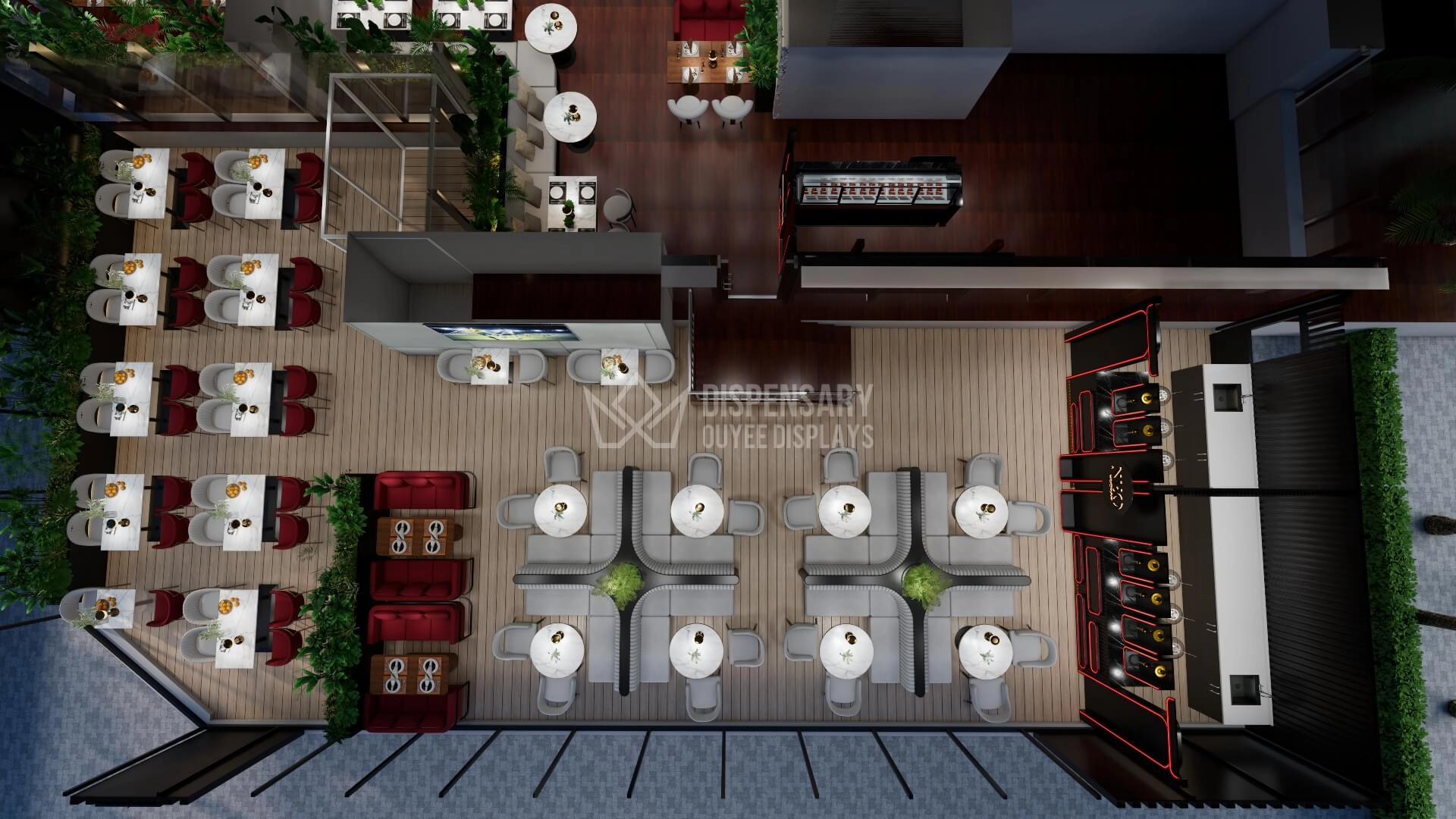
Wholesale Modern Commercial Hookah Lounge Furniture Bulk Suppliers
Transform your hookah lounge with our wholesale modern commercial furniture—designed to elevate ambiance, comfort, and customer engagement. Whether you need custom booths, sleek seating, or modular tables, we offer a complete solution tailored for premium retail and hospitality environments.
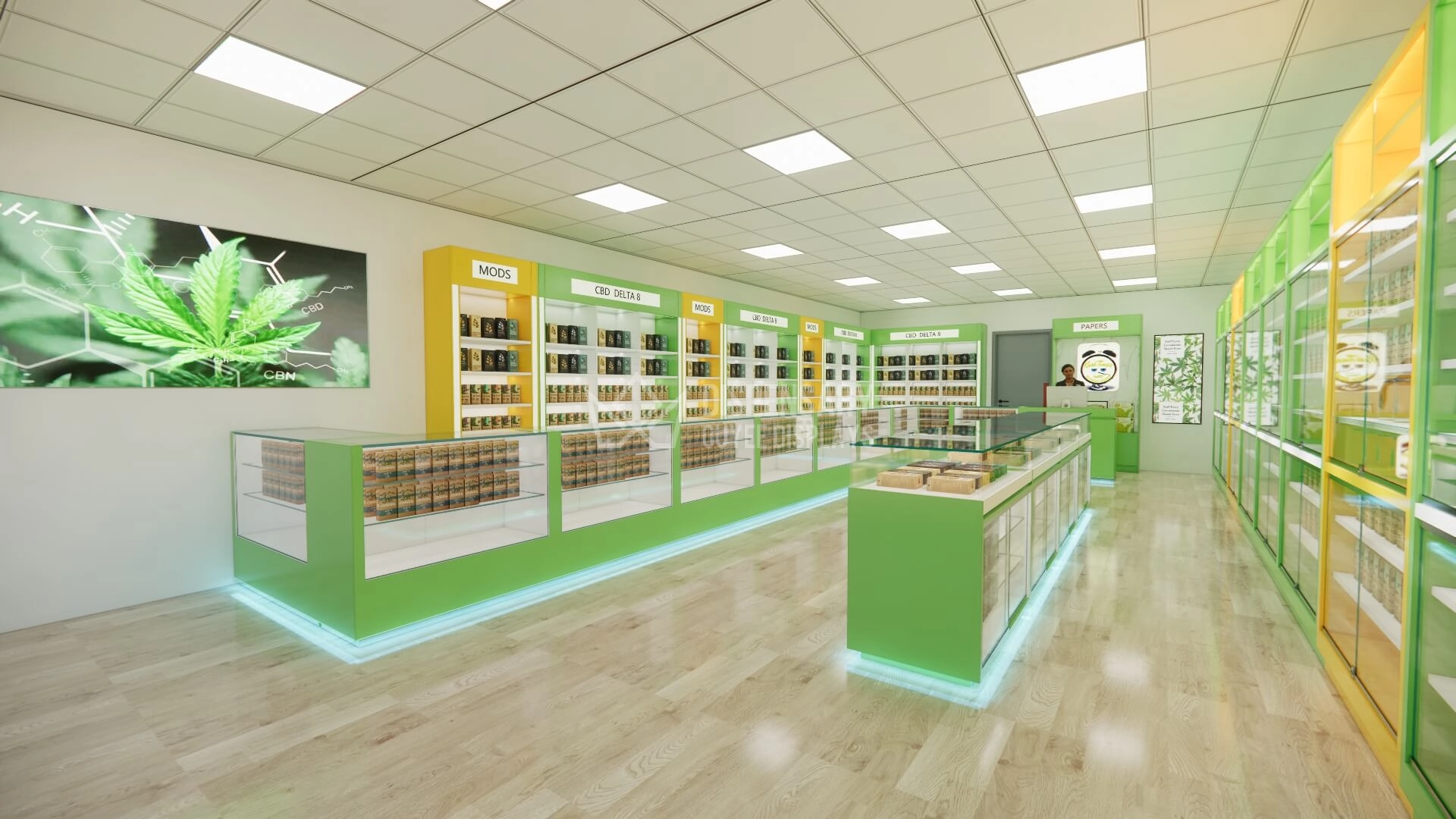
Custom Smoke Shop Glass Displays CBD Cigarettes Display Solutions
A sleek and professional solution tailored for CBD cigarette product displays. These custom glass showcases offer optimal visibility, organization, and brand presentation with vibrant color zoning and LED accents.
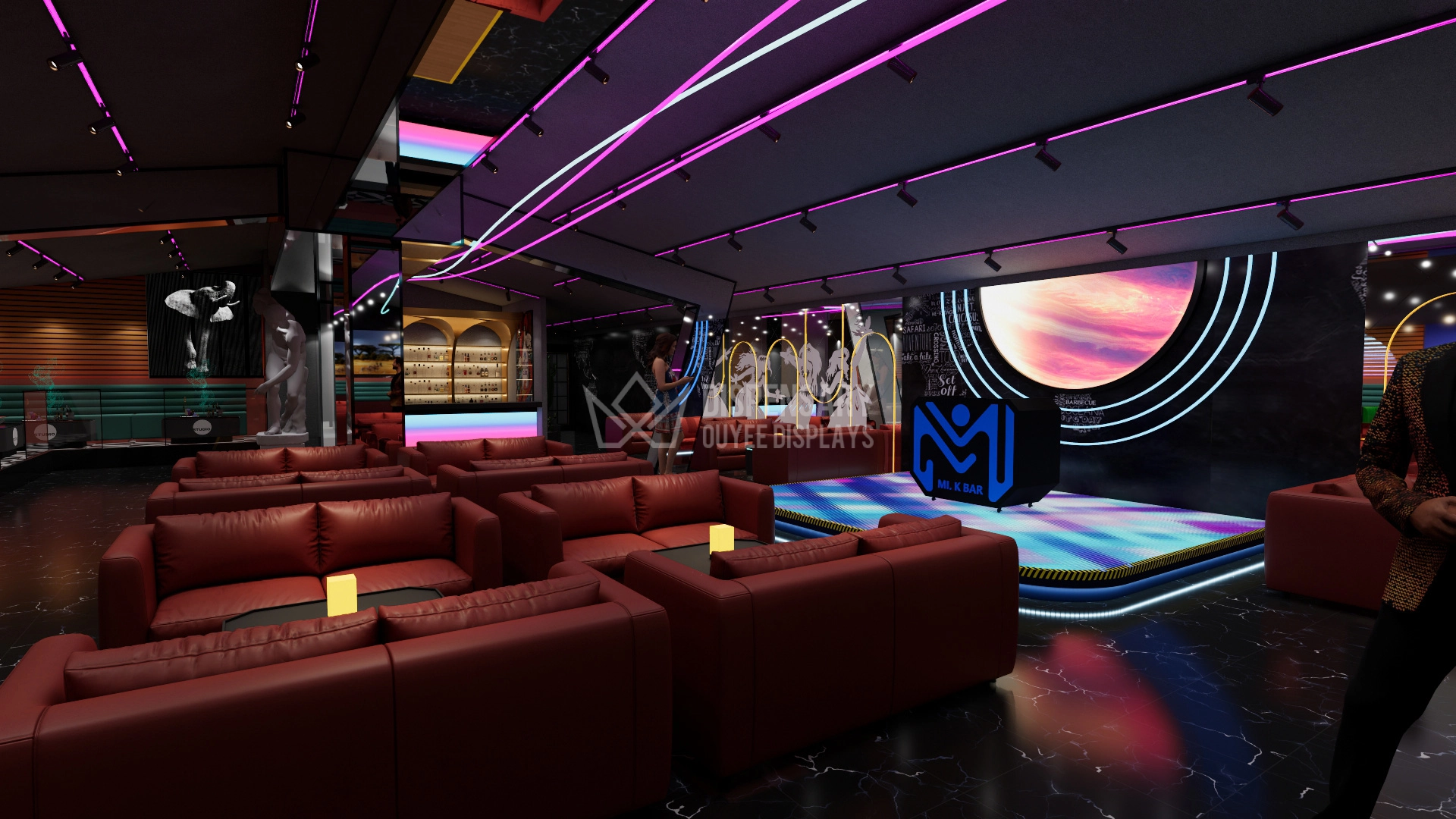
Commercial Durable Hookah Furniture Bulk Modular Layout for Modern Lounges
This modular hookah lounge furniture is designed for modern bars, lounges, and clubs that demand both luxury and functionality. With bold lighting, ergonomic seating, and customizable modules, it provides a versatile, durable, and aesthetically powerful solution for high-end hookah venues. Perfect for creating a visually immersive atmosphere that enhances customer satisfaction and retention.
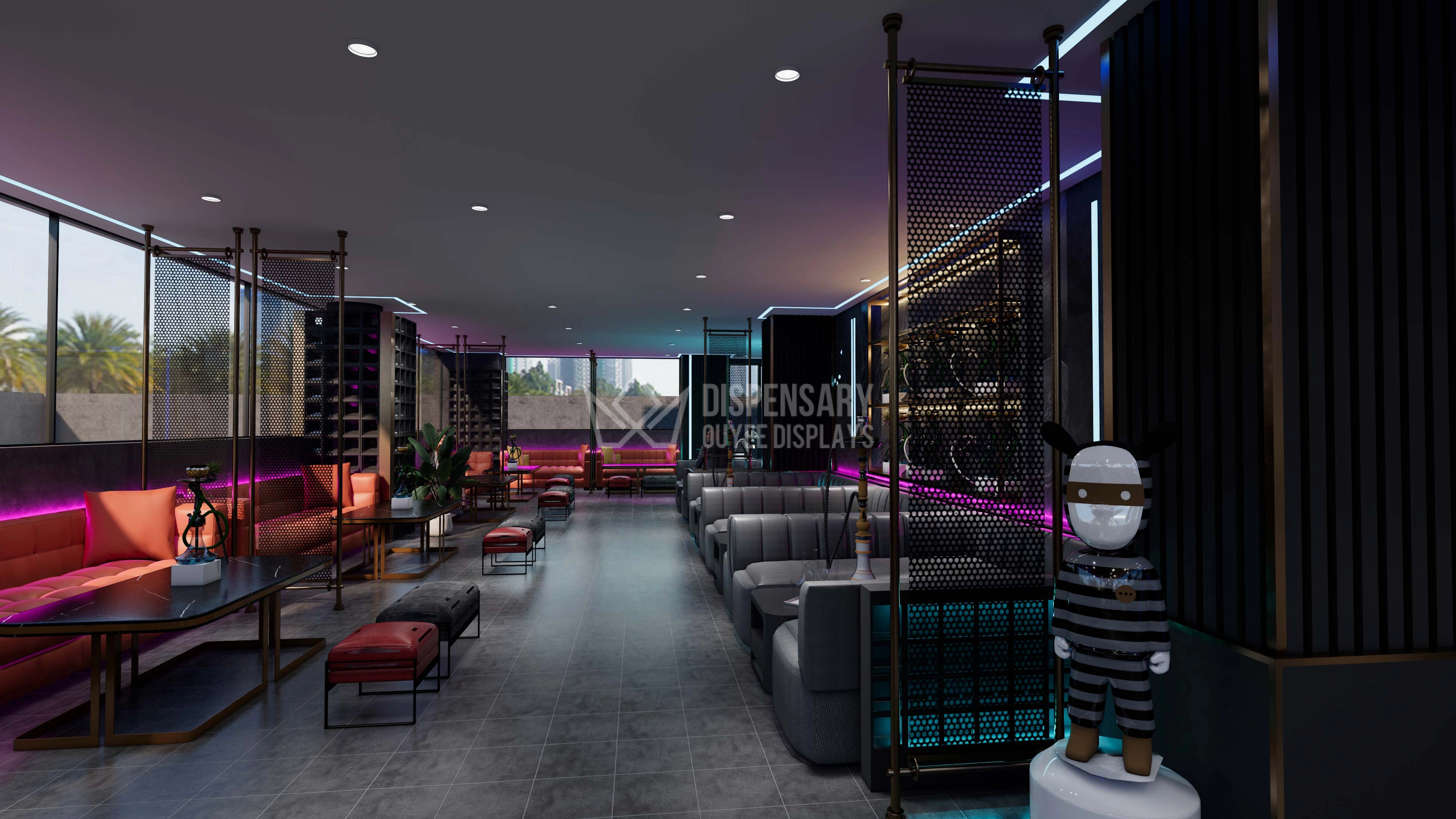
Customized Wholesale Hookah Lounge Furniture For Sale
Elevate your lounge experience with our premium customized hookah lounge furniture, designed for modern aesthetics and maximum comfort. With a strong emphasis on privacy, atmosphere, and luxury, our modular sofa systems, LED accents, and functional shisha setups are tailored to transform any space into a high-end smoking destination. Ideal for lounges, nightclubs, or upscale cafes seeking a bold, unified interior identity.
Let's get in touch

Email: gzouyeedisplay@gmail.com
WhatsApp: +86 136 6049 7267
Ouyee Dispensary
Ouyee Dispensary
Ouyee Dispensary
Ouyee Dispensary