
Custom Glass vs Acrylic CBD Display Cases: Pros
- Understanding Materials: Basics of Glass and Acrylic
- Chemical composition and structural differences
- Optical clarity and light transmission
- Security & Durability Considerations for Retail Cannabis Displays
- Impact resistance and shatter behavior
- Scratch resistance and surface wear
- Design, Customization, and Cost
- Fabrication flexibility and custom features
- Lifecycle cost and maintenance
- Comparative Data: Head-to-Head Metrics
- Choosing the Right Material: Use Cases & Recommendations
- When to prefer custom glass display cases for CBD
- When to prefer acrylic CBD display cases
- Hybrid strategies and best practices
- Installation, Compliance and Maintenance
- Security hardware and regulatory considerations
- Cleaning and long-term care
- Why Choose a Specialist Manufacturer: The Ouyee Advantage
- Practical Project Checklist: Specifying Custom Display Cases for CBD
- FAQs
- 1. Which material—glass or acrylic—is more secure for CBD products?
- 2. How do cleaning and maintenance differ between glass and acrylic?
- 3. Can acrylic yellow over time under store lighting?
- 4. Is it possible to combine glass and acrylic in the same fixture?
- 5. How should I decide between upfront cost and long-term value?
- 6. Can Ouyee handle regulatory compliance and custom locking systems?
As someone who has designed and specified hundreds of in-store display solutions for cannabis retailers worldwide, I know how critical the choice of display material is for product presentation, security, and lifecycle cost. In this article I examine the pros of custom glass and acrylic CBD display cases, compare their performance with verifiable material data, and give practical guidance to help you choose the right solution for your dispensary. I also explain why working with an experienced manufacturer like Ouyee can simplify customization, compliance, and long-term value.
Understanding Materials: Basics of Glass and Acrylic
Chemical composition and structural differences
Glass is an inorganic, amorphous solid typically based on silica (SiO2) with additives (soda-lime being the most common). Acrylic, commonly known as PMMA (polymethyl methacrylate), is an organic thermoplastic often marketed as “acrylic glass” or by trade names like Plexiglas. These fundamental differences explain why the two materials behave so differently in strength, weight, and optical properties. For a quick technical reference see the Wikipedia entries for Acrylic glass (PMMA) and Glass (glass).
Optical clarity and light transmission
Both materials offer excellent clarity. Typical PMMA has a refractive index around 1.49 and transmits up to 92% of visible light in thin sections, making it very bright and clear. Soda-lime glass commonly used in retail cases has a refractive index near 1.52. In practical terms, both look highly transparent, but acrylic can feel slightly warmer and more vivid because of its higher light transmission in certain finishes.
Security & Durability Considerations for Retail Cannabis Displays
Impact resistance and shatter behavior
Acrylic is significantly more impact resistant than ordinary annealed glass: it can endure higher impact without fracturing and will not shatter into sharp shards if it fails, which is a clear safety advantage in busy retail environments. Tempered or laminated safety glass improves impact performance and controlled breakage, but at the same thickness acrylic still outperforms standard glass in impact resistance. For safety-glass standards you can reference ISO guidance on laminated glass (ISO 12543).
Scratch resistance and surface wear
Scratch resistance is an area where glass generally wins. Glass surfaces are harder and resist everyday abrasions from cleaning, rings, or tools better than uncoated acrylic. However, acrylic can be coated with hard-coat finishes to significantly improve scratch resistance—an important consideration if you expect frequent handling or repositioning of products. I always recommend evaluating scratch coatings as part of a custom display specification.
Design, Customization, and Cost
Fabrication flexibility and custom features
Acrylic excels where complex shapes, curved glazing, seamless joins, and lightweight components are required. Thermoforming, CNC routing, and laser welding allow rapid prototyping and creative geometries that are more challenging with glass. Conversely, glass is often preferred for large planar surfaces, high-end aesthetic weight, and where anti-scratch performance is prioritized.
Lifecycle cost and maintenance
Upfront material cost can sometimes favor acrylic for equivalent visual impact at lower weight and easier transport. But lifecycle costs depend on scratch repairs, cleaning practices, and longevity. Glass may outlast acrylic in high-contact zones due to less abrasion, while acrylic may reduce shipping and installation cost due to lower weight. I recommend running a simple total-cost-of-ownership calculation when specifying custom display cases for CBD: factor in initial purchase, expected maintenance, replacement likelihood, and downtime for repairs.
Comparative Data: Head-to-Head Metrics
| Property | Typical Soda-Lime Glass | PMMA (Acrylic) | Practical Impact for CBD Displays |
|---|---|---|---|
| Density | ~2.5 g/cm³ (source) | ~1.18 g/cm³ (source) | Acrylic is much lighter—easier shipping & installation. |
| Refractive index | ~1.52 | ~1.49 (source) | Both offer excellent clarity; glass slightly different color rendition. |
| Impact resistance | Lower (can shatter unless tempered) | Higher; does not shatter into shards | Acrylic safer in high-impact or public-facing areas unless glass is laminated/tempered. |
| Scratch resistance | Higher | Lower (improvable with hard-coat) | Glass resists everyday wear better; acrylic needs coatings for heavy use. |
| Cost (material) | Moderate–High (varies with tempered/laminated) | Lower–Moderate | Acrylic can reduce initial cost for complex shapes; glass is perceived as High Quality. |
| UV resistance / yellowing | Non-yellowing (glass inherently UV-stable) | Can yellow over long periods unless UV-stabilized | Choose UV-stabilized acrylic for long-term displays under strong light. |
Data sources: material properties summarized from Acrylic glass (PMMA) — Wikipedia and Glass — Wikipedia. For industry safety glazing standards see ISO 12543.
Choosing the Right Material: Use Cases & Recommendations
When to prefer custom glass display cases for CBD
I recommend glass when: you want a High Quality, weighty aesthetic; the display is large and planar (e.g., full-height cabinets); scratch resistance is paramount (high-touch counters); or you need long-term color stability under strong retail lighting. If you specify safety glass (tempered or laminated), you can achieve both security and High Quality feel, though at higher cost and weight.
When to prefer acrylic CBD display cases
Acrylic wins for lightweight modular displays, intricate shapes, integrated light wells, curved showcases, and where impact resistance and transportability matter. If your store frequently rearranges fixtures or you need elaborate, sculpted brand elements, acrylic allows creativity without the shipping and installation penalties of thick glass.
Hybrid strategies and best practices
Sometimes the best approach is hybrid: use glass for fixed, high-value showcase fronts and acrylic for movable shelving, internal guards, or curved merchandising zones. I routinely specify hybrid constructions—tempered glass doors with acrylic interior trays or acrylic sneeze guards combined with glass shelving. You get the best of security and design flexibility while optimizing cost.
Installation, Compliance and Maintenance
Security hardware and regulatory considerations
Beyond material choice, secure locking mechanisms, anchored mounting, and alarm integration are essential to comply with local cannabis retail regulations. State and local rules vary, so I always advise confirming requirements for locked storage, surveillance visibility, and access control with your legal/compliance team. Physical materials alone don’t meet legal requirements—locking and alarm systems must be included in the spec.
Cleaning and long-term care
Glass tolerates common cleaning agents and abrasive incidents better than acrylic. For acrylic I recommend non-abrasive cleaners, microfiber cloths, and regular use of approved cleaning solutions to avoid micro-scratches. If using acrylic, specify a hard-coat and UV-stabilized grade for long-term clarity.
Why Choose a Specialist Manufacturer: The Ouyee Advantage
In my experience specifying dispensary fixtures, partnering with a manufacturer that understands the cannabis retail market saves time and risk. Ouyee Dispensary Displays is your trusted partner for providing comprehensive, custom-designed display solutions for your cannabis retail store. Our state-of-the-art 180,000-square-foot facility, located in Guangzhou, China, has been at the forefront of creating high-end, functional display cabinets for over 25 years.
From cannabis dispensaries to pharmacy showcases, tobacco display racks, and e-cigarette showcases, we have earned the trust of clients across various sectors. With cutting-edge German-made CNC automation machining centers, Ouyee ensures top-notch quality in every product we produce. Our products are designed with a focus on aesthetics, functionality, and, most importantly, security, durability, and usability. By continually pushing the boundaries of design and craftsmanship, we provide clients with display solutions that enhance brand identity.
Our vision is to become the world's leading cannabis dispensary display manufacturer. Learn more at https://www.ouyeedispensary.com/. We specialize in custom cannabis display cases, CBD displays, dispensary displays, dispensary fixtures, smoke shop display cases, and weed dispensary display solutions tailored to your specific compliance, branding, and operational needs.
Practical Project Checklist: Specifying Custom Display Cases for CBD
- Define product security requirements (locking, anchoring, alarm integration).
- Decide on primary material based on use case: glass for High Quality fixed cases; acrylic for lightweight, complex shapes.
- Specify surface treatments: tempered/laminated glass or hard-coat/UV stabilization for acrylic.
- Include maintenance procedures and recommended cleaning agents in handover documentation.
- Plan for installation logistics—weight limits, anchoring points, and in-store access routes.
FAQs
1. Which material—glass or acrylic—is more secure for CBD products?
Security depends on both material and hardware. Acrylic has better impact resistance and won’t shatter into sharp pieces; tempered or laminated glass, combined with high-quality locks and anchors, provides excellent security and a High Quality look. For high-theft environments I recommend laminated glass with internal locking and alarm integration.
2. How do cleaning and maintenance differ between glass and acrylic?
Glass tolerates stronger cleaners and abrasives better than acrylic. Acrylic requires non-abrasive cleaners and microfiber cloths to avoid scratching; a hard-coat finish improves abrasion resistance. Include cleaning instructions in your SOPs to preserve appearance and functionality.
3. Can acrylic yellow over time under store lighting?
Unstabilized acrylic can exhibit yellowing with prolonged UV exposure. Choose UV-stabilized acrylic grades or use protective coatings if displays are subject to intense daylight or strong UV-emitting lighting. Glass is inherently UV stable and won’t yellow.
4. Is it possible to combine glass and acrylic in the same fixture?
Yes. Hybrid designs are common and often ideal: glass for doors and large viewing panels, acrylic for internal trays, curved elements, or signage. Hybrid solutions let you balance aesthetics, cost, weight, and functionality.
5. How should I decide between upfront cost and long-term value?
Evaluate total cost of ownership: initial purchase, installation logistics, expected maintenance, replacement likelihood, and downtime. If you expect heavy contact, glass may be more durable; if frequent reconfiguration or lightweight shipping matters, acrylic can reduce overall expense. I often run simple 3–5 year TCO scenarios to guide clients.
6. Can Ouyee handle regulatory compliance and custom locking systems?
Yes. Ouyee has experience delivering compliant dispensary displays with integrated locking, alarm-ready cutouts, and installation guidance tailored to jurisdictional requirements. Contact our team to discuss your local regulation needs and custom hardware integrations.
If you want to evaluate options for your store, request a consultation or view our product range and case studies at Ouyee Dispensary Displays. For tailored quotes on custom display cases for CBD, reach out to our sales team and we’ll help you match material, finish, and security to Ouyee and regulatory needs.
Contact us to start a project: https://www.ouyeedispensary.com/
Retail merchandising ideas using smoke shop display cases
Using Digital Screens and Tablets in Dispensary Displays
Modern Retail Cannabis Counter Design Trends
Prefabricated vs Custom Cannabis Display Counters
Our Team
What after-sales services does Ouyee provide?
Ouyee offers installation, maintenance, training, and repair services to ensure your displays remain in excellent condition.
OEM ODM Dispensary Display Showcases Retail Design Cannabis Stores
Are your display counters modular and expandable?
Yes. All units are designed with modularity to allow future expansions.
Professional 3D Design Tempered Glass Tobacco Fixture Manufacturer
Can the shelving units support heavy products?
Yes, each shelf is designed to hold up to 30 kg (66 lbs), with reinforced brackets and durable materials.
Aegis Security Checkout Display
How long does production take for a full set?
Typically 15–25 days depending on order size and customization.
Customized Wholesale Hookah Lounge Furniture For Sale
What’s the delivery time for bulk orders?
Production takes 18-25 days, with sea shipping timelines depending on your location (usually 20–35 days).
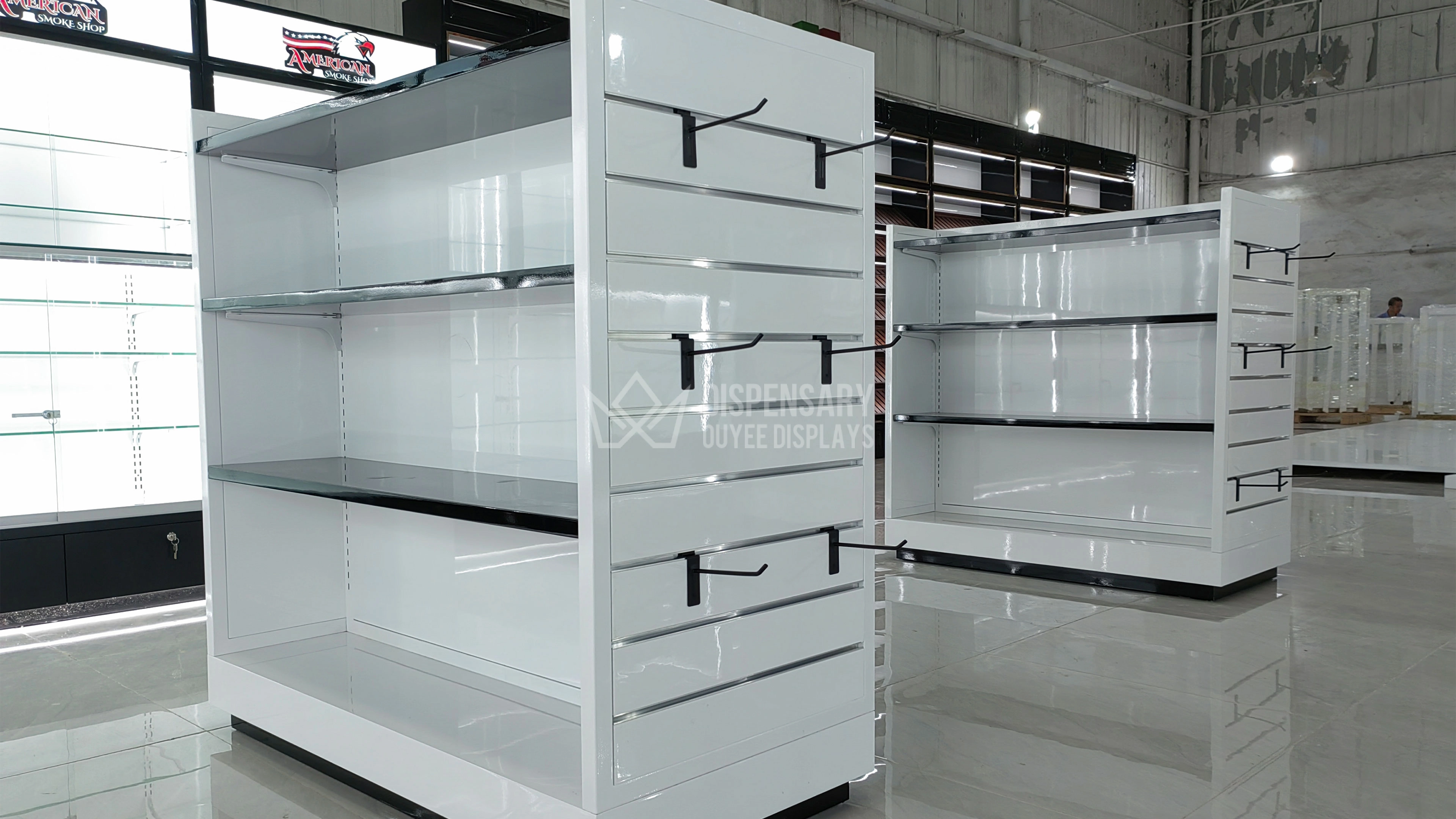
Smoke Shop Fixtures Multi Tiered Cigarette Display Cabinet Factory
Elevate your smoke shop’s merchandising with our multi-tiered cigarette display cabinet, built with premium glass, wood veneer, and integrated LED lighting. This customized setup includes a dedicated cigar room wall system for showcasing high-end cigars, making it the ultimate retail display solution for modern smoke shops.
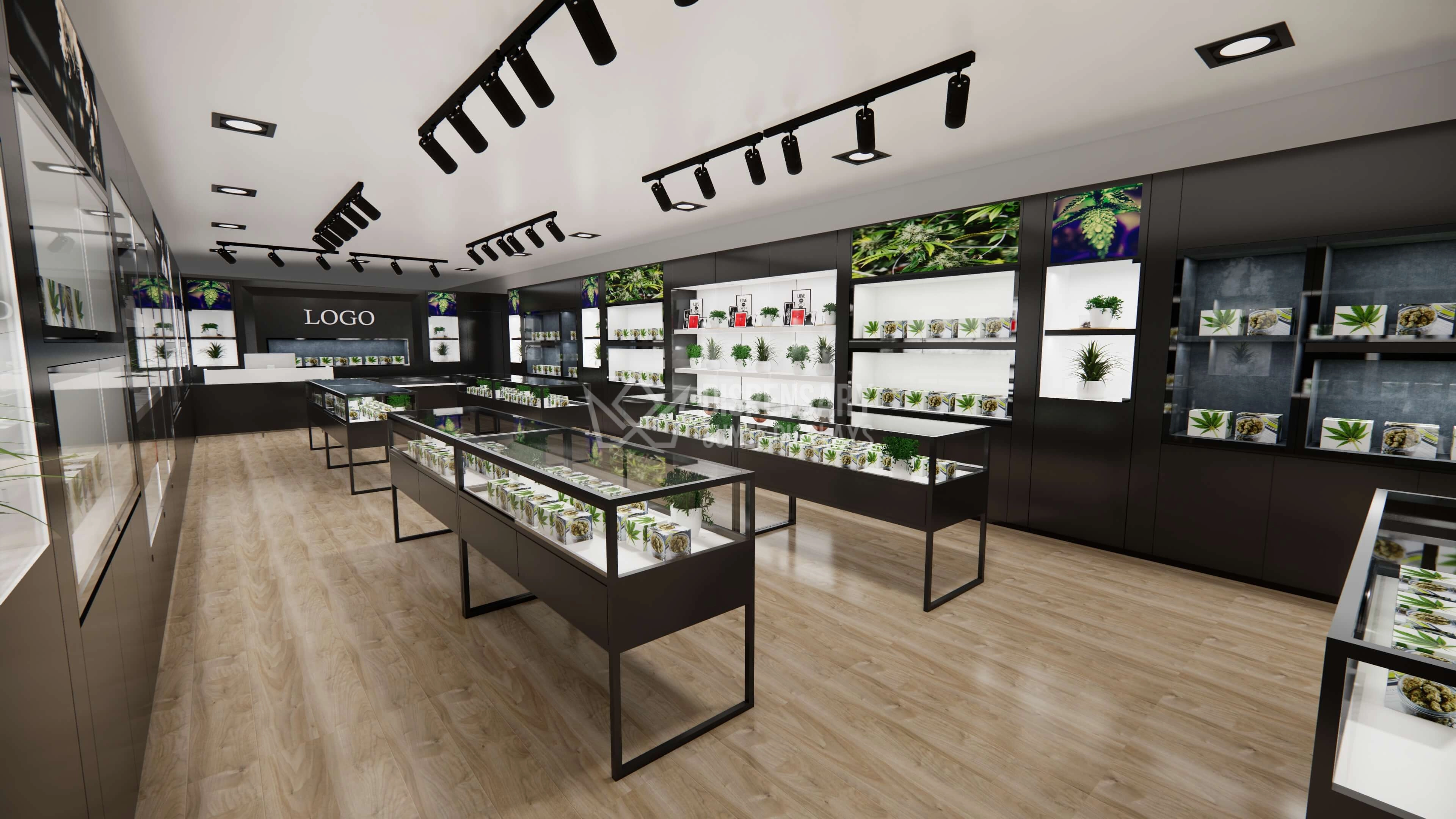
OEM ODM Dispensary Showcase Counters Display Fixtures For Cannabis
Sleek, secure, and fully customizable — our OEM/ODM dispensary counters redefine how cannabis is displayed in retail environments, merging form and function seamlessly.
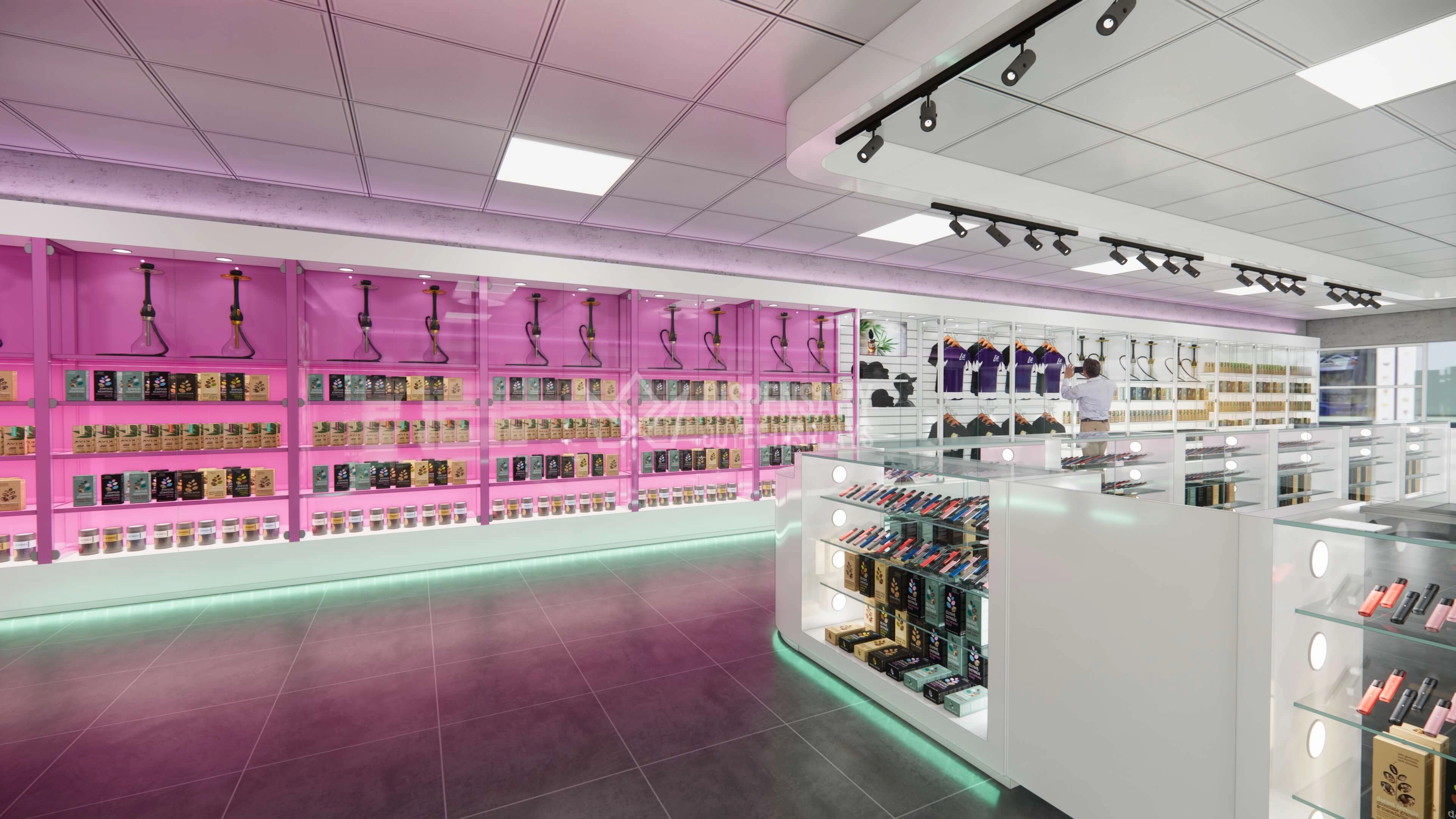
Modern Minimalist Cannabis Dispensary Displays Solutions
Modern minimalist cannabis dispensary displays offer sleek design, optimal product visibility, and efficient space usage, enhancing customer experience and elevating your store’s professional image.
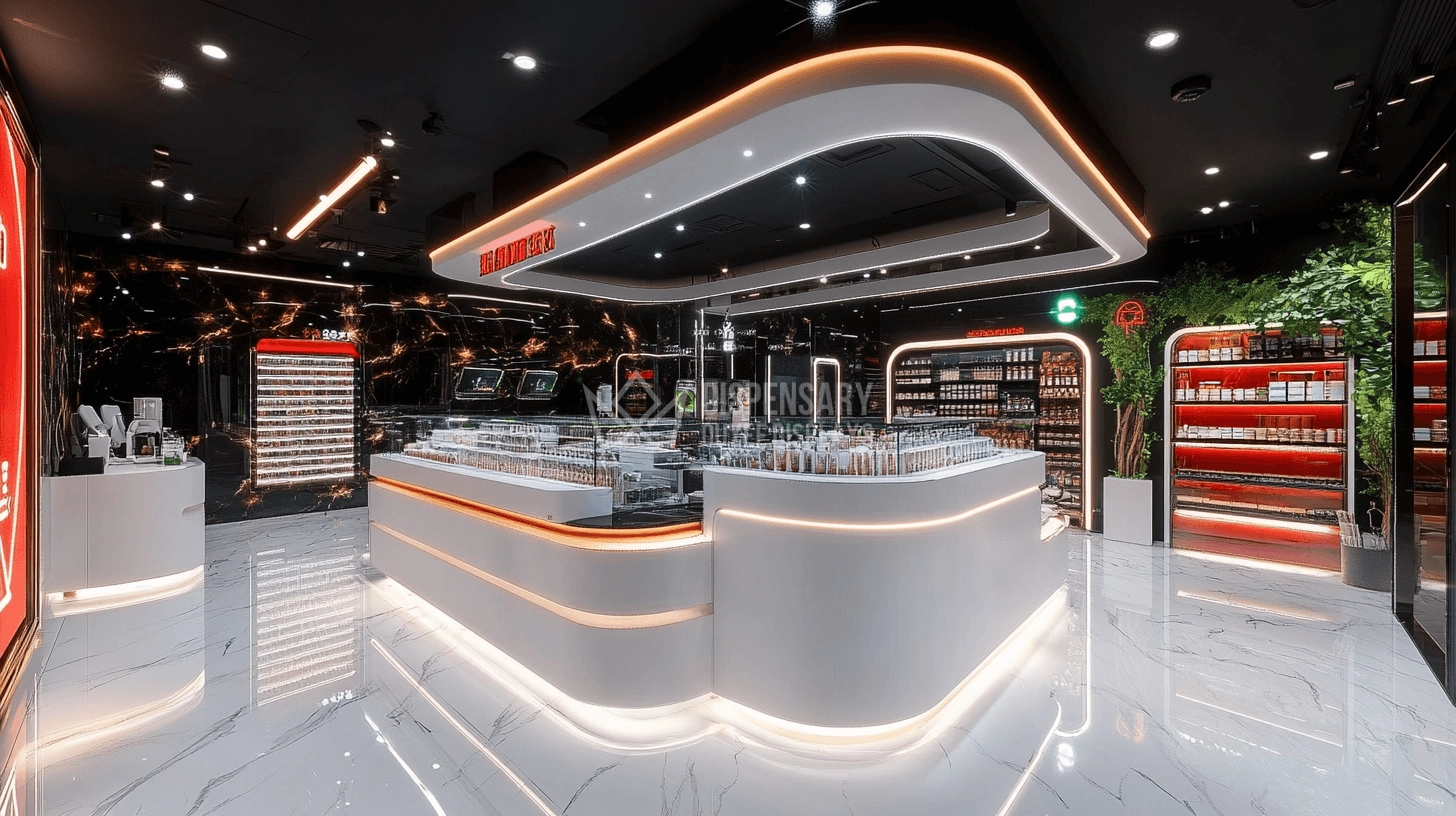
Turnkey Solution Modern Cannabis Dispensary Design Companies
A futuristic cannabis dispensary design offering turnkey display solutions with curved counters, ambient LED lighting, and sleek showcase systems.
Let's get in touch

Email: gzouyeedisplay@gmail.com
WhatsApp: +86 136 6049 7267
Ouyee Dispensary
Ouyee Dispensary
Ouyee Dispensary
Ouyee Dispensary