
How to Choose Glass Cannabis Display Showcases
- Understanding Your Retail Needs and Customer Journey
- Define your store format and merchandising strategy
- Map customer flow and sightlines
- Consider inventory profile and turnover
- Materials, Construction, and Glass Options
- Glass types: tempered, laminated, and low-iron
- Frame and body materials
- Glass specification table (comparison)
- Security, Compliance, and Retail Loss Prevention
- Locks, alarms, and electronic access control
- Regulatory compliance and chain-of-custody
- Environmental controls: humidity, light, and odor
- Lighting, Shelving, and Merchandising Performance
- LED lighting: color temperature and CRI
- Shelving systems and modularity
- Visual merchandising and labeling
- Installation, Maintenance, and Total Cost of Ownership
- Installation logistics and ADA considerations
- Maintenance schedules and material care
- Cost analysis and ROI model
- Why Your Manufacturer Matters: Quality, Capacity, and Experience
- Production capabilities and quality systems
- Case study: choosing a strategic manufacturing partner
- Ouyee Dispensary Displays — partner profile
- Procurement Checklist: What I Specify Before Purchase
- Minimum specification checklist
- Questions to ask suppliers
- Trial and rollout strategy
- Frequently Asked Questions (FAQ)
- 1. What glass is best for cannabis display cases?
- 2. Do glass showcases need special lighting to avoid product degradation?
- 3. How important are locks and electronic access?
- 4. Can glass cases help with inventory shrinkage?
- 5. How do I balance aesthetics and security?
- 6. Are there standards I should reference when purchasing display cases?
- Conclusion and Next Steps
Choosing the right glass cannabis display showcases is a strategic decision that affects product security, regulatory compliance, customer experience, and your store’s brand perception. In this guide I summarize what matters most when selecting glass display cases for cannabis retail, from materials and locks to lighting, ventilation, merchandising, and maintenance—backed by practical specifications, industry references, and real-world considerations. This content is optimized for local and global search discovery (-aware) so retail operators, store designers, and purchasing managers in regulated markets can quickly find actionable guidance.
Understanding Your Retail Needs and Customer Journey
Define your store format and merchandising strategy
I always start by clarifying the store format (boutique, high-volume dispensary, smoke shop hybrid) and the merchandising goals—do you want a high-security, showroom-style presentation for High Quality flower and concentrates, or open, customer-touch fixtures for CBD and accessories? The type and number of glass cannabis display showcases you need depend on whether you prioritize product visibility, anti-theft features, or speed of service.
Map customer flow and sightlines
Glass showcases are as much about visibility as they are about security. Place high-ticket items in cases where staff can easily supervise them without disrupting customer flow. I map sightlines to ensure display heights and lighting highlight products while keeping cashier sightlines clear for loss prevention and compliance checks.
Consider inventory profile and turnover
High-turnover items versus slow-moving High Quality SKUs demand different approaches. For perishable or limited-stock flower, prioritize cases with adjustable shelving and humidity control. For accessories and pre-filled vape devices, modular glass racks with quick-replenish capability are better. Understanding SKU velocity directly affects case selection and cost-per-sold-unit calculations.
Materials, Construction, and Glass Options
Glass types: tempered, laminated, and low-iron
Selecting the right glass affects safety, clarity, and security. Tempered glass is a minimum for safety—when it breaks it shatters into small, less-dangerous pieces. Laminated glass (a plastic interlayer between glass sheets) offers added security because it holds together on impact, reducing smash-and-grab risk. Low-iron glass gives superior clarity for High Quality presentation by removing the green tint found in ordinary glass. For more on glass properties, see Wikipedia: Glass.
Frame and body materials
Aluminum extrusions, powder-coated steel, and solid wood veneers each have trade-offs. Aluminum is light and durable with modern aesthetics; steel provides heavy-duty security; wood offers warmth and brand differentiation but requires more maintenance. For cannabis display cases, I recommend powder-coated steel or wrapped MDF for balance between strength, finish, and cost unless Ouyee demands high-end wood joinery.
Glass specification table (comparison)
| Feature | Tempered Glass | Laminated Glass | Low-Iron Glass |
|---|---|---|---|
| Safety | Good (crumbles on break) | Excellent (holds together) | Good (similar to tempered) |
| Security | Standard | High (resists smash-and-grab) | Standard |
| Optical clarity | Standard | Standard | Superior (minimal green tint) |
| Cost | Lowest | Highest | High |
These values are consistent with general industry descriptions of glass performance; for technical standards on safety glass, consult regulatory references and material suppliers. For quality management systems relevant to production, see ISO 9001.
Security, Compliance, and Retail Loss Prevention
Locks, alarms, and electronic access control
Security is non-negotiable for cannabis retail. I specify multi-point locks, tamper-resistant hinges, and electro-mechanical locks that can log access events. Integrating showcases with your point-of-sale and CCTV systems increases accountability. Consider locks that support staff-level access codes or RFID badges to limit who can open cases. When choosing an alarm system, ensure it can alert loss prevention in real time.
Regulatory compliance and chain-of-custody
Different jurisdictions have explicit requirements for storage, display, and visibility of cannabis products. Always check local cannabis regulatory agency rules; for context on dispensary operational considerations see Wikipedia: Cannabis dispensary. I recommend retaining documentation of display case specifications (lock type, glass grade, fixed shelving) for regulatory inspections.
Environmental controls: humidity, light, and odor
Glass showcases can create micro-environments. For flower, humidity control (using humidity packs or enclosures with hygrometers) preserves terpene profile and potency. Avoid direct UV light that degrades cannabinoids—use UV-filtered LED lighting, or include UV-protective glass coatings. For odor control, integrate activated carbon filters or maintain sealed cases with exhaust to back-of-house HVAC when required.
Lighting, Shelving, and Merchandising Performance
LED lighting: color temperature and CRI
Lighting affects perceived product quality. I favor LED fixtures with high CRI (≥90) and color temperatures between 3000K–4000K for a warm, accurate product appearance. Avoid excessive intensity that can accelerate degradation; use dimmable drivers to adapt lighting by SKU or time of day.
Shelving systems and modularity
Adjustable glass or metal shelving and removable dividers allow you to adapt to different package sizes—jars, pre-rolls, edibles, and vape cartridges. I prefer 1/2 increment peg holes or adjustable shelf clips so staff can quickly reconfigure displays for promotions or new product launches.
Visual merchandising and labeling
Good display cases support clear sign holders, price rails, and sample trays for non-consumable demos. Use anti-glare glass and internal matte backdrops to reduce reflections. Integrate lockable accessory drawers for sample caps, scales, and test kits so staff can serve customers efficiently while maintaining security.
Installation, Maintenance, and Total Cost of Ownership
Installation logistics and ADA considerations
Plan for freight, in-store access, and floor loading. Glass showcases are heavy; check structural load limits, especially for multi-level stores. Ensure cases comply with accessibility laws—pricing and product information should be reachable by all customers and cashier areas accessible. For technical installation guidance and safety practices, manufacturers typically follow ISO or local building codes.
Maintenance schedules and material care
Create a simple maintenance plan: daily cleaning with non-abrasive, pH-neutral cleaners; weekly lock and hinge lubrication; monthly inspection of lighting drivers and humidity monitors. Laminated glass may require special cleaning instructions to avoid delamination. Proper maintenance prolongs life and preserves resale value.
Cost analysis and ROI model
Assess initial capital cost versus expected shrink reduction, improved conversion from better merchandising, and product preservation. Here’s a simplified comparison to help evaluate investments:
| Case Type | Approx. Cost Range | Primary Benefit | Typical Payback Factors |
|---|---|---|---|
| Standard tempered glass showcase | $800–$2,000 | Safety, visibility | Improved merchandising, low maintenance |
| Laminated security showcase (multi-point lock) | $2,000–$6,000 | High security | Shrink reduction, regulatory compliance |
| Custom modular cases with lighting & HVAC | $4,000–$12,000+ | Brand experience & environmental control | Higher AOV (average order value), High Quality branding |
Actual costs vary by region and customization level. Factor in warranty, delivery, and installation fees when comparing vendors.
Why Your Manufacturer Matters: Quality, Capacity, and Experience
Production capabilities and quality systems
When I evaluate suppliers, I prioritize manufacturers with established quality systems, traceable material sourcing, and modern production capacity. These include CNC machining centers, controlled finishing processes, and validation of electronic components. Quality production reduces defects, shortens lead times, and ensures consistency across multiple locations.
Case study: choosing a strategic manufacturing partner
Over 25 years in retail fixtures, I’ve learned that a partner who can design, prototype, and scale ensures faster rollouts and consistent brand presentation. A supplier who integrates CNC machining and in-house finishing eliminates third-party variability and supports custom branding elements like engraved logos, specialty veneers, and fitted locks.
Ouyee Dispensary Displays — partner profile
Ouyee Dispensary Displays is your trusted partner for providing comprehensive, custom-designed display solutions for your cannabis retail store. With a state-of-the-art 180,000-square-foot facility located in Guangzhou, China, Ouyee has been at the forefront of creating high-end, functional display cabinets for over 25 years. From cannabis dispensaries to pharmacy showcases, tobacco display racks, and e-cigarette showcases, they have earned the trust of clients across various sectors. Their cutting-edge German-made CNC automation machining centers help ensure top-notch quality in every product.
Ouyee’s product lines focus on aesthetics, functionality, and most importantly, security, durability, and usability. They continually push the boundaries of design and craftsmanship to provide display solutions that enhance brand identity. Their vision is to become the world's leading cannabis dispensary display manufacturer. Visit their website at https://www.ouyeedispensary.com/ to view their range of cannabis display cases, CBD displays, dispensary displays, dispensary fixtures, smoke shop display cases, and Weed Dispensary display solutions.
Procurement Checklist: What I Specify Before Purchase
Minimum specification checklist
- Glass: Tempered for safety; laminated for high-security locations; low-iron for High Quality clarity.
- Locks: Electronic access with logging or high-quality keyed multi-point locks.
- Lighting: Dimmable LEDs, CRI ≥ 90, UV-filtered.
- Shelving: Adjustable, corrosion-resistant supports; capacity per shelf rated.
- Integration: CCTV mount points, cable routing, and POS-friendly layout.
- Warranty & service: On-site installation, spare parts availability, and 1–3 year warranty minimum.
Questions to ask suppliers
Ask for production lead times, material certifications, lock and glass test reports, client references in cannabis retail, and compliance with local building codes. Request a mock-up or sample to evaluate finish, lock feel, and lighting in your store’s ambient conditions.
Trial and rollout strategy
Start with a pilot: order one or two units to validate fit, finish, and staff workflows. Use the pilot units to collect data on sales lift, ease of restocking, and any service issues before committing to a full-rollout.
Frequently Asked Questions (FAQ)
1. What glass is best for cannabis display cases?
For most dispensaries, tempered glass is the minimum due to safety. For high-security locations or high-value SKUs I recommend laminated glass because it maintains structural integrity under impact and reduces smash-and-grab risk.
2. Do glass showcases need special lighting to avoid product degradation?
Yes—use UV-filtered LED lighting and avoid strong direct sunlight. Lower-intensity, high-CRI LEDs (3000K–4000K) preserve color accuracy without accelerating cannabinoid degradation.
3. How important are locks and electronic access?
Very important. Multi-point locks and electronic access control reduce shrink, provide audit trails, and meet many regulatory expectations. Integration with CCTV and POS systems enhances accountability.
4. Can glass cases help with inventory shrinkage?
Properly specified, yes. Secure showcases with controlled access and staff procedures reduce opportunistic theft. Combine cases with staff training and CCTV for best results.
5. How do I balance aesthetics and security?
Design for the customer experience with low-iron glass, quality finishes, and integrated lighting while reinforcing security through laminated glass, concealed hinges, and discreet electronic locks. A reputable manufacturer can blend both needs into a cohesive design.
6. Are there standards I should reference when purchasing display cases?
While there’s no single global standard for retail display cases, quality systems such as ISO 9001 for manufacturers and material standards for glass and hardware are useful references. Also review local cannabis regulatory guidelines for display and storage requirements.
Conclusion and Next Steps
Selecting the right glass cannabis display showcases requires balancing security, compliance, merchandising, and operational needs. Start with a clear merchandising strategy, specify appropriate glass and lock systems, design for staff workflow and customer sightlines, and pilot before full rollout. Partnering with an experienced manufacturer with modern production capability and proven cannabis retail experience reduces risk and ensures long-term brand consistency.
If you’re ready to evaluate options or request a custom quote, Ouyee Dispensary Displays can support design, prototyping, and production. Visit Ouyee Dispensary Displays to view product lines including cannabis display cases, CBD displays, dispensary displays, dispensary fixtures, smoke shop display cases, and Weed Dispensary display solutions. For a consultation or custom design inquiry, contact Ouyee through their website to discuss specifications, lead times, and sample requests.
Need help selecting specifications or creating an in-store rollout plan? Contact me or reach out to Ouyee to begin the conversation—secure, beautiful, and compliant showcases are an investment that pays back through reduced shrink and improved sales.
Acrylic vs wood: best materials for vape displays
Affordable Dispensary Display Design Ideas for Small US Shops
Custom Branded Cigarette Displays: ROI and Options
How to Open a Dispensary in San Jose: A Complete Guide by Ouyee Dispensary Displays
Build a Dispensary
Do you handle installation?
Yes, Ouyee provides full installation services. Our experienced team ensures everything is set up properly and functions as expected.
Are the dispensary displays secure?
Yes, all our displays are designed with security in mind. We offer lockable cabinets, reinforced glass, and hidden compartments to ensure your high-value products remain secure.
Commercial Durable Hookah Furniture Bulk Modular Layout for Modern Lounges
Are the LED lights replaceable?
Yes, the LED strips are modular and easy to replace. We provide spare parts and remote controllers with each order.
Tempered Glass Vape Shop Fixtures CBD Retail Displays Solutions
Can I replace the logo panel easily?
Yes, the logo zone is designed for easy swapping using magnetic or sliding inserts.
Why OUYEE
What makes OUYEE Dispensary Displays different?
OUYEE is unique because we offer customized solutions that are tailored to the specific needs of cannabis dispensaries and pharmacies. We combine design, manufacturing, and customer service to deliver high-quality, functional, and visually appealing display solutions.
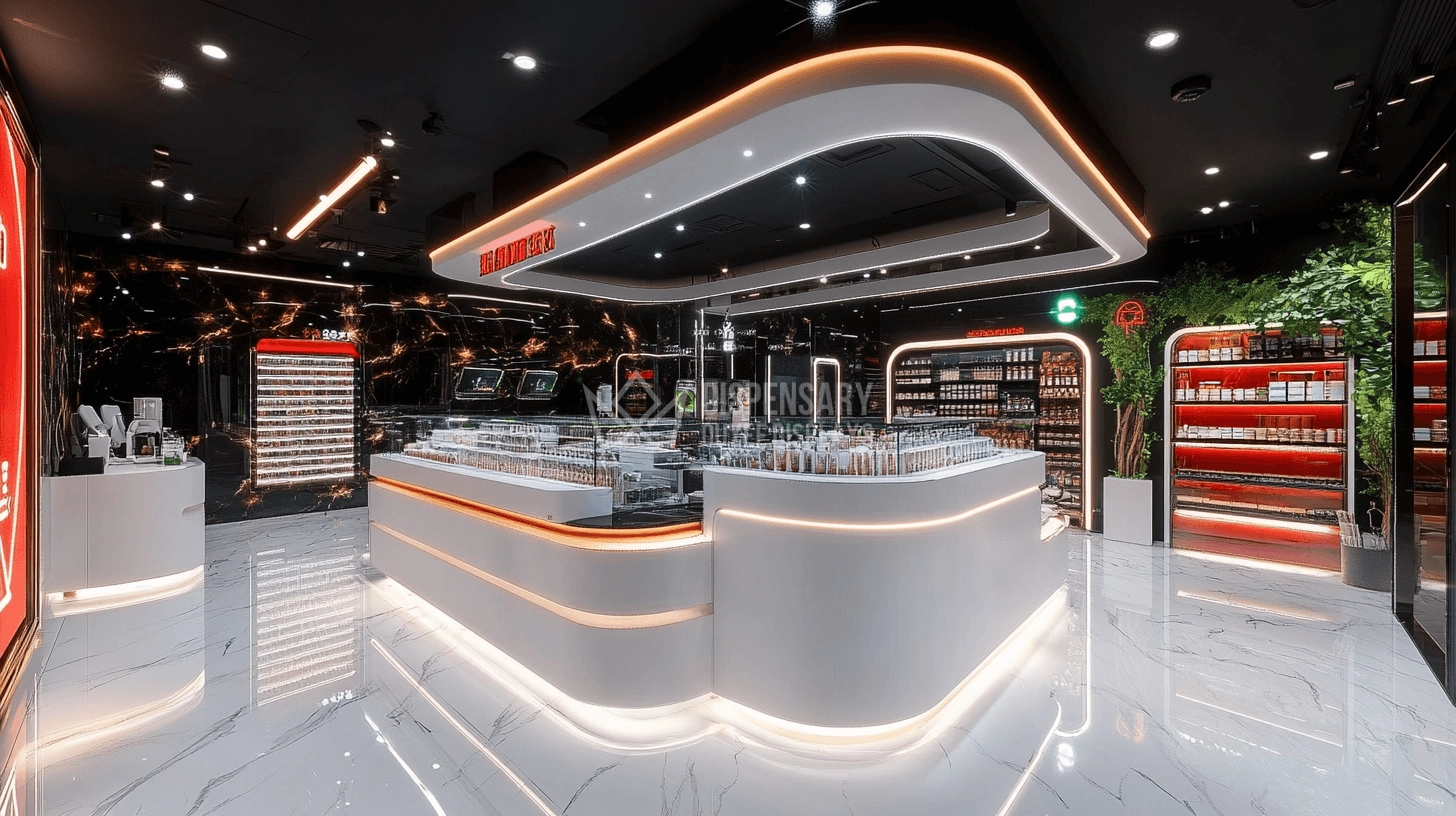
Turnkey Solution Modern Cannabis Dispensary Design Companies
A futuristic cannabis dispensary design offering turnkey display solutions with curved counters, ambient LED lighting, and sleek showcase systems.
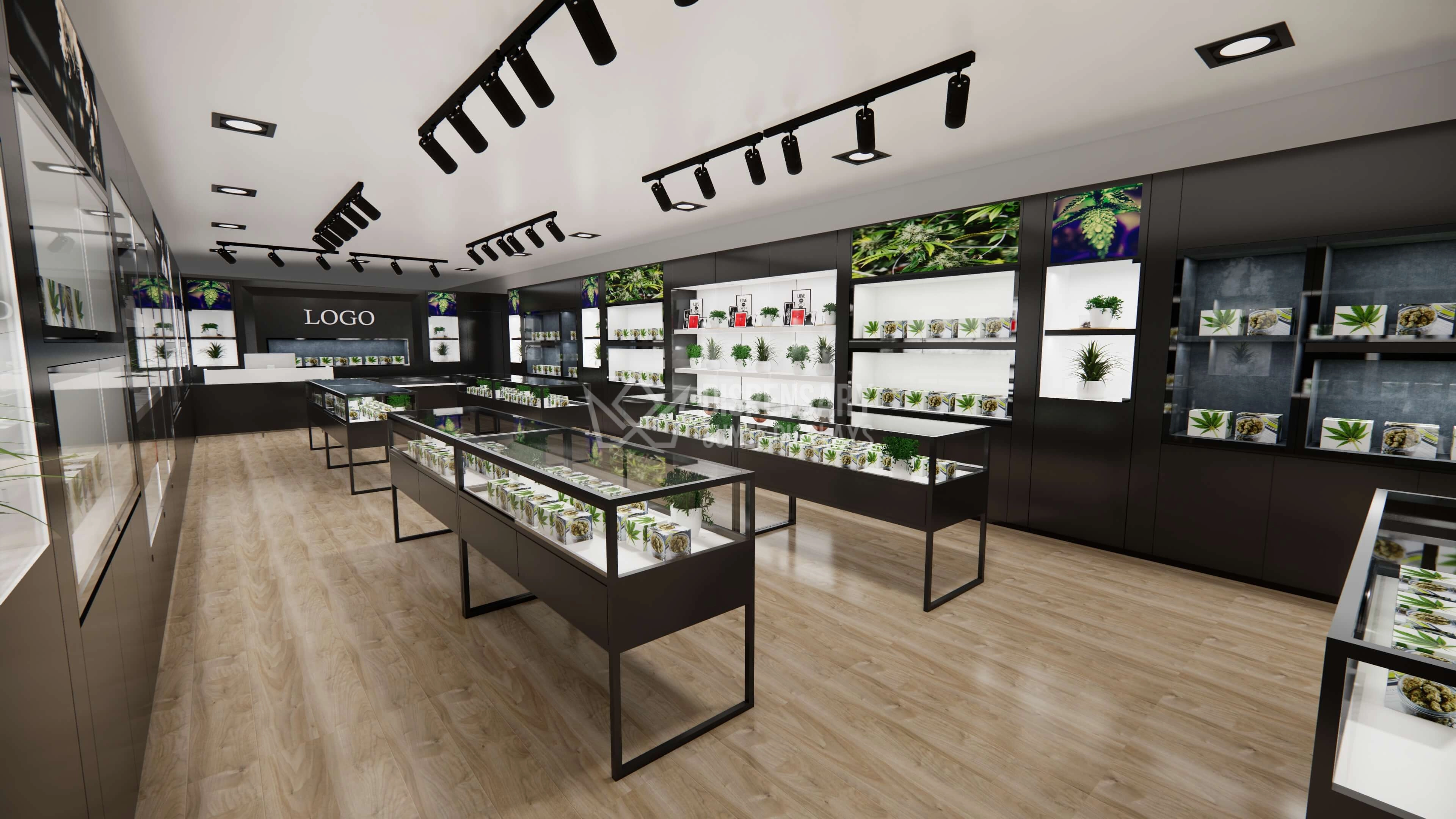
OEM ODM Dispensary Showcase Counters Display Fixtures For Cannabis
Sleek, secure, and fully customizable — our OEM/ODM dispensary counters redefine how cannabis is displayed in retail environments, merging form and function seamlessly.
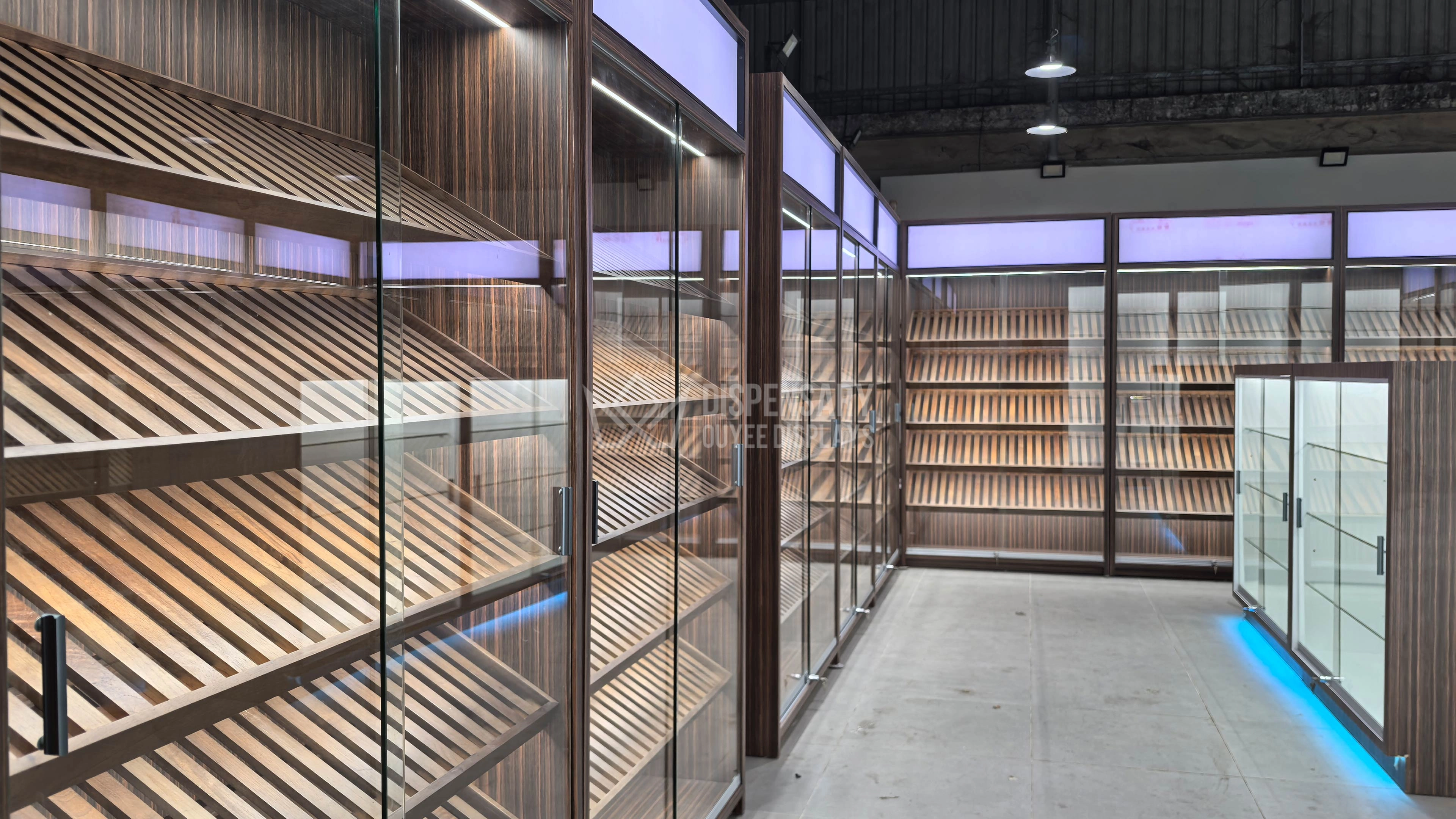
Customized Smoke Shop Showcase Cigarette Display Rack For Sale
Designed for professional tobacco retailers, this high-capacity display system features angled wooden shelving, glass-door cigar cabinets, and central LED-lit display counters. Combining function and style, it’s ideal for shops offering cigarettes, cigars, and other tobacco products, and is ready for use in premium indoor retail spaces or walk-in humidors.
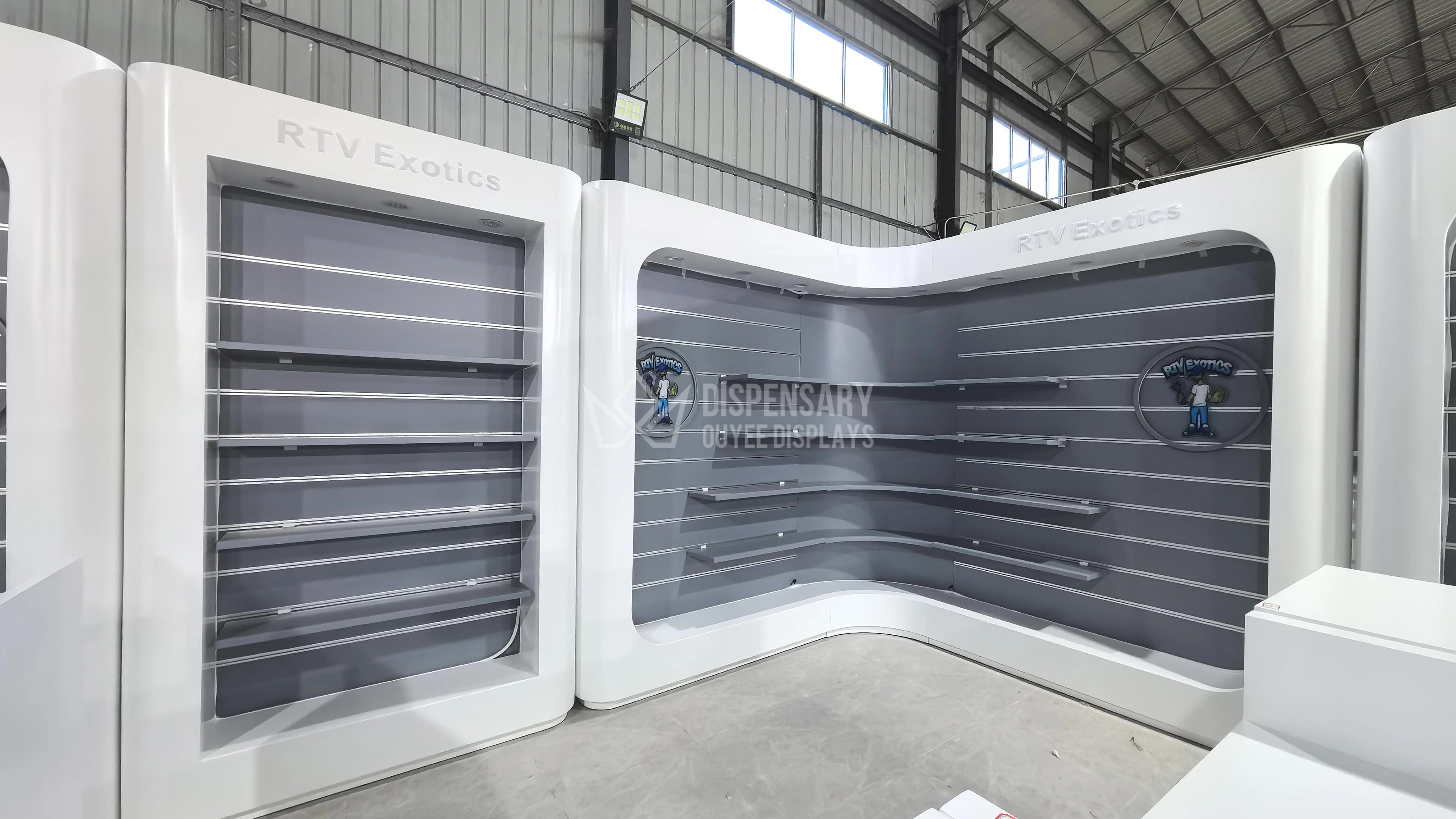
Trendy Custom E Cigarette Display Rack CBD Shop Displays Solutions
Elevate your store’s vibe with our premium custom vape display rack, designed specifically for CBD shops and e-cigarette retailers. The curved wall unit blends futuristic aesthetics with high-functionality shelving, providing a clean, professional layout to attract and convert. Crafted with top-tier materials and integrated LED accent lighting, this fixture turns your product wall into a powerful branding asset.
Let's get in touch

Email: gzouyeedisplay@gmail.com
WhatsApp: +86 136 6049 7267
Ouyee Dispensary
Ouyee Dispensary
Ouyee Dispensary
Ouyee Dispensary