
LED and Lighting Tips for Retail Cigarette Displays
- Why lighting matters in retail environments
- Visual merchandising, perception and sales
- Security, compliance and visibility for age-restricted products
- LED selection and technical specifications for retail cigarette displays
- Color temperature and color rendering (CCT and CRI)
- Lumen output, beam control and recommended lux targets
- Energy efficiency, thermal management and electrical safety
- Design strategies and installation best practices
- Layered lighting: ambient, accent and task
- Glare control, diffusion and material finishes
- Security integration and tamper resistance
- Measuring performance, maintenance and ROI
- Key metrics to track
- Sample cost vs benefit comparison (illustrative)
- Maintenance schedule and practical tips
- Standards, references and product selection resources
- Useful industry references
- Choosing the right supplier and fixture type
- Ouyee Dispensary Displays — partner profile
- Frequently Asked Questions (FAQ)
- 1. What is the ideal color temperature for a retail cigarette display?
- 2. What CRI should I specify to ensure packaging colors are accurate?
- 3. How bright should a cigarette display be (lux values)?
- 4. Are LEDs safe to use inside locked display cases?
- 5. How can lighting help reduce theft or support CCTV?
- 6. How often should I replace or service LED fixtures?
- 7. Can lighting changes produce measurable sales uplift?
This guide provides location-aware, practical LED and lighting tips for store owners, merchandisers and fixture designers responsible for retail cigarette display planning and execution. Whether you manage a convenience store, smoke shop, pharmacy or dispensary that includes tobacco products, the lighting decisions you make affect product visibility, legal compliance, shop security and energy costs. The recommendations below are aimed at retailers in the US, Canada, EU, UK, Australia and Asia and reference established lighting guidance where appropriate.
Semantic keywords used throughout this article to help contextual relevance: retail cigarette display, cigarette display case, tobacco display rack, smoke shop display cases, e-cigarette showcase, dispensary displays, display cabinetry, merchandising lighting.
Why lighting matters in retail environments
Visual merchandising, perception and sales
Lighting is a silent salesperson. Properly specified LEDs draw attention to product fascia, preserve color fidelity on packaging, and help direct customers’ gaze to high-margin SKUs. Studies by retail lighting specialists and practitioners (for example, resources from the Lighting Research Center and industry literature from the Illuminating Engineering Society (IES)) show that well-layered lighting increases dwell time and purchase probability. For a retail cigarette display, use accent lighting to create contrast between foreground products and the back wall while avoiding oversaturation that causes color washout.
Security, compliance and visibility for age-restricted products
Cigarettes and other tobacco products are age-restricted in most jurisdictions. Good lighting supports ID-check processes, store security cameras and loss-prevention systems. Bright but non-glare illumination improves camera image quality (reducing motion blur and exposure problems) and helps staff verify customer age. Ensure lighting does not create reflective hotspots that obscure packaging or camera sightlines.
LED selection and technical specifications for retail cigarette displays
Color temperature and color rendering (CCT and CRI)
Color temperature affects how packaging colors, logos and health warnings appear. For tobacco and cigarette merchandizing, a neutral to warm white range of approximately 3000K to 3500K is commonly preferred because it renders warm tones accurately without producing a clinical or cold look. A higher Correlated Color Temperature (4000K+) may be appropriate for large convenience-store aisles where crisp contrast is required.
Color Rendering Index (CRI) or, preferably, TM-30 measures color fidelity. Specify LEDs with CRI ≥ 90 when accurate brand-color reproduction is important (for High Quality packs and branded displays). If budget constraints exist, CRI ≥ 80 is a reasonable minimum. Higher CRI LEDs typically cost more but reduce returns and mis-merchandising caused by inaccurate color appearance.
Lumen output, beam control and recommended lux targets
Design to lux targets rather than raw lumens. Typical target illuminance ranges for cigarette and tobacco displays:
| Display area | Recommended lux | Notes |
|---|---|---|
| Shelf faces / open racks | 300–500 lx | Balanced visibility without glare; suitable for multi-sku shelves |
| Glass display cabinets / counter cases | 500–800 lx | Compensates for glazing reflections and distance; supports security cameras |
| Promotion headers & focal signage | 700–1,000 lx (accent) | Short-duration accent to highlight promotions; use with dimming/timers |
Beam control is critical: narrow beams or adjustable track-mounted spotlights can highlight a particular pack or brand without raising overall ambient levels. Use optic lenses or reflectors with beam angles selected to produce even facings. For glass cases, ensure lights are angled to minimize specular reflections toward the customer and cameras.
Authoritative lighting references: general LED background at Wikipedia: Light-emitting diode and retail-focused guidance from the Illuminating Engineering Society.
Energy efficiency, thermal management and electrical safety
Modern LEDs deliver high lumen per watt ratios, but long-term performance depends on thermal management. Choose fixtures with integrated heatsinks and drivers rated for continuous retail operation (24/7 capability if required by the store). Look for LED modules with an L70 rating (time to 70% initial lumen output) of at least 30,000–50,000 hours for retail fixtures.
Additionally, specify dimmable drivers with low flicker (<10% flicker index) to avoid camera artifacts and occupant discomfort. Ensure products carry recognized safety marks (UL, CE, RoHS) for your market and that installation follows local electrical code. Improperly rated drivers or overheating LED strips in enclosed cabinetry are common causes of premature failure.
Design strategies and installation best practices
Layered lighting: ambient, accent and task
Apply the layered lighting approach:
- Ambient: the store’s general lighting (e.g., linear troffers) that provides baseline comfort.
- Accent: LED spotlights, linear recessed strips, or mini-downlights that highlight cigarette facings and brand islands.
- Task: focused lighting for cashier counters or ID-check stations to ensure clear visibility during transactions.
Layering lets you raise visual emphasis on key products while keeping overall energy use efficient by dimming ambient light during promotions and increasing accent output only where needed.
Glare control, diffusion and material finishes
Packaging often uses glossy films and metallic inks that cause specular reflections. To reduce glare:
- Use diffused linear LED strips behind frosted channels to provide soft, even light.
- Specify anti-reflective (AR) or non-glare glazing on display cabinets where possible.
- Use shallow beam angles or shielded spotlights to illuminate packs without creating hotspots.
Finish choices for in-cabinet surfaces (matte black or medium gray backs) can improve perceived contrast and reduce unwanted reflections.
Security integration and tamper resistance
Lighting can be integrated with security systems: wire lights to motion sensors, timers or POS signals so that promotional lighting only activates when staff are present, reducing attention during off-hours and improving CCTV capture during transactions. For age-restricted products, ensure fixtures facilitate camera sightlines and are tamper-resistant (screw-secured trim, concealed wiring, and vandal-proof enclosures). Consider locking compartments with interior LED lighting that turns on when opened to assist staff checking age and fulfill security protocols.
Measuring performance, maintenance and ROI
Key metrics to track
Assess lighting upgrades by measuring:
- Sales lift: compare SKU-level sales before/after lighting changes over comparable periods.
- Energy consumption: monitor store-level kWh before and after LED retrofits.
- Maintenance intervals: track failure rates and replacement cycles of lamps and drivers.
- Customer behavior: dwell time and conversion rates near tobacco fixtures (use in-store analytics where available).
Sample cost vs benefit comparison (illustrative)
| Option | Initial cost per fixture (USD) | Estimated annual energy (kWh) | Typical lifespan | Notes |
|---|---|---|---|---|
| Fluorescent linear (legacy) | 40–70 | 900–1,200 | 8,000–12,000 hrs | Lower upfront cost but higher energy and maintenance |
| Standard LED strip fixture | 80–150 | 300–500 | 30,000–50,000 hrs | Good balance of cost and long life |
| High-CRI retail LED module | 150–300 | 350–600 | 50,000+ hrs | Higher initial cost, better color accuracy and lower long-term maintenance |
Data sources for equipment lifetimes and typical energy use are published by manufacturers and summarized in lighting references such as the LED overview and guidelines available from the IES. Actual field numbers will vary by operating hours and control strategies.
Maintenance schedule and practical tips
Recommended maintenance actions for retail cigarette display lighting:
- Quarterly visual inspection for discoloration, flicker, or shadowing.
- Annual photometric test to ensure lux levels meet design targets; adjust aim or replace modules as required.
- Keep fixtures and diffusers clean; dust and grease reduce output and exacerbate glare.
- Use modular fixtures to reduce downtime — replace LED modules or drivers rather than entire fixtures when possible.
Standards, references and product selection resources
Useful industry references
For technical backing and further reading consult:
- Illuminating Engineering Society (IES) guidance — https://www.ies.org/
- General LED technology overview — https://en.wikipedia.org/wiki/Light-emitting_diode
- Display case design considerations — https://en.wikipedia.org/wiki/Display_case
Choosing the right supplier and fixture type
When selecting fixtures, request photometric files (IES or .ldt) so you can model illuminance and glare before installation. Insist on warranty terms that cover lumen maintenance and driver life. For large rollouts, pilot a single store and use POS sales data plus camera footage to quantify the effect before full deployment.
Ouyee Dispensary Displays — partner profile
Ouyee Dispensary Displays is your trusted partner for providing comprehensive, custom-designed display solutions for your cannabis retail store and tobacco retailers. Our state-of-the-art 180,000-square-foot facility, located in Guangzhou, China, has been at the forefront of creating high-end, functional display cabinets for over 25 years. From cannabis dispensaries to pharmacy showcases, tobacco display racks, and e-cigarette showcases, Ouyee has earned the trust of clients across various sectors. With cutting-edge German-made CNC automation machining centers, Ouyee ensures top-notch quality in every product produced.
Ouyee’s product range includes cannabis display cases, CBD displays, dispensary displays, dispensary fixtures, smoke shop display cases and weed dispensary display solutions. Their design focus prioritizes aesthetics, functionality, security, durability and usability — critical attributes for fixtures holding age-restricted products like cigarettes and vaping products.
Why retailers choose Ouyee:
- 25+ years of manufacturing expertise and global supply experience
- Large-scale production capability (180,000 sq ft facility in Guangzhou)
- Advanced CNC and automated manufacturing for consistent tolerances
- Custom modular designs to integrate LED lighting, security locks and camera-friendly geometry
- Focus on design for merchandising, longevity and brand expression
Learn more about Ouyee’s offerings: https://www.ouyeedispensary.com/
Frequently Asked Questions (FAQ)
1. What is the ideal color temperature for a retail cigarette display?
For most cigarette displays, 3000K–3500K provides a warm-neutral appearance that preserves brand colors and looks inviting. For bright convenience-store aisles where contrast against ambient is needed, 3500K–4000K may be acceptable. Always evaluate using sample fixtures and real packaging.
2. What CRI should I specify to ensure packaging colors are accurate?
Specify LEDs with CRI ≥ 90 for the best color fidelity. If budget constraints exist, a minimum CRI of 80 is acceptable for general merchandising but may not fully reproduce metallic inks and subtle brand shades.
3. How bright should a cigarette display be (lux values)?
Target approximately 300–500 lux for open shelves, 500–800 lux for glass cabinets to offset glazing losses, and 700–1,000 lux for short-duration accent lighting on promotional headers. Use photometric planning for specifics.
4. Are LEDs safe to use inside locked display cases?
Yes — provided the fixture is designed for enclosed use, with appropriate thermal management, a driver rated for continuous operation and compliance with local safety standards (e.g., UL, CE). Avoid DIY installations that do not account for heat buildup or driver ventilation.
5. How can lighting help reduce theft or support CCTV?
Good, non-glare lighting improves CCTV image clarity and helps staff validate IDs. Integrate lights with motion sensors and ensure fixture placement does not produce reflections that hide faces or packaging. Tamper-resistant fixtures and wiring further discourage theft.
6. How often should I replace or service LED fixtures?
With quality products expect 30,000–50,000 hours of useful life (L70). Perform quarterly visual checks and annual photometric verification. Replace failing drivers or modules as needed; modular fixtures reduce full-system downtime.
7. Can lighting changes produce measurable sales uplift?
Yes. Properly designed accent lighting often increases attention and purchase probability. Quantify uplift by A/B testing in similar stores or by running a pilot and measuring SKU-level sales before and after installation.
Need help specifying the right fixtures for your retail cigarette display or integrating lighting with security and merchandising? Contact Ouyee Dispensary Displays for tailored, production-ready solutions and end-to-end support. Visit our product page and request a quote: https://www.ouyeedispensary.com/.
Contact us today to discuss custom display cases, LED integration, security features, and full-store rollouts. Our team will help you balance visual merchandising, compliance and long-term ROI.
Top 10 display fixtures for dispensaries Manufacturers and Supplier Brands
Dispensary Setups: Custom Cannabis Retail Displays
Cannabis dispensary design trends for 2026
Top tobacco and vape display solutions Manufacturers and Suppliers
About OUYEE
How long does it take to receive my custom display cabinets?
Typically, the process takes 4-6 weeks, depending on the complexity of your design and order size.
Custom 3D Vape Store Fixtures and Display Solutions with LED
Can the shelving headers say something other than “E-Juices”?
Absolutely. Headers can be printed with your brand name, product type, or left blank for future flexibility.
Wooden Marihuana Dispensary Shelves Cannabis Display Case Manufacturer
Is this suitable for both THC and CBD products?
Absolutely. The shelving is adaptable for pre-rolls, cartridges, flower jars, and even edibles or oils.
Holistic Solutions Tempered Glass Smoke Shop Displays Solutions
Can the counter dimensions be customized to fit a smaller space?
Yes, all counters are fully customizable in width, depth, and height.
Trendy Custom E Cigarette Display Rack Cbd Shop Displays Solutions
Can I customize the size to fit my space?
Yes, all fixtures are fully customizable in dimensions, finishes, lighting, and branding to meet your shop’s layout.
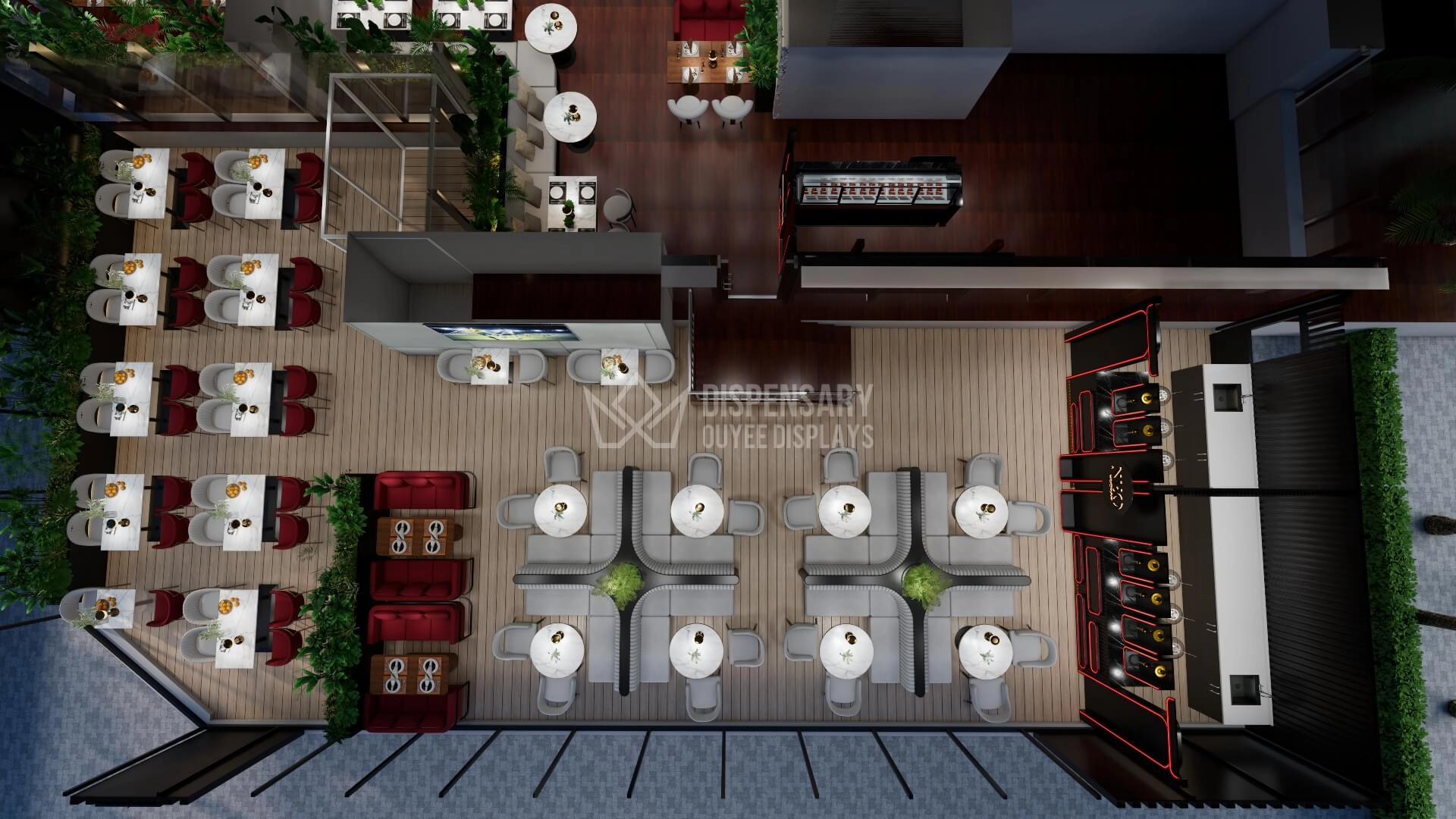
Wholesale Modern Commercial Hookah Lounge Furniture Bulk Suppliers
Transform your hookah lounge with our wholesale modern commercial furniture—designed to elevate ambiance, comfort, and customer engagement. Whether you need custom booths, sleek seating, or modular tables, we offer a complete solution tailored for premium retail and hospitality environments.
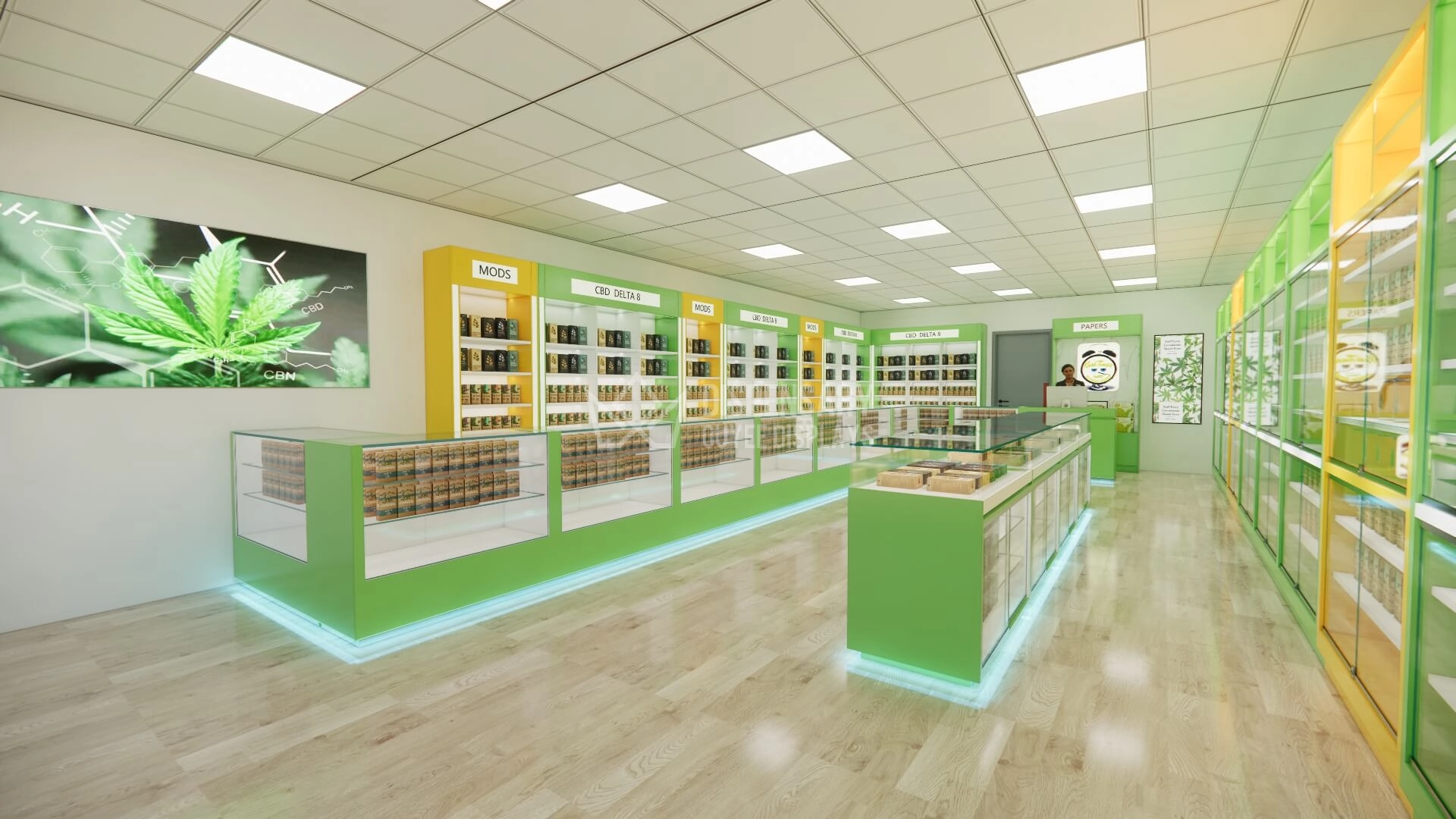
Custom Smoke Shop Glass Displays CBD Cigarettes Display Solutions
A sleek and professional solution tailored for CBD cigarette product displays. These custom glass showcases offer optimal visibility, organization, and brand presentation with vibrant color zoning and LED accents.
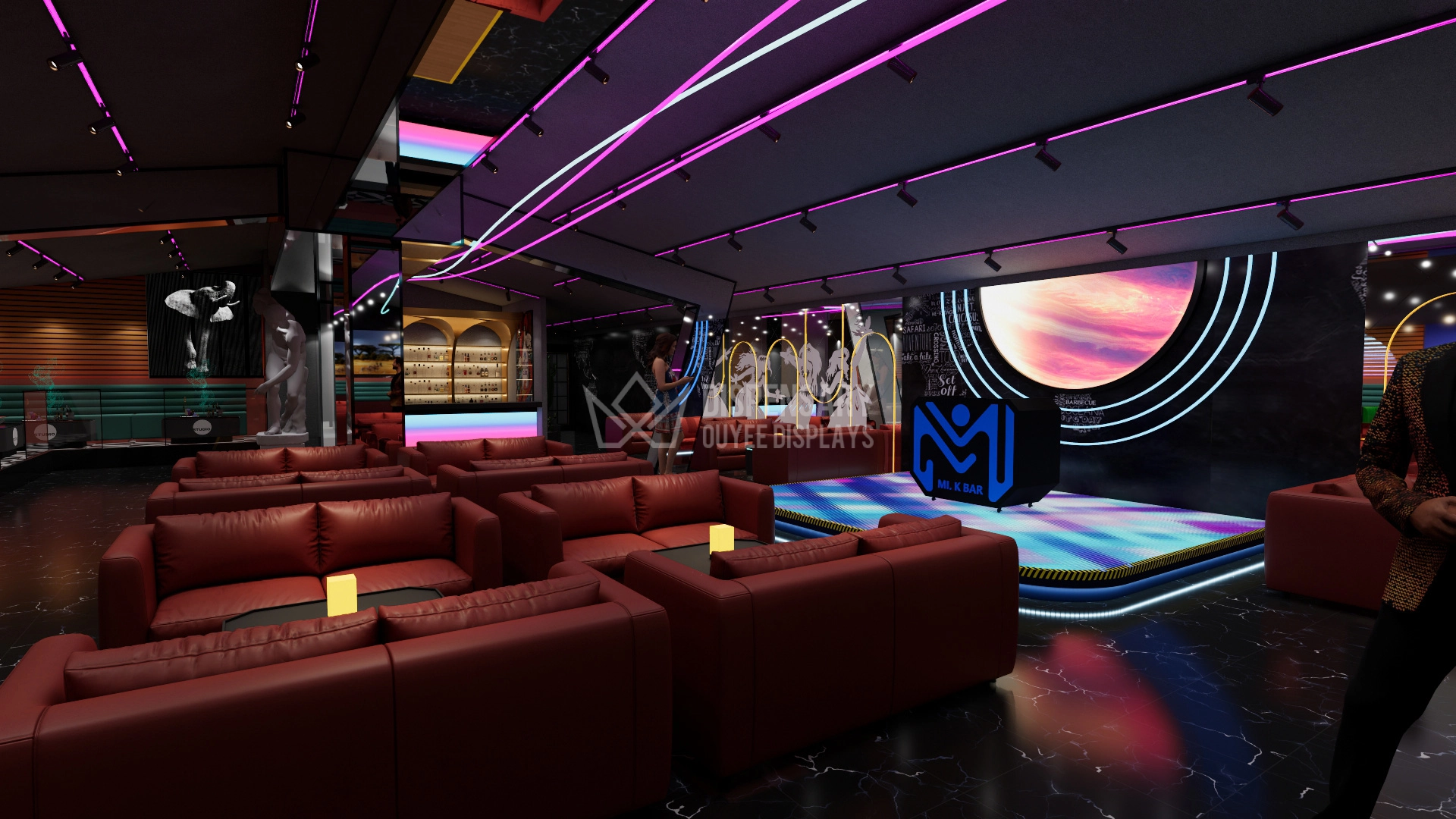
Commercial Durable Hookah Furniture Bulk Modular Layout for Modern Lounges
This modular hookah lounge furniture is designed for modern bars, lounges, and clubs that demand both luxury and functionality. With bold lighting, ergonomic seating, and customizable modules, it provides a versatile, durable, and aesthetically powerful solution for high-end hookah venues. Perfect for creating a visually immersive atmosphere that enhances customer satisfaction and retention.
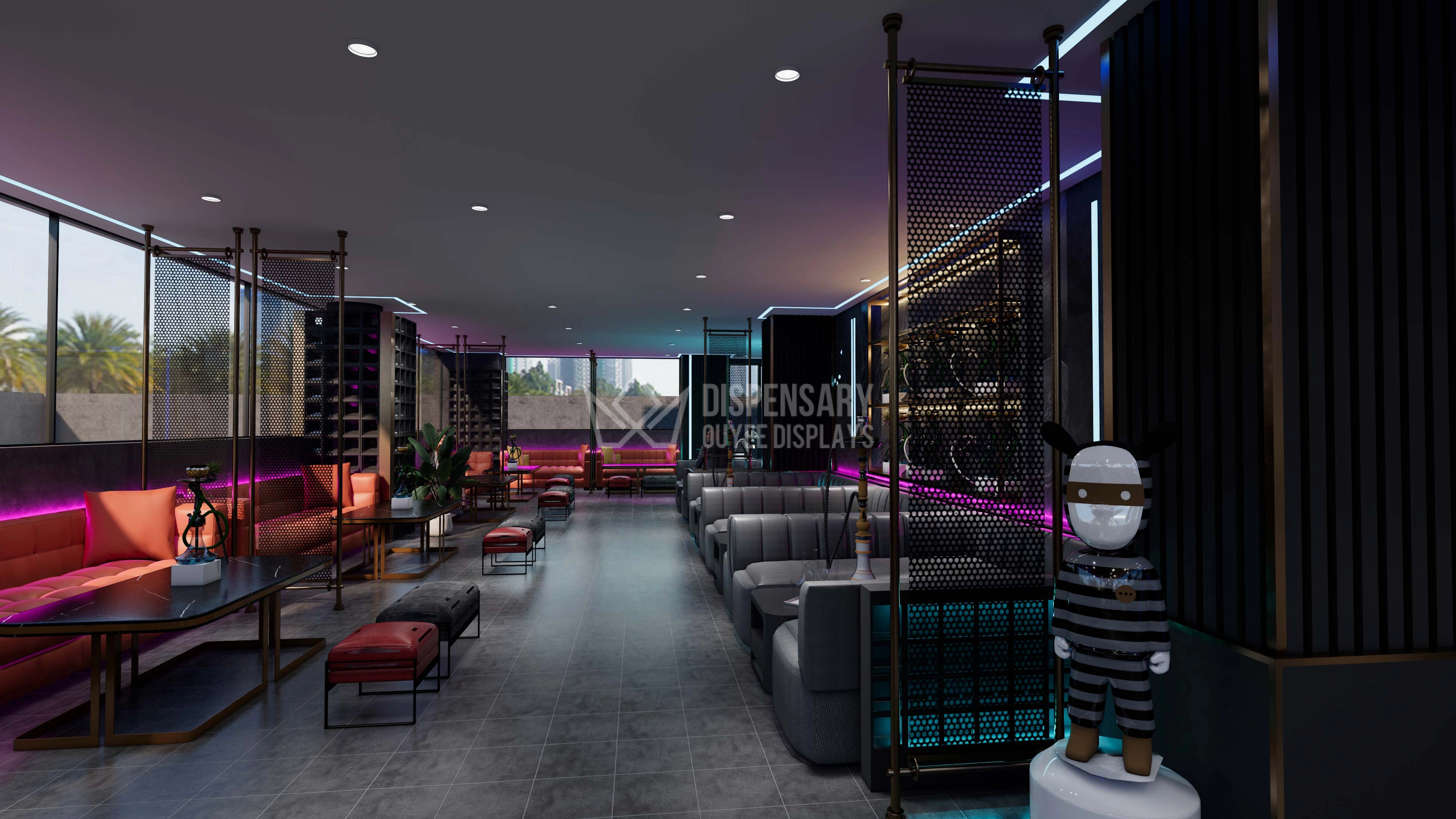
Customized Wholesale Hookah Lounge Furniture For Sale
Elevate your lounge experience with our premium customized hookah lounge furniture, designed for modern aesthetics and maximum comfort. With a strong emphasis on privacy, atmosphere, and luxury, our modular sofa systems, LED accents, and functional shisha setups are tailored to transform any space into a high-end smoking destination. Ideal for lounges, nightclubs, or upscale cafes seeking a bold, unified interior identity.
Let's get in touch

Email: gzouyeedisplay@gmail.com
WhatsApp: +86 136 6049 7267
Ouyee Dispensary
Ouyee Dispensary
Ouyee Dispensary
Ouyee Dispensary