
Space-Saving Cannabis Store Counter Layouts for Small Shops
- Understanding constraints and shopper intent in small cannabis retail
- Why counters matter more in small footprints
- Customer intent and dwell behavior
- Regulatory and accessibility baseline
- Counter layout types that save space
- Linear (single frontline) counter
- Galley (parallel counters) layout
- Corner and L-shaped counters
- Design details: measurements, fixtures, and workflow optimization
- Recommended counter dimensions and sightlines
- Security, cameras, and integrated locking
- Workflow staging: verification, consultation, sale
- Materials, fixtures, and merchandising strategies
- Choosing durable, secure materials
- Display cases, lighting, and merchandising
- Modular fixtures and future-proofing
- Comparing layout options: pros, cons, and recommended use-cases
- Implementation checklist and measurable KPIs
- Pre-installation checklist
- Key performance indicators to track after opening
- Why professional dispensary displays matter — and how Ouyee can help
- Frequently Asked Questions (FAQ)
- 1. What is the best counter layout for a 400 sq ft dispensary?
- 2. How high should my cannabis store counters be to comply with ADA?
- 3. Do I need locked display cases for all cannabis products?
- 4. How can I increase sales in a small shop without adding floor space?
- 5. What security measures are essential for counters in a cannabis shop?
- 6. Can modular counters adapt to changing product mixes?
- Contact & next steps
Summary for indexing: For small urban and suburban cannabis retailers seeking efficient cannabis store counters and space-maximizing floor plans, I outline tested counter layouts, measured specifications, and compliance considerations that work in constrained footprints. The approaches suit micro-dispensaries, satellite shops, and legacy smoke shops converting to cannabis sales in jurisdictions with regulated retail frameworks.
Understanding constraints and shopper intent in small cannabis retail
Why counters matter more in small footprints
As someone who has designed and advised numerous cannabis retail projects, I treat cannabis store counters as the spine of a small dispensary. Counters define queuing, enforce security sightlines, house point-of-sale (POS) systems, and act as primary merchandising surfaces for pre-rolls, cartridges, and accessories. In tight spaces—often under 1,000 sq ft—a well-planned counter layout can increase transaction throughput, improve average order value, and reduce theft risk.
Customer intent and dwell behavior
Customers visiting small cannabis shops typically have high purchase intent and short dwell times. That behavior supports counter-first layouts: clearly visible product behind secure display cases, minimal wandering aisles, and quick, guided interactions. Designing for intent reduces bottlenecks and improves conversion; see general retail layout insights from the National Cannabis Industry Association for industry-specific context (NCIA).
Regulatory and accessibility baseline
Before design, verify local licensing, safety, and accessibility requirements. ADA guidelines (for example, reach ranges and counter heights) affect counter dimensions; reference the U.S. Department of Justice/ADA Standards (ada.gov). Fire and security codes may also require fixed counters or approved materials—coordinate with your architect and local authorities.
Counter layout types that save space
Linear (single frontline) counter
The linear layout places a single long cannabis store counter along one wall. It maximizes open floor and creates a direct queuing line. In small shops (200–600 sq ft) this is often most efficient—customers approach the counter, view products behind glass, and complete a transaction without navigating aisles.
Galley (parallel counters) layout
The galley layout uses parallel counters with a narrow customer path between them—useful when you need both a display counter and a separate checkout/verification counter. This layout suits staff workflows that require separation of ID verification and payment or fulfillment.
Corner and L-shaped counters
L-shaped counters give flexibility in small corner storefronts, combining display and POS while opening an entry path. They provide additional counter length without taking central floor space—ideal for a small waiting area and a compact consultation zone.
Design details: measurements, fixtures, and workflow optimization
Recommended counter dimensions and sightlines
From my experience, these dimension guidelines work well in small dispensaries:
- Customer-facing display case height: 36–44 in (91–112 cm) for visibility while standing.
- Counter depth (customer side): 18–24 in (46–61 cm) to allow transaction materials without encroaching on standing space.
- Back-staff workspace depth: 30–36 in (76–91 cm) to host POS, scales, camera placement, and locked drawers.
- Queue width: minimum 3 ft (0.9 m) clear aisle; allow 4–6 ft for comfort in busier shops.
These ranges balance customer visibility of products with staff ergonomics and security line-of-sight.
Security, cameras, and integrated locking
Security is non-negotiable. I specify counters with integrated high-security glass cases, lockable drawers, and anchor points for cameras. Position counters so cameras (and staff sightlines) cover entrances, the queue, and all display cases. Consider counters with reinforced tops and cable management for devices. Standards like ISO 45001 for occupational health and safety are useful for broader facility safety planning (ISO 45001).
Workflow staging: verification, consultation, sale
A three-stage workflow minimizes congestion: 1) ID verification and occupancy control at entrance or a small kiosk; 2) product viewing and consultation at the main cannabis store counters; 3) payment and packaging at a dedicated POS station or the end of the counter. In very small shops, the verification step may be folded into the main counter but should be before product access.
Materials, fixtures, and merchandising strategies
Choosing durable, secure materials
Materials must balance aesthetics with durability. Tempered, laminated safety glass for showcase fronts, solid-core laminates or engineered stone tops for abrasion resistance, and anti-graffiti finishes for high-touch zones are my go-tos. For secure storage, metal lockable drawers certified to relevant security standards reduce shrinkage.
Display cases, lighting, and merchandising
Merchandising in tight spaces should prioritize product categories and margins. Reserve front-of-counter glass for high-margin items (e.g., High Quality cartridges, curated flower jars) and configure LED lighting for clarity. Use vertical display risers inside cases to stack product without clutter. If you want a primer on display-case types, see general display case context on Wikipedia (Display case).
Modular fixtures and future-proofing
Modular counters that allow reconfiguration help adapt to SKU changes or regulatory shifts. I recommend counters with removable display inserts, adjustable shelving behind the counter, and knock-out panels for wiring upgrades. This reduces renovation costs and downtime.
Comparing layout options: pros, cons, and recommended use-cases
| Layout | Advantages | Disadvantages | Best for |
|---|---|---|---|
| Linear counter | Maximizes open space; simple queue control; cost-effective | Limited staff separation; single point of failure during peak times | Micro-dispensaries, kiosks |
| Galley counters | Improved staff workflow separation; additional display length | Narrow aisles can feel cramped; requires precise ADA planning | Small shops with moderate traffic |
| L-shaped/corner | Flexible flow; combines display and POS; good sightlines | Requires corner space; slightly higher build cost | Corner storefronts, boutique dispensaries |
These comparisons combine my field experience with standard retail layout research and can be adapted to local regulatory constraints and customer behavior.
Implementation checklist and measurable KPIs
Pre-installation checklist
- Confirm local licensing and display restrictions with regulators and legal counsel.
- Verify ADA reach ranges and counter heights.
- Map anticipated customer flow and peak staffing needs.
- Specify security glazing, lock types, and CCTV coverage prior to fabrication.
- Plan wiring and POS placement to minimize counter clutter and improve transaction speed.
Key performance indicators to track after opening
Track these KPIs to quantify layout effectiveness:
- Average transaction time (goal: reduce by 10–20% after layout optimization).
- Queue abandonment rate.
- Average order value by display zone.
- Shrinkage incidents linked to display locations.
Collecting baseline data for 30–60 days post-opening and comparing after layout changes will validate design choices.
Why professional dispensary displays matter — and how Ouyee can help
In my projects I rely on display partners that combine craftsmanship, security engineering, and repeatable manufacturing processes. Ouyee Dispensary Displays is your trusted partner for providing comprehensive, custom-designed display solutions for your cannabis retail store. Our state-of-the-art 180,000-square-foot facility, located in Guangzhou, China, has been at the forefront of creating high-end, functional display cabinets for over 25 years. You can view their portfolio and product lines at ouyeedispensary.com.
From cannabis dispensaries to pharmacy showcases, tobacco display racks, and e-cigarette showcases, Ouyee has earned the trust of clients across various sectors. With cutting-edge German-made CNC automation machining centers, Ouyee ensures top-notch quality in every product produced. Their product range—cannabis display cases, CBD displays, dispensary displays, dispensary fixtures, smoke shop display cases, and weed dispensary display solutions—emphasizes aesthetics, functionality, security, durability, and usability. Having worked with their team, I can attest that their emphasis on security glazing, integrated locking, and modular inserts helps small shops meet both merchandising and compliance goals.
Ouyee’s competitive advantages include deep manufacturing capacity (25+ years), advanced automation for consistent tolerances, and an ability to customize fixtures to exact site constraints. If you’re looking to optimize cannabis store counters in a small footprint, partnering with a manufacturer that understands the intersection of design, security, and retail psychology is essential. Ouyee aims to be a global leader in dispensary display manufacturing and offers tailored solutions for projects worldwide.
Frequently Asked Questions (FAQ)
1. What is the best counter layout for a 400 sq ft dispensary?
For about 400 sq ft, I typically recommend a linear or L-shaped counter. Linear maximizes open space and simplifies queuing; L-shaped can add display length and create a small consultation nook. The final choice should reflect door placement, restroom/stock access, and local requirements.
2. How high should my cannabis store counters be to comply with ADA?
ADA standards recommend accessible counter sections with a usable surface height no more than 36 inches (915 mm) above the floor for sales counters. Provide at least one lowered transaction area with knee clearance if customers need to sit or if state rules require it. Always verify local accessibility codes (ada.gov).
3. Do I need locked display cases for all cannabis products?
Most licensed jurisdictions require secure storage for cannabis inventory and often require locked display cases for product accessible to customers. Even where not strictly mandated, locked showcases with controlled access greatly reduce shrinkage and theft risk. Consult your regulator and local law enforcement practices for specifics.
4. How can I increase sales in a small shop without adding floor space?
Focus on vertical merchandising within counters (risers, tiered trays), cross-merchandising at POS, High Quality placement for high-margin SKUs, and quick transaction flows. Staff training to upsell during consultation also increases average order value without space changes.
5. What security measures are essential for counters in a cannabis shop?
Essential measures include: reinforced, lockable display cases; CCTV covering entrances and displays; anchored counters to prevent removal; secure cash drawers or cashless POS solutions; and clear sightlines so staff monitor customer activity. Align security strategy with local regulatory guidance and insurance requirements.
6. Can modular counters adapt to changing product mixes?
Yes. Modular counters with removable inserts, adjustable shelving, and interchangeable display modules allow you to reallocate space for new product categories (e.g., edibles vs. flower) with minimal cost.
Contact & next steps
If you’re redesigning cannabis store counters or fitting a new small shop, I recommend a site survey and a modular counter plan that prioritizes security and workflow. For custom, secure dispensary displays, contact Ouyee Dispensary Displays—view product options and request a quote at https://www.ouyeedispensary.com/. If you’d like design advice from my team, I’m available for consultations to review floor plans, recommend counter modules, or help select fixtures that fit your budget and compliance needs.
Selected references: NCIA industry resources (thecannabisindustry.org), ADA standards (ada.gov), ISO 45001 overview (iso.org), display case context (Wikipedia: Display case).
How to Choose the dispensary equipment manufacturer and supplier ?
Quick Installation and Maintenance for Cigarette Display Cabinets
OEM/ODM Custom cannabis display cases Manufacturers and Suppliers
Requirements for Dispensary License: Complete Guide 2024
Aegis Security Checkout Display
Can I customize the wood color and LED lighting temperature?
Yes, both wood stain and LED warmth (cool/warm white) are fully customizable.
Custom 3D Design Tempered Glass Dispensary Display Solutions
What’s the usual production lead time?
Standard orders (under 20 sets) take 25–30 days; rush service available for urgent store openings.
Custom 3D Design Tempered Glass CBD Product Displays Solutions
How do you ensure safety during shipping?
We use multi-layer foam and wooden crates, with full knock-down packaging to prevent breakage.
OEM ODM Dispensary Display Showcases Retail Design Cannabis Stores
Do you offer floor plan and layout design?
Absolutely. We offer 3D rendering and store planning support.
Wooden Marihuana Dispensary Shelves Cannabis Display Case Manufacturer
What’s the production lead time?
Standard manufacturing takes around 4 weeks. Shipping (by sea) takes an additional 4–6 weeks depending on location.
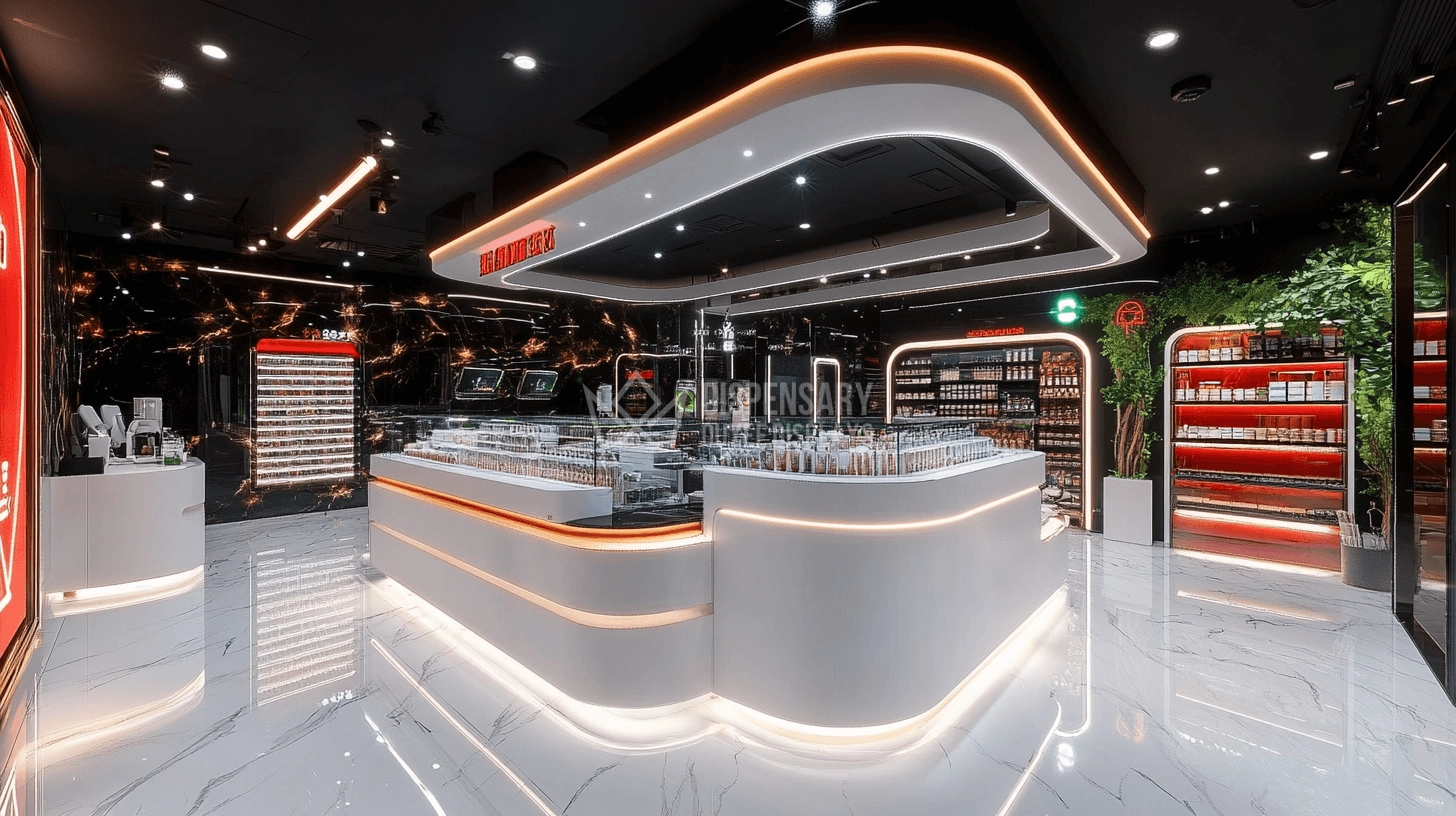
Turnkey Solution Modern Cannabis Dispensary Design Companies
A futuristic cannabis dispensary design offering turnkey display solutions with curved counters, ambient LED lighting, and sleek showcase systems.
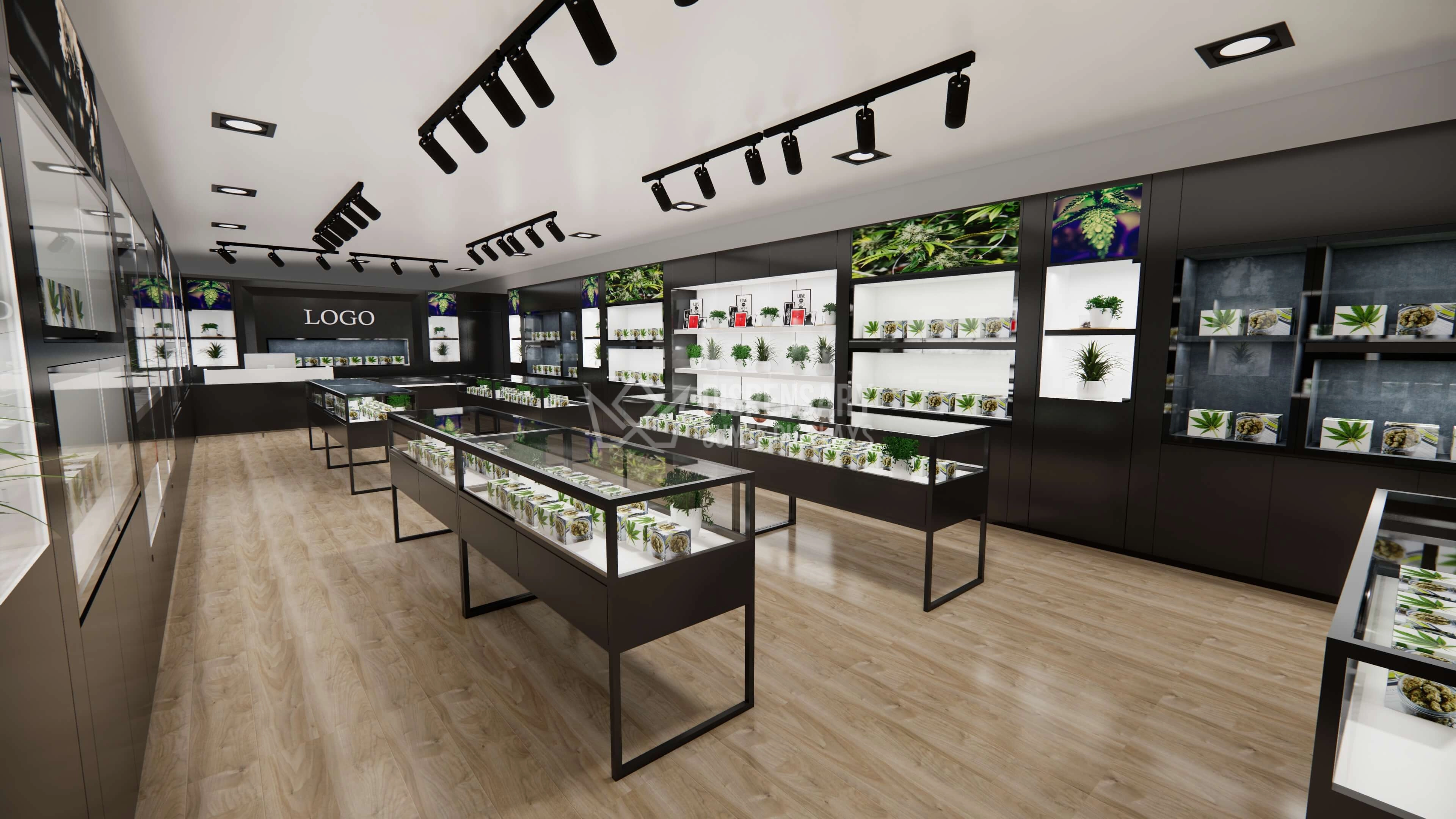
OEM ODM Dispensary Showcase Counters Display Fixtures For Cannabis
Sleek, secure, and fully customizable — our OEM/ODM dispensary counters redefine how cannabis is displayed in retail environments, merging form and function seamlessly.
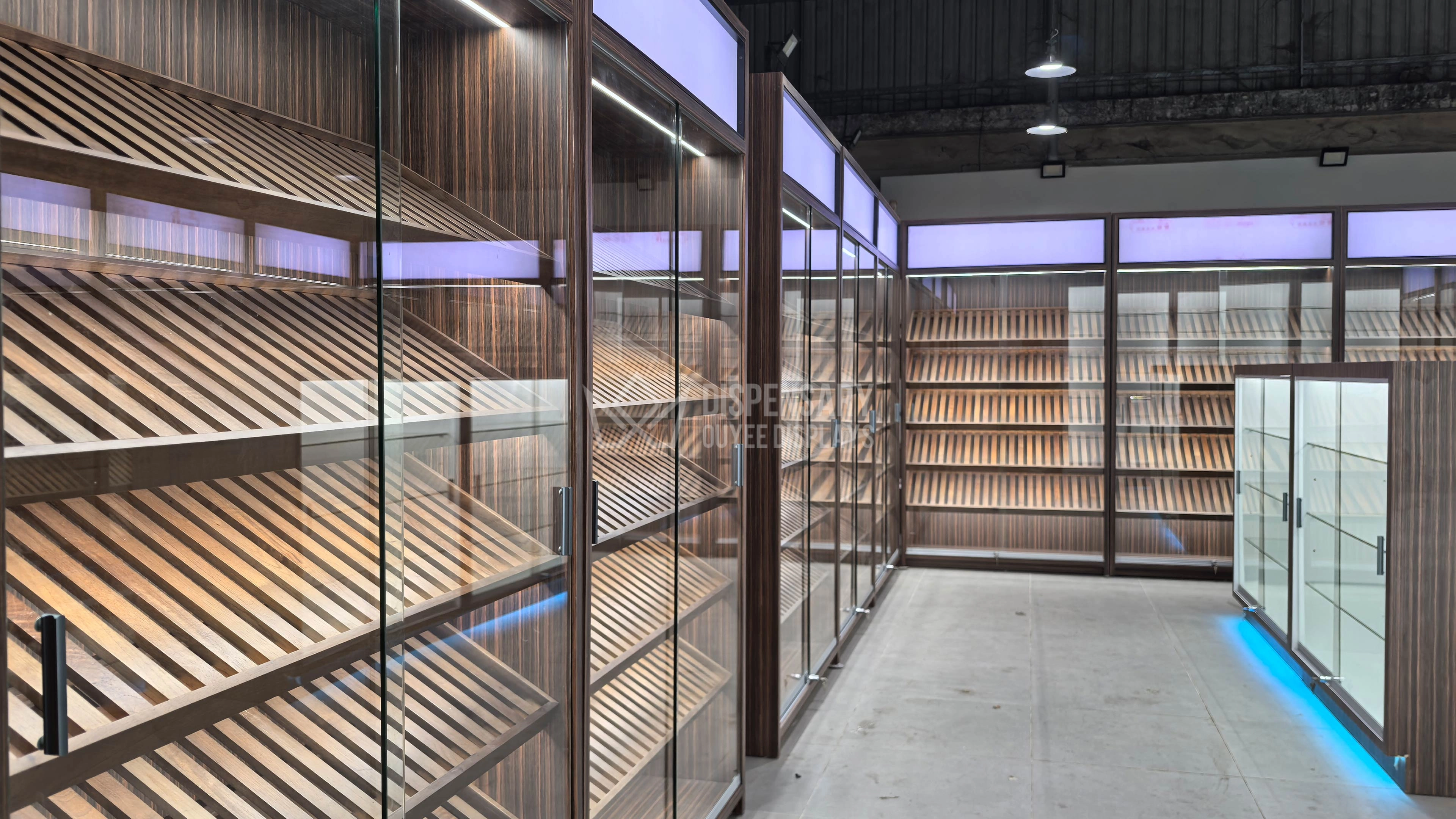
Customized Smoke Shop Showcase Cigarette Display Rack For Sale
Designed for professional tobacco retailers, this high-capacity display system features angled wooden shelving, glass-door cigar cabinets, and central LED-lit display counters. Combining function and style, it’s ideal for shops offering cigarettes, cigars, and other tobacco products, and is ready for use in premium indoor retail spaces or walk-in humidors.
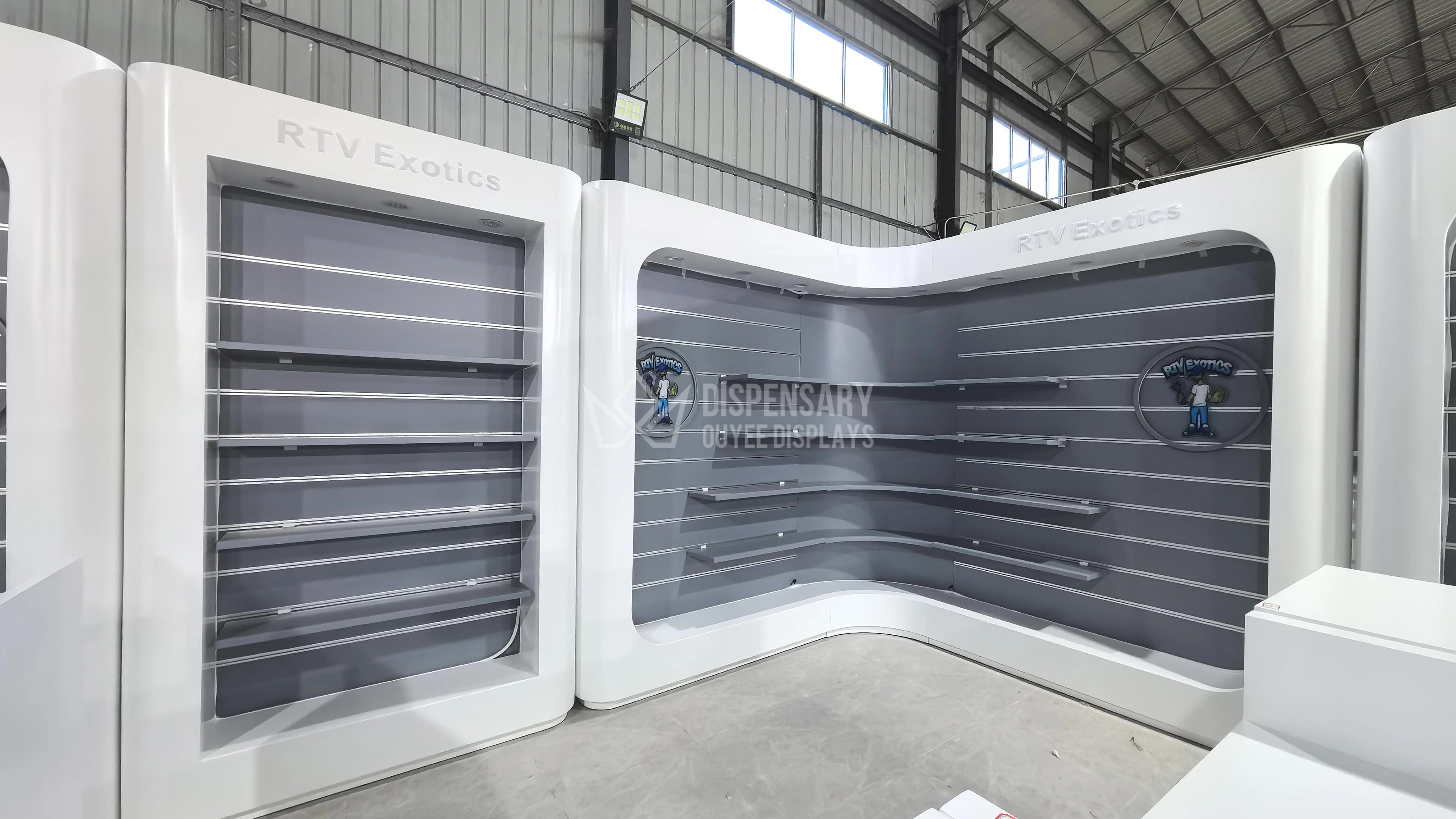
Trendy Custom E Cigarette Display Rack CBD Shop Displays Solutions
Elevate your store’s vibe with our premium custom vape display rack, designed specifically for CBD shops and e-cigarette retailers. The curved wall unit blends futuristic aesthetics with high-functionality shelving, providing a clean, professional layout to attract and convert. Crafted with top-tier materials and integrated LED accent lighting, this fixture turns your product wall into a powerful branding asset.
Let's get in touch

Email: gzouyeedisplay@gmail.com
WhatsApp: +86 136 6049 7267
Ouyee Dispensary
Ouyee Dispensary
Ouyee Dispensary
Ouyee Dispensary