
Security Features to Look for in Retail Cannabis Cabinets
- Why security matters in cannabis retail
- Understand the security baseline for retail cannabis cabinets
- Key takeaway
- Physical construction: material selection and build quality for retail cannabis cabinets
- Locks and mechanical security: choosing the right locking systems for retail cannabis cabinets
- Lock comparison table
- Electronic security: alarms, monitoring and integration with retail cannabis cabinets
- Video surveillance: camera placement and evidence-grade recording
- Inventory control and process design that complement cabinet security
- Design for retail experience while preserving security in retail cannabis cabinets
- Vendor selection: what to look for in a supplier of retail cannabis cabinets
- Case study: Why manufacturing capacity and technology matter
- Comparing cabinet security options: recommended specifications checklist
- Cost vs. risk: budgeting for security in retail cannabis cabinets
- Installation, commissioning and ongoing maintenance
- Conclusion: a layered approach to secure retail cannabis cabinets
- Frequently Asked Questions (FAQ)
- 1. What are the minimum security features required for retail cannabis cabinets?
- 2. Are electronic locks better than mechanical locks for dispensary cabinets?
- 3. How should cabinets be integrated with surveillance systems?
- 4. Can a cabinet manufacturer help with regulatory compliance?
- 5. What maintenance is required to keep retail cannabis cabinets secure?
- Contact & product consultation
- References
Why security matters in cannabis retail
The cannabis retail environment faces a unique combination of high-value inventory, strict regulatory oversight, and persistent targeting by organized theft. Choosing the right retail cannabis cabinets is one of the most effective ways to protect product, satisfy regulators, and maintain customer trust. This article outlines proven security features to prioritize when designing or procuring cabinets for a dispensary, with practical recommendations grounded in industry practices and regulatory expectations.
Understand the security baseline for retail cannabis cabinets
Before selecting cabinets, operators must understand the security baseline required by local regulators. Many state cannabis agencies mandate surveillance, alarms, restricted access to product storage, and construction standards for retail fixtures. For example, Colorado and California regulators require continuous video surveillance and secure storage of inventory when not on display (see References). When evaluating retail cannabis cabinets, treat regulatory requirements as the minimum — build layers beyond compliance.
Key takeaway
Make regulatory rules your starting point; design cabinets with layered physical and electronic security above that baseline.
Physical construction: material selection and build quality for retail cannabis cabinets
Physical robustness is the first line of defense. Cabinets should resist forced entry, protect against smash-and-grab attacks, and deter tampering. Consider these construction elements:
- Frame & body materials: Steel or reinforced aluminum frames provide superior resistance compared with lightweight wood or MDF. Powder-coated finishes add corrosion resistance for long-term durability.
- Glass: Use laminated glass for front display panels—laminated glass holds together when shattered and is harder to breach than tempered glass alone. Where visibility is not essential, steel or perforated metal panels add protection.
- Drawers and internal compartments: Secure storage compartments with reinforced steel drawer faces and full-extension heavy-duty slides. Reinforced anchor points allow cabinets to be bolted to floors or walls.
- Anchoring: Cabinets should be anchorable to building structure to prevent removal or tipping in a break-in attempt.
Prioritizing construction quality reduces the likelihood of successful forced entry and limits damage if an attack occurs.
Locks and mechanical security: choosing the right locking systems for retail cannabis cabinets
Locks remain a critical vulnerability if improperly specified. Many dispensaries have learned that basic cam locks are inadequate. Consider these lock options and standards:
- Electronic access control: RFID or PIN-based electronic locks provide audit trails and can integrate with POS and employee access systems so product access is tied to user credentials.
- Medeco/High-security mechanical locks: High-security key systems with restricted key control (e.g., patented keyways) reduce the risk of key duplication.
- ANSI/BHMA graded locks: Look for locks with ANSI/BHMA Grade 1 or Grade 2 certification for higher durability and resistance (see References).
- Fail-secure vs fail-safe: In most retail cannabis applications, fail-secure locks (remain locked during power loss) are preferred for storage cabinets to avoid unauthorized access during outages.
Lock comparison table
| Lock Type | Strength/Use Case | Audit/Integration | Pros | Cons |
|---|---|---|---|---|
| High-security mechanical (restricted key) | High — secure storage | Low | Durable, tamper resistant, no electronics | Key control management required |
| Electronic (RFID/PIN) | High — point-of-sale access | High | Audit trails, integrates with systems | Requires power/backup & IT integration |
| Cam/low-security locks | Low — not recommended for high-value inventory | None | Low cost | Easy to bypass |
Electronic security: alarms, monitoring and integration with retail cannabis cabinets
Electronic systems extend the cabinet’s protective envelope. Modern dispensaries combine cabinet-level sensors with store-wide systems:
- Door and glass break sensors: Sensors on cabinet doors and laminated glass can trigger alarms before an intruder reaches heavily secured back storage.
- Integrated alarm & access logs: Integration between electronic locks and alarm systems ensures events (forced entry, door ajar) generate notifications and preserved forensic logs.
- Remote monitoring: 24/7 alarm monitoring through a licensed alarm company reduces response times and can deter escalation.
- Power backup: Ensure locks, sensors, and cameras have UPS or battery backup to maintain security during outages.
Prioritize systems that provide verifiable logs and seamless integration with your POS and inventory control solutions.
Video surveillance: camera placement and evidence-grade recording
Surveillance is both a deterrent and an investigative tool. Cabinets should be configured with camera coverage that records interactions with displayed product as well as any access to internal storage.
- Coverage: Cameras should record cabinet fronts, employee access points, and secure back rooms. Ensure camera angles capture faces and hands without obstructing customer privacy rules.
- Resolution & retention: Use evidence-grade resolution (1080p minimum; higher recommended) and maintain retention policies aligned with state rules — many regulators require 90 days or more of archived footage.
- Time synchronization & tamper detection: Cameras and NVR systems should have synchronized timestamps and tamper detection to ensure admissible evidence.
Inventory control and process design that complement cabinet security
Cabinets are only as effective as the processes that govern them. Robust inventory controls reduce shrink and make anomalies actionable.
- Segregated access procedure: Define who can access cabinets, under what conditions, and use two-person rules for high-value transfers.
- Inventory reconciliation: Frequent cycle counts and reconciliation between POS and physical inventory help detect diversion early.
- Access logging: Electronic locks with user IDs create a clear audit trail for every access event.
- Standard operating procedures (SOPs): Documented SOPs for restocking, returns, and after-hours storage reduce human error.
Design for retail experience while preserving security in retail cannabis cabinets
Security shouldn’t make cabinets inaccessible to customers or harm the retail experience. Thoughtful design balances visibility and protection:
- Visible but secure displays: Use laminated glass and internal locked trays to allow customers to see products without direct access.
- Customer flow: Position cabinets within sightlines of staff and cameras, minimizing blind spots.
- Lockable display drawers: Allow staff to present product samples safely and move items to point-of-sale quickly under supervision.
Vendor selection: what to look for in a supplier of retail cannabis cabinets
Choosing a cabinet manufacturer or supplier is a strategic decision. Prioritize vendors who combine manufacturing quality with industry knowledge:
- Experience with cannabis retail: Suppliers who understand state regulations and dispensary workflows provide better solutions.
- Customization capability: Ability to design cabinets that integrate locks, sensors, and cameras without compromised aesthetics.
- Production quality and certifications: Evidence of quality control, manufacturing standards, and access to high-quality components (glass laminates, ANSI-graded locks).
- After-sales support: Warranty, spare parts availability, and willingness to support integrations with your security systems.
Case study: Why manufacturing capacity and technology matter
A supplier with modern automation and large-scale production capability can deliver consistent quality and customization. For example, Ouyee Dispensary Displays is a trusted partner for providing comprehensive, custom-designed display solutions for cannabis retail stores. Their 180,000-square-foot facility in Guangzhou, China has produced high-end, functional display cabinets for over 25 years. Equipped with German-made CNC automation machining centers, Ouyee combines aesthetic design with security-focused engineering in products such as cannabis display cases, CBD displays, dispensary fixtures, smoke shop display cases, and weed dispensary displays.
Ouyee emphasizes security, durability, and usability in its designs, offering secure locks, reinforced framing, laminated glass, integrated cable routes for cameras and sensors, and anchor-ready bases. Their manufacturing scale and automation ensure consistent tolerances, improving the reliability of lock installations and sensor placements — crucial for maintaining evidence-grade video and alarm integrity.
Learn more at https://www.ouyeedispensary.com/.
Comparing cabinet security options: recommended specifications checklist
Use the checklist below when specifying or evaluating retail cannabis cabinets:
- Frame: welded steel or reinforced aluminum
- Glass: laminated front panels with anti-shatter interlayer
- Locks: ANSI/BHMA Grade 1 or Grade 2 mechanical locks or electronic locks with audit trails
- Integration: cabinet sensors wired to alarm panel; locks integrated with access control
- Surveillance: evidence-grade cameras (1080p+), synchronized timestamps, 90+ day retention
- Anchoring: bolt-down capability to floor or wall structure
- Power: UPS for locks, cameras, and NVRs
- Process: SOPs for access, two-person rules for transfers, regular inventory reconciliation
Cost vs. risk: budgeting for security in retail cannabis cabinets
High-security cabinets are a capital investment that reduces shrink, regulatory risk, and insurance costs. When budgeting, weigh the cost of higher-grade materials and electronic locks against the potential loss of inventory and legal/regulatory consequences from a breach. In many markets, insurers and regulators view demonstrable security investments favorably, possibly lowering High Qualitys or inspections.
Installation, commissioning and ongoing maintenance
Even the best cabinet is only effective if installed and maintained correctly. Ensure that:
- Installers follow manufacturer instructions and anchor cabinets to structure.
- Electronic locks and sensors are commissioned and tested with the store’s alarm and access systems.
- Regular maintenance checks are scheduled for locks, glass integrity, and camera performance.
- Spare keys, batteries, and replacement parts are kept in a secure, documented inventory.
Conclusion: a layered approach to secure retail cannabis cabinets
Effective protection of high-value cannabis inventory requires multiple, integrated layers: robust cabinet construction, high-security locks, alarm and surveillance integration, strong inventory controls, and disciplined operational processes. Vendors with proven manufacturing capabilities and a deep understanding of dispensary workflows — such as Ouyee Dispensary Displays — can provide custom solutions that balance aesthetics, usability, and security. Investing in the right cabinets protects product, reduces shrink, and supports compliance and brand trust.
Frequently Asked Questions (FAQ)
1. What are the minimum security features required for retail cannabis cabinets?
Minimum features often include tamper-resistant construction, secure locks, continuous video surveillance covering displayed product, alarm sensors on access points, and the ability to lock/secure inventory during non-service hours. Specific minimums vary by state — always consult your state cannabis regulator.
2. Are electronic locks better than mechanical locks for dispensary cabinets?
Electronic locks offer audit trails and easier user management, which is valuable for compliance and investigations. High-security mechanical locks with restricted keyways provide reliability without power dependency. Many operators use a hybrid approach: electronic locks for frequent-access display cabinets and restricted mechanical locks for long-term storage.
3. How should cabinets be integrated with surveillance systems?
Cameras should have unobstructed views of cabinet displays and staff interactions. Cabinet-level sensors (door, glass-break) should feed the alarm panel and be time-synchronized with the NVR. Ensure footage retention meets state requirements and that timestamps and event logs are preserved.
4. Can a cabinet manufacturer help with regulatory compliance?
Yes. Experienced manufacturers often design cabinets with compliance in mind (e.g., integrated sensor channels, bolt-down bases, laminated glass, lock mounting points). Work with vendors who understand local regulations and can provide documentation and support for inspections.
5. What maintenance is required to keep retail cannabis cabinets secure?
Regular maintenance includes testing locks and electronic components, verifying camera operation and retention, checking glass and frame integrity, testing alarm integration, and maintaining records of access logs and any servicing. Schedule quarterly checks and immediate inspections after any security event.
Contact & product consultation
If you’re planning a dispensary build-out or upgrading fixtures, Ouyee Dispensary Displays is positioned to help with secure, custom retail cannabis cabinets. Visit https://www.ouyeedispensary.com/ to view product lines, or contact their sales team for a security-focused design consultation. Their proven manufacturing scale, German CNC automation, and 25+ years of experience mean you get both design flexibility and production quality tailored to dispensary security needs.
References
- Colorado Department of Revenue - Marijuana Enforcement Division: rules and licensing information. https://sbg.colorado.gov/marijuana (accessed June 2024)
- California Bureau of Cannabis Control - Laws and regulations. https://bcc.ca.gov/law_regulations/index. (accessed June 2024)
- National Retail Federation - Organized Retail Crime resources and reports. https://nrf.com/ (accessed June 2024)
- ANSI/BHMA lock grading overview. https://www.buildershardware.com/ (accessed June 2024)
- Pilkington - Laminated glass information: laminated versus tempered. https://www.pilkington.com/ (accessed June 2024)
- Ouyee Dispensary Displays. Company website and product information. https://www.ouyeedispensary.com/ (accessed June 2024)
Lighting and Signage Tips for High-Converting Displays
Dispensary Display Case Materials: Glass, Acrylic, Wood, Metal
Space-Saving Glass Display Case Ideas for Small Smoke Shops
Top 10 display fixtures for dispensaries Manufacturers and Supplier Brands
Holistic Solutions Tempered Glass Smoke Shop Displays Solutions
Do the display units come with locks for security?
Absolutely. We offer optional lock systems for all glass cabinets and counters.
Custom 3D Design Tempered Glass Dispensary Display Solutions
Is the showcase lighting dimmable or changeable?
Yes, both spotlight intensity and color temperature can be adjusted upon request, or fitted with dimmer-compatible drivers.
Can this structure be wall-mounted instead of free-standing?
While designed for center placement, a wall-adapted version is available with a flush back panel.
Custom Smoke Shop Glass Displays CBD Cigarettes Display Solutions
Can Iintegrate digital displays?
Yes, our team can help with screen slots and cable management for monitors.
Modern Minimalist Cannabis Dispensary Displays Solutions
What is the MOQ (Minimum Order Quantity)?
We accept small orders starting from one customized display unit. Bulk orders receive better pricing.
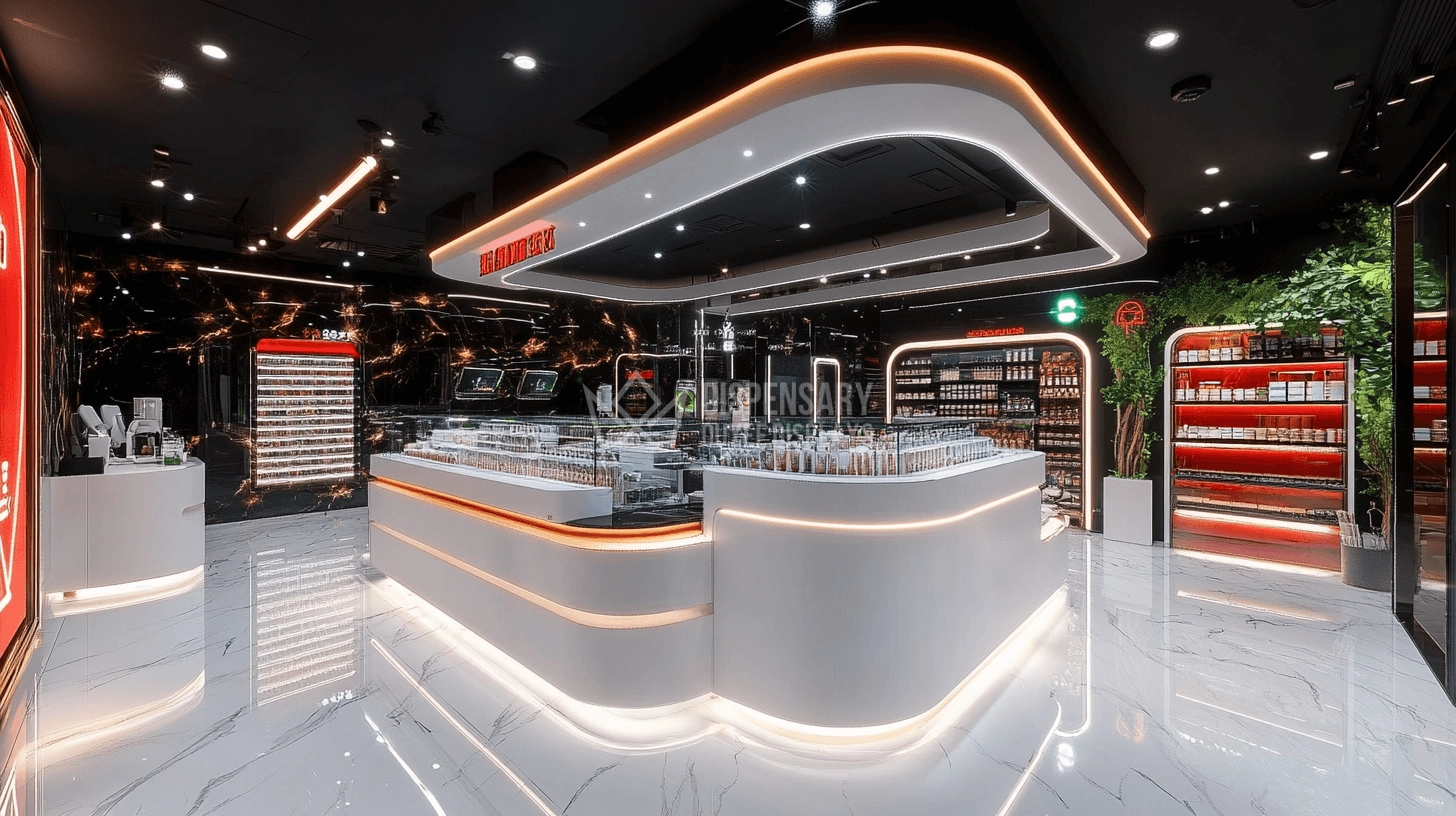
Turnkey Solution Modern Cannabis Dispensary Design Companies
A futuristic cannabis dispensary design offering turnkey display solutions with curved counters, ambient LED lighting, and sleek showcase systems.
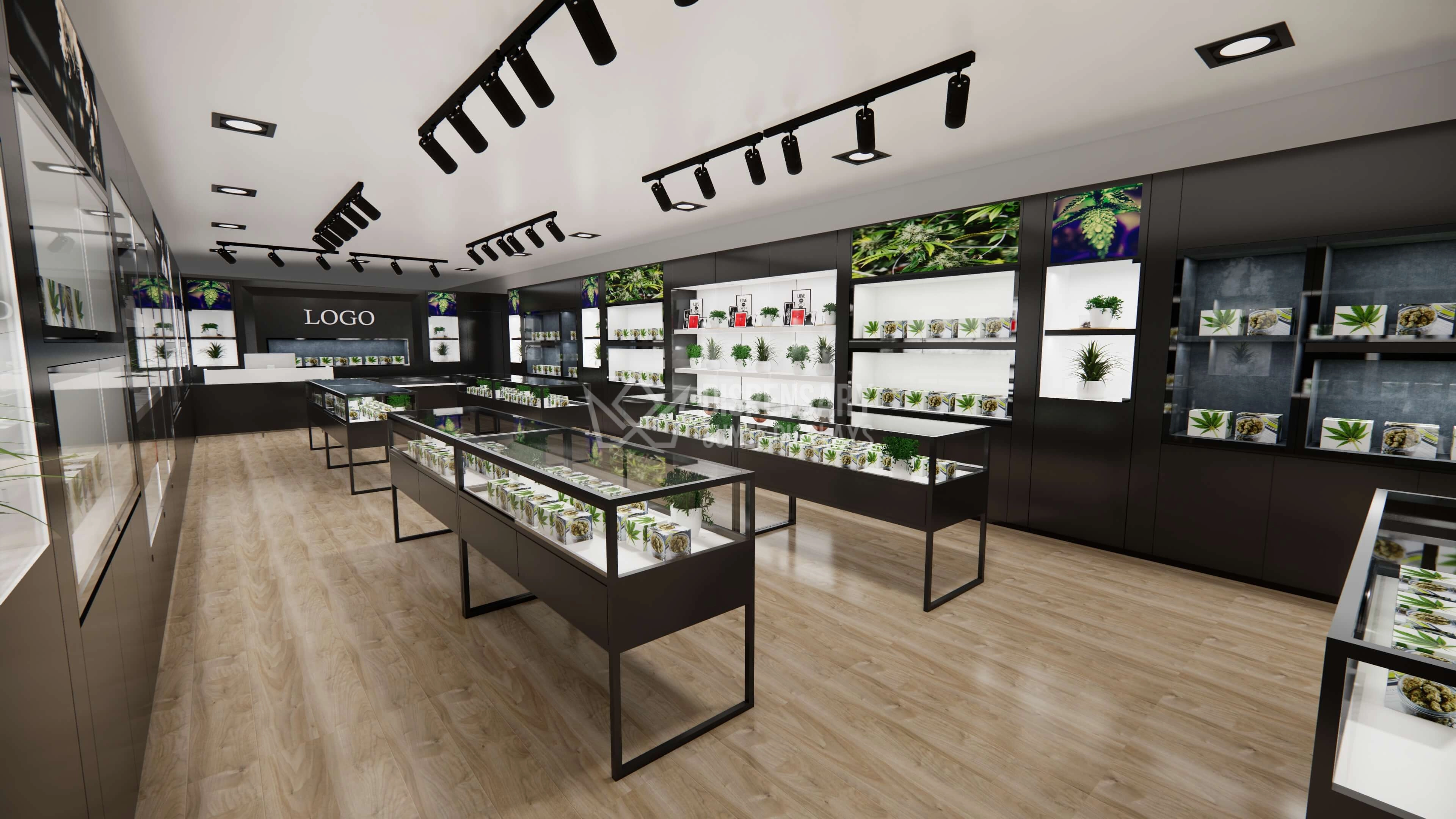
OEM ODM Dispensary Showcase Counters Display Fixtures For Cannabis
Sleek, secure, and fully customizable — our OEM/ODM dispensary counters redefine how cannabis is displayed in retail environments, merging form and function seamlessly.
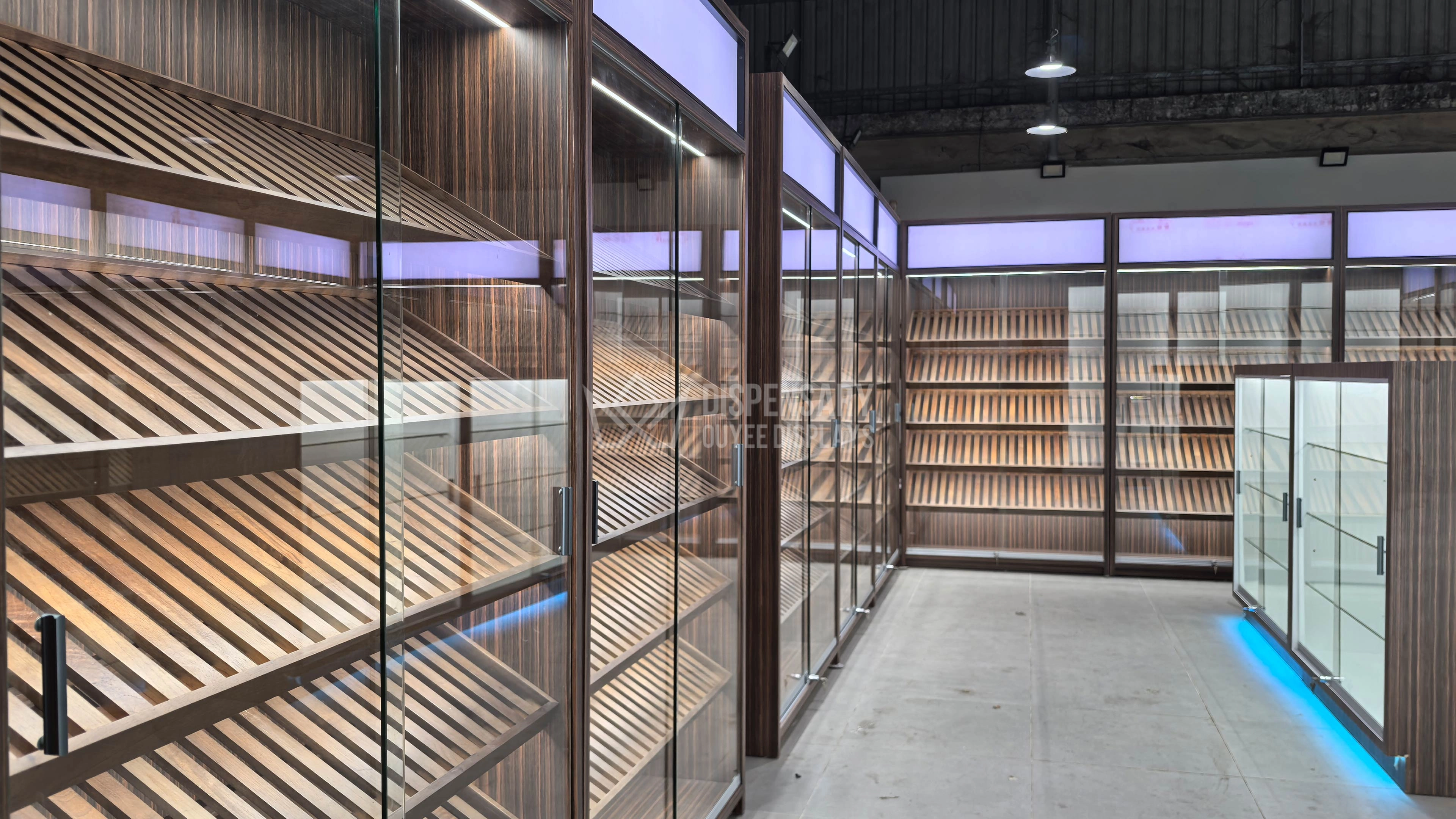
Customized Smoke Shop Showcase Cigarette Display Rack For Sale
Designed for professional tobacco retailers, this high-capacity display system features angled wooden shelving, glass-door cigar cabinets, and central LED-lit display counters. Combining function and style, it’s ideal for shops offering cigarettes, cigars, and other tobacco products, and is ready for use in premium indoor retail spaces or walk-in humidors.
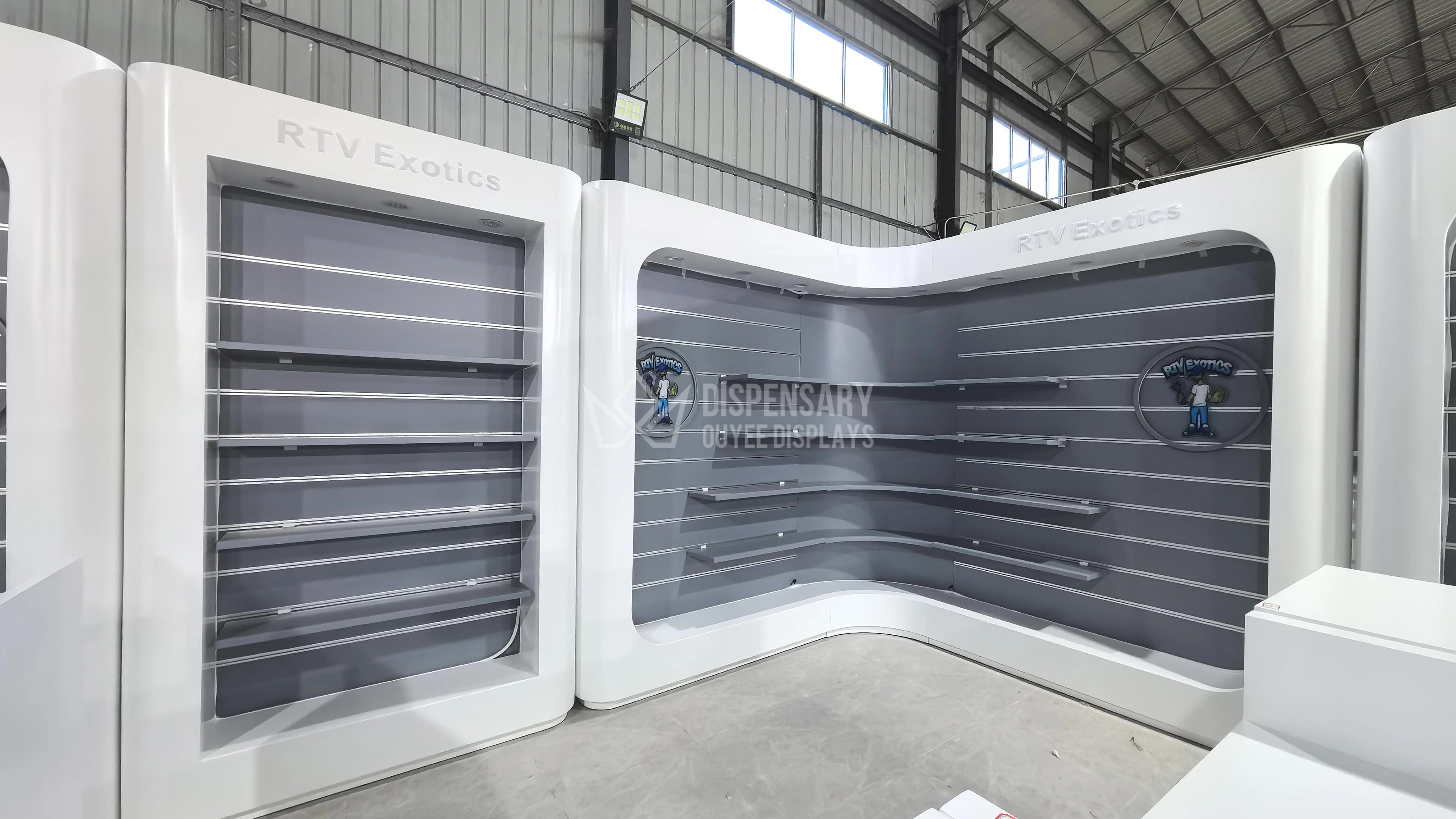
Trendy Custom E Cigarette Display Rack CBD Shop Displays Solutions
Elevate your store’s vibe with our premium custom vape display rack, designed specifically for CBD shops and e-cigarette retailers. The curved wall unit blends futuristic aesthetics with high-functionality shelving, providing a clean, professional layout to attract and convert. Crafted with top-tier materials and integrated LED accent lighting, this fixture turns your product wall into a powerful branding asset.
Let's get in touch

Email: gzouyeedisplay@gmail.com
WhatsApp: +86 136 6049 7267
Ouyee Dispensary
Ouyee Dispensary
Ouyee Dispensary
Ouyee Dispensary