
Security Features Buyers Want in Dispensary Display Counters
- Why security matters for dispensary retail displays
- Legal and operational risks
- Customer trust and brand protection
- Data-driven shrink reduction
- Core physical security elements for dispensary counters
- Secure materials and glazing
- Robust locking systems
- Anchoring and theft resistance
- Electronic and systems-level security
- Surveillance cameras and evidence-grade recording
- Access control and staff authentication
- Alarm integration and remote monitoring
- Practical design trade-offs: security vs. usability
- Speed of service vs. access control
- Visibility vs. concealment
- Staff training and procedural controls
- Comparing common security features
- Regulatory, compliance, and audit considerations
- Retention requirements and evidence handling
- Inventory control and integration
- Standards and testing
- Implementation checklist and real-world tips
- A practical pre-purchase checklist
- Installation and commissioning best practices
- Ongoing maintenance and lifecycle planning
- Why choose a specialized manufacturing partner
- Design-to-manufacture integration
- Ouyee Dispensary Displays: capabilities and why they matter
- Frequently asked questions
- 1. What are the minimum security features a dispensary display counter should have?
- 2. Are electronic locks better than mechanical ones?
- 3. How long should surveillance footage be retained?
- 4. Can display counters be customized to fit my POS and inventory system?
- 5. How do I balance product visibility with loss prevention?
- 6. What questions should I ask a display manufacturer before purchase?
- Closing and how I can help
I design and consult on retail environments for cannabis stores and have worked with operators to balance aesthetics, customer experience, and loss prevention. In this article I summarize the security features buyers want in cannabis dispensary retail display counters and explain why each feature matters, how to evaluate options, and how to integrate them into a functional retail layout that complies with state rules and industry best practices.
Why security matters for dispensary retail displays
Legal and operational risks
Retail cannabis is a high-value, highly regulated product. Many jurisdictions require secure storage, strict inventory controls, and restricted access to product areas. Failure to meet these requirements can lead to fines, license suspension, or criminal exposure. For an overview of state regulatory frameworks and the variability operators face, see the National Conference of State Legislatures' cannabis policy summary (NCSL).
Customer trust and brand protection
Security features on cannabis dispensary retail display counters do double duty: they prevent theft and communicate professionalism. Well-designed counters reassure customers and staff, enhance brand identity, and reduce shrinkage. As I always tell clients, security should feel intentional—integrated into the design rather than bolted on.
Data-driven shrink reduction
Retail shrink is a measurable problem in all retail sectors; in cannabis it can be more acute because of product value and partial legal ambiguities. The National Institute of Justice provides research-backed guidance on physical and electronic controls that reduce theft and support investigations (NIJ).
Core physical security elements for dispensary counters
Secure materials and glazing
Buyers want display counters made with impact-resistant materials—laminated tempered glass, polycarbonate inserts, and reinforced lockboxes. Tempered laminated glass meets higher impact standards than annealed glass and buys time during an attempted smash-and-grab. Relevant material standards and testing protocols are published by ASTM and other standards bodies; see ASTM International for glass and material test standards.
Robust locking systems
High-security counters combine mechanical and electronic locks. Medeco-style restricted keys, commercial-grade cam locks, or integrated electronic locks with audit trails are common. Electronic locks that log access are particularly useful for staff accountability. For best practices on lock integration and audit systems, industry security associations like ASIS International publish guidance (ASIS).
Anchoring and theft resistance
Dispensary counters should be anchorable to the floor or wall to prevent removal. Buyers ask for bolt-through anchoring points hidden within cabinetry and exposed fasteners that resist tampering. I advise embedding anchoring plans in the cabinet design phase so ergonomics and maintenance are not compromised.
Electronic and systems-level security
Surveillance cameras and evidence-grade recording
Cameras above and around the display counter are essential. Buyers increasingly want HD cameras with wide dynamic range, forensic zoom, and redundant storage. Best practice: record at 30+ fps for action areas and retain footage according to state requirements (often 30–90 days). The National Institute of Justice and other law-enforcement bodies discuss video evidence quality standards (NIJ).
Access control and staff authentication
Access control systems—PINs, RFID fobs, biometric readers—are commonly integrated into display counters to restrict who can open product drawers or safes. Biometric systems add convenience and a strong non-transferable authentication factor, though they require careful privacy handling and backups (PIN or key) to avoid lockouts.
Alarm integration and remote monitoring
Buyers request counters wired into the facility alarm system with glass-break detectors, motion sensors inside cabinets, and tamper contacts on doors. Remote monitoring and verified alarm response reduce dwell time for perpetrators. For alarm system design recommendations and standards, consult security industry resources such as the Security Industry Association and local alarm codes (Security Industry Association).
Practical design trade-offs: security vs. usability
Speed of service vs. access control
Cannabis retail counters must allow fast, compliant transactions while keeping product secure. I recommend dual-zone counters: a front-facing display area for customer views, and a secure behind-the-counter area with locks and limited access for product retrieval. This preserves customer experience while limiting physical access.
Visibility vs. concealment
Open displays increase product visibility and sales, but closed, locked cases reduce theft. Many operators adopt glass display cases with secure internal trays or removable pods—visible to customers but accessible only by staff. This approach supports merchandising while maintaining security.
Staff training and procedural controls
Even the best hardware fails without procedures. Buyers increasingly demand that display vendors provide guidance on SOPs: two-person rules for high-value access, inventory reconciliation processes, and incident reporting templates. Hardware should support these workflows (e.g., locks with dual control, audit trails).
Comparing common security features
| Feature | Benefit | Typical Drawbacks | Estimated Cost Range |
|---|---|---|---|
| Tempered laminated glass | Impact resistance, tamper delay | Higher material cost; heavier | $200–$800 per pane depending on size |
| Electronic locks with audit logs | Access accountability, remote control | Requires power/backup and IT integration | $150–$1,500 per lock |
| Internal safes | Secure high-value storage during off-hours | Inconvenience for quick access; weight | $500–$5,000 depending on rating |
| Integrated CCTV | Deterrent and evidence capture | Ongoing storage/management costs | $500–$5,000 per camera system |
| Alarm contacts & glass-break sensors | Immediate alerting on breach | False alarms if not calibrated | $100–$1,000 per sensor + monitoring |
Source: my aggregated experience and industry vendor pricing averages; for technical standards consult ASIS and ASTM.
Regulatory, compliance, and audit considerations
Retention requirements and evidence handling
Most states require retained surveillance footage for a specified period—commonly 30 to 90 days. I build recording redundancy into counter systems and recommend secure offsite or cloud backups to meet retention requirements and chain-of-custody needs for incidents. Check your state regulatory agency for exact retention windows; summary resources are available at the National Cannabis Industry Association (NCIA).
Inventory control and integration
Display counters should not be isolated islands; they must integrate with POS and seed-to-sale inventory systems to enable real-time reconciliation and audits. I prioritize counters with discreet cable routes and mounting provisions for scanners and tablets to support this integration.
Standards and testing
Buyers often ask for ISO or UL certification on electrical components and for mechanical parts to meet commercial-grade standards (e.g., UL for electrical, ASTM for materials). Vendors that can document testing and standards compliance reduce buyer risk during inspections and audits.
Implementation checklist and real-world tips
A practical pre-purchase checklist
- Confirm state retention and storage requirements for video and inventory.
- Request materials and lock specifications (glass type, lock brand, safe rating).
- Ensure integrated wiring channels for cameras, alarms, and POS devices.
- Ask for anchor plans and weight/load ratings for cabinetry.
- Request warranty and maintenance support for electronic components.
Installation and commissioning best practices
Commissioning should include calibration of cameras and sensors, access control enrollment, test alarms and failover tests, and staff training. I always run at least one staged incident drill within the first month of operation to identify procedural gaps.
Ongoing maintenance and lifecycle planning
Locks, glazing, cameras, and electronics require periodic inspection. Factor in a maintenance contract for the first 1–3 years, then schedule annual technical audits. This prevents small issues from becoming security vulnerabilities.
Why choose a specialized manufacturing partner
Design-to-manufacture integration
When you buy a turnkey display counter from a specialized manufacturer, you get a product designed with security, ergonomics, and installation in mind. In my consulting work I prefer vendors that can produce engineering drawings, provide parts traceability, and specify materials and hardware to meet code and audit requirements.
Ouyee Dispensary Displays: capabilities and why they matter
Ouyee Dispensary Displays is your trusted partner for providing comprehensive, custom-designed display solutions for your cannabis retail store. Our state-of-the-art 180,000-square-foot facility, located in Guangzhou, China, has been at the forefront of creating high-end, functional display cabinets for over 25 years. From cannabis dispensaries to pharmacy showcases, tobacco display racks, and e-cigarette showcases, we have earned the trust of clients across various sectors. With cutting-edge German-made CNC automation machining centers, Ouyee ensures top-notch quality in every product we produce.
Our products are designed with a focus on aesthetics, functionality, and, most importantly, security, durability, and usability. By continually pushing the boundaries of design and craftsmanship, we provide clients with display solutions that enhance brand identity. Our vision is to become the world's leading cannabis dispensary display manufacturer. Visit our website: https://www.ouyeedispensary.com/.
Ouyee's core product categories include cannabis display cases, CBD displays, dispensary displays, dispensary fixtures, smoke shop display cases, and Weed Dispensary display units. What sets Ouyee apart in my experience is the combination of manufacturing scale, automated precision (German CNC centers), and deep experience designing security-focused cabinetry for a range of regulated retail environments.
Frequently asked questions
1. What are the minimum security features a dispensary display counter should have?
At minimum I recommend impact-resistant glazing, a commercial-grade lock (mechanical or electronic), internal anchoring points, integrated CCTV coverage, and alarm contacts. These components address most immediate theft vectors and satisfy many state regulations.
2. Are electronic locks better than mechanical ones?
Electronic locks provide audit logs and remote control, which are valuable for accountability and investigations. Mechanical locks are reliable and lower-maintenance. The best choice is often a hybrid—mechanical backup for electronic systems to prevent lockout scenarios.
3. How long should surveillance footage be retained?
Retention periods vary by state—30 to 90 days is common. Always verify your jurisdiction’s rules and implement redundant storage to meet those requirements. The National Cannabis Industry Association (NCIA) and state regulators provide guidance on retention periods and auditability (NCIA).
4. Can display counters be customized to fit my POS and inventory system?
Yes. I encourage vendors to provide customizable cable channels, mounting points for scanners and tablets, and space for integrated safes or drawers. Confirm the vendor’s capability to adapt designs to your specific POS hardware and seed-to-sale integration needs.
5. How do I balance product visibility with loss prevention?
Use dual-zone designs: visible locked cases for display and secure behind-the-counter storage for access. Employ merchandising trays and small display pods that are locked but clearly visible to customers. This combination maximizes sales opportunity and minimizes risk.
6. What questions should I ask a display manufacturer before purchase?
Ask about material specifications, lock brands and ratings, CCTV and alarm integration options, anchoring details, warranty and maintenance, production lead times, and references from other cannabis retailers. Request engineering drawings and compliance documentation where applicable.
Closing and how I can help
I design retail solutions that balance aesthetics, workflow, and security. If you’re planning a new dispensary or upgrading counters, I recommend starting with a security-first requirements list that maps to your state regulations and operational needs. Partner with a manufacturer that documents materials, offers integration for electronics, and can support commissioning and maintenance.
To explore secure, custom cannabis dispensary retail display counters, view products or request a consultation with Ouyee Dispensary Displays at https://www.ouyeedispensary.com/. Our experience and production capabilities make us a strong partner for operators seeking display cases, CBD displays, dispensary fixtures, smoke shop cases, and more.
Contact us to get started: request a quote, ask for technical drawings, or schedule a product walkthrough. I’m available to advise on security specifications and to help translate operational needs into cabinetry that protects inventory and enhances customer trust.
Vape Display Case Design: Glass vs Acrylic
Top Cigarette Display Cabinet Materials and Durability
How to Choose Secure Cannabis Retail Display Cases
Best Dispensary Display Ideas to Boost Sales
Smoke Shop Fixtures Multi Tiered Cigarette Display Cabinet Factory
Can the cigar wall maintain humidity?
While this display is humidity-ready, we recommend adding built-in or portable humidifiers for full control.
About OUYEE
How Do I Get a Quote for Dispensary Displays?
Getting a quote is easy! Contact us with your dispensary layout and fixture requirements. Receive a customized dispensary design proposal with pricing. Confirm your order, and we start production immediately!
Wholesale Hookah Lounge Furniture Bulk Modern Sofa Table Sets
How do you ensure furniture won’t be damaged during shipping?
All items are shipped fully assembled, foam-wrapped, and packed in custom-sized wooden crates to prevent movement and breakage during transit.
Custom 3D Vape Store Fixtures and Display Solutions with LED
Do you offer custom size wall shelves for narrow spaces?
Yes. We offer bespoke wall systems to suit tight or unusually shaped store interiors, including corners or columns.
Custom 3D Design Tempered Glass Dispensary Display Solutions
What’s the usual production lead time?
Standard orders (under 20 sets) take 25–30 days; rush service available for urgent store openings.
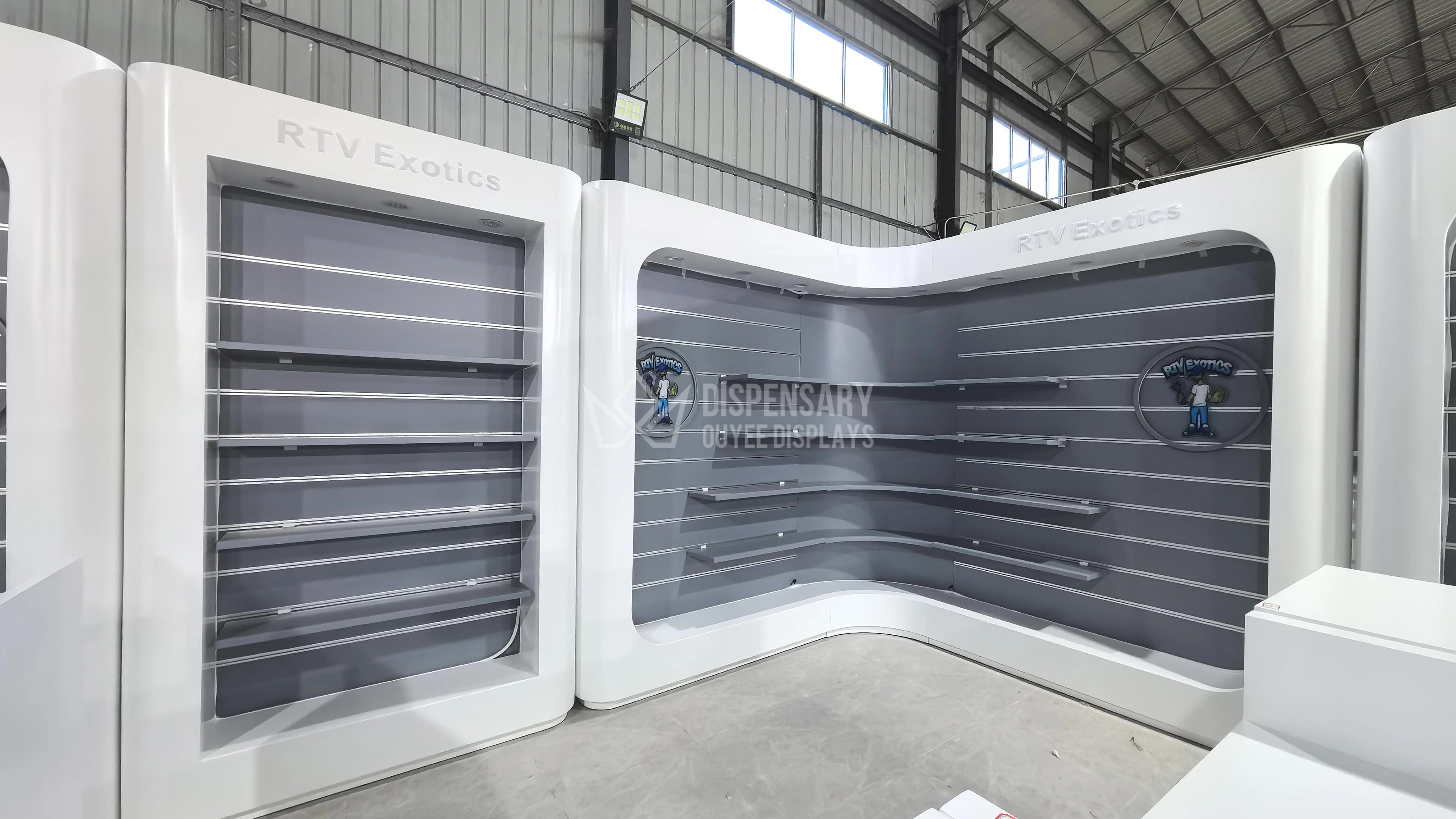
Trendy Custom E Cigarette Display Rack CBD Shop Displays Solutions
Elevate your store’s vibe with our premium custom vape display rack, designed specifically for CBD shops and e-cigarette retailers. The curved wall unit blends futuristic aesthetics with high-functionality shelving, providing a clean, professional layout to attract and convert. Crafted with top-tier materials and integrated LED accent lighting, this fixture turns your product wall into a powerful branding asset.
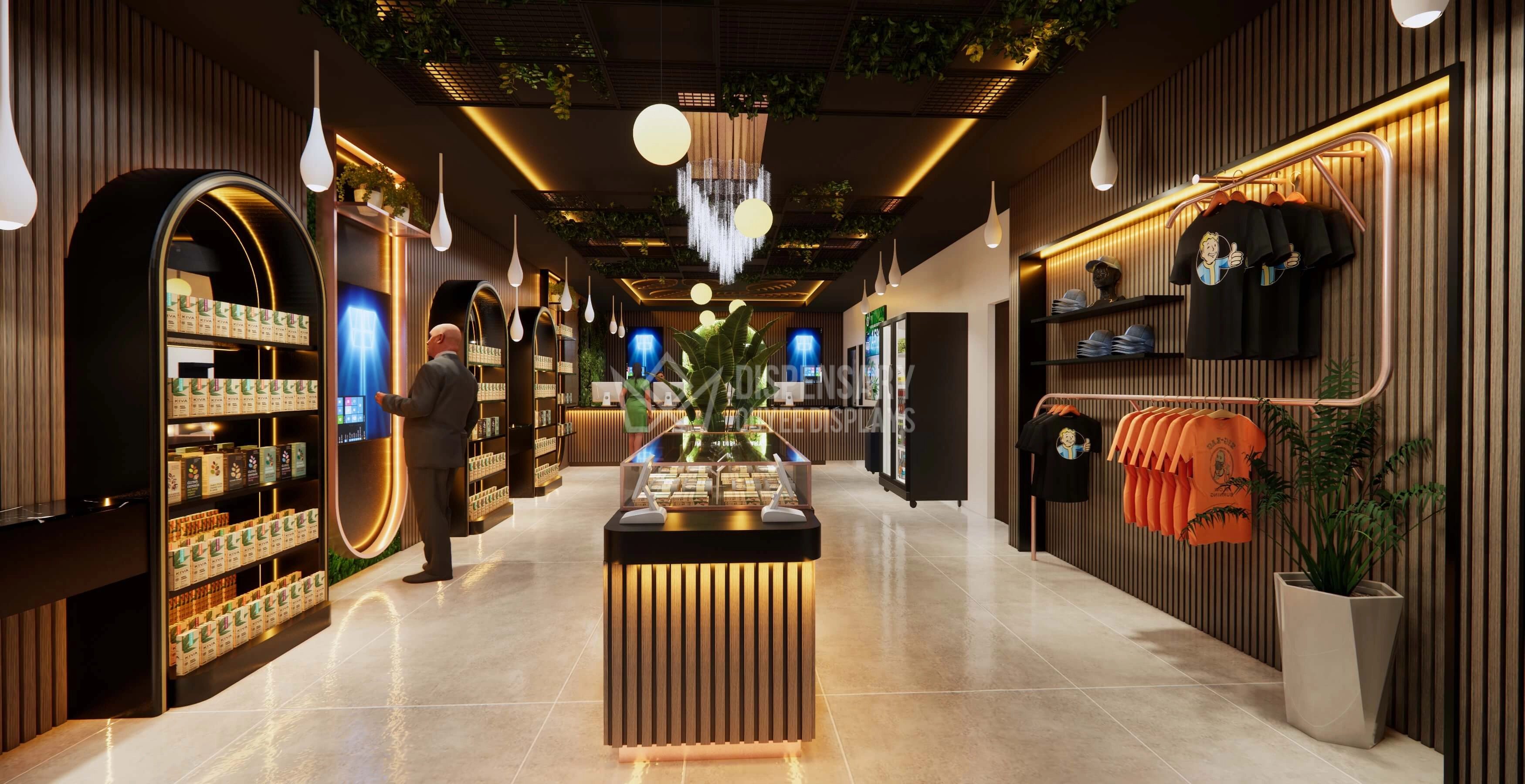
Innovative Smoke Shop Display Ideas Supplier Custom Retail Solutions
This modern cannabis dispensary retail layout combines elegant lighting, natural textures, and high-end display craftsmanship to create a luxurious customer experience. Perfect for showcasing cannabis products, accessories, and lifestyle items in a stylish and functional
way.
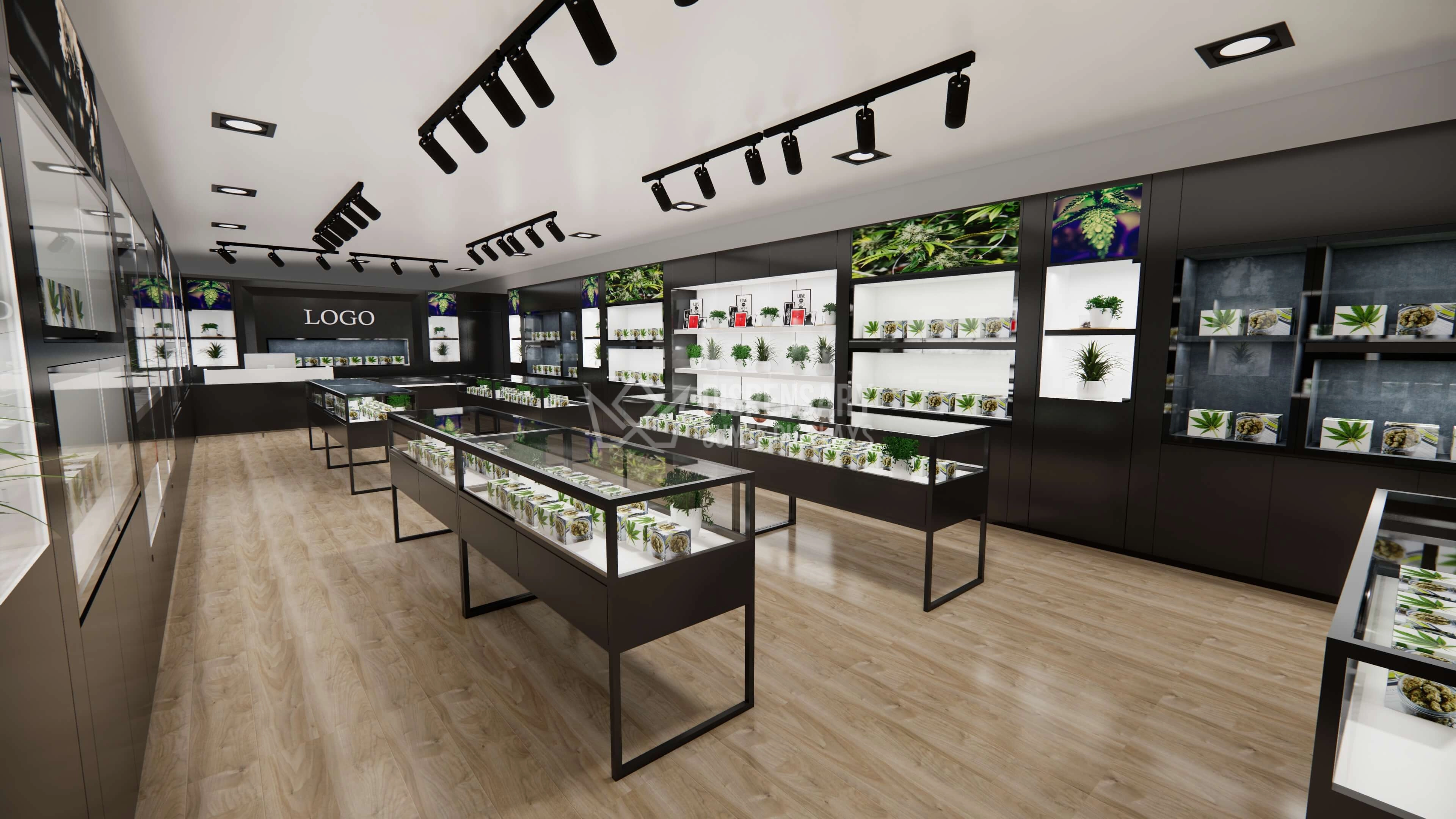
OEM ODM Dispensary Showcase Counters Display Fixtures For Cannabis
Sleek, secure, and fully customizable — our OEM/ODM dispensary counters redefine how cannabis is displayed in retail environments, merging form and function seamlessly.
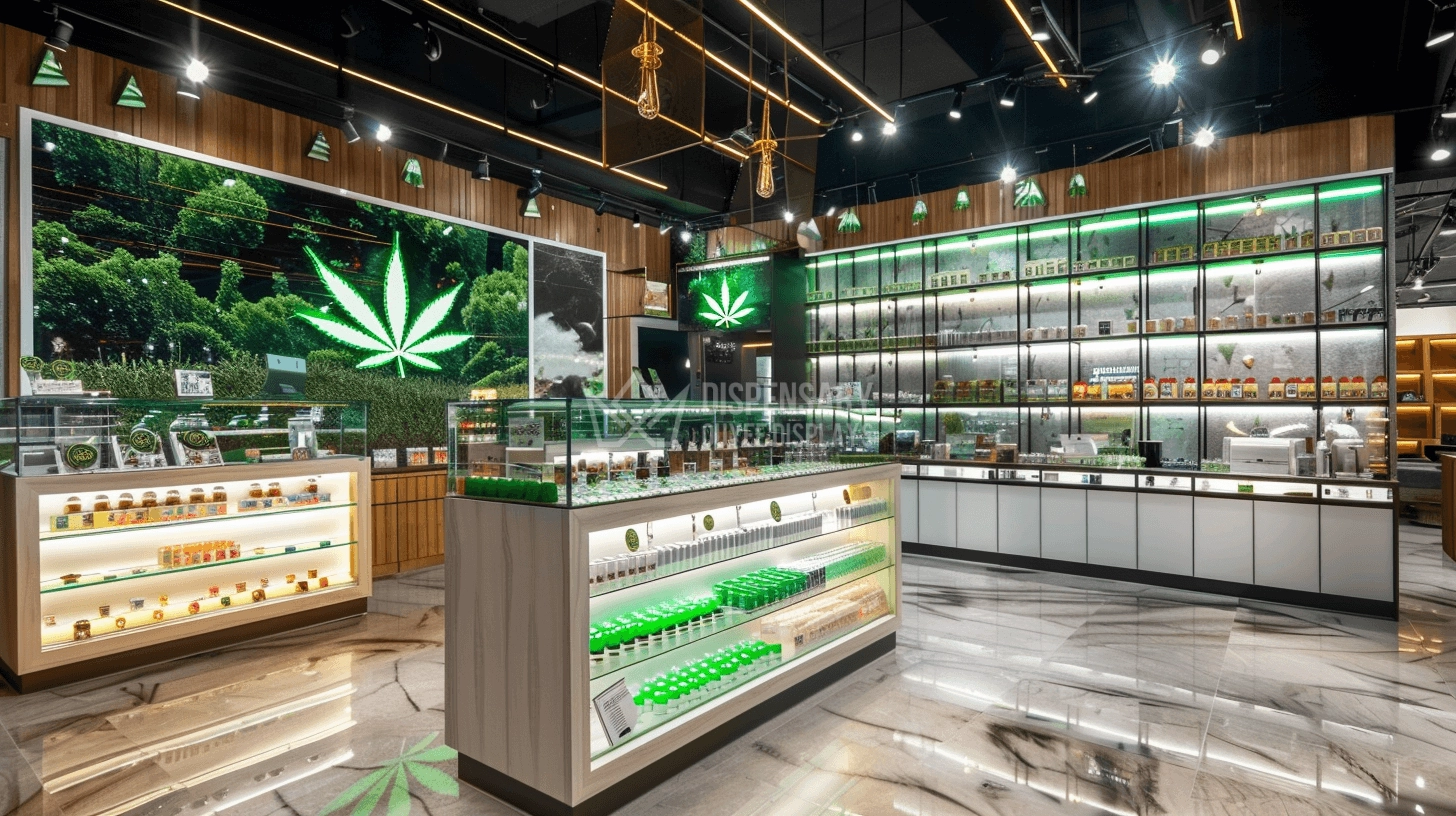
Retail Marijuana Dispensary Fixtures Cannabis Glass Display Cabinet Factory
High-end cannabis display cabinets tailored for retail dispensaries, enhancing product visibility, safety, and store aesthetics while optimizing space usage.
Let's get in touch

Email: gzouyeedisplay@gmail.com
WhatsApp: +86 136 6049 7267
Ouyee Dispensary
Ouyee Dispensary
Ouyee Dispensary
Ouyee Dispensary