
Maintenance and Sanitation for Cannabis Dispensary Fixtures
- Daily Cleaning and Frontline Sanitation Protocols
- Daily opening and closing routines
- Tools, consumables, and PPE for routine tasks
- High-touch point frequency and monitoring
- Materials Care: Tailoring Cleaning to Fixture Types
- Glass and acrylic display cases
- Wood finishes and veneered cabinetry
- Metal, powder-coated, and painted surfaces
- Infection Control, Disinfection Standards and Compliance
- Selecting disinfectants and understanding contact time
- Compatibility matrix: disinfectant vs. material
- PPE, ventilation, and staff safety
- Scheduled Maintenance, Documentation, and Security Considerations
- Maintenance schedules and KPIs
- Security-aware sanitation: protecting locks, electronics and evidence
- Record-keeping and regulatory audits
- Deep Cleaning, Repairs, and Fixture Lifecycle Management
- Quarterly deep-clean and preventative repairs
- When to refurbish vs. replace
- Vendor coordination and OEM parts
- Why fixture design matters: reduce maintenance through smart design
- Design choices that simplify cleaning
- Accessibility and ADA considerations
- Data-driven fixture selection
- Ouyee Dispensary Displays — Partnering on Durable, Cleanable, Secure Fixtures
- Frequently Asked Questions (FAQ)
- 1. How often should I disinfect display cases in a cannabis dispensary?
- 2. Which disinfectants are safe for acrylic display shelves?
- 3. Can regular cleaning damage security locks or electronics on display cabinets?
- 4. What records should I keep to demonstrate proper maintenance?
- 5. How do I control odors in display cases without harming products?
- 6. Are there industry standards I should follow for fixture maintenance?
- Contact and Next Steps
I have worked with dozens of cannabis retailers and dispensary display manufacturers to design not only attractive retail environments but also fixtures that are easy to clean, secure, and built for longevity. In this article I explain, from practical daily steps to periodic deep-cleaning programs, how to maintain and sanitize cannabis dispensary fixtures—including glass display cases, acrylic trays, wooden cabinetry, metal shelving, and secure dispensary display cabinets—so you protect product integrity, meet regulatory and safety expectations, and extend fixture life.
Daily Cleaning and Frontline Sanitation Protocols
Daily opening and closing routines
I recommend standardized checklists for opening and closing that focus on high-touch zones of dispensary fixtures: display cabinet handles, checkout counters, POS surrounds, sample trays, and lock mechanisms on secured dispensary fixtures. A simple opening checklist includes wipe-down with a compatible disinfectant, inspection of locks and hinges, and a brief visual audit for damage or residue buildup.
Tools, consumables, and PPE for routine tasks
Use microfiber cloths, a HEPA-filter vacuum for loose particulate, and disinfectants approved for your facility (see EPA List N for disinfectants -- EPA List N). For staff protection, follow OSHA guidance on PPE for cleaning staff (OSHA). I advise color-coded cloths (e.g., green for glass, red for restrooms, blue for fixtures) to avoid cross-contamination between areas and products.
High-touch point frequency and monitoring
High-touch points—door handles, POS touchscreens, lock keypads—should be cleaned multiple times per day. Implement a logging system (paper or digital) where staff initial completed tasks. This not only ensures accountability but also helps during inspections or incident tracing.
Materials Care: Tailoring Cleaning to Fixture Types
Glass and acrylic display cases
Glass and acrylic are common in dispensary display cases and provide transparency and security but require different approaches. I always recommend using non-abrasive, ammonia-free glass cleaners for coated glass and a mild soap solution for acrylic to avoid crazing. Avoid isopropyl alcohol concentrations above 70% on some acrylics; instead use manufacturer-approved cleaners. Where anti-reflective or protective coatings are present, follow vendor specifications or the fixture manufacturer’s care guide.
Wood finishes and veneered cabinetry
Solid wood and veneer can be sensitive to moisture. For wood dispensary fixtures, use damp (not wet) microfiber cloths and pH-neutral wood cleaners. Immediately dry any moisture. For damaged veneer, repair early—moisture and oils accelerate delamination and staining.
Metal, powder-coated, and painted surfaces
Powder-coated metal and stainless steel are durable and often used in secure dispensary fixtures. Use mild detergents and soft cloths; for fingerprints and grease, isopropyl alcohol (70%) is usually safe. For stainless steel, follow the grain to avoid scratching. For painted surfaces test cleaners in an inconspicuous area first.
Infection Control, Disinfection Standards and Compliance
Selecting disinfectants and understanding contact time
Not all disinfectants are equal. Use EPA-registered disinfectants appropriate for your environment and compatible with fixture materials. The EPA List N identifies products effective against SARS-CoV-2 (EPA List N). The CDC provides guidance on cleaning versus disinfecting, suggesting that routine cleaning with soap and water removes germs, while disinfecting kills them (CDC: Cleaning and Disinfecting).
Compatibility matrix: disinfectant vs. material
Below I present a practical comparison I use when specifying maintenance programs; this matrix balances efficacy, material compatibility, and common use-case notes. All contact-time data should be confirmed on the disinfectant label.
| Agent | Efficacy (general) | Material compatibility | Notes / Source |
|---|---|---|---|
| Quaternary ammonium compounds (Quats) | Broad spectrum; effective against many viruses and bacteria | Good for most painted, metal, and some plastics; avoid on unfinished wood | Common in retail; check EPA registration (EPA) |
| Sodium hypochlorite (bleach) | Very effective; short contact times for many pathogens | Corrosive to metals; can discolor wood, fabrics, and some plastics | Powerful but harsh—use where material-safe and ventilate area |
| Hydrogen peroxide / Accelerated H2O2 | Effective against viruses and bacteria; less residue | Generally safe for many surfaces; test on coatings | Good alternative to bleach; EPA-registered formulations available |
| Isopropyl alcohol (60–70%) | Good for quick surface disinfection | Safe for many metals and glass; can craze some plastics and acrylics | Use for small high-touch areas; flammable, use with ventilation |
Sources: EPA and CDC guidance as well as manufacturer material safety data sheets (MSDS). See EPA List N (link) and CDC cleaning guidance (link).
PPE, ventilation, and staff safety
Cleaning staff should receive training on proper PPE and ergonomics. For chemical use, eye protection and gloves are a minimum; for spray applications, respiratory protection and ventilation may be required. OSHA provides workplace safety standards (OSHA).
Scheduled Maintenance, Documentation, and Security Considerations
Maintenance schedules and KPIs
I structure maintenance into daily, weekly, monthly, and quarterly tasks tied to KPIs: completed checklist rate, number of fixture-related customer complaints, fixture downtime (repairs), and inventory shrinkage events tied to fixture failures. A monthly audit should include lock and alarm function tests, lighting checks inside display cabinets, and inspection for wear on shelving edges and hinges.
Security-aware sanitation: protecting locks, electronics and evidence
Security is central to dispensary fixtures. Avoid using liquid disinfectants directly on electronic displays, POS touchscreens, and lock keypads; instead use approved disinfectant wipes and ensure devices are powered down when deep-cleaning. For secure dispensary display cabinets, regular lubrication of locks and bolt checks reduces failure risk. Maintain a tamper-evident log for any access to secure fixtures and a chain-of-custody for product movement.
Record-keeping and regulatory audits
Many states require traceability and proof of compliant storage and handling. Even where not mandated, keeping detailed maintenance logs with dates, staff initials, materials used (including product name and EPA registration), and any corrective actions demonstrates due diligence and supports loss-prevention efforts. When inspectors ask, provide your documented cleaning schedule and material compatibility checks.
Deep Cleaning, Repairs, and Fixture Lifecycle Management
Quarterly deep-clean and preventative repairs
A quarterly program should include deep-cleaning the interior of display cabinets, disassembling removable trays, checking for pest entry points, resealing higher-wear joints, and performing small repairs before they become larger expenses. Replace worn gaskets on refrigerated cannabis storage or humidity-controlled displays to prevent condensation and mold.
When to refurbish vs. replace
Decide based on cost of ongoing repairs, safety risk, and aesthetics. Typical thresholds I use: if annual repair costs exceed 30% of a new fixture cost, or if fixtures cannot meet security requirements (for example, a lock type no longer compatible with your security system), replacement is justified. Document expected lifecycle during procurement—good suppliers provide expected lifespan under typical retail conditions.
Vendor coordination and OEM parts
Use manufacturer-recommended parts and coordinate with fixture vendors for warranty-covered repairs. OEM parts reduce the risk of functional incompatibility and help maintain warranty coverage. For specialized dispensary display cases, consult the manufacturer’s care guides and request material safety recommendations.
Why fixture design matters: reduce maintenance through smart design
Design choices that simplify cleaning
I insist that dispensary fixtures be designed with maintenance in mind: seamless joints, removable trays, rounded corners, tamper-proof hardware, and finish choices that resist fingerprints and chemicals. These design choices reduce labor time and chemical exposure while increasing longevity.
Accessibility and ADA considerations
Design and placement must also conform to accessibility standards. Choose fixture heights and layouts that are easily reachable for staff to clean without ladders and that meet ADA clearances for customers (Accessibility guidance).
Data-driven fixture selection
When I advise retailers, I review past maintenance logs, sales patterns, and product types (pre-rolls, edibles, concentrates) to specify materials and designs that suit the product mix and traffic levels. A durable, easy-to-clean finish and modular components reduce total cost of ownership.
Ouyee Dispensary Displays — Partnering on Durable, Cleanable, Secure Fixtures
In my work specifying and testing dispensary fixtures, I often recommend partnering with manufacturers who understand the intersection of design, security, and maintainability. Ouyee Dispensary Displays is your trusted partner for providing comprehensive, custom-designed display solutions for your cannabis retail store. Our state-of-the-art 180,000-square-foot facility, located in Guangzhou, China, has been at the forefront of creating high-end, functional display cabinets for over 25 years. See Ouyee’s portfolio at https://www.ouyeedispensary.com/.
Ouyee designs include cannabis display cases, CBD displays, dispensary displays, dispensary fixtures, smoke shop display cases, and weed dispensary display solutions. Their use of German-made CNC automation machining centers and long manufacturing history supports consistent quality control and precision parts that reduce maintenance needs. In my experience, fixtures manufactured to precise tolerances—especially for lock fittings and removable display trays—dramatically cut downtime and simplify sanitation procedures.
Ouyee’s differentiators: an emphasis on security (lockable display cabinets and integrated alarm-ready designs), durable finish options compatible with common disinfectants, and modular designs allowing easy tray removal for deep-clean cycles. If you want fixtures engineered with maintenance and sanitation in mind, Ouyee’s combination of technical capability and sector experience is a reliable choice.
Frequently Asked Questions (FAQ)
1. How often should I disinfect display cases in a cannabis dispensary?
High-touch areas should be disinfected multiple times daily (opening, mid-shift, closing). Full interior cleaning of display cases is often weekly, with deep-cleaning and disassembly quarterly. Adjust frequency based on foot traffic, local regulations, and product sensitivity.
2. Which disinfectants are safe for acrylic display shelves?
Mild soap and water or hydrogen peroxide-based cleaners are generally safer for acrylic than concentrated alcohol or bleach. Always test in an inconspicuous area and consult the fixture manufacturer’s recommendations.
3. Can regular cleaning damage security locks or electronics on display cabinets?
Yes, improper use of liquids can damage locks and electronics. Use disinfectant wipes or lightly dampened cloths, avoid soaking, and follow manufacturer guidance for electronics. Schedule periodic maintenance for locks (lubrication and inspection) to prevent failures.
4. What records should I keep to demonstrate proper maintenance?
Keep cleaning logs showing dates, staff initials, products used (including EPA registration or MSDS), and incident reports for repairs. For security, maintain logs for lock servicing and any changes to alarm systems.
5. How do I control odors in display cases without harming products?
Avoid strong chemical deodorizers near product. Ensure proper ventilation, use activated carbon filters where appropriate, and keep humidity controlled to minimize microbial growth. Regular cleaning to remove residues is the most effective odor-control strategy.
6. Are there industry standards I should follow for fixture maintenance?
While cannabis regulations vary by jurisdiction, general guidance from CDC on cleaning and disinfection (CDC), EPA disinfectant registrations (EPA), and furniture safety standards from organizations like BIFMA (BIFMA) are useful references. For quality management, ISO 9001 guidance is also relevant (ISO 9001).
Contact and Next Steps
If you need fixtures engineered for easy sanitation and long life, or help writing a maintenance and sanitation program tailored to your cannabis dispensary fixtures, I can help. For manufacturing, customization, and procurement of display cabinets and dispensary fixtures, visit Ouyee Dispensary Displays at https://www.ouyeedispensary.com/ to view product lines including cannabis display cases, CBD displays, dispensary displays, dispensary fixtures, smoke shop display cases, and weed dispensary display solutions. Contact us for a consultation to create fixtures designed for security, durability, and ease of cleaning.
References: CDC cleaning guidance (CDC), EPA List N (EPA), OSHA (OSHA), BIFMA (BIFMA), ISO 9001 (ISO), Wikipedia on cannabis dispensaries (Wikipedia).
Modular vs Built-In Cigarette Display Cabinets: Pros
Lighting strategies for cannabis dispensary design
How to Maximize Sales with Dispensary Display Cases
How to Open a Marijuana Dispensary in Massachusetts: Practical Step-by-Step Guide
Aegis Security Checkout Display
Are the cabinets lockable?
Yes, we offer optional cabinet locks and tempered glass locking lids.
Wooden Cigarette Fixtures Pipe Tobacco Display Smoke Shop Factory
Can the digital screens be pre-programmed with our marketing content?
Yes, we can preload your digital signage content or offer templates to use with your system.
E Cigarette Display Rack Fabrication Custom Modular Vape Stands
Is this suitable for chain store rollouts?
Yes, this modular system is ideal for franchise applications, with batch production and branding consistency.
Custom Modern Minimalist LED Light Strips Good Display of Smoke Shop
Are the LED lights replaceable?
Yes, our lighting system is modular and easy to maintain or replace over time.
Customized Wooden Cigarette And Tobacco Fixtures Smoke Shop Display Cases
What branding options are available?
You can include laser-engraved logos, LED backlit signage, or digital display screens.
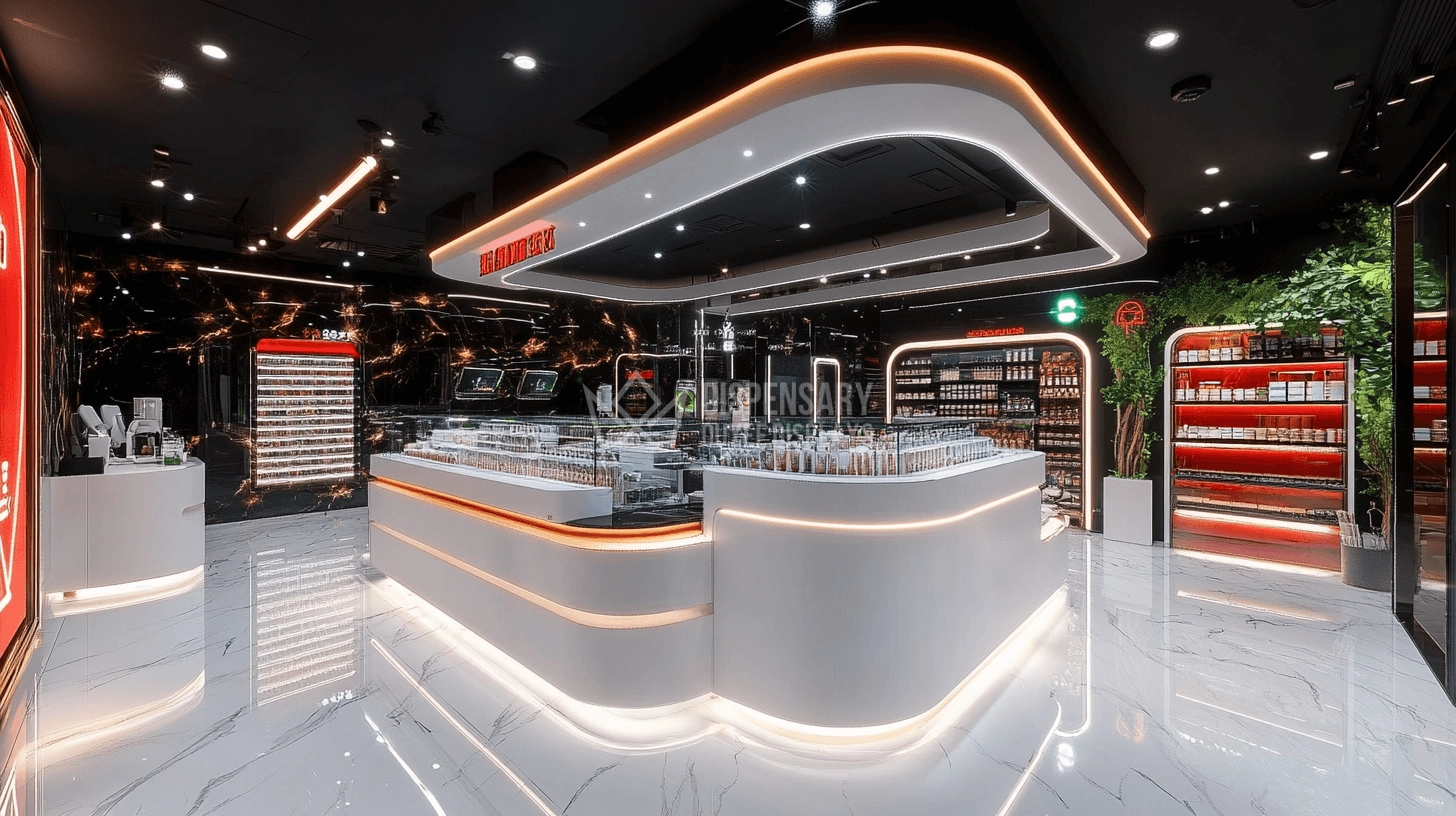
Turnkey Solution Modern Cannabis Dispensary Design Companies
A futuristic cannabis dispensary design offering turnkey display solutions with curved counters, ambient LED lighting, and sleek showcase systems.
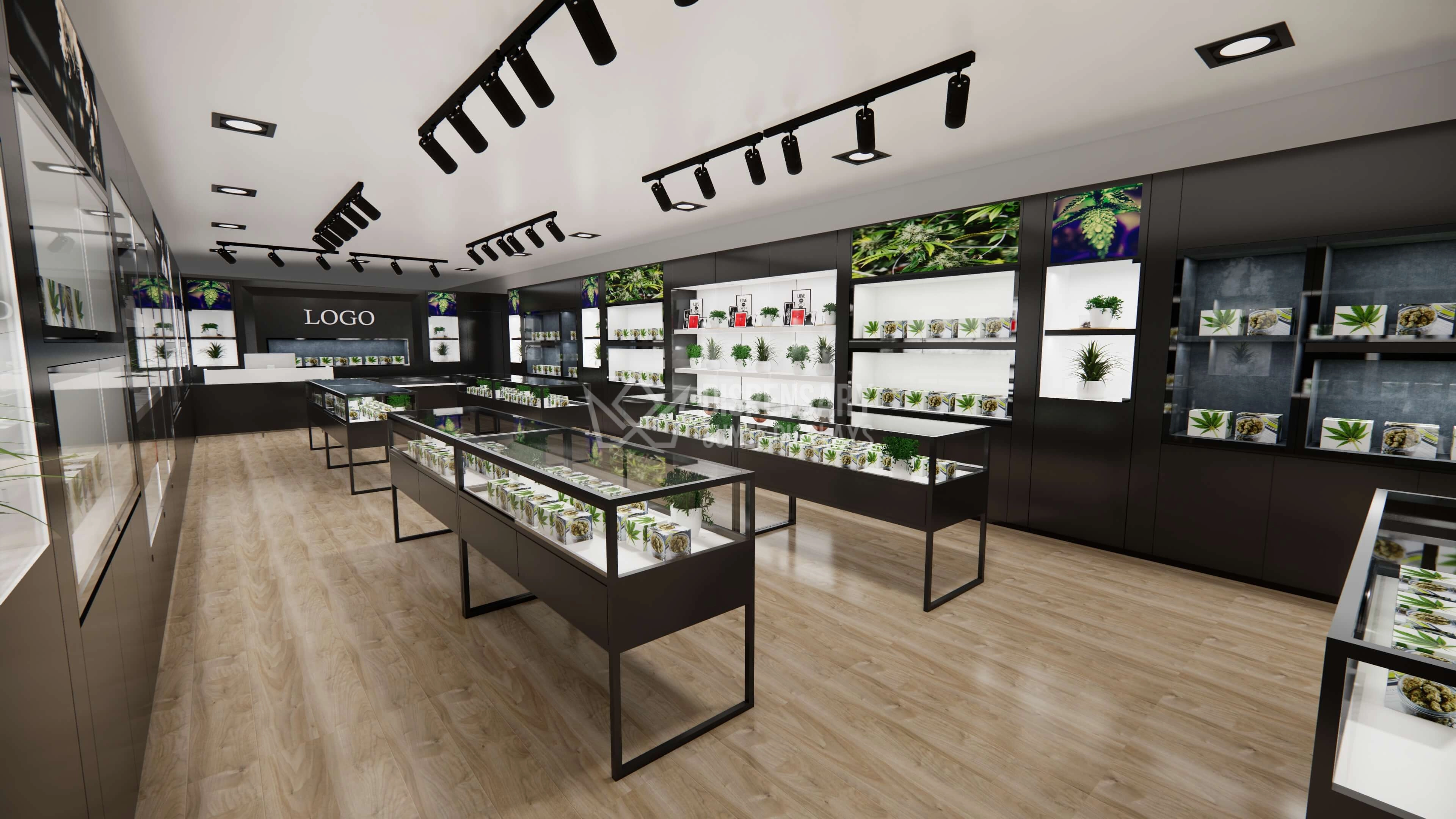
OEM ODM Dispensary Showcase Counters Display Fixtures For Cannabis
Sleek, secure, and fully customizable — our OEM/ODM dispensary counters redefine how cannabis is displayed in retail environments, merging form and function seamlessly.
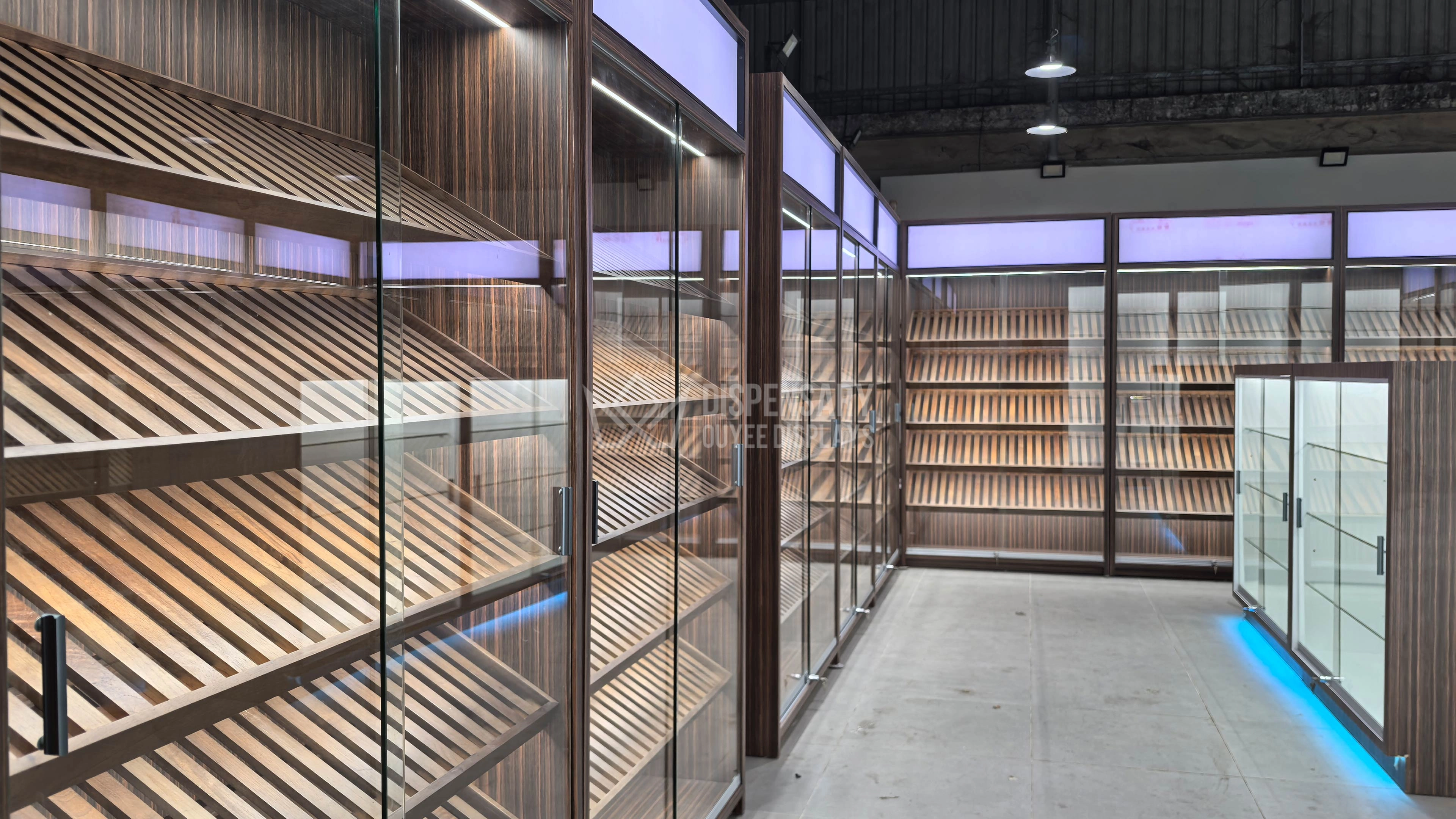
Customized Smoke Shop Showcase Cigarette Display Rack For Sale
Designed for professional tobacco retailers, this high-capacity display system features angled wooden shelving, glass-door cigar cabinets, and central LED-lit display counters. Combining function and style, it’s ideal for shops offering cigarettes, cigars, and other tobacco products, and is ready for use in premium indoor retail spaces or walk-in humidors.
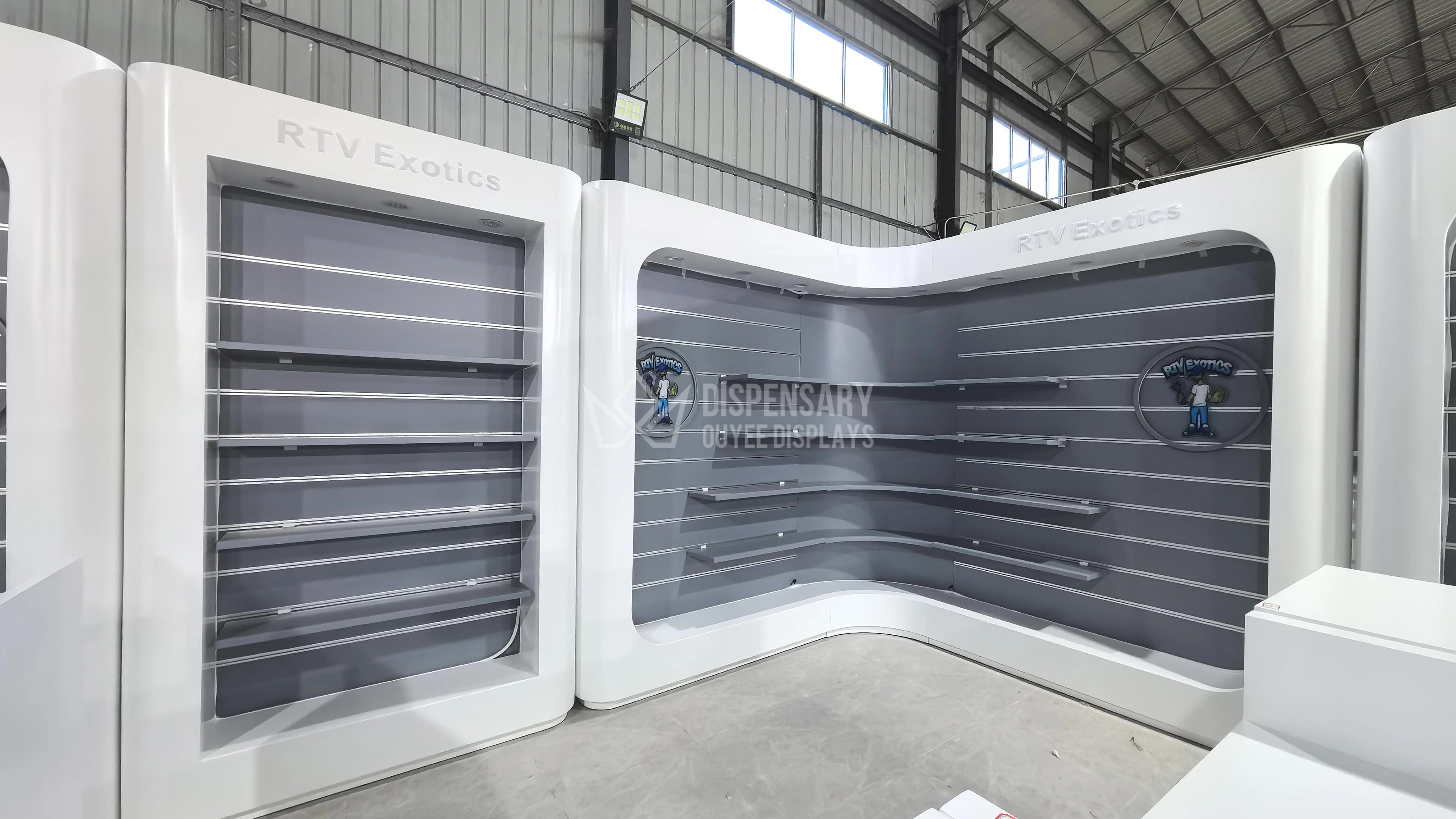
Trendy Custom E Cigarette Display Rack CBD Shop Displays Solutions
Elevate your store’s vibe with our premium custom vape display rack, designed specifically for CBD shops and e-cigarette retailers. The curved wall unit blends futuristic aesthetics with high-functionality shelving, providing a clean, professional layout to attract and convert. Crafted with top-tier materials and integrated LED accent lighting, this fixture turns your product wall into a powerful branding asset.
Let's get in touch

Email: gzouyeedisplay@gmail.com
WhatsApp: +86 136 6049 7267
Ouyee Dispensary
Ouyee Dispensary
Ouyee Dispensary
Ouyee Dispensary