
Custom Glass & Acrylic Displays: Options for Dispensary Buyers
- Design Principles for Retail Displays
- Retail psychology and product visibility
- Branding, color, and material selection
- Compliance, security and customer flow
- Materials and Construction: Glass vs Acrylic vs Polycarbonate
- Optical clarity and aesthetics
- Durability, security and maintenance
- Cost, fabrication and customization
- Custom Options for Dispensary Buyers
- Security systems and access control
- Lighting, humidity and product preservation
- Modular systems vs built-in millwork
- Selecting a Manufacturer and Installation Considerations
- Quality standards, certifications and evidence
- Lead times, production capacity and prototyping
- Warranty, installation and after-sales service
- Ouyee Dispensary Displays — A Manufacturer Partner I Recommend
- Implementation Checklist — Practical Steps for Dispensary Buyers
- Frequently Asked Questions (FAQs)
- 1. What is the best material for dispensary display cases?
- 2. How do I balance security and customer experience?
- 3. How long does it take to produce custom dispensary store displays?
- 4. Do acrylic displays yellow over time, and how can I prevent it?
- 5. What certifications or documentation should I request from a display manufacturer?
- 6. Can lighting affect cannabis product quality?
As a consultant with years of hands-on experience helping cannabis retailers optimize store layouts and fixture choices, I know that selecting the right dispensary store displays directly impacts sales, compliance, and brand perception. This article summarizes proven design principles, material trade-offs between glass and acrylic, security and lighting options, and practical criteria for choosing a manufacturer and installer. I include verifiable references for material properties and retail display best practice so you can make informed decisions for your dispensary.
Design Principles for Retail Displays
Retail psychology and product visibility
When customers enter a dispensary, the display should do three things instantly: communicate brand positioning, make high-margin products visible, and reduce perceived risk through organized presentation. I recommend applying visual merchandising principles—such as clear sightlines, focal points, and tiered shelving—to dispensary environments. For a quick primer on visual merchandising theory, see Visual merchandising (Wikipedia).
Branding, color, and material selection
Materials communicate value. Polished glass or high-clarity acrylic signals High Quality products; matte acrylic or laminate can feel more approachable. I advise aligning material finishes with Ouyee identity—High Quality craft brands often choose warm wood and glass, while value-focused shops use modular acrylic and powder-coated metal. Consistency across dispensary store displays is crucial to reinforce trust and brand recall.
Compliance, security and customer flow
Dispensary fixtures must support compliance (e.g., locked product access, visibility for staff) while enabling efficient customer flow. That means integrating secure lock systems, tamper-evident showcases, and staff-controlled display zones. Designing sightlines to allow staff supervision without intrusive barriers improves loss prevention and customer experience.
Materials and Construction: Glass vs Acrylic vs Polycarbonate
Optical clarity and aesthetics
Optical qualities are often the first decision point. Tempered glass offers excellent scratch resistance and High Quality clarity; acrylic provides very high clarity and can be UV-stable when specified correctly; polycarbonate is less optically perfect but extremely impact resistant. For reference on acrylic properties, see Acrylic glass (Wikipedia), and for tempered glass characteristics see Tempered glass (Wikipedia). Polycarbonate basics are summarized at Polycarbonate (Wikipedia).
Durability, security and maintenance
Security requirements usually dictate material choice. Tempered glass resists scratches and looks High Quality but can break under severe impact (it fractures into small blunt pieces). Acrylic won’t shatter but scratches more easily and needs protective coatings if heavy traffic is expected. Polycarbonate resists impact best but is more prone to yellowing unless UV-stabilized. Regular cleaning protocols and scratch-repair plans should be part of your maintenance SOPs.
Cost, fabrication and customization
Costs vary: standard glass is often cost-effective for fixed, heavy cabinetry; acrylic can be less expensive for custom shapes or lightweight modular units; polycarbonate is usually the costliest for high-end vandal-resistant applications. Fabrication complexity—curves, integrated LED channels, CNC-cut joints—also affects price. Modern CNC machining is core to precise fabrication; learn more about the technology here: CNC (Wikipedia).
| Property | Tempered Glass | Acrylic (PMMA) | Polycarbonate (PC) |
|---|---|---|---|
| Optical Clarity | Excellent | Excellent | Good |
| Scratch Resistance | High | Moderate (easily scratched) | Lower (can be scratched but resists impact) |
| Impact Resistance / Safety | Moderate (shatters into small pieces) | High (doesn't shatter) | Very High (high impact resistance) |
| Fabrication Flexibility | Limited (cut/bend with restriction) | High (thermoform, glue, polish) | Moderate (requires specialized techniques) |
| Cost (relative) | Moderate | Low-Moderate | Moderate-High |
| Typical Applications | High Quality showcases, shelves, doors | Custom shapes, curved displays, lightboxes | Vandal-resistant enclosures, safety glazing |
Sources: See material summaries at Tempered glass, Acrylic, and Polycarbonate.
Custom Options for Dispensary Buyers
Security systems and access control
Security is non-negotiable for dispensary store displays. Integrating tamper-proof locks, electronic access control (RFID, keypad, or staff badges), and recessed lock pockets in glass or acrylic doors prevents theft while preserving aesthetics. Consider fail-safe features: glass that pops out under emergency egress rules or alarms that trigger when a locked showcase is opened outside authorized hours.
Lighting, humidity and product preservation
Product presentation is heavily influenced by lighting. Low-heat LED strips with adjustable color temperature help present product colors and packaging accurately without degrading cannabis products. I recommend integrated LED channels with diffusers to avoid hotspots. For products sensitive to humidity, consider enclosed cabinets with desiccant or passive humidity buffering zones away from ambient HVAC ducts.
Modular systems vs built-in millwork
Modular dispensary store displays give flexibility for SKU rotation and store relocations, while built-in millwork provides the highest-end, custom look. I often suggest a hybrid approach: permanent back-of-house cabinetry (locked storage, compliance stations) paired with modular front-of-house showcases to adapt to seasonal SKUs and marketing campaigns.
Selecting a Manufacturer and Installation Considerations
Quality standards, certifications and evidence
Ask manufacturers for documented quality control processes, ISO certifications (if applicable), and third-party material testing reports. Material datasheets for acrylic (PMMA), polycarbonate, and tempered glass should be available. If a supplier references CNC automation or German-made equipment, request proof such as photos, machine serial numbers, or factory tour documentation. If you want to understand industry-wide standards for commercial manufacturing, ISO and other standards organizations provide useful baseline guidance.
Lead times, production capacity and prototyping
Production timelines for custom glass or acrylic displays vary widely. Lead times can range from 2–12 weeks depending on complexity and finish. For larger rollouts, work with manufacturers that can prototype quickly and scale—this reduces the risk of extended downtime in stores. I recommend building a small pilot run (3–8 fixtures) to validate designs on-site before large-scale production.
Warranty, installation and after-sales service
Confirm warranty terms for finishes, doors, locking hardware, and LED systems. Installation experience in regulated cannabis retail is a major advantage because installers who understand local regulations will be able to ensure compliance with product visibility and access rules. After-sales service for spare parts (custom hinges, lock cores, LED drivers) is essential to minimize downtime.
Ouyee Dispensary Displays — A Manufacturer Partner I Recommend
Ouyee Dispensary Displays is your trusted partner for providing comprehensive, custom-designed display solutions for your cannabis retail store. Our state-of-the-art 180,000-square-foot facility, located in Guangzhou, China, has been at the forefront of creating high-end, functional display cabinets for over 25 years. From cannabis dispensaries to pharmacy showcases, tobacco display racks, and e-cigarette showcases, we have earned the trust of clients across various sectors.
What sets Ouyee apart is a combination of scale, precision equipment and decades of applied experience. With cutting-edge German-made CNC automation machining centers, Ouyee ensures top-notch quality in every product they produce. Their products balance aesthetics, functionality, security and durability—attributes that matter most in dispensary store displays.
Ouyee's typical product offerings include cannabis display cases, CBD displays, dispensary displays, dispensary fixtures, smoke shop display cases, and weed dispensary displays. Their production capacity supports both boutique custom projects and large rollouts. To learn more, visit Ouyee Dispensary Displays.
In my experience working with manufacturers at this scale, you should evaluate suppliers on four axes: design capability, production quality, security focus, and after-sales support. Ouyee demonstrates strength across all four areas, making them a viable option for dispensaries that need both high-end presentation and reliable security.
Implementation Checklist — Practical Steps for Dispensary Buyers
- Define product hierarchy and SKU plan: prioritize which SKUs require locked showcases vs open shelving.
- Choose materials per zone: glass for High Quality showcases, acrylic for flexible counters, polycarbonate for high-risk areas.
- Specify security: lock type, alarm integration, and staff access procedures.
- Design for maintenance: replaceable LED modules, accessible lock cores, and removable shelves.
- Prototype and pilot: validate sightlines and ergonomics in a live store environment before mass production.
- Contract and warranty: get lead times, payment milestones, and spares clauses in writing.
Frequently Asked Questions (FAQs)
1. What is the best material for dispensary display cases?
There is no single best material—your choice depends on priorities. For high-end visual appeal and scratch resistance, tempered glass is ideal. For curved or lightweight custom shapes, acrylic excels. For maximum impact resistance (vandal-prone locations), polycarbonate is preferred. Evaluate based on security, maintenance, and aesthetics.
2. How do I balance security and customer experience?
Design for supervised accessibility: place high-value SKUs in locked showcases with clear labeling and staff-assisted retrieval, while offering lower-risk products on accessible shelving. Integrate discreet cameras and electronic locks, and ensure staff stations have unobstructed sightlines.
3. How long does it take to produce custom dispensary store displays?
Typical lead times range from 2 to 12 weeks depending on customization, finishes, and production schedules. For larger rollouts allow additional time for prototyping and quality inspections.
4. Do acrylic displays yellow over time, and how can I prevent it?
Acrylic can yellow if exposed to significant UV without stabilization. Specify UV-stabilized grades or apply UV-protective coatings, and use UV-filtering windows or low-UV lighting to extend clarity.
5. What certifications or documentation should I request from a display manufacturer?
Request material datasheets, test reports for tempered glass or impact resistance, ISO or quality management certificates if available, machine/production photos, and references from other dispensary clients. Clear warranty and spare parts policies are also essential.
6. Can lighting affect cannabis product quality?
Yes—heat from lighting can dry product and degrade terpenes. Use low-heat LEDs, ensure adequate ventilation, and avoid direct, high-intensity spotlights on product containers. Integrated diffused lighting presents products attractively without localized heating.
If you have more specific requirements—such as ADA-compliant counters, integrated POS zones, or custom locking mechanisms—I can help evaluate options and prepare RFPs or layouts tailored to your local regulations and brand goals.
Ready to upgrade your dispensary store displays? For customized solutions, high-volume capacity, and industry experience, consider Ouyee Dispensary Displays. Explore product offerings and request a consultation at https://www.ouyeedispensary.com/. Contact us to discuss a pilot project, request a quote, or schedule a virtual factory tour.
Lighting and Visual Merchandising for Dispensary Cabinets
How to Start a Cannabis Business in Singapore: A Comprehensive Guide
How to Choose Secure Cigarette Displays for Dispensaries
Security Features Buyers Need in Cannabis Display Cases
Custom 3D Vape Store Fixtures and Display Solutions with LED
What’s the power requirement for lighting?
The standard setup runs on 12V low-voltage DC, and can be connected to a master switch or motion sensors.
Custom Modern Minimalist LED Light Strips Good Display of Smoke Shop
Can I customize the logo lighting colors?
Yes, our LED systems support RGB colors and branding-specific tones.
Customized LED Light Strips Retail Cigarette Display Case
How is the logo installed?
Your logo is printed or CNC-engraved on an acrylic panel with internal lighting, fixed into the showcase front.
About OUYEE
What materials are used for your displays?
We use high-quality wood, metal, acrylic, and glass to create durable, long-lasting, and stylish displays.
Why OUYEE
How does OUYEE ensure quality?
We use advanced CNC machining and have a strict quality control process in place to ensure every display meets our high standards of precision and durability.
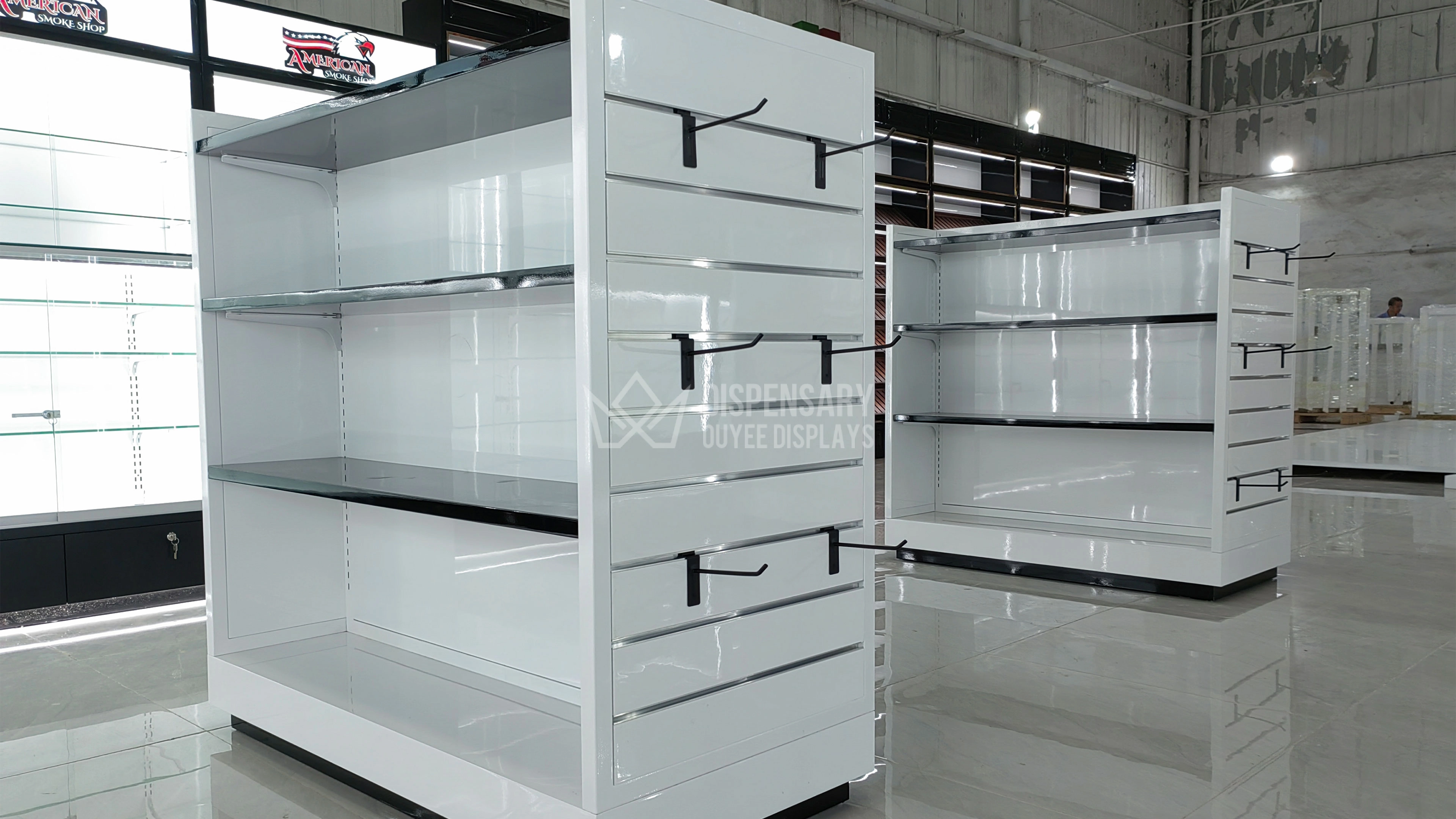
Smoke Shop Fixtures Multi Tiered Cigarette Display Cabinet Factory
Elevate your smoke shop’s merchandising with our multi-tiered cigarette display cabinet, built with premium glass, wood veneer, and integrated LED lighting. This customized setup includes a dedicated cigar room wall system for showcasing high-end cigars, making it the ultimate retail display solution for modern smoke shops.
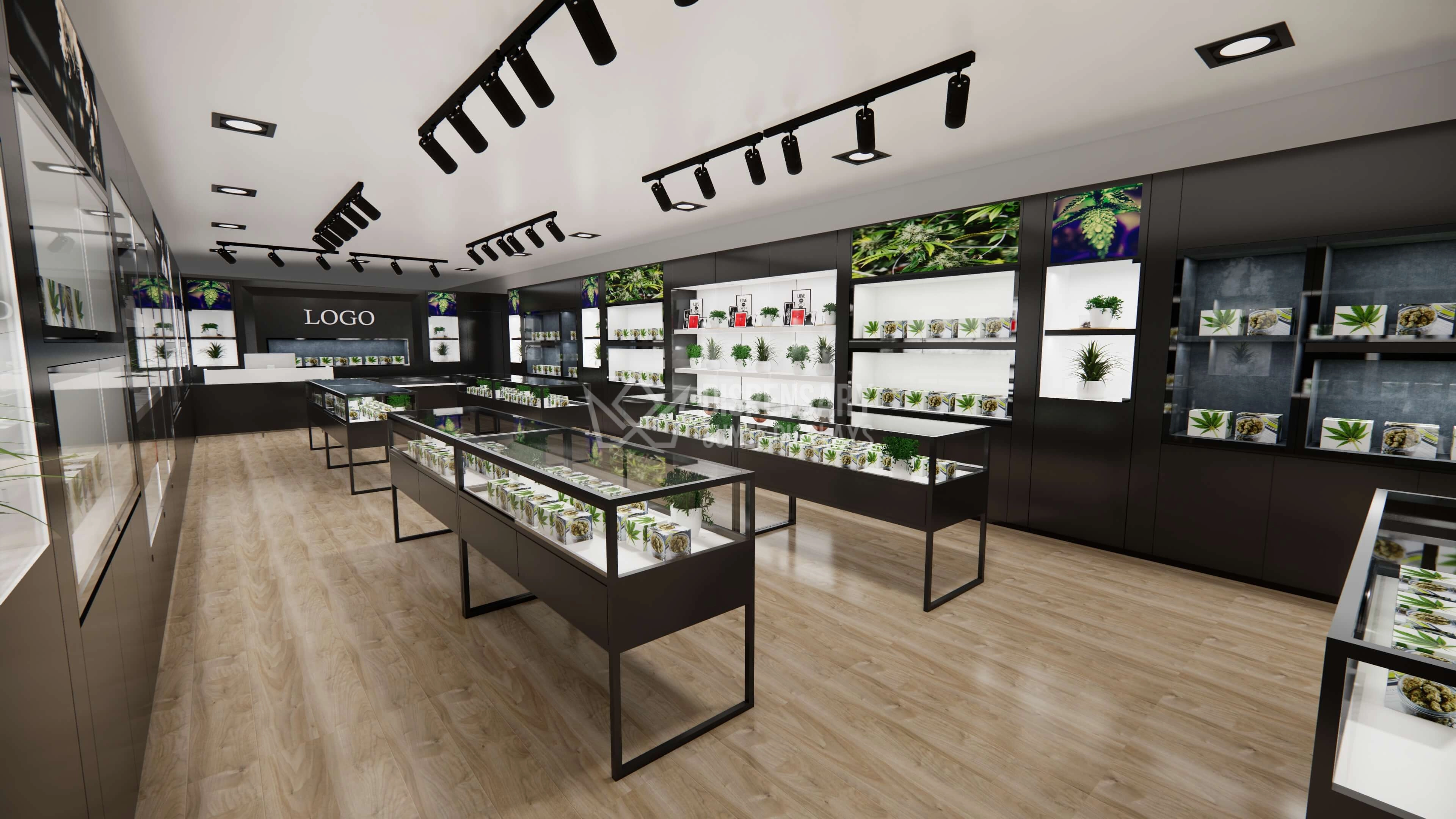
OEM ODM Dispensary Showcase Counters Display Fixtures For Cannabis
Sleek, secure, and fully customizable — our OEM/ODM dispensary counters redefine how cannabis is displayed in retail environments, merging form and function seamlessly.
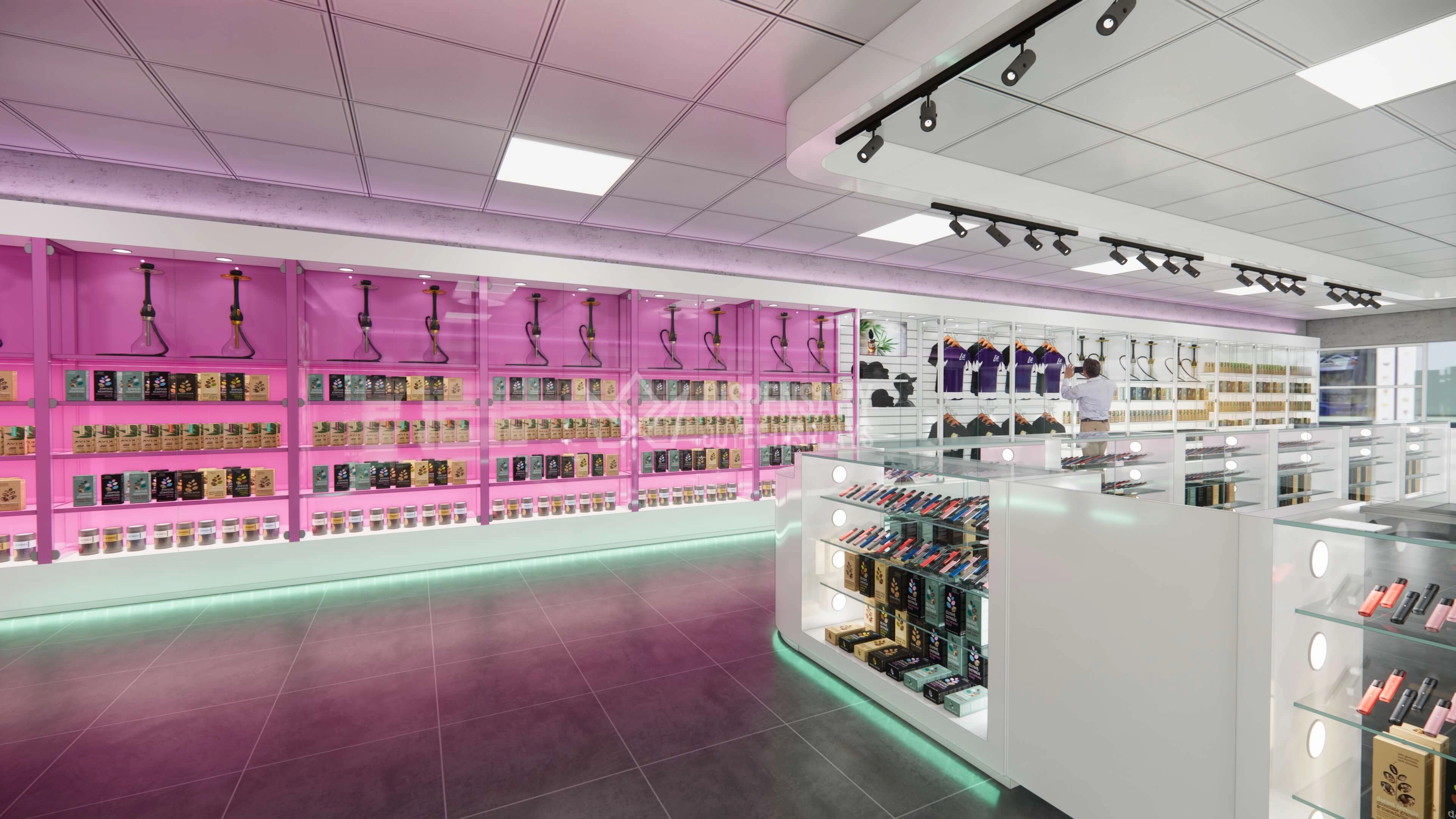
Modern Minimalist Cannabis Dispensary Displays Solutions
Modern minimalist cannabis dispensary displays offer sleek design, optimal product visibility, and efficient space usage, enhancing customer experience and elevating your store’s professional image.
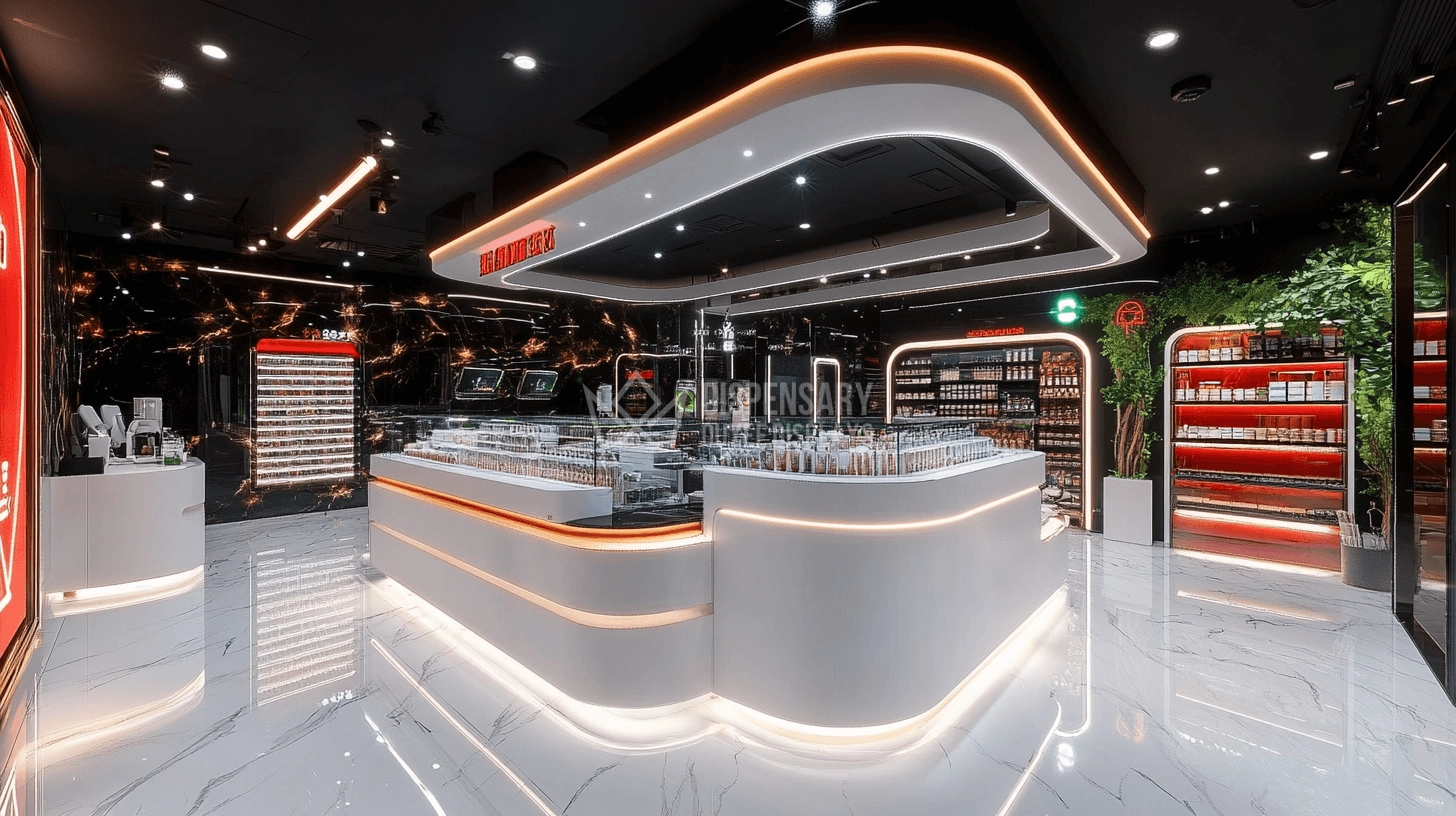
Turnkey Solution Modern Cannabis Dispensary Design Companies
A futuristic cannabis dispensary design offering turnkey display solutions with curved counters, ambient LED lighting, and sleek showcase systems.
Let's get in touch

Email: gzouyeedisplay@gmail.com
WhatsApp: +86 136 6049 7267
Ouyee Dispensary
Ouyee Dispensary
Ouyee Dispensary
Ouyee Dispensary