
Cost vs ROI: Investing in High-Quality Cannabis Counters
- Balancing Cost and Value in Dispensary Design
- Understanding the Cost Components
- Direct capital costs
- Indirect and lifecycle costs
- Compliance and security expenses
- Cost Benchmarks and Comparative Scenarios
- Three representative counter types
- Cost vs ROI table
- How to read the table for your business
- Measuring ROI: Metrics and Practical Calculation
- Which metrics matter?
- Simple ROI formula and example
- Attribution and A/B testing
- Design, Compliance and Operational Considerations
- Regulatory requirements
- Operational workflow and staff ergonomics
- Customer experience and display science
- Procurement and Total Cost of Ownership (TCO) Best Practices
- Spec selection and vendor evaluation
- Financing, leasing and modular approaches
- Maintenance, warranties and lifecycle planning
- Case Examples and Quick ROI Models
- Model A — Small dispensary (startup)
- Model B — Established dispensary expanding experience
- When high cost may not be justified
- Frequently Asked Questions (FAQ)
- 1. How much should I budget for retail cannabis display counters?
- 2. Do fancy counters really increase sales?
- 3. What security features are essential for cannabis counters?
- 4. Should I customize counters or buy prefab models?
- 5. How do I calculate payback for a display counter?
- Next Steps and Contact
- References
Balancing Cost and Value in Dispensary Design
Investing in High Quality retail cannabis display counters is not just a capital expense — it is a strategic decision that affects compliance, customer experience, operational efficiency, and ly revenue. This article breaks down cost components, benchmark price ranges, realistic ROI scenarios tied to sales uplift and operational savings, and procurement best practices for dispensary owners and retail buyers evaluating retail cannabis display counters.
Understanding the Cost Components
Direct capital costs
Direct capital costs include the unit price of the counter or fixture, transportation, installation, and any required electrical or network work for integrated technology (POS, security cameras, lighting). Prices vary widely by material, customization, and tech integration. Typical categories are: prefabricated glass counters, mid-range custom millwork, and high-end modular displays with integrated lighting, refrigeration, or electronics.
Indirect and lifecycle costs
Beyond purchase price, factor in maintenance (glass replacement, finishes), warranty and service plans, depreciation, and eventual replacement or reconfiguration. For dispensaries, compliance-driven retrofits (to meet local locked-display rules or inventory-tracking hardware) can be significant.
Compliance and security expenses
Retail cannabis display counters often require lockable compartments, reinforced glass, integrated cameras, and secure cable routing. These security features increase initial cost but reduce shrinkage risk and may lower insurance High Qualitys—effects that should be included in ROI calculations.
Cost Benchmarks and Comparative Scenarios
Three representative counter types
We model three common purchase tiers for retail cannabis display counters to illustrate cost vs ROI trade-offs: Basic Prefab, Mid-Range Custom Millwork, and High-End Modular Tech-Integrated.
Cost vs ROI table
| Counter Type | Initial Cost (typical, USD) | Expected Lifespan | Annual Maintenance | Estimated Sales Uplift | Estimated Payback (years) |
|---|---|---|---|---|---|
| Basic Prefab (glass/metal) | $1,000–$5,000 | 3–7 years | $100–$500 | 1–3% | 3–6 (on $500k–$1M revenue) |
| Mid-Range Custom Millwork | $5,000–$20,000 | 7–12 years | $300–$1,200 | 5–15% | 1–4 |
| High-End Modular (tech + security) | $20,000–$75,000+ | 8–15 years | $1,000–$5,000 | 10–30%+ | 0.5–3 |
Notes and assumptions: sales uplift ranges derive from retail design and in-store experience studies that show improved layout, lighting, and product presentation increase conversion and average basket size. Payback estimates assume a dispensary with annual gross sales between $500,000 and $2,000,000; exact payback depends on baseline sales, margin structure, and operating costs. (Sources cited in References.)
How to read the table for your business
If your store gross is $1,000,000 with an average margin of 40%, a 5% increase in revenue equals $50,000 additional top-line revenue and $20,000 additional gross profit annually — sufficient to pay for many mid-range counters within 1–3 years. Counter decisions should therefore be modeled against store-specific revenue and margin metrics.
Measuring ROI: Metrics and Practical Calculation
Which metrics matter?
Key metrics to track before and after an investment in retail cannabis display counters:
- Conversion rate (visitors → buyers)
- Average transaction value (ATV) / basket size
- Sales per square foot and sales per linear foot of display
- Shrinkage/inventory loss rate
- Customer dwell time and repeat-purchase rate
Simple ROI formula and example
Simple Payback Period = Initial Investment ÷ Annual Net Benefit. Annual Net Benefit = (Incremental Revenue × Margin) + Cost Savings (reduced shrinkage, lower insurance) − Additional Operating Costs.
Example: $15,000 mid-range counter → expected revenue uplift 8% on $1M store = $80,000 extra revenue; with 40% margin = $32,000 gross benefit. Subtract $1,000 additional maintenance and $0 added staffing → net benefit ≈ $31,000. Payback ≈ $15,000 ÷ $31,000 ≈ 0.5 years.
Attribution and A/B testing
To validate uplift, run controlled tests where possible: install a new counter in one location or one part of the store, measure pre/post differences, and compare to a control period/location. Use point-of-sale data, visitor counts, and customer surveys to attribute sales changes to the fixture and the experience it enables.
Design, Compliance and Operational Considerations
Regulatory requirements
Retail cannabis display counters must comply with state and local regulations: locked displays, clear lines of sight for cameras, restricted customer access to product, and secure POS/inventory integration. Non-compliance can lead to fines and forced refits, making compliant design a risk mitigation measure as well as a functional requirement.
Operational workflow and staff ergonomics
Design should minimize transaction time and handling errors. Consider counter height for safe product transfer, storage access for staff, cable management for devices, and sight-lines for security cameras. Efficient layouts reduce transaction times and allow staff to serve more customers during peak windows.
Customer experience and display science
High-quality materials, lighting, and modular product zones let you present high-margin or promotional SKUs more effectively. Display hierarchy (feature wall, eye-level placement, cross-sell islands) influences purchase decisions — display counters are a frontline tool for merchandising and education in a regulated product category where in-person guidance matters.
Procurement and Total Cost of Ownership (TCO) Best Practices
Spec selection and vendor evaluation
When sourcing retail cannabis display counters, request detailed specs: materials, warranty, lead time, maintenance schedule, security features, and references. Compare vendors on total cost, not just sticker price: include installation, integration with POS and cameras, and service-level agreements.
Financing, leasing and modular approaches
Options to manage upfront cost: equipment leasing, staged roll-outs, or modular designs that can be expanded. Leasing spreads cost but may increase lifetime expense; modular systems allow reinvestment in high-performing zones without full replacement.
Maintenance, warranties and lifecycle planning
Negotiate warranties covering moving parts, glass, and finishes. Establish a lifecycle plan: schedule minor refurbishments (re-lamping, re-finishing) at regular intervals to keep displays fresh without full replacements. Track amortized capital cost per year for budgeting and ROI tracking.
Case Examples and Quick ROI Models
Model A — Small dispensary (startup)
Assumptions: annual sales $500k, limited capital. Opting for mid-range counters ($8,000). Expected uplift 6% = $30k extra revenue; margin 35% → $10,500 gross. Payback ~0.76 years. Risks: lower foot traffic could extend payback, so stage purchase with modular elements if possible.
Model B — Established dispensary expanding experience
Assumptions: annual sales $2M, invests $40,000 in high-end modular counters and integrated POS/security. Expected uplift 12% = $240k extra revenue; margin 40% → $96k gross. Payback <1 year. Additional benefits: improved inventory accuracy and brand perception; lower shrinkage and higher customer retention further improve ROI.
When high cost may not be justified
Low-traffic locations, stores with poor product assortment, or businesses with no plan to use counters for merchandising/education may not see immediate ROI. Ensure product assortment, pricing and staff training are aligned with display investments.
Frequently Asked Questions (FAQ)
1. How much should I budget for retail cannabis display counters?
Budget ranges from roughly $1,000 for basic prefabricated counters to $20,000+ for custom mid-range options and $20,000–$75,000+ for high-end modular systems with integrated technology. Choose based on your sales volume, margin, security and branding needs.
2. Do fancy counters really increase sales?
Yes, when combined with better merchandising, lighting, and staff training. Well-designed counters improve product visibility, perceived quality, and conversion rates. Measure uplift with POS data and control testing to ensure attribution.
3. What security features are essential for cannabis counters?
Lockable product drawers, reinforced display glass, integrated camera sight-lines, tamper-proof fasteners, and secure cable routing for POS devices. Always match counter specs to local compliance rules and your insurer's requirements.
4. Should I customize counters or buy prefab models?
Customization is valuable if branding, unique workflows, or specific security integrations are priorities. Prefab models reduce upfront cost and lead time. Many retailers adopt hybrid approaches: prefab core with custom fascia or modular inserts.
5. How do I calculate payback for a display counter?
Calculate expected incremental annual revenue from uplift, multiply by gross margin to find incremental gross profit, subtract added operating costs (maintenance, utilities), and divide the initial investment by the net annual benefit to get payback years.
Next Steps and Contact
If you want a tailored ROI model for your dispensary, productized cost comparison, or help specifying compliant retail cannabis display counters for a remodel or new store, contact our dispensary displays team. We provide site evaluations, CAD-ready specs, and lifecycle cost modeling to help you choose the right counter for revenue, security, and brand impact.
Contact / View Products: Request a consultation or catalog demo to see fixture samples, material options, and integrated-security packages tailored to retail cannabis display counters.
References
- McKinsey & Company — Reimagining physical retail for a digital world (accessed 2026-01-13)
- Statista — Cannabis industry (market overview and retail trends) (accessed 2026-01-13)
- HomeAdvisor — Cabinet installation and custom millwork cost benchmarks (used to estimate custom millwork ranges, accessed 2026-01-13)
- Retail Dive — Industry coverage on store design and investment in physical retail (general source, accessed 2026-01-13)
- MJBizDaily — Cannabis business reporting and dispensary benchmarks (industry reports and retailer case studies, accessed 2026-01-13)
Data and case model assumptions in this article are drawn from the cited retail and industry sources, vendor price lists, and aggregated installer quotes current as of access dates above. For a site-specific estimate, consult a certified retail fixtures provider or request our custom ROI worksheet.
Glass vs acrylic display cases for cannabis products
Top 10 cbd display case Manufacturers and Supplier Brands
How to Open a Dispensary in Missouri: A Complete Guide by Ouyee
How to Start a Cannabis Business: Visual Merchandising Tips
Trendy Custom E Cigarette Display Rack Cbd Shop Displays Solutions
Can I customize the size to fit my space?
Yes, all fixtures are fully customizable in dimensions, finishes, lighting, and branding to meet your shop’s layout.
Wholesale Modern Commercial Hookah Lounge Furniture Bulk Suppliers
What is the minimum order quantity?
Typically 10 pieces per type, but we accommodate custom bulk requests.
Tempered Glass Vape Shop Fixtures CBD Retail Displays Solutions
Is the lighting system included?
Yes, we provide built-in LED lighting with wiring included, ready to plug and play.
Custom Modern Minimalist LED Light Strips Good Display of Smoke Shop
Are the LED lights replaceable?
Yes, our lighting system is modular and easy to maintain or replace over time.
Build a Dispensary
How much do custom dispensary display solutions cost?
Pricing varies based on the size, complexity, and customization options of your project. We offer affordable solutions that meet your budget while ensuring the highest quality.
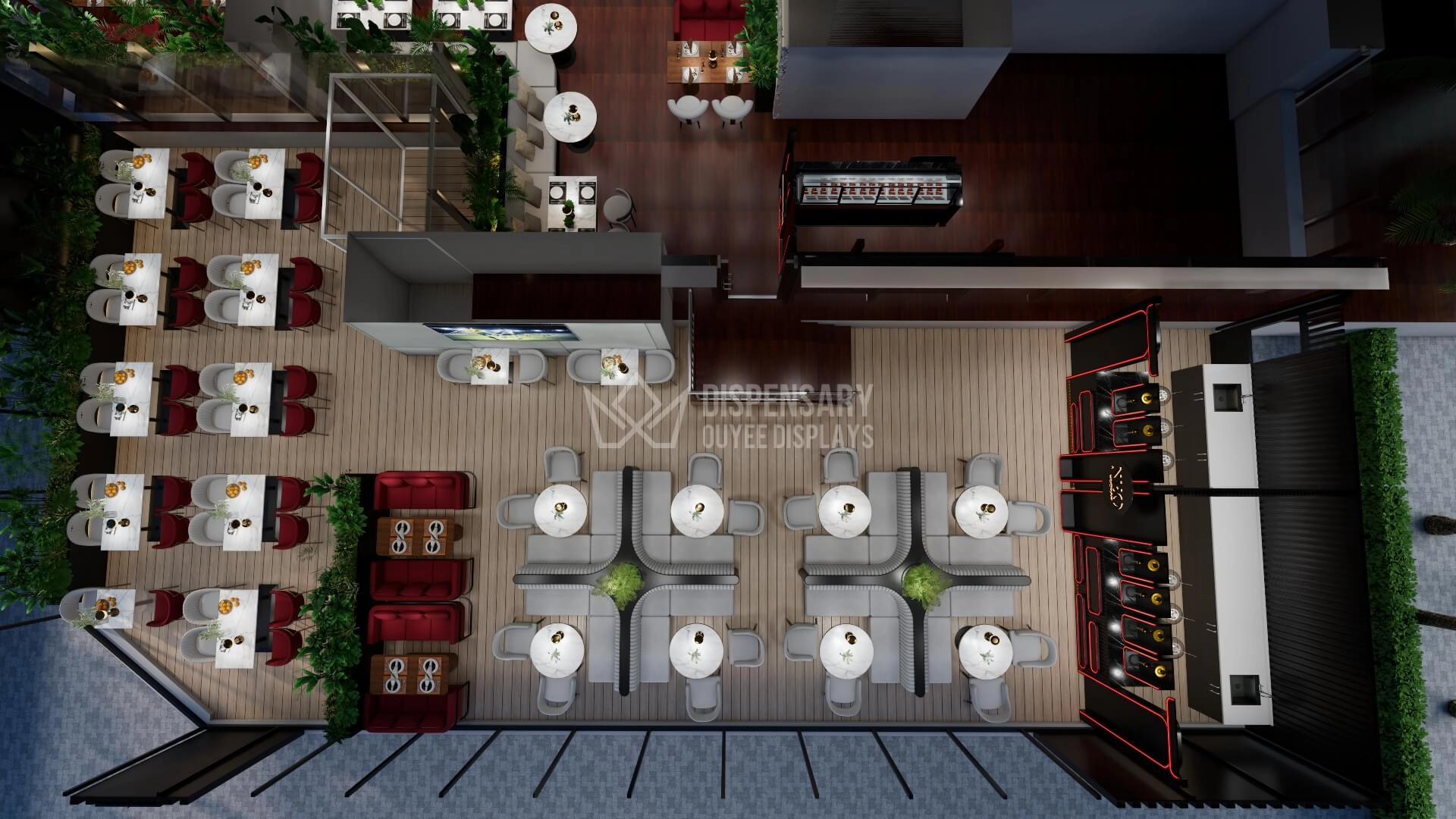
Wholesale Modern Commercial Hookah Lounge Furniture Bulk Suppliers
Transform your hookah lounge with our wholesale modern commercial furniture—designed to elevate ambiance, comfort, and customer engagement. Whether you need custom booths, sleek seating, or modular tables, we offer a complete solution tailored for premium retail and hospitality environments.
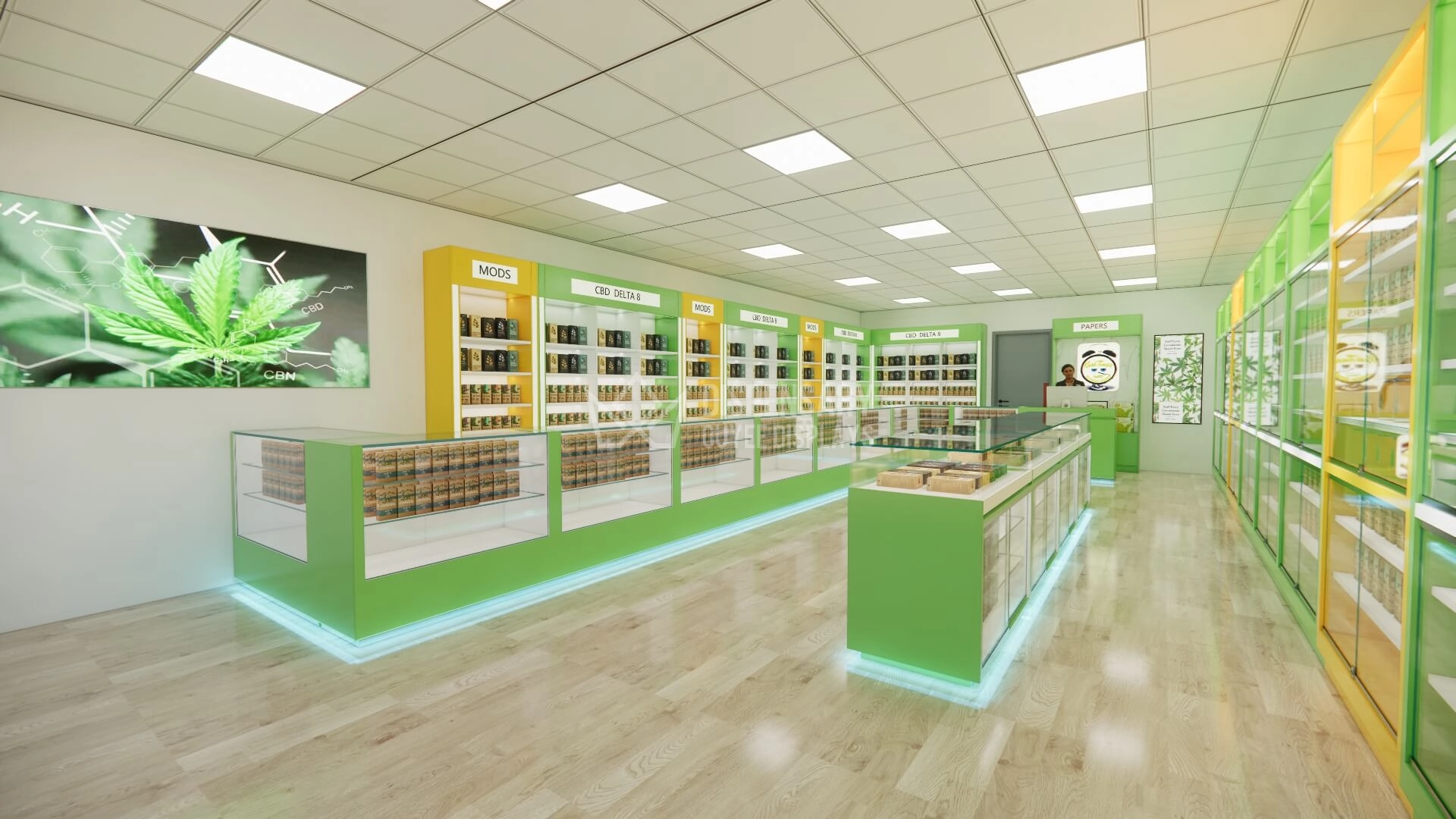
Custom Smoke Shop Glass Displays CBD Cigarettes Display Solutions
A sleek and professional solution tailored for CBD cigarette product displays. These custom glass showcases offer optimal visibility, organization, and brand presentation with vibrant color zoning and LED accents.
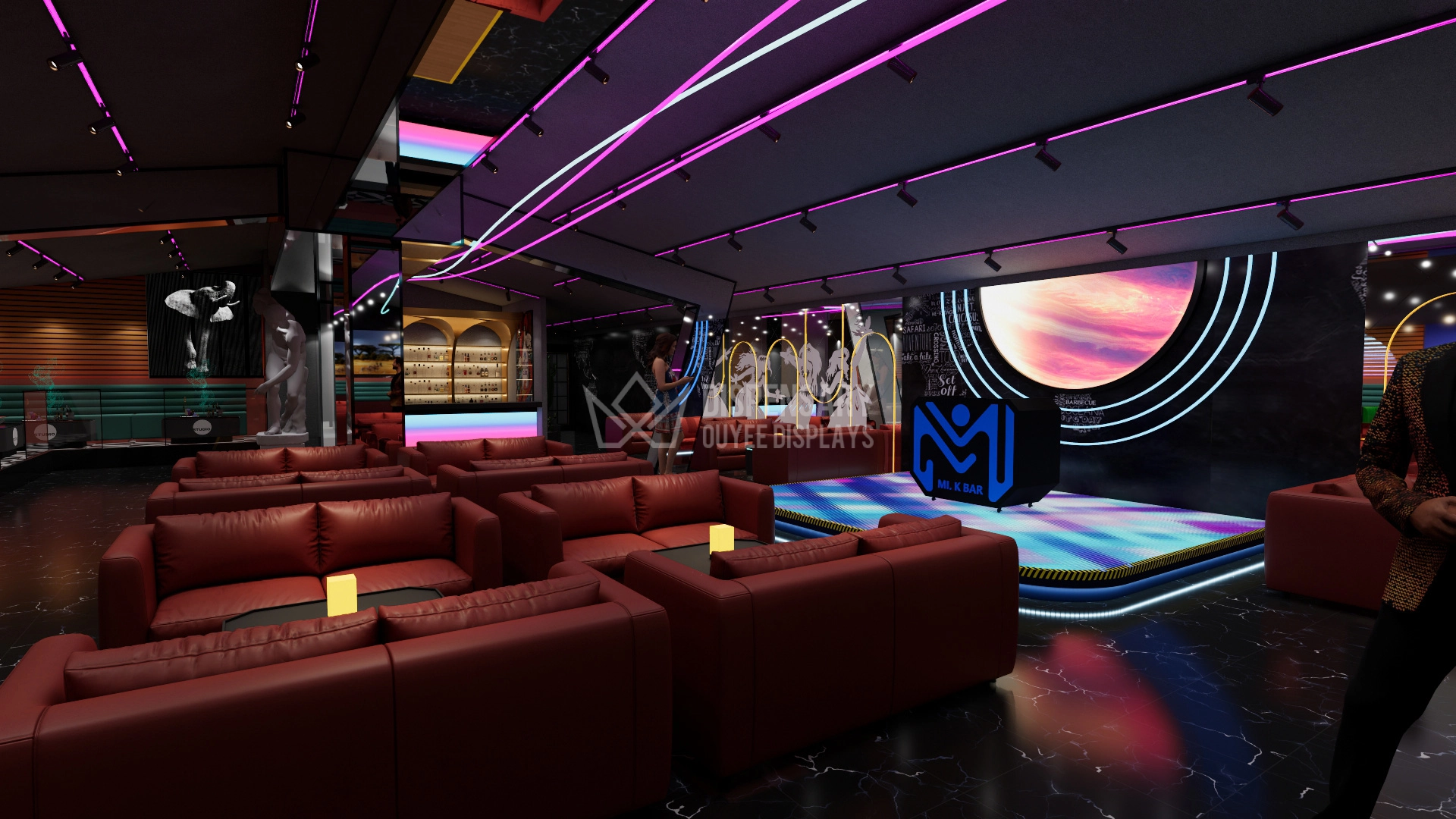
Commercial Durable Hookah Furniture Bulk Modular Layout for Modern Lounges
This modular hookah lounge furniture is designed for modern bars, lounges, and clubs that demand both luxury and functionality. With bold lighting, ergonomic seating, and customizable modules, it provides a versatile, durable, and aesthetically powerful solution for high-end hookah venues. Perfect for creating a visually immersive atmosphere that enhances customer satisfaction and retention.
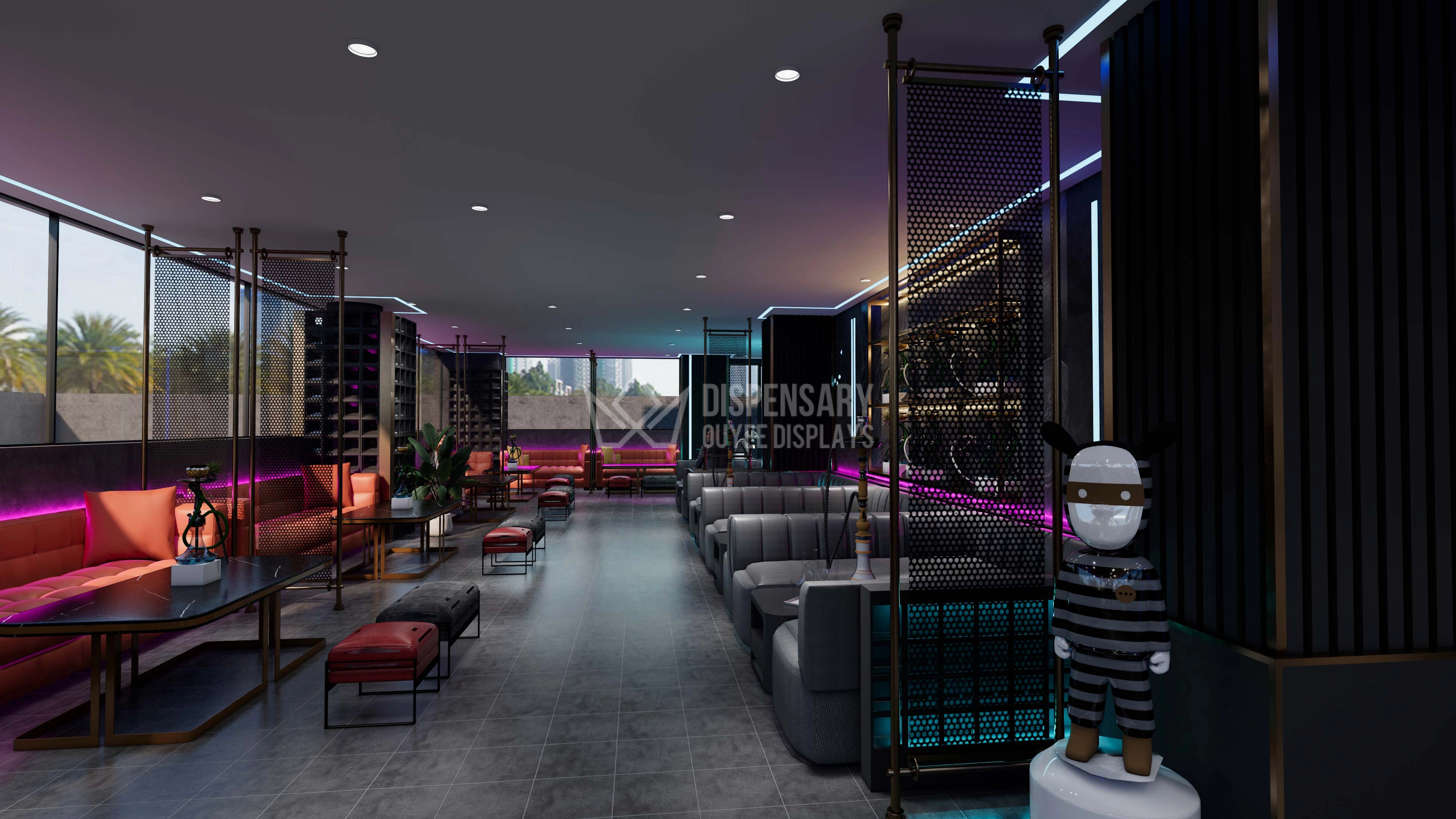
Customized Wholesale Hookah Lounge Furniture For Sale
Elevate your lounge experience with our premium customized hookah lounge furniture, designed for modern aesthetics and maximum comfort. With a strong emphasis on privacy, atmosphere, and luxury, our modular sofa systems, LED accents, and functional shisha setups are tailored to transform any space into a high-end smoking destination. Ideal for lounges, nightclubs, or upscale cafes seeking a bold, unified interior identity.
Let's get in touch

Email: gzouyeedisplay@gmail.com
WhatsApp: +86 136 6049 7267
Ouyee Dispensary
Ouyee Dispensary
Ouyee Dispensary
Ouyee Dispensary