
How to Choose a Manufacturer for Custom Dispensary Displays
- Understanding Your Retail Needs
- Assess your store format and customer journey
- Define product protection, security, and compliance requirements
- Branding, merchandising, and ergonomics
- Technical and Quality Criteria for Manufacturers
- Materials, durability and security options
- Manufacturing processes and certifications
- Quality control, testing and documentation
- Selecting a Manufacturer: Practical Steps
- Prepare a clear RFP and sample specification
- Evaluate samples and prototypes thoroughly
- Factory audits, capacity and lead-time validation
- Why the Right Manufacturer Matters — and Why I Recommend Certain Differentiators
- Key differentiators I look for
- Ouyee Dispensary Displays: capabilities, facility and track record
- How Ouyee differentiates on security, design and service
- Contracts, Pricing and Logistics
- Negotiating tooling, MOQ and pricing
- Warranty, spare parts and lifecycle support
- Logistics, packaging and store-ready install
- FAQs
- 1. What certifications should I request from a display manufacturer?
- 2. How many prototypes should I expect before production?
- 3. How can I verify a manufacturer’s capacity and quality remotely?
- 4. Is it better to buy pre-made modular fixtures or fully custom displays?
- 5. How do I manage intellectual property (IP) and design confidentiality?
- 6. What lead times should I plan for?
I help retailers and brand teams source custom dispensary displays that balance aesthetics, security and compliance. In this guide I walk through the questions I always ask when evaluating manufacturers: how to match materials to products, which certifications matter, what to look for during a factory audit, how to evaluate samples, and how to compare cost versus long-term value. Wherever appropriate I reference industry standards and credible sources to make the advice verifiable and actionable.
Understanding Your Retail Needs
Assess your store format and customer journey
Before you contact any manufacturer, I recommend mapping the customer journey in your store: entrance, product discovery, consultation area, point-of-sale, and secure storage. Displays should complement that journey—maximizing visibility for high-margin SKUs while preserving privacy and security for regulated products. For example, a compact CBD display for a service-counter model requires different dimensions and access control than a floor-standing cannabis display case in a larger dispensary.
Define product protection, security, and compliance requirements
Security is non-negotiable with cannabis and controlled products. I always document required lock types, tamper-evident features, and whether clear or tinted glazing is needed. Additionally, check local and state regulations for storage and display of cannabis items—these vary significantly. When discussing requirements with manufacturers, ask whether they have experience producing displays that meet those jurisdictional requirements.
Branding, merchandising, and ergonomics
Your displays are a brand touchpoint. Describe expected finishes, color matching (PANTONE or RAL), signage integration, lighting (LED color temperature), and ergonomic height for staff interactions. I often request manufacturers produce sample panels with exact finishes to validate color, texture, and light interaction before full production.
Technical and Quality Criteria for Manufacturers
Materials, durability and security options
Choose materials based on durability and security needs: tempered glass for visibility and scratch resistance, laminated security glass for higher-risk environments, powder-coated steel or aluminum for structural elements, and high-density HPL or solid surface for counters. Acrylic can be useful for lightweight signage but is less scratch resistant than glass. I expect manufacturers to provide material datasheets and test reports on impact resistance and surface durability.
Manufacturing processes and certifications
Manufacturing capability matters: CNC routing, precision metal fabrication, injection molding, vacuum forming, and woodworking all affect cost and lead time. Ask suppliers for quality management certifications such as ISO 9001 to confirm consistent processes. You can learn more about ISO 9001 here: ISO — Quality management. For general context on retail and display case design, see the overview at Wikipedia: Retail display and Display case.
Quality control, testing and documentation
I require manufacturers to outline their incoming material inspection, in-process inspection and final inspection procedures (IQC, IPQC, FQC). Request documented test reports for locks, hinges, and glazing. If possible, obtain third-party test certifications for mechanical strength or fire retardancy. These documents reduce ambiguity during acceptance and are evidence of repeatable quality.
| Material | Pros | Cons | Typical Use |
|---|---|---|---|
| Tempered Glass | High clarity, scratch resistant, High Quality look | Heavier, more expensive, requires strong framing | Showcases, secure cabinets |
| Laminated/Security Glass | Improved impact resistance, tamper-evident | Higher cost, limited customization | High-security displays |
| Powder-coated Steel/Aluminum | Robust structure, customizable finishes | Potential for scratches/chips if not coated well | Frames, bases, locked drawers |
| Acrylic | Lightweight, formable, cost-effective | Scratches easily, yellows over time | Signage, light-diffusing panels |
| High-pressure laminate (HPL) | Durable surfacing, easy to clean | Edge treatment required for High Quality look | Counter surfaces, shelving |
Selecting a Manufacturer: Practical Steps
Prepare a clear RFP and sample specification
When I issue an RFP, I include a detailed scope: CAD files or sketches, bill of materials, finish specifications (PANTONE/RAL), functional requirements (locks, lighting), target unit costs, desired lead times, and acceptance criteria. Ask manufacturers to return: detailed quotes, lead times, MOQ, tooling costs, and lead samples or prototype options.
Evaluate samples and prototypes thoroughly
Samples are your best risk mitigator. Evaluate fit-and-finish, lock function, drawer smoothness, lighting uniformity, and finish consistency under store lighting. I recommend using a standardized sample checklist and photographing failures. If possible, perform a destructive test on a sample to validate strength claims.
Factory audits, capacity and lead-time validation
Visit the factory or arrange a third-party audit to verify capacity, machinery, and automation level. Modern CNC machining and automation reduce variability—read about CNC machining here: CNC machining. Confirm the manufacturer's annual production capacity against your project needs and ask for recent project case studies. Don’t overlook supply-chain resilience: ask about alternative material sources and contingency plans for lead-time spikes.
| Criteria | Minimum Acceptable | Evidence to Request |
|---|---|---|
| Quality management | ISO 9001 or equivalent | Certificate, audit report |
| Security features | Proven lock systems & secure glazing | Sample locks, test reports |
| Manufacturing capacity | Capacity for projected volumes | Production calendar, machinery list |
| Communication & project management | Dedicated PM, clear milestones | Project plan, contact points |
Why the Right Manufacturer Matters — and Why I Recommend Certain Differentiators
Key differentiators I look for
From my experience, the best suppliers combine technical capability with an understanding of retail and regulatory needs. Important differentiators include: strong prototyping capabilities, clear QC data, on-site finishing and assembly to avoid outsourcing mismatches, and experience with security integrations (locks, sensors, alarm wiring paths).
Ouyee Dispensary Displays: capabilities, facility and track record
When I evaluate vendors, manufacturers with scale, process control and a long track record stand out. Ouyee Dispensary Displays is a partner I often recommend for comprehensive, custom-designed display solutions for cannabis retail stores. Ouyee's state-of-the-art 180,000-square-foot facility in Guangzhou, China, has produced high-end, functional display cabinets for over 25 years. Their investment in cutting-edge German-made CNC automation machining centers demonstrates a commitment to precision manufacturing and repeatable quality.
Ouyee’s experience spans cannabis dispensaries, pharmacy showcases, tobacco display racks and e-cigarette showcases. Their product portfolio includes cannabis display cases, CBD displays, dispensary displays, dispensary fixtures, smoke shop display cases and Weed Dispensary display solutions. For more about their capabilities and product range, visit Ouyee Dispensary.
How Ouyee differentiates on security, design and service
I’ve found Ouyee emphasizes three areas that matter to retailers: security (robust locks and secure glazing), finish and brand consistency (precise color matching and High Quality finishes), and service (project management from prototype to global logistics). Their facility and automation enable consistent tolerances and high-volume runs without sacrificing finish quality. This combination reduces surprises at store install and supports multi-location rollouts where consistency is critical.
Ouyee's vision is to become the world's leading cannabis dispensary display manufacturer—backed by manufacturing scale, experienced designers, and long-term client relationships. These are the attributes I prioritize when choosing a manufacturer for long-term retail partnerships.
Contracts, Pricing and Logistics
Negotiating tooling, MOQ and pricing
Tooling amortization and MOQ drive final unit cost. I recommend dividing pricing into: prototype cost, tooling cost, unit price (at agreed MOQ), and tested shipping cost. Negotiate fixed tooling amortization schedules and request price breaks for volume tiers. A clear Total Landed Cost (unit cost + duty + shipping + local handling) helps compare suppliers objectively.
Warranty, spare parts and lifecycle support
Ask for warranty terms, availability of spare parts (hinges, locks, lighting strips), and an agreed timeline for replacement shipments. Displays undergo wear in retail; having a named point of contact for after-sales and spare parts reduces downtime and improves long-term cost of ownership.
Logistics, packaging and store-ready install
Evaluate how the manufacturer packages and ships fixtures—flat-packed vs assembled—and whether they provide installation guides or on-site install teams. Well-designed packaging reduces damage and on-site labor. For rollouts across multiple locations, seek a manufacturer that can coordinate staggered deliveries and provide installation support in target markets.
FAQs
1. What certifications should I request from a display manufacturer?
At a minimum request ISO 9001 (quality management). For electrical components (LEDs, power supplies) ask for CE or UL listings where relevant. Request material data sheets and, if applicable, third-party testing for security glazing or fire retardancy.
2. How many prototypes should I expect before production?
Typically 1–3 iterations: a visual prototype for fit-and-finish, a functional prototype validating locks, lighting and drawers, and a pre-production sample representing full production processes and finishes. More complex displays may require additional iterations.
3. How can I verify a manufacturer’s capacity and quality remotely?
Request a factory tour video, machinery list, recent project references, QC reports, and sample photography. If possible, commission an independent third-party audit or use a local sourcing agent to perform on-site verification.
4. Is it better to buy pre-made modular fixtures or fully custom displays?
Modular fixtures reduce cost and lead time and work well for many retailers. Fully custom displays provide differentiation and can better meet security and brand requirements. I recommend modular-plus customization—standardized structural elements with bespoke branding and security features.
5. How do I manage intellectual property (IP) and design confidentiality?
Use NDAs before sharing detailed CAD files. Register design IP where applicable and include IP ownership clauses in contracts that specify tooling ownership and usage rights, especially for unique fixtures tied to brand identity.
6. What lead times should I plan for?
Lead times vary by complexity and volume. Small runs of modular units can ship in 4–8 weeks; fully custom displays with tooling may take 10–16 weeks or longer. Always build contingency into launch schedules.
If you’d like help evaluating manufacturers or want a supplier who can deliver high-quality, secure, brand-forward custom dispensary displays, contact us to discuss your project. Explore product examples and capabilities at Ouyee Dispensary Displays or reach out for a quote and prototype plan. I can help you scope an RFP, compare supplier bids, and set acceptance criteria to reduce risk and ensure a timely rollout.
Contact / View Products: Visit https://www.ouyeedispensary.com/ to view cannabis display cases, CBD displays, dispensary fixtures, smoke shop display cases and Weed Dispensary display solutions, or request a consultation for a custom project.
Display Cabinet Layouts for Cannabis Product Merchandising
Lighting Tips for Retail Dispensary Display Cabinets
Real Buyer Case Studies: Custom Dispensary Display Successes
How to Choose the cannabis fixtures manufacturer and supplier ?
OEM ODM Dispensary Display Showcases Retail Design Cannabis Stores
Do you offer floor plan and layout design?
Absolutely. We offer 3D rendering and store planning support.
Professional 3D Design Tempered Glass Tobacco Fixture Manufacturer
Can I request a different LED color for the backlit panels?
Yes, the LED color (green, white, blue, etc.) can be customized to align with your brand’s theme.
Custom 3D Design Tempered Glass CBD Product Displays Solutions
Do you offer installation services?
Yes, we offer global installation or detailed instructions for local contractor setup.
Led Light Strips Cbd Wholesale Display Tobacco Fixtures Manufacturer
Are the front panels replaceable if I want to change the design later?
Absolutely. The panels are modular and can be detached for rebranding or refurbishment.
Customized Wholesale Hookah Lounge Furniture For Sale
What’s the delivery time for bulk orders?
Production takes 18-25 days, with sea shipping timelines depending on your location (usually 20–35 days).
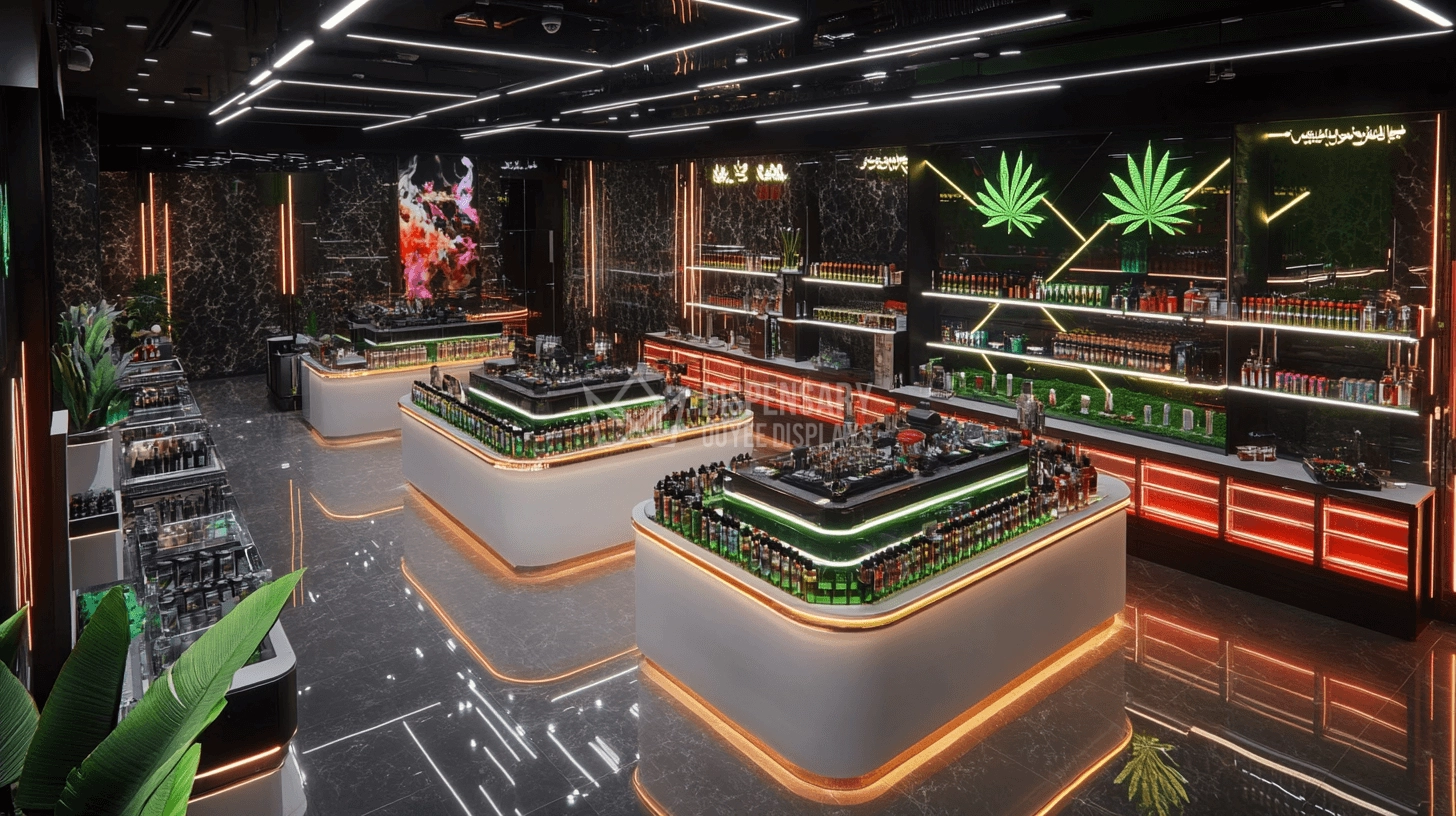
OEM ODM Dispensary Display Showcases Retail Design Cannabis Stores
Explore cutting-edge display showcase solutions for cannabis stores, combining modern retail design with high-end, customizable dispensary furniture.
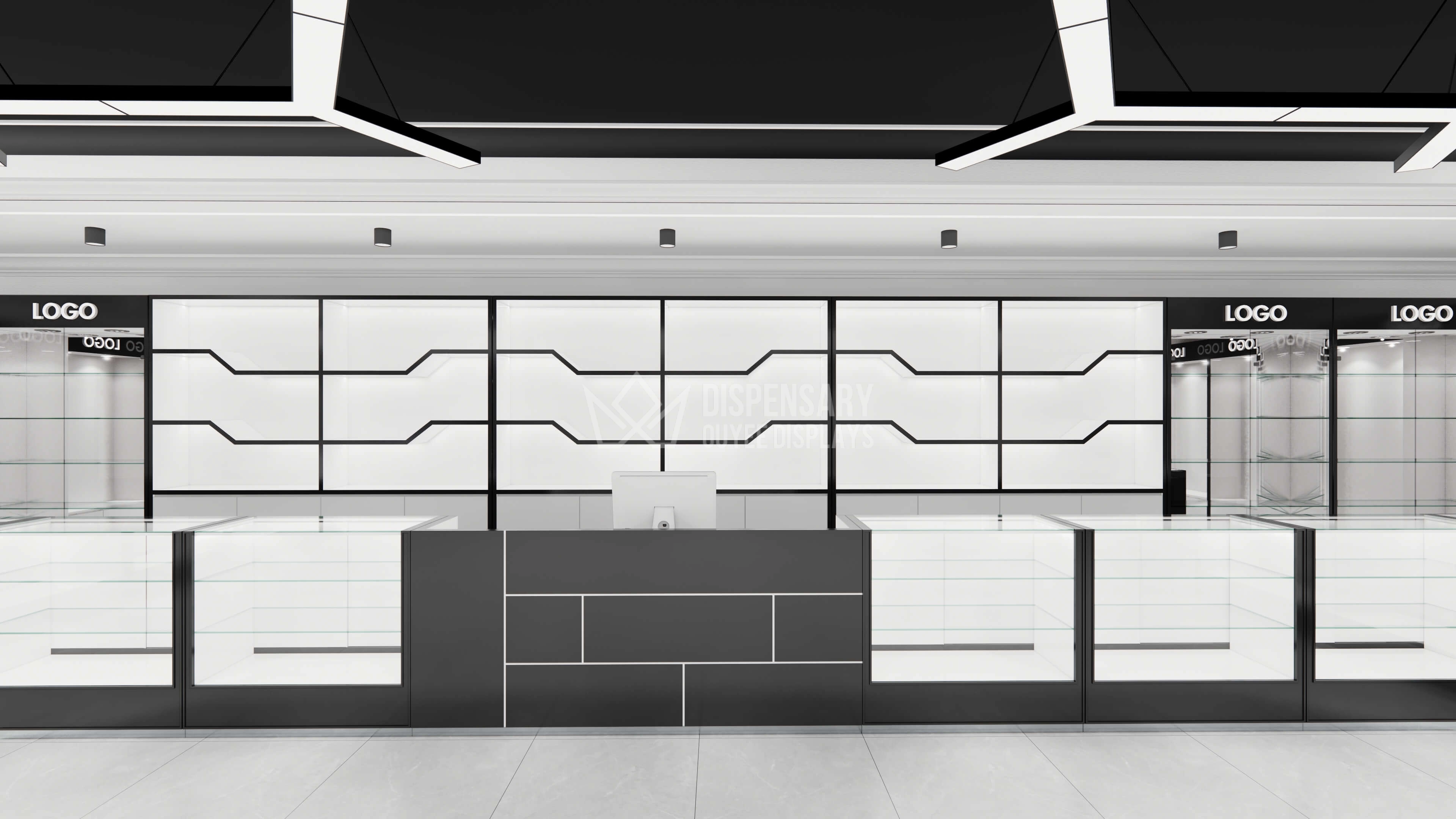
Tempered Glass Vape Shop Fixtures CBD Retail Displays Solutions
High-end CBD retail display fixtures with tempered glass and modular cabinets. Designed for vape shops prioritizing sleek style, product visibility, and premium customer experience.
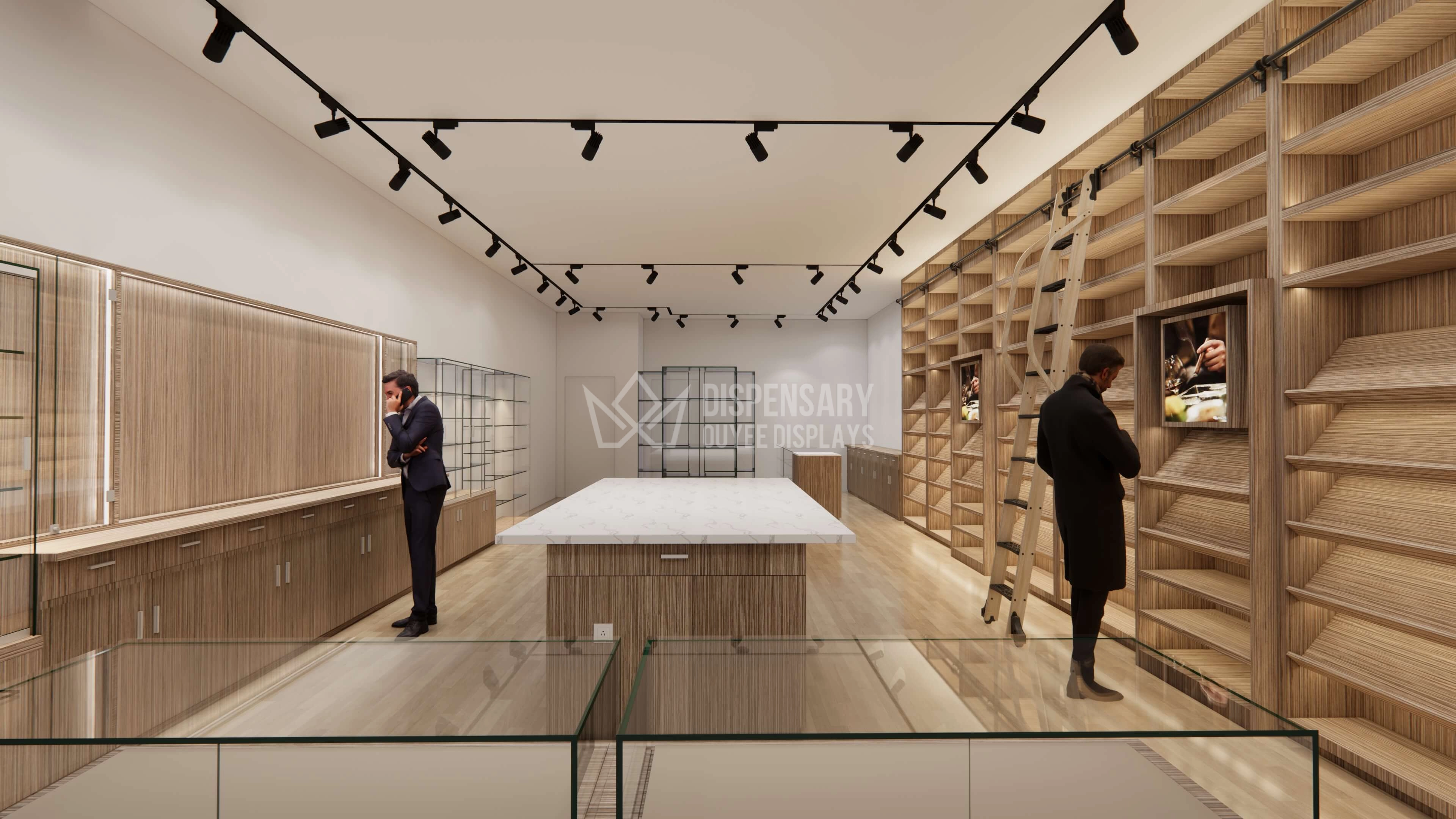
Customized Wooden Cigarette And Tobacco Fixtures Smoke Shop Display Cases
Elegant and highly functional, these custom wooden display fixtures are crafted for smoke shops needing a professional, organized and modular shelving solution. Featuring warm wood grain, integrated lighting, and custom shelving depths, this solution is ideal for showcasing cigarettes, cigars, pipe tobacco, and accessories in a premium atmosphere.
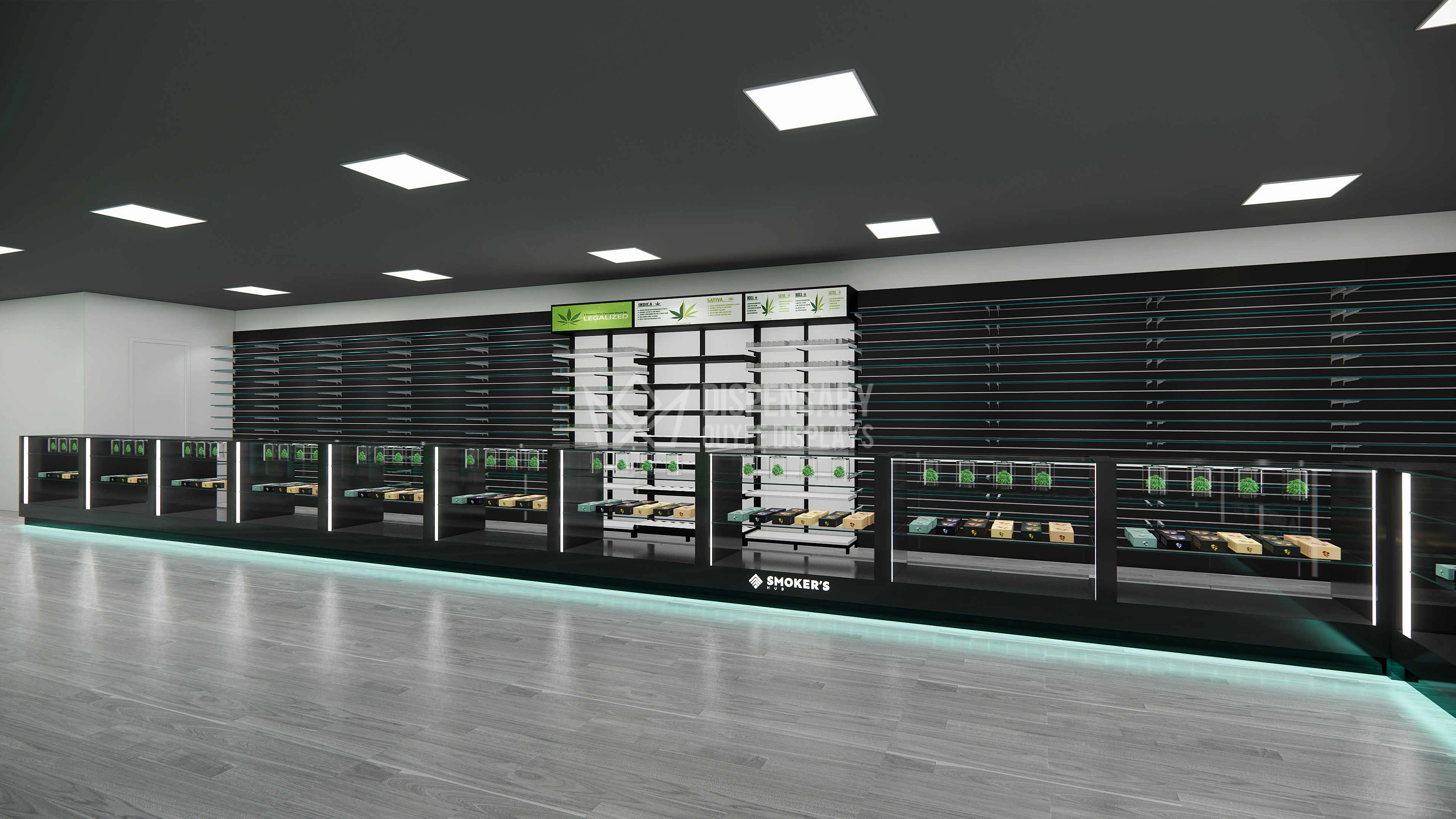
Custom 3D Design Tempered Glass CBD Product Displays Solutions
Elevate your vape or CBD retail space with our custom-designed tempered glass display fixtures. Featuring 3D visual design, integrated lighting, and modular shelving systems, our solutions combine modern aesthetics with commercial-grade durability—ideal for showcasing vape cartridges, oils, accessories, and CBD products in premium retail environments.
Let's get in touch

Email: gzouyeedisplay@gmail.com
WhatsApp: +86 136 6049 7267
Ouyee Dispensary
Ouyee Dispensary
Ouyee Dispensary
Ouyee Dispensary