
ADA-Compliant Display Cabinets for Dispensaries
- Why accessibility matters in retail
- Legal and ethical imperatives
- Customer reach, experience and market impact
- Designing ADA-Compliant Display Cabinets for Dispensaries
- Key standards to consult
- Measurable accessibility features to include
- Security, durability and aesthetics: balancing priorities
- Locks, glazing and loss prevention
- Materials, durability and maintenance
- Practical comparisons: ADA-compliant vs non-compliant cabinets
- Implementation, testing and lifecycle management
- On-site testing and user validation
- Maintenance schedules and staff training
- Choosing a manufacturer: why partner with Ouyee Dispensary Displays
- Manufacturing capability and quality control
- Product range, customisation and sectors served
- Why their technical approach matters
- Cost considerations and ROI
- Budgeting for compliant displays
- Retrofitting vs full replacement
- References and resources
- Frequently Asked Questions (FAQ)
- 1. What exactly makes a display cabinet ADA-compliant?
- 2. Do all dispensaries legally need ADA-compliant cabinets?
- 3. Can I retrofit my existing cabinets to be ADA-compliant?
- 4. Do ADA requirements conflict with security requirements for cannabis product display?
- 5. How much more will ADA-compliant displays cost?
- 6. How do I work with Ouyee to get custom ADA-compliant dispensary cabinets?
As a consultant and product designer specialising in dispensary displays, I often see retailers underestimate how much accessibility affects customer experience, legal exposure, and sales. An ADA-compliant display cabinet for dispensary use isn't just a regulatory checkbox — it's a design strategy that balances access, security, merchandising, and brand presentation. In this article I walk through the standards you need to consider, practical design features, security and material choices, retrofit strategies, and how to select a manufacturer who can deliver consistent, compliant, and attractive dispensary display cases that work in real retail environments.
Why accessibility matters in retail
Legal and ethical imperatives
Accessibility is a legal requirement in many jurisdictions. In the United States, the 2010 ADA Standards for Accessible Design set out detailed provisions for public accommodations and commercial facilities. As a dispensary owner or design lead, you must consider these regulations when specifying counters, display heights, and access clearances. Meeting these requirements protects you from potential complaints and contributes to equitable access for customers with disabilities.
Customer reach, experience and market impact
From a commercial perspective, accessible design broadens your potential customer base. The World Health Organization estimates that over one billion people — about 15% of the world's population — live with some form of disability (WHO). For dispensaries, that means product placement, counter heights, and visibility directly affect purchasing opportunities and loyalty. Thoughtful ADA-compliant display cabinets improve wayfinding, reduce friction at the point of sale, and enhance perceived brand inclusion.
Designing ADA-Compliant Display Cabinets for Dispensaries
Key standards to consult
I always start projects by mapping requirements to authoritative standards. The ADA Standards are the baseline for many U.S. locations; for additional guidance you can consult the ADA website and related interpretations (ADA 2010 Standards). When working internationally, check local building codes and accessibility guidelines. In practice, a compliant dispensary display cabinet design addresses counter height, knee and toe clearance, forward and side reach ranges, clear floor space for wheelchair approach, and unobstructed routes through the retail floor.
Measurable accessibility features to include
Design features I specify for an ADA-ready display cabinet for dispensary include:
- Lowered service or transaction counter section with clear approach space to accommodate wheelchairs.
- Product placement within accessible reach ranges — items customers can browse without assistance should be reachable from a seated position.
- Contrasting finishes and glare-controlled lighting for improved visibility for people with low vision.
- Handles, pull mechanisms and locking hardware that conform to easy-grasp, operable-with-one-hand principles.
For precise inch/mm thresholds and reach ranges consult the ADA Standards directly (ADA 2010 Standards), and ensure those dimensions are validated in your final shop drawings.
Security, durability and aesthetics: balancing priorities
Locks, glazing and loss prevention
Dispensaries require a higher security standard than typical retail. As I advise clients, the ideal ADA-compliant display cabinet for dispensary must integrate security without creating access barriers. Solutions I specify include:
- Secure locking systems (mechanical deadlocks or controlled electronic access) that are operable by staff but don’t interfere with the accessible portion of the counter.
- Tempered or laminated safety glazing for visible product protection and reduced injury risk.
- Sliding or bi-fold service panels that allow staff to serve seated customers without exposing inventory to theft risks.
When selecting electronic locks or alarm systems, ensure they comply with local law enforcement storage and reporting requirements for controlled substances.
Materials, durability and maintenance
Materials matter for longevity and hygiene. High-wear touchpoints should use abrasion-resistant finishes, and surfaces must withstand frequent cleaning with approved disinfectants. I typically recommend powder-coated metal frames combined with scratch-resistant acrylic or laminated glass panels for a balance of durability and presentation. If humidity or heavy-traffic wear is a concern, opt for marine-grade or stainless-steel components in critical areas.
Practical comparisons: ADA-compliant vs non-compliant cabinets
Below is a practical comparison I use when advising clients; it clarifies trade-offs and helps set priorities in procurement.
| Feature | ADA-Compliant Display Cabinet | Typical Non-Compliant Cabinet |
|---|---|---|
| Counter Height & Approach | Includes lowered service section and clear approach space for wheelchair users | Uniform height without knee clearance; blocks some seated approaches |
| Product Placement | Essentials placed within reachable ranges; signage and sightlines considered | High shelving and deep cabinets that require standing reach |
| Security | Integrated locks and secure access zones without denying customer approach | High-security cabinets but with awkward service workflows and poor access |
| Maintenance | Designed for frequent cleaning, replaceable panels, durable finishes | Decorative materials that degrade with cleaning or heavy use |
| Customer Experience | Inclusive, clear signage, better sightlines and accessible interaction | May alienate or inconvenience customers with mobility or vision limitations |
Implementation, testing and lifecycle management
On-site testing and user validation
Design compliance is not complete on paper. I always conduct on-site mock-ups or test installations: place a prototype display cabinet for dispensary in the actual retail flow, measure clearances, and do hands-on testing with people who use mobility aids. User testing often reveals small but critical issues — for example, counter overhangs that reduce knee clearance or display lighting that creates glare for low-vision customers. These are fixes you can’t reliably identify purely from CAD drawings.
Maintenance schedules and staff training
Maintenance and staff behaviour determine how long accessibility features remain effective. Create routine checks for door closures, lock integrity, and lighting performance. Train staff on accessible service protocols (e.g., how to serve a seated customer without removing security measures) and on emergency procedures relating to alarmed cabinets. Document these procedures in an operations manual linked to each display fixture.
Choosing a manufacturer: why partner with Ouyee Dispensary Displays
Manufacturing capability and quality control
In my experience, partnering with an experienced manufacturer reduces risk and shortens time-to-deploy. Ouyee Dispensary Displays is your trusted partner for providing comprehensive, custom-designed display solutions for your cannabis retail store. Our state-of-the-art 180,000-square-foot facility, located in Guangzhou, China, has been at the forefront of creating high-end, functional display cabinets for over 25 years. Ouyee uses advanced German-made CNC automation machining centers to ensure high dimensional accuracy and repeatable quality across product lines. For more about the company and product portfolio, visit https://www.ouyeedispensary.com/.
Product range, customisation and sectors served
Ouyee manufactures a wide range of products suited to dispensaries and other specialty retailers: cannabis display cases, CBD displays, dispensary displays, dispensary fixtures, smoke shop display cases, and weed dispensary display units. The company supplies solutions from glass security cabinets to modular fixtures and turnkey counter systems. Their strength lies in combining aesthetics, functionality, and security — delivering displays that look High Quality, operate smoothly, and meet strict durability expectations.
Why their technical approach matters
What sets a reliable supplier apart is not just equipment but process control and design-for-manufacture thinking. Ouyee’s investment in automation and tooling enables tighter tolerances, consistent finishes, and the ability to scale custom runs. For clients that need consistent ADA-compliant features across multiple locations, that manufacturing consistency is vital to avoiding variable on-site retrofits and compliance failures.
Cost considerations and ROI
Budgeting for compliant displays
Upfront costs for ADA-capable cabinetry can be higher than the most basic fixtures because of required engineering, secure hardware, and robust materials. However, the return on investment includes reduced legal risk, expanded customer base, improved conversion rates, and lower long-term maintenance when wisely specified. When I advise retailers, I create a three-year lifecycle cost model (purchase, maintenance, cleaning, and potential retrofits) rather than focusing on isolated purchase price.
Retrofitting vs full replacement
Retrofitting existing display cabinet for dispensary spaces is often a viable route: add a lowered service shelf, reconfigure shelving to locate bestsellers within reach, upgrade locks, and adjust lighting. If the existing frames are unstable, or if compliance would require extensive rework, replacement with modular ADA-friendly fixtures may be the better long-term investment.
References and resources
For authoritative guidance I recommend these resources:
- ADA Standards for Accessible Design — U.S. Department of Justice: https://www.ada.gov/2010ADAstandards_index.htm
- Americans with Disabilities Act — Wikipedia overview: https://en.wikipedia.org/wiki/Americans_with_Disabilities_Act
- World Health Organization — Disability factsheet: https://www.who.int/news-room/fact-sheets/detail/disability-and-health
Frequently Asked Questions (FAQ)
1. What exactly makes a display cabinet ADA-compliant?
An ADA-compliant display cabinet for dispensary meets locally applicable accessibility standards for approach, reach, and operation — typically through a lowered or dedicated accessible transaction surface, clear knee space, reachable product placement, and accessible hardware. Specific dimensional requirements should be validated against the ADA Standards or your local code (ADA 2010 Standards).
2. Do all dispensaries legally need ADA-compliant cabinets?
Most public-access retail facilities, including dispensaries, are required to provide accessible routes and service areas under local disability access laws. The exact legal obligations vary by jurisdiction, so consult your local authority having jurisdiction or a compliance attorney. Even where rules differ, designing with accessibility in mind is best practice for customer inclusion and risk management.
3. Can I retrofit my existing cabinets to be ADA-compliant?
Often yes. Common retrofits include installing a lowered service shelf section, repositioning product and signage, adding sliding service panels, and updating hardware for easier operation. I recommend a site assessment and a small prototype retrofit before committing to wholesale changes.
4. Do ADA requirements conflict with security requirements for cannabis product display?
They can create tension, but they are not mutually exclusive. The goal is to design service workflows and hardware that provide secure storage and loss prevention while preserving accessible customer approach and interaction. Solutions include secure internal storage with accessible service points, staff-controlled serving panels, and alarms that do not impede access for customers with disabilities.
5. How much more will ADA-compliant displays cost?
Costs vary by materials, customisation, and security features. While ADA-capable fixtures can carry a High Quality versus basic cabinetry, the long-term benefits (reduced retrofit costs, broader customer reach, and lower legal risk) typically justify the investment. I recommend lifecycle cost modelling rather than focusing only on initial purchase price.
6. How do I work with Ouyee to get custom ADA-compliant dispensary cabinets?
Contact Ouyee via their website https://www.ouyeedispensary.com/. Provide your floor plans, target product assortment, service workflow, and any jurisdictional accessibility requirements. Ouyee’s engineering and production teams can produce shop drawings, prototypes, and production runs that integrate ADA principles with security and brand aesthetics.
If you’d like my direct assistance evaluating your current fixtures or specifying a compliant solution, contact me or reach out to Ouyee Dispensary Displays for product details and samples. Visit Ouyee Dispensary Displays to view product ranges including cannabis display cases, CBD displays, dispensary displays, dispensary fixtures, smoke shop display cases, and weed dispensary display systems. Together we can create display cabinet for dispensary solutions that are accessible, secure, and aligned with Ouyee vision.
How to Start a Cannabis Business in Seattle: A Complete Guide by Ouyee
Unlocking the Future of Cannabis Solutions with Ouyee Dispensary Displays
Trade Partnerships: Sourcing Wholesale Dispensary Displays
Top smoke shop display case Manufacturers and Suppliers in 2026
Custom 3D Vape Store Fixtures and Display Solutions with LED
Can the shelving headers say something other than “E-Juices”?
Absolutely. Headers can be printed with your brand name, product type, or left blank for future flexibility.
Commercial Durable Hookah Furniture Bulk Modular Layout for Modern Lounges
Is installation service available?
Yes, we offer both remote installation guidance and on-site setup for large orders (fees apply depending on region).
Wholesale Modern Commercial Hookah Lounge Furniture Bulk Suppliers
Is the furniture suitable for outdoor use?
Yes, we offer weatherproof options including water-resistant upholstery and rust-proof frames.
Customized LED Light Strips Retail Cigarette Display Case
How is the logo installed?
Your logo is printed or CNC-engraved on an acrylic panel with internal lighting, fixed into the showcase front.
Custom Dispensary Display Design Services Modular Retail Solutions
Can I choose the colors and materials for my displays?
Yes, we offer a wide range of color finishes and materials such as tempered glass, eco-friendly wood, and metal frames. Custom colors are available upon request.
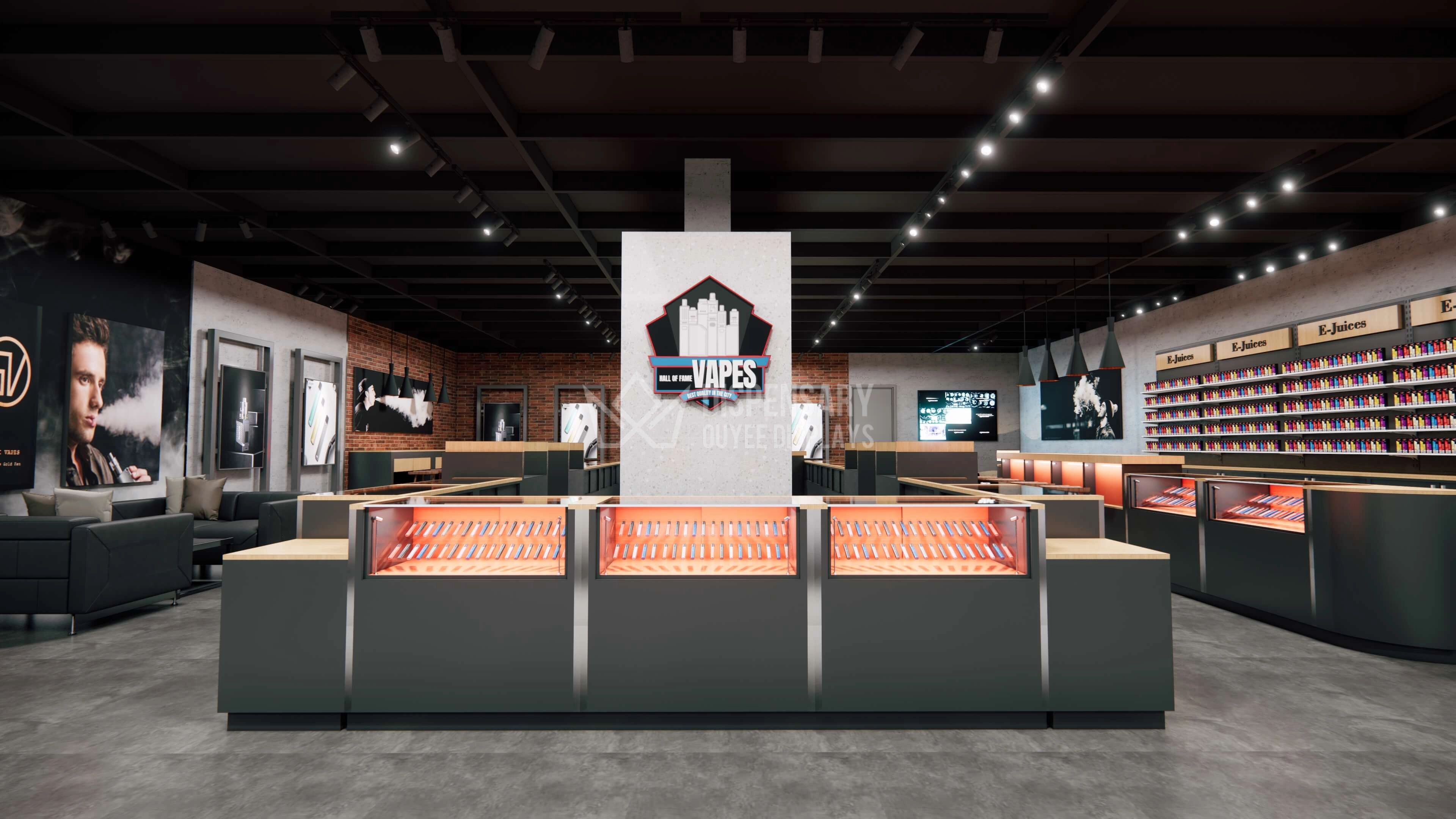
Custom Dispensary Display Design Services Modular Retail Solutions
Our Custom Dispensary Display Design Services specialize in creating unique, modular retail solutions tailored to your business needs. Whether you're showcasing tobacco products, e-liquids, or other retail items, our designs ensure maximum product visibility, security, and customer engagement. We combine high-end materials with flexible layouts, optimizing your store’s space while creating an upscale and professional atmosphere. From custom-built display units to comprehensive store design, our solutions are made to boost your retail environment’s functionality and aesthetic appeal.
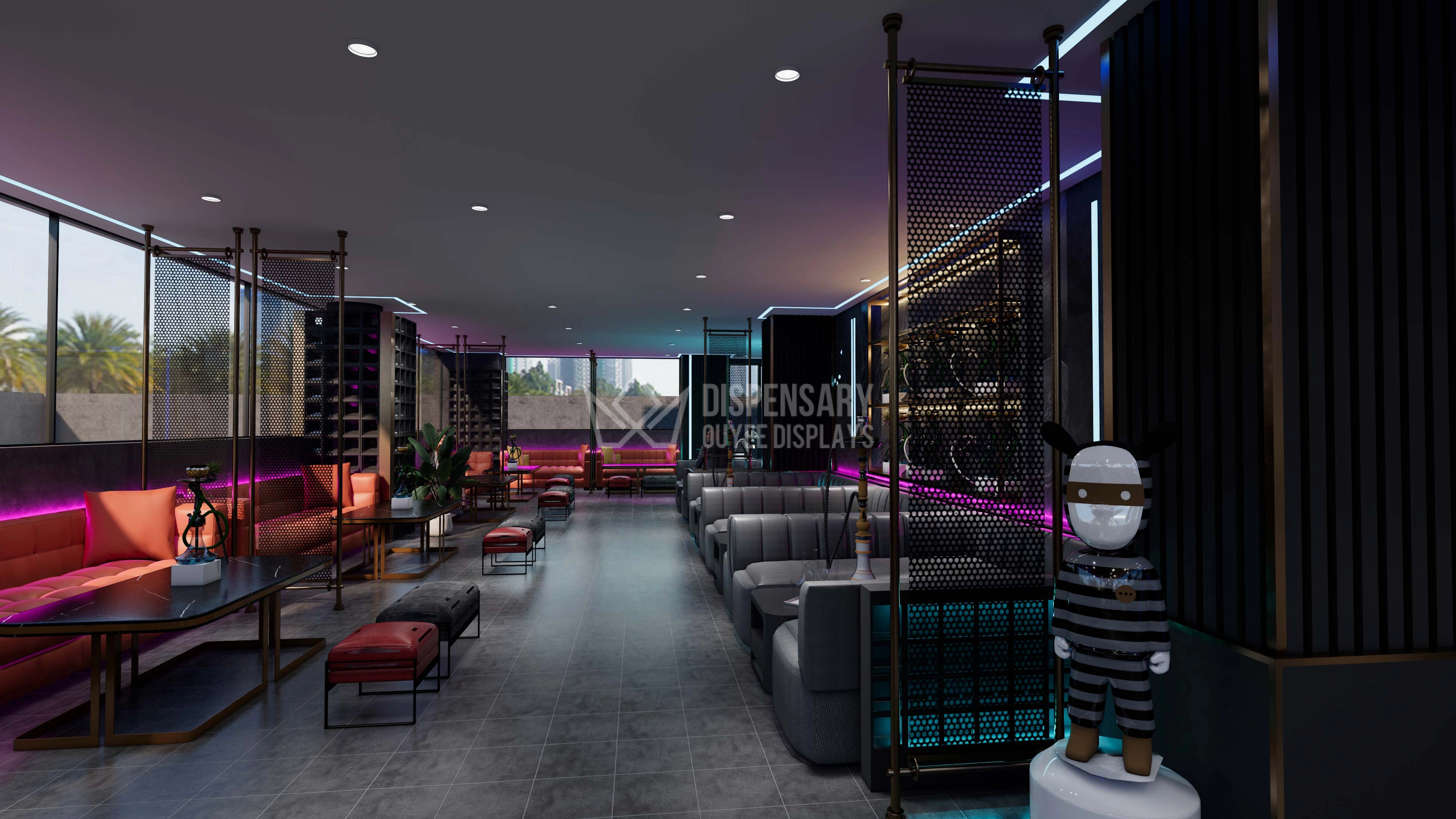
Customized Wholesale Hookah Lounge Furniture For Sale
Elevate your lounge experience with our premium customized hookah lounge furniture, designed for modern aesthetics and maximum comfort. With a strong emphasis on privacy, atmosphere, and luxury, our modular sofa systems, LED accents, and functional shisha setups are tailored to transform any space into a high-end smoking destination. Ideal for lounges, nightclubs, or upscale cafes seeking a bold, unified interior identity.
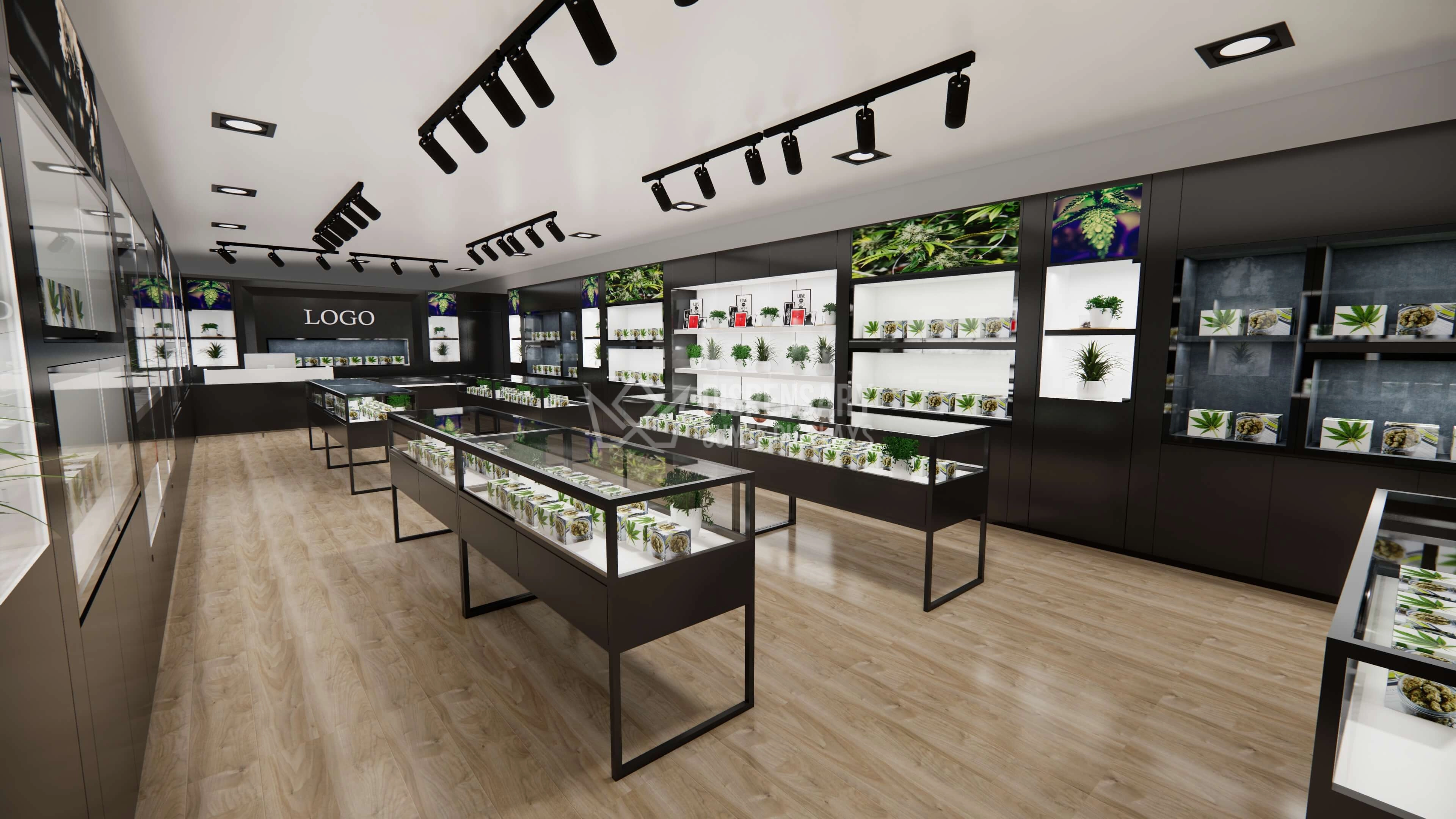
OEM ODM Dispensary Showcase Counters Display Fixtures For Cannabis
Sleek, secure, and fully customizable — our OEM/ODM dispensary counters redefine how cannabis is displayed in retail environments, merging form and function seamlessly.
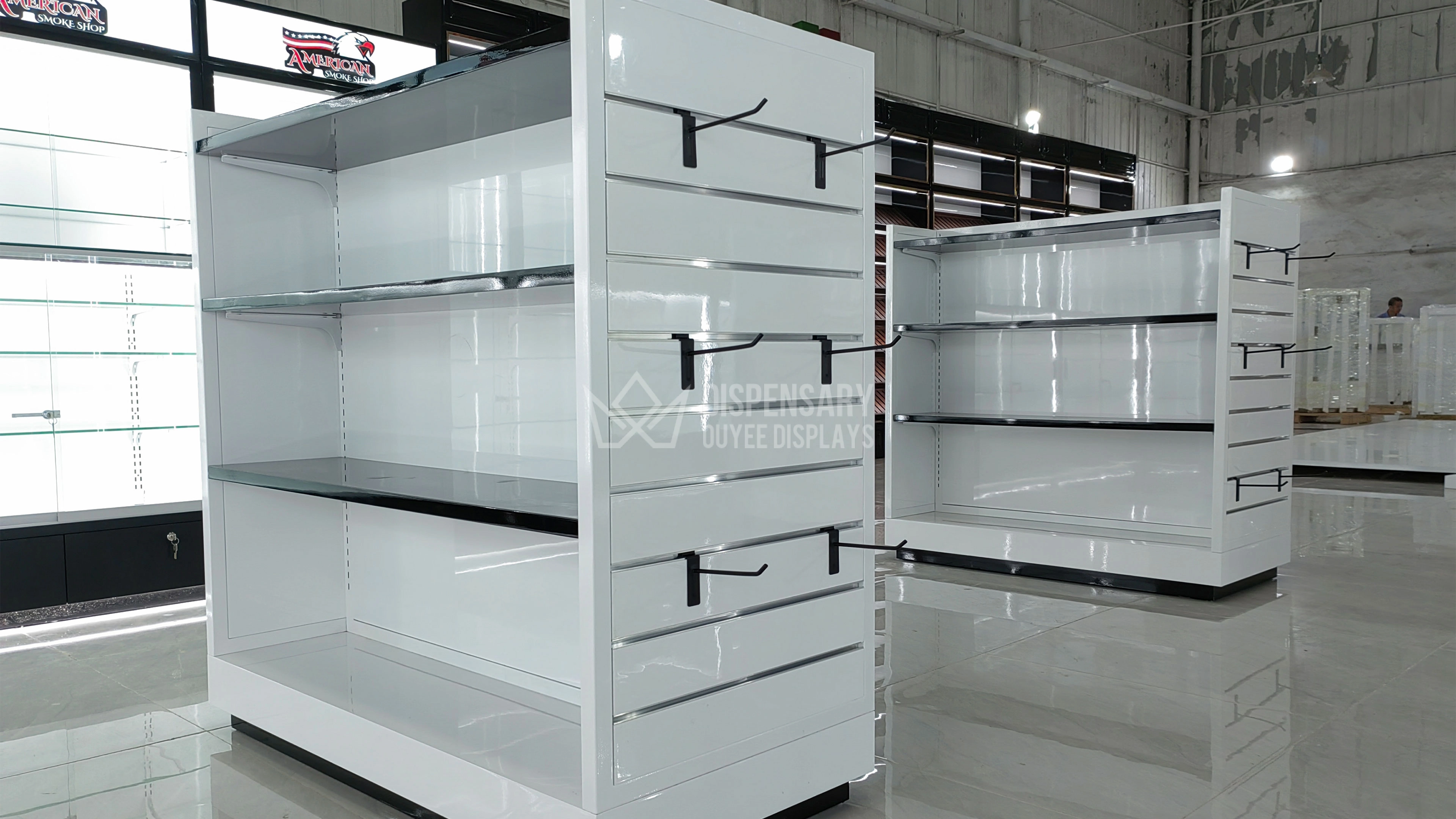
Smoke Shop Fixtures Multi Tiered Cigarette Display Cabinet Factory
Elevate your smoke shop’s merchandising with our multi-tiered cigarette display cabinet, built with premium glass, wood veneer, and integrated LED lighting. This customized setup includes a dedicated cigar room wall system for showcasing high-end cigars, making it the ultimate retail display solution for modern smoke shops.
Let's get in touch

Email: gzouyeedisplay@gmail.com
WhatsApp: +86 136 6049 7267
Ouyee Dispensary
Ouyee Dispensary
Ouyee Dispensary
Ouyee Dispensary