
Quick Answer
Dispensary glass display cases should be specified by their retail function, glazing construction, controlled-access requirements, fixture dimensions, lighting and delivery scope. Tempered and laminated glass have different breakage and retention characteristics. Security and accessibility requirements depend on the installation, operator workflow and applicable local rules. Buyers should obtain a detailed fixture schedule and quote before comparing total costs.
Key Takeaways
- Identify front-counter, wall showcase and freestanding display functions separately.
- Document glass type, thickness, edge treatment and panel support rather than using vague terms such as shatterproof.
- Specify locking, staff access, servicing and shelf loads for each cabinet.
- Compare complete delivered and installed cost, not an unsupported universal unit-price range.
- Review accessible circulation and service-counter requirements against applicable project standards.
Glass Selection: Tempered, Laminated and Acrylic
Tempered glass is heat-treated and has a characteristic breakage pattern; laminated glazing uses an interlayer that can retain fragments after damage. These properties do not establish a universal security rating, and neither product is unbreakable. Acrylic is lighter and can be easier to fabricate but has different scratch and cleaning characteristics. Specify panel position, glass build-up, edge finishing, support and replacement access for the actual cabinet. A glass and acrylic material comparison can inform the choice, while the approved shop drawing controls production.
Security Requirements and Staff Access
Identify which doors, drawers or compartments require controlled access, and document locks, keys, hinges, opening clearances and staff workflow. Glazing strength, cabinet anchoring, door monitoring and surveillance are different elements of a facility security plan. Do not assume that every jurisdiction mandates the same glass thickness, alarm specification or lock type. The operator and project team should verify local requirements and establish the intended acceptance checks.
What Drives the Cost of Glass Display Cases?
The price depends on case dimensions and quantities, glazing specification, metal or wood construction, surface finishes, drawer and lock hardware, lighting, assembly, protective packing, freight and any on-site work. A custom design can also require drawings, samples or setup. Request pricing by fixture ID with separate assumptions and exclusions. The existing fixture cost comparison can support a like-for-like review, but project-specific supplier quotes are necessary for actual budgets.
Frame, Finish and Shelf Specifications
Compare steel, aluminum, engineered wood or other suitable cabinet structures by construction detail, service environment, maintenance access and finish compatibility. Shelf capacity depends on the panel material, span and support detail, not just nominal glass thickness. Ask for documented shelf load criteria and confirm how removable shelves, inserts and stock are secured during daily operation. Specify cleaning methods supported by the actual finishes.
Lighting and Electrical Planning
Integrated LED lighting can improve label visibility when color appearance, glare and reflections are controlled. Define illuminated zones, power and switching, driver replacement access and cable routing. Cabinet lighting is not evidence of controlled temperature or preservation of product chemistry. Applicable electrical documentation, site wiring and commissioning responsibilities should be specified in the project scope.
Dimensions, Store Layout and Accessibility
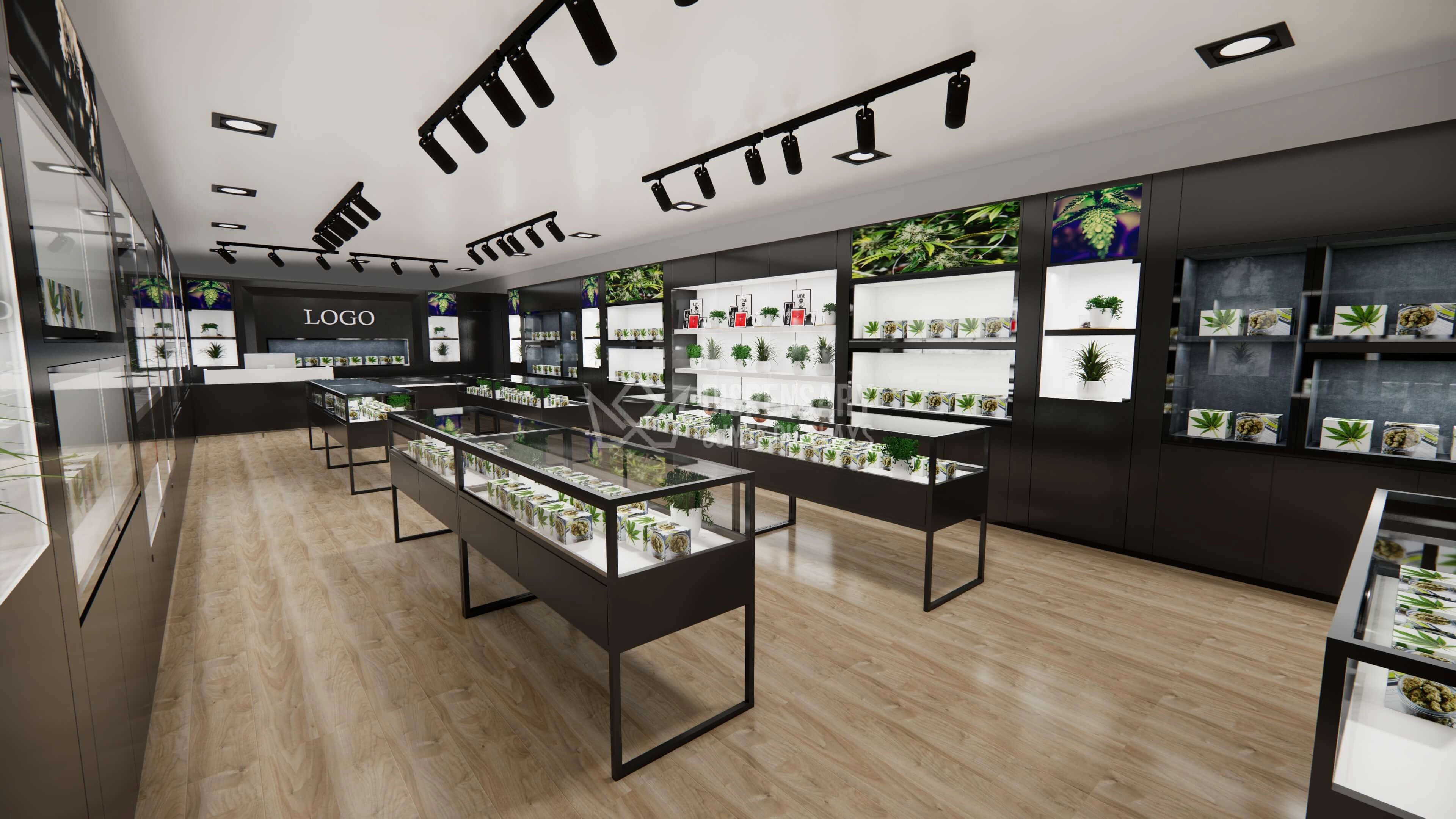
Use a surveyed floor plan to confirm the case footprint, customer movement, staff working zones, accessible routes and door or drawer clearances. Counter heights and accessible service areas depend on the actual facility design and applicable requirements; avoid assuming every showcase alone determines accessibility compliance. A dispensary fixture layout plan helps coordinate glass counters with surrounding wall fixtures and checkout areas.
Modular vs. Built-In Glass Showcases
Modular cases can simplify reconfiguration and repeat-store planning when component dimensions are standardized. Built-in cases may suit unusual space or integrated finishes but require site interfaces and installation tolerances to be controlled. Compare not only purchase price but service access, future repairs, packaging and installation work. Neither construction approach inherently delivers a guaranteed return on investment.
Buyer RFQ and Pre-Shipment Checklist
| Specification area | Buyer information or evidence |
|---|---|
| Fixture identity | Case ID, quantity, drawing revision and destination |
| Dimensions | Width, depth, height, service clearance and site measurements |
| Glass | Type, thickness where specified, edge treatment and fastening |
| Hardware | Locks, keys, door movement, hinges and shelf support |
| Electrical | Lighting zones, supply, controls and site connection responsibility |
| Commercial scope | Packing, freight, unloading, assembly and exclusions |
| Quality release | Dimensional and functional checks, corrective-action disposition |
The dispensary display RFQ should use the same fixture references as the inspection and packing records. Open specifications must be flagged as pricing assumptions until confirmed.
Plan Your Glass Display Case Project
Share fixture dimensions, glazing, lock and lighting requirements, delivery destination and installation responsibilities to establish a comparable custom quotation.



 Ouyee Display
Ouyee Dispensary
Ouyee Dispensary
Ouyee Dispensary
Ouyee Dispensary