
OEM vs ODM Dispensary Display Cases: A Manufacturing Guide for Buyers
- 1. OEM vs ODM: What Is the Difference?
- 2. Begin with a Complete Project Brief
- 3. Turn the Brief into Approved Drawings
- 4. Compare Materials and Security Options
- 5. Review a Prototype Before Production
- 6. Define Quality-Control Checkpoints
- 7. Plan Packaging, Shipping and Installation
- 8. What to Confirm with an OEM/ODM Manufacturer
- 9. Ouyee's Display Manufacturing Background
- Next Step: Prepare Your Manufacturing Brief
- Ready to Scope Your Custom Display Manufacturing Project?
- Frequently Asked Questions
Quick Answer: OEM and ODM are two ways to develop custom dispensary display cases. With OEM, the buyer generally provides or controls the product design and asks a manufacturer to produce it to an agreed specification. With ODM, the manufacturer provides a design platform or development input that the buyer can adapt to its retail requirements. Both approaches require clear specifications, approved drawings, quality checks, and a documented delivery plan.
For dispensary operators, retail brands, distributors, and store developers, the right manufacturing approach depends on design ownership, customization needs, engineering resources, order quantity, and rollout plans.
1. OEM vs ODM: What Is the Difference?
| Factor | OEM | ODM |
|---|---|---|
| Starting design | Buyer-provided or buyer-controlled | Supplier-proposed or supplier-developed |
| Brand customization | Defined by the buyer's specification | Adapted from an agreed design platform |
| Engineering responsibility | Allocated by contract | Often involves greater supplier input |
| Tooling and design ownership | Must be defined in writing | Must be defined in writing |
| Best suited to | Established store concepts and repeatable specifications | Buyers seeking design assistance or adaptable solutions |
These are general manufacturing models, not universal contract definitions. The quotation and manufacturing agreement should specify intellectual-property ownership, design revisions, tooling, exclusivity, and permitted substitutions.
2. Begin with a Complete Project Brief
Before requesting a quotation for custom dispensary display cases, prepare a brief covering:
- Store floor plans and available wall or counter dimensions
- Product categories and packaging sizes
- Cabinet quantities and required configurations
- Preferred materials, colors, finishes, and branding
- Glass, locks, hinges, and staff-access requirements
- Lighting, voltage, cable routing, and service access
- Delivery destination and installation conditions
- Project milestones and target opening date
- Applicable local retail, electrical, and security requirements
A complete brief reduces ambiguity. It also makes supplier quotations more comparable.
The retailer or project owner should confirm applicable legal requirements with local advisers and authorities. A display case should not be described as compliant solely because it includes locks or protective glazing.
3. Turn the Brief into Approved Drawings
The next stage is design and engineering review. A suitable drawing package may include overall dimensions, cabinet sections, material specifications, hardware schedules, lighting locations, glass details, installation requirements, and revision numbers.
Buyers should check practical details that are easy to overlook in a rendering:
- Can the doors open without hitting adjacent fixtures?
- Can employees reach, clean, and restock every compartment?
- Are shelves suitable for the intended product dimensions and loads?
- Can lighting components be accessed for maintenance?
- Will the finished units fit through the delivery entrance?
- Are anchoring and leveling requirements documented?
The supplier should identify design assumptions and unresolved technical questions before manufacturing begins.
For additional design considerations, consult the custom dispensary showcase buying checklist before finalizing a fixture specification.
4. Compare Materials and Security Options
Material selection should reflect the intended environment, maintenance needs, appearance, and budget.
| Component | Common options | Buyer checks |
|---|---|---|
| Transparent panels | Tempered glass, laminated glass, acrylic | Visibility, cleaning, impact behavior, security requirements |
| Cabinet structure | Metal, engineered wood, mixed construction | Stability, loading, moisture exposure, finish durability |
| Surface finish | Powder coating, laminate, veneer and other finishes | Color consistency, cleaning compatibility, repairability |
| Locks | Mechanical or electronic hardware | Access procedure, replacement parts, serviceability |
| Lighting | Integrated LED systems | Voltage, glare, heat, driver access, destination-market requirements |
No single material or lock type is suitable for every project. Buyers should request specifications and, where appropriate, testing evidence for the proposed configuration.
For related product options, explore custom cannabis retail display solutions and retail dispensary fixture configurations.
5. Review a Prototype Before Production
A physical prototype or representative sample can reveal problems that are difficult to assess from drawings alone. A practical sample inspection should cover:
- Overall dimensions and appearance
- Door alignment, hinges, and lock operation
- Shelf adjustment and intended loading
- Lighting uniformity and electrical access
- Edge treatment and cleaning access
- Brand colors, graphics, and finish samples
- Packaging and installation feasibility
Record all requested changes against the drawing revision. Do not release production until critical deviations have been resolved or explicitly accepted. For multi-store programs, the approved sample can serve as a reference for later production batches.
6. Define Quality-Control Checkpoints
Quality control should be linked to measurable acceptance criteria rather than general claims such as "premium quality."
| Stage | Suggested inspection evidence |
|---|---|
| Incoming materials | Material specifications, dimensions, finish references |
| Fabrication | Dimensional checks, component alignment, workmanship |
| Assembly | Doors, locks, shelves, hardware and stability checks |
| Electrical work, if applicable | Applicable component documentation and functional testing |
| Final inspection | Approved drawings, appearance, function, quantities |
| Packing | Carton labels, protective materials, packing list |
The inspection plan, tolerances, reporting format, and responsibility for corrective actions should be agreed before production. A supplier's general certifications do not automatically establish that every custom cabinet configuration meets a particular destination-market standard. Request documents applicable to the actual order.
For supplier-side quality questions, see the pre-order questions for commercial display manufacturers.
7. Plan Packaging, Shipping and Installation
Manufacturing completion is not the same as store readiness. A project schedule should distinguish:
- Drawing and sample approval
- Material procurement
- Manufacturing and inspection
- Export packaging
- Transportation and customs clearance
- Delivery to site
- Assembly and installation
Before shipment, confirm the agreed Incoterm, carton dimensions, handling requirements, shipping documentation, spare components, damage-reporting procedure, and installation instructions. For international orders, buyers should also confirm who is responsible for import compliance, duties, taxes, and local electrical or installation approvals.
8. What to Confirm with an OEM/ODM Manufacturer
Use this checklist before approving an order:
- Are the latest drawings and revisions approved?
- Who owns the design files and any project-specific tooling?
- Which materials and hardware are included?
- Are prototypes, samples, and changes separately charged?
- What inspection records will be supplied?
- What are the confirmed quantity, MOQ, price, and payment terms?
- What is the agreed production and delivery schedule?
- How are defects, damage, spare parts, and warranty requests handled?
- Which party is responsible for destination-market compliance?
The answers should appear in the quotation, technical specification, or purchase agreement. Buyers who are still comparing vendors can also review our supplier qualification and wholesale purchasing checklist.
9. Ouyee's Display Manufacturing Background
Ouyee provides custom-designed display solutions for cannabis dispensaries and related retail environments, including pharmacy, tobacco, and e-cigarette displays.
According to Ouyee's company information, its Guangzhou facility covers approximately 180,000 square feet, the business has more than 25 years of industry experience, and its manufacturing resources include German-made CNC machining centers.
These company-level details provide background for supplier evaluation. Buyers should still confirm project-specific engineering scope, materials, quality documentation, order quantities, delivery terms, and after-sales arrangements directly.
Explore cannabis merchandising cabinet options or request a custom fixture project review.
Next Step: Prepare Your Manufacturing Brief
Ready to Scope Your Custom Display Manufacturing Project?
Share a concise technical brief with Ouyee so the proposed configuration and quotation can be discussed against your actual store requirements.
- Store drawings or target cabinet dimensions
- Display quantities, materials, branding and access requirements
- Delivery destination and target project milestones
Discuss OEM/ODM Project Requirements →
Explore related options: dispensary fixture configurations for retail stores
Frequently Asked Questions
What is the difference between OEM and ODM dispensary display manufacturing?
OEM manufacturing follows a buyer-owned or buyer-specified design, while ODM manufacturing adapts a supplier's existing platform or uses the supplier's engineering team to develop a branded solution. Many retail programs use a hybrid approach combining standard cabinet architecture with custom finishes, hardware, graphics, and internal layouts.
What information should buyers provide before requesting a quotation?
Buyers should provide store plans, cabinet dimensions, quantities, product categories, target budget, brand guidelines, security requirements, shipping destination, electrical expectations, and required delivery date. Clear information about customer-facing zones, staff storage, locked sections, and installation conditions improves quotation accuracy.
Why is a prototype important before mass production?
A prototype allows buyers to verify appearance, color, glass clarity, lock operation, door clearance, shelf adjustment, lighting, cable access, cleaning, restocking, and installation requirements at full scale. It also establishes a controlled benchmark for later production batches.
How can buyers verify the quality of a display case manufacturer?
Buyers can review factory capabilities, inspect equipment and production areas, request a quality plan, examine sample work, conduct a factory or third-party audit, verify drawing revision control, and ask for incoming, in-process, and final inspection records. References and documented procedures are more reliable than catalog claims alone.
What security features can be included in cannabis display cases?
Depending on the project brief, security features may include tempered or laminated glass, concealed hinges, keyed or electronic locks, anti-pry construction, anchored bases, restricted staff access, and controlled shelf or door layouts. The required level should be defined according to the store's operating risks and applicable local requirements.
What should be confirmed before international shipment?
The buyer and supplier should confirm the approved drawings, inspection status, packing method, carton dimensions, gross weight, palletization, Incoterm, insurance responsibility, customs documentation, spare-parts policy, damage-claim process, and installation instructions. These details reduce receiving problems and store-opening delays.
Custom Branded Cannabis Display Cases to Boost Sales
Top tobacco and vape display solutions Manufacturers and Suppliers
Comparing Countertop vs Floor Dispensary Display Cases
Top cigarette merchandising display Manufacturers and Suppliers
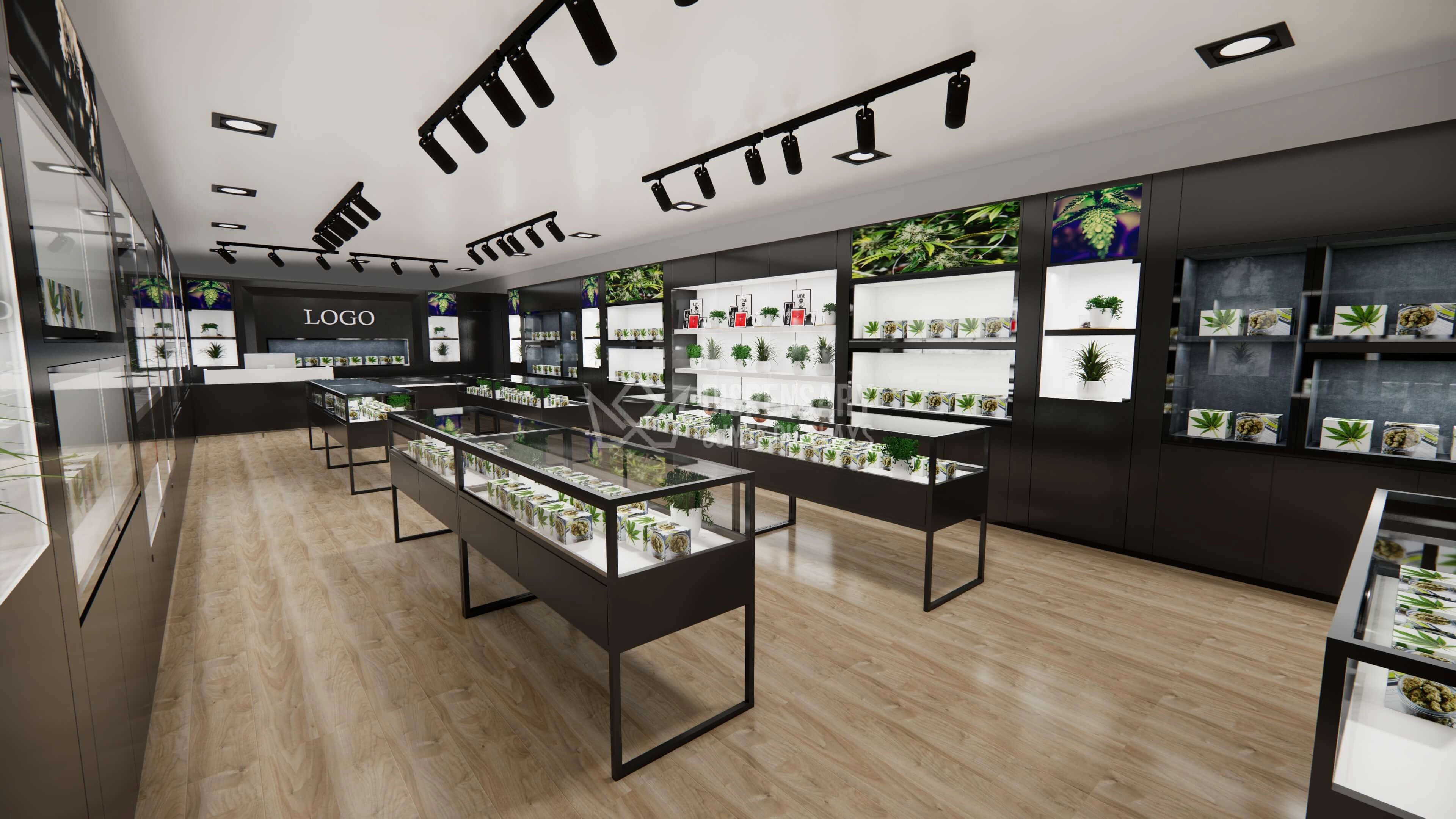
OEM ODM Dispensary Showcase Counters Display Fixtures For Cannabis
Sleek, secure, and fully customizable — our OEM/ODM dispensary counters redefine how cannabis is displayed in retail environments, merging form and function seamlessly.
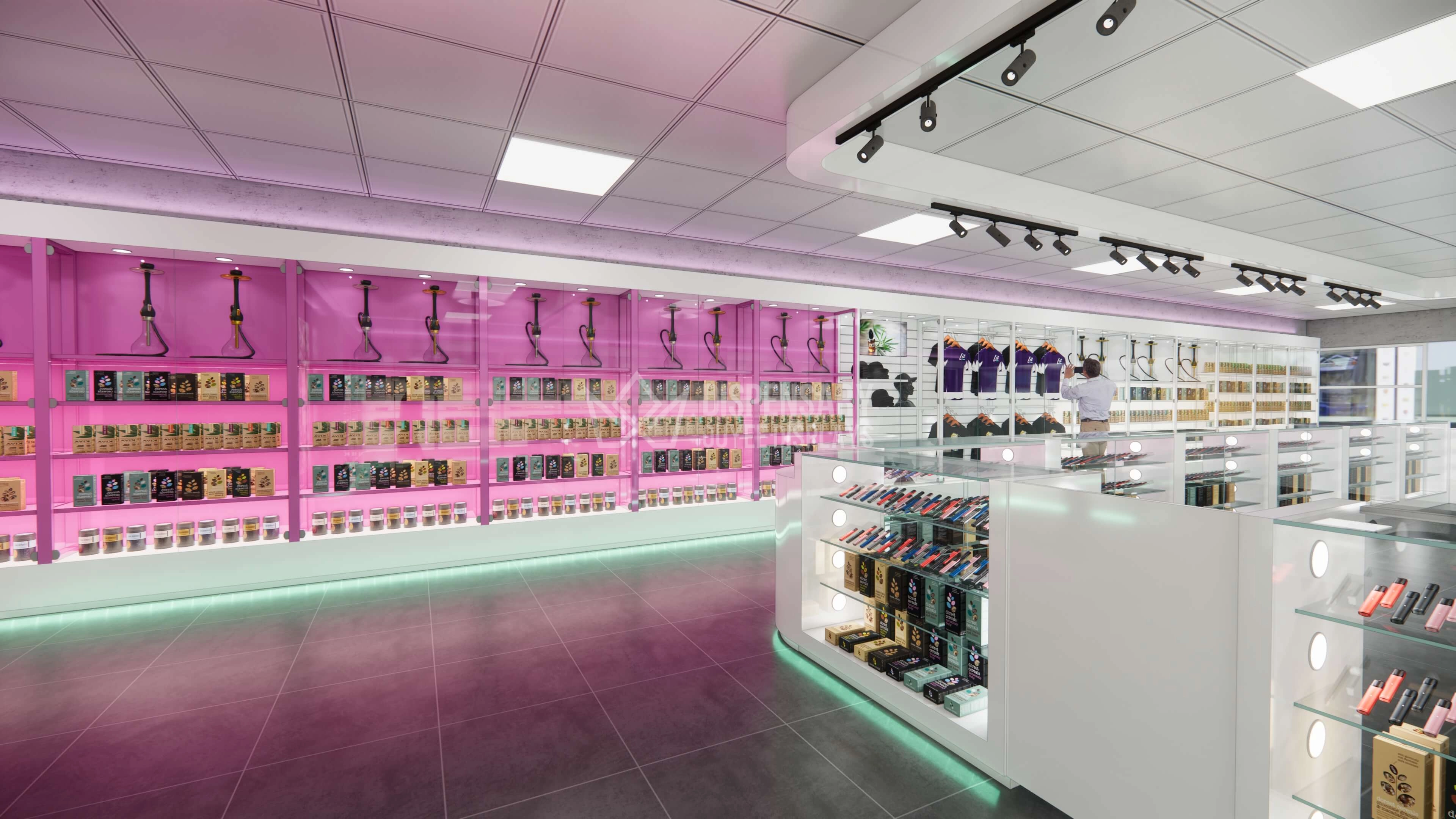
Modern Minimalist Cannabis Dispensary Displays Solutions
Modern minimalist cannabis dispensary displays offer sleek design, optimal product visibility, and efficient space usage, enhancing customer experience and elevating your store’s professional image.
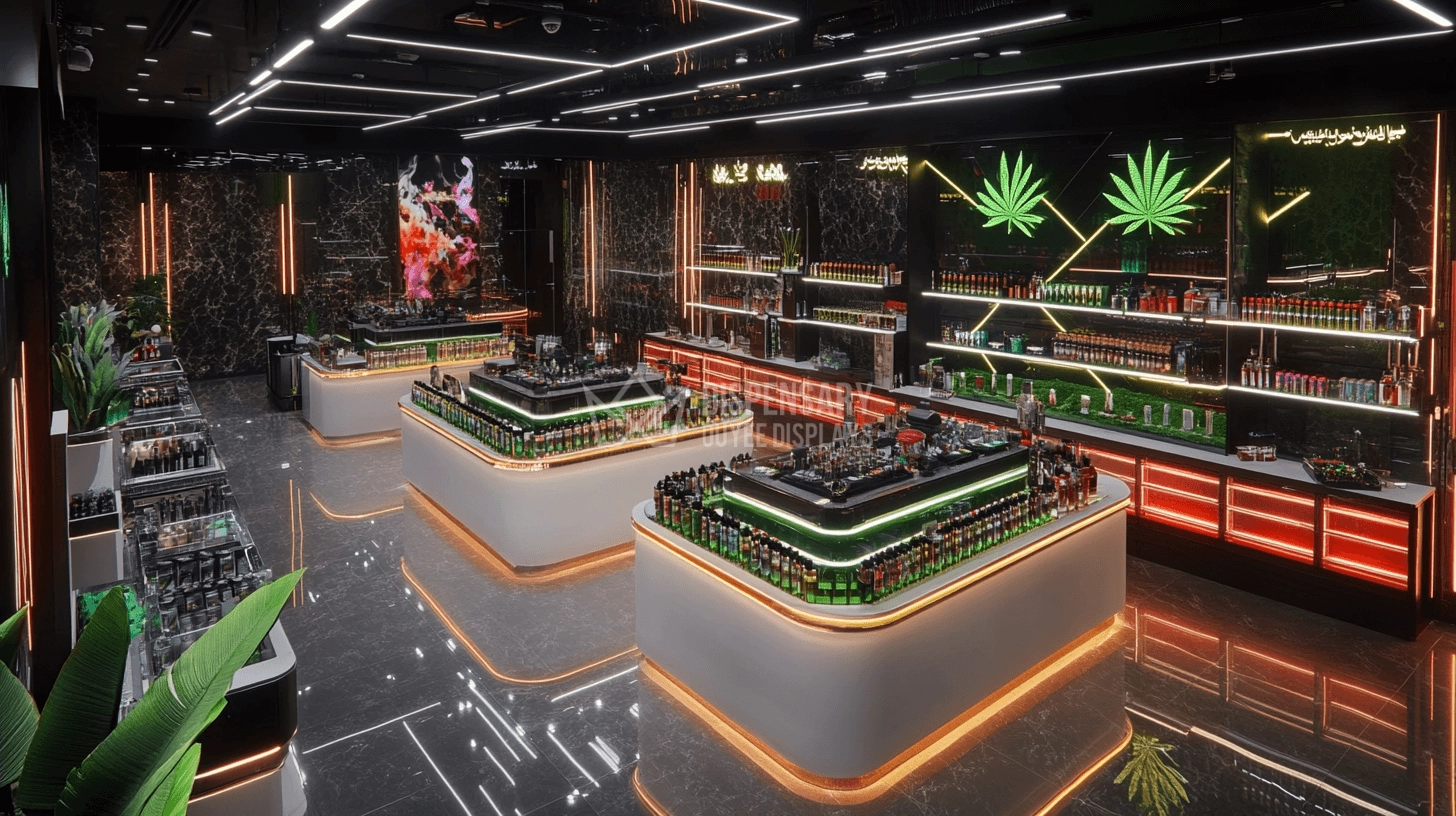
OEM ODM Dispensary Display Showcases Retail Design Cannabis Stores
Explore cutting-edge display showcase solutions for cannabis stores, combining modern retail design with high-end, customizable dispensary furniture.
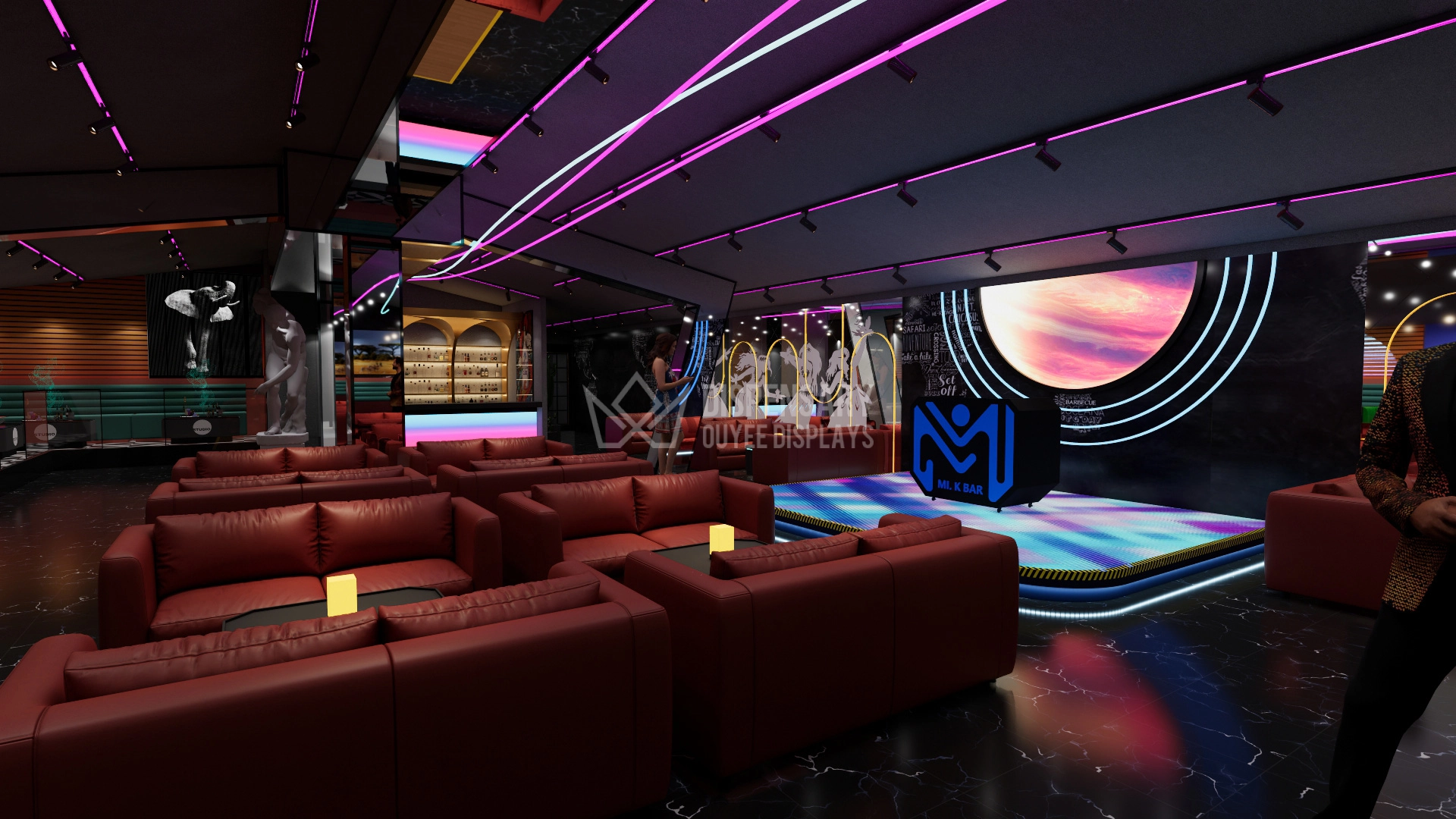
Commercial Durable Hookah Furniture Bulk Modular Layout for Modern Lounges
This modular hookah lounge furniture is designed for modern bars, lounges, and clubs that demand both luxury and functionality. With bold lighting, ergonomic seating, and customizable modules, it provides a versatile, durable, and aesthetically powerful solution for high-end hookah venues. Perfect for creating a visually immersive atmosphere that enhances customer satisfaction and retention.
Looking for something else?
At Ouyee, we’re committed to fulfilling all your retail shelving, storage, and display needs.
We have massive stocks and the biggest range of retail display equipment and shop fittings, fast dispatch and delivery!
Talk Now For Your Cannabis Display Project !

 Ouyee Display
Ouyee Dispensary
Ouyee Dispensary
Ouyee Dispensary
Ouyee Dispensary